Cypher 5… is writing itself right now!
You know how Joon said it was the last time they were gonna perform Cypher 3, the Killer, at the YTC concert in Busan? They were ready to put it to rest, put behind that era of bitterness… and move on, into the new horizons of Chapter 2.
#WeStandWithBTS The past two days have been chaotic in the social media world, with ARMYs defending BTS from people who have suddenly come out of the woodwork to criticize or ridicule their decision. Moments like this remind me of something far more important. Before we get caught up in arguments with strangers on the internet, it might be worth remembering how we became ARMY in the first place.
I suspect that for most of us, it wasn't because of an award, a chart position, or what a critic had to say. It was because, at some point, BTS and their music found us exactly when we needed them. This is how it happened for me.
Among my middle-aged peers, I stand out as somewhat unique: I stay closely attuned to youth culture, from music and fashion to their evolving slang. Perhaps this comes naturally because I teach and counsel young people, and I also try to make it my mission to listen to and understand what excites and inspires them. Recognizing that I'm genuinely interested in their world, my students are never shy about sharing their passions with me.
When BTS first appeared on the Korean music scene, none of my students seemed enthusiastic, as no one mentioned them to me. I first vaguely heard about BTS through a news article that highlighted Bang Si-hyuk and his new music label, Big Hit Entertaiment. But the group's name—방탄소년단 (Bangtan Sonyeondan) (Bulletproof Boy Scouts in English)—struck me as peculiar, if not a bit puzzling. I remember the public reaction at the time being quite harsh, with many mocking it as perhaps the worst idol group name ever and criticizing the members' looks as insufficient for surviving the cutthroat K-pop industry. Soon enough, I forgot about the group altogether.
Two years later, in 2015, however, two students, who were early ARMY members, introduced me to BTS during a classroom break. They passionately praised the group's lyrics criticizing Korea's ruthless educational system and the immense pressures placed on young people. Surprised that BTS had not already faded away in the harsh idol landscape, I listened as my students played "뱁새 (Baepsae)," literally meaning "A Have-not," but better known by its English title, "Silver Spoon." I was taken aback by the lyrics, accustomed as I was to idol songs centered mostly on romance and heartbreak.
It reminded me of earlier generations of Korean artists such as Seo Taiji and H.O.T., who had challenged social norms and educational pressures. Seo Taiji's 1994 heavy metal song "Classroom Idea" had boldly confronted Korea's education system, with its relentless pressure on students, leading to the song being banned from public broadcast. It felt as though BTS had picked up that torch twenty years later, with the added courage of writing their own lyrics, something still uncommon among idol groups.
Impressed, I began exploring BTS's music videos and live performances. The song "쩔어 (Dope)" particularly captivated me. Its playful yet pointed commentary on social inequality, clever wordplay, and flawless choreography were exhilarating. It was then that I understood why BTS had become renowned for their 칼군무 (kal-goon-moo), or "knife-like choreography," movements so synchronized and precise that they seemed almost mathematically perfect.
But it was RM's mixtape, released later that same year, that transformed me from an intrigued listener into a lifelong ARMY. To me, it was not simply an album but an authentic and courageous glimpse into his innermost struggles. RM transformed anxiety, confusion, and loneliness into poetic, reflective music. His lyrics were intense and unfiltered, at times hauntingly bleak, exploring life's complexities and darker realities.
In my favorite track, "Life," RM reflected on the difference between merely existing and truly living. He questioned whether happiness lies in chasing dreams or in embracing the quiet, ordinary moments that together make up a life. His restrained yet emotional delivery resonated with me, capturing the beautiful melancholy of life's unanswered questions. It amazed me that someone so young could create something so mature, intricate, and artistically fearless.
From then on, my admiration for BTS only deepened as each member consistently produced work marked by excellence, creativity, and sincerity. That admiration inspired me to create my first social media account on Twitter in 2017, dedicated to analyzing and translating BTS's lyrics for ARMYs around the world.
From the moment I discovered BTS in 2015 until today, I have followed them passionately. Over the years, I came to admire them not only as musicians but as human beings. Their generosity toward others, the countless charitable causes they have supported, the comfort and encouragement they have given millions through their lyrics, the laughter they have brought through Run BTS, Bon Voyage, In the SOOP, and countless other moments, the unconditional love they have shown ARMY, and the extraordinary commitment they bring to every single performance—all of it has only deepened my respect for them.
I listen to all kinds of music, but BTS is the only artist I follow. They are the only artists for whom I willingly spend my time, energy, and money. Because following BTS has enriched my life in ways I never expected. Their music has been the soundtrack to some of my happiest memories, and even now, whenever life becomes a little overwhelming, I throw a few BTS CDs, such as mono., Agust D D-2, Jack In The Box, into my car, drive aimlessly through the city, and let the music settle my mind. Somehow, it always does. No other artist has ever had that effect on me.
I've read countless stories from ARMYs who say BTS helped save their lives or carried them through their darkest moments. My story isn't quite like that. But BTS has undeniably made my life happier and richer. They have also introduced me to friends from every corner of the world. Because of BTS, the world feels smaller, warmer, and more connected. Every ARMY I've met has been kind, thoughtful, funny, and endlessly interesting.
So when I see everything happening online over the past two days, I remind myself why I became ARMY in the first place. It was never because of trophies, critics, or headlines. It was because BTS created music that spoke honestly about life and, in doing so, brought millions of us together. For that, I will always be grateful.
@kayrh11@CoffeeDateBTS@Variety That’s if they’re sincere about inclusivity. I mean they think they should be the ones to judge meaningful use of Asian Language! For goodness sake!
@SaraBangtan07 Your post resonates! We have tickets for Foxboro & I was looking forward to the 8+Hr drive across the border to NY & MA from Ontario. But hubby’s nervous about all the lawless 1ce incidents (mind u a white Canadian citizen & my paperwork is in order.) We may not be going!😢
Harvey Mason Jr.’s response is a masterclass in corporate gaslighting that completely ignores how the Recording Academy actually operates.
While the "separate but equal" defense sounds perfectly reasonable on paper, anyone who closely follows the music industry knows that sub-categories are routinely used as containment zones for diverse artists. The Grammys have a long, documented history of using genre and regional brackets to keep non-Western, non-white, and non-English-speaking acts away from the Big Four main stages.
The Structural Flaws in the CEO's Argument
The Vote-Splitting Reality: Mason claims genre categories do not exclude artists from the General Field (Album, Record, and Song of the Year). However, in practice, the 15,000 Grammy voters use these niche categories as a convenient box to check. Once an artist is tucked safely away in a regional or genre slot, voters rarely feel compelled to reward them in the top-tier categories.
The "Urban" Parallel: We have seen this exact playbook before. For years, Black artists were systematically funneled into the "Urban Contemporary" or R&B categories while being locked out of Album of the Year. The Academy renamed the category after intense backlash, but the structural habit of keeping diverse, chart-topping music out of the main spotlight remains identical.
Clout Chasing vs. Artistic Respect: The Academy's sadness over BTS’s withdrawal is deeply financial. The Grammys desperately need the massive social media impressions, live viewership, and cultural relevance that global acts bring to a dying linear television broadcast. They want the traffic, but they refuse to evolve their voting pool to genuinely evaluate global music on equal footing.
The Language and Geography Barrier: Music is a universal medium. By drawing a geographic boundary around pop music coming out of Asia, the Academy is fundamentally stating that Western pop is the "default" and everything else is a foreign anomaly requiring a special, segregated spotlight.
BTS's decision to withhold their submissions is a monumental power move. They are exposing the fact that the industry's most prestigious institution relies on outdated, Western-centric biases, proving that true global impact no longer requires a stamp of approval from a stagnant committee.
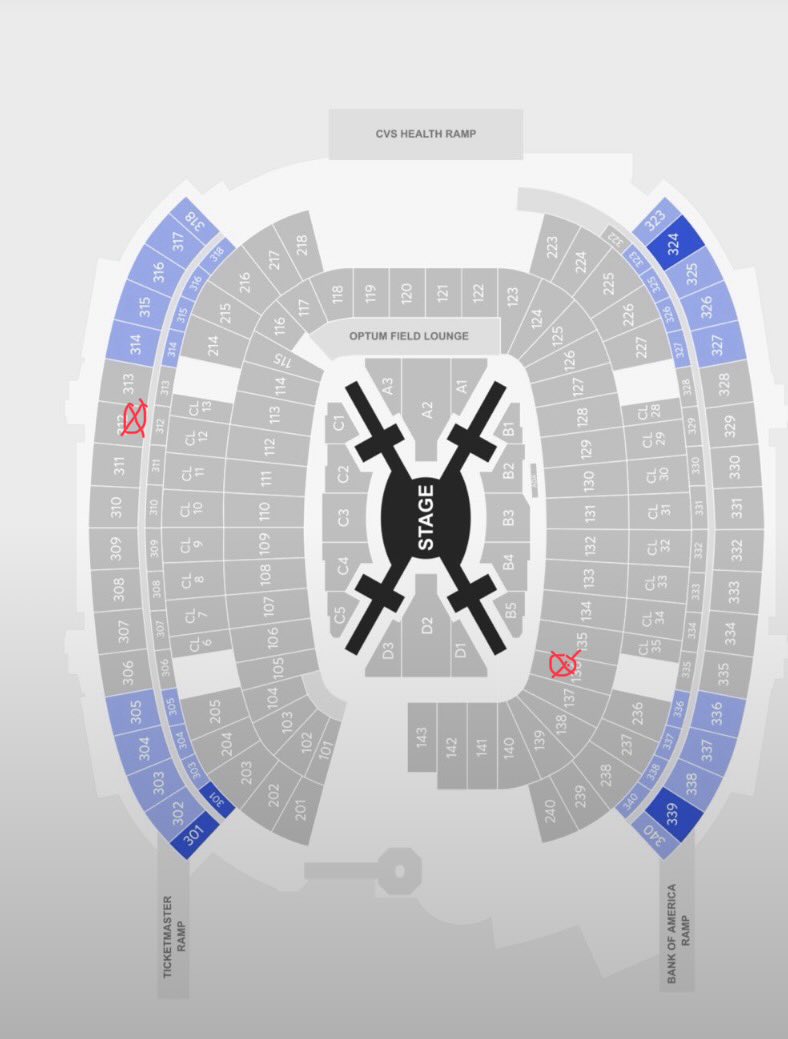
ARMY, I have 2 pairs of tickets for the FOXBOROUGH Day 2 concert on 6 AUG. (Our plans to travel from Canada fell through.😔)
Seats: 2 in Section 136 (excellent), and 2 in Section 312 (cheaper).
See attached. I have proof. Please get in touch. We can transact on a secure platform.
@lockharthv@SugaSugaRune06 Nah! They’ve grown up, and way beyond this particular dream. They’ve seen how ARMY embrace Arirang. That gave them strength and pride.
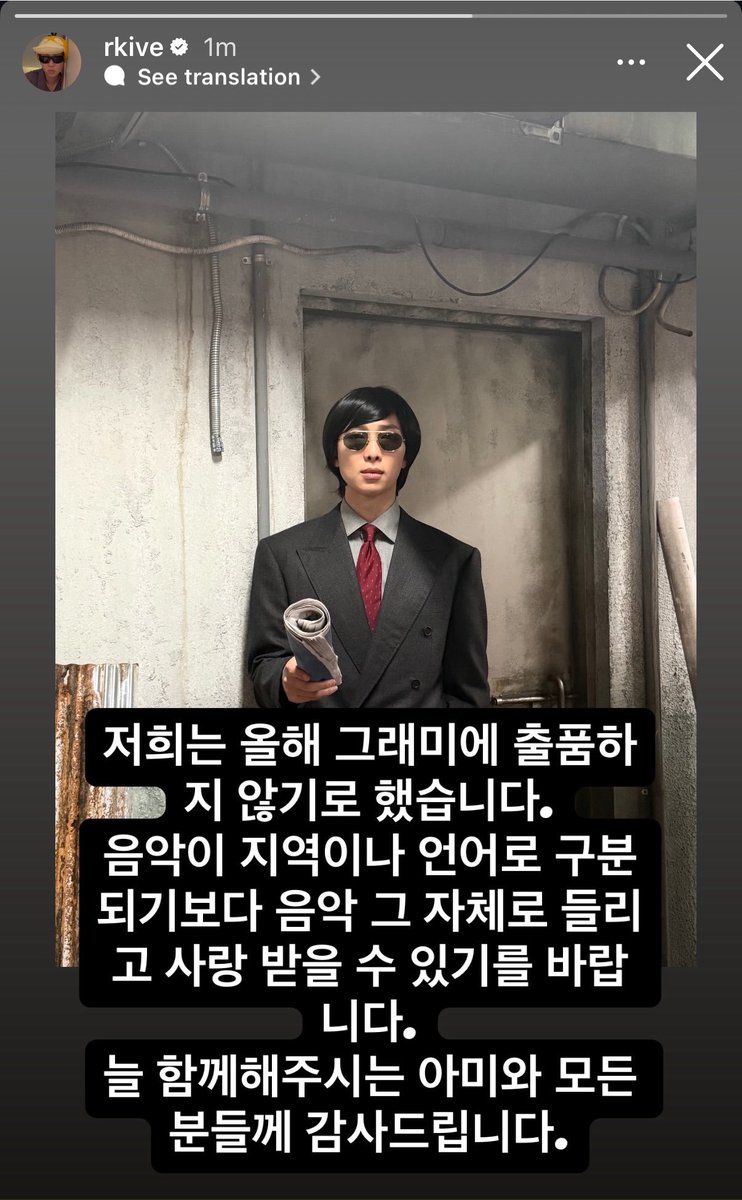
Namjoon, I KNOW you didn’t post your Grammy story alongside that photo of yourself holding the newspaper in the 2.0 MV by accident. Just hear me out.
Here’s what I found in the articles printed in the newspaper he’s holding:
“Brand New 2.0 Launches… Complete Strategic Overhaul.”
“The newly unveiled ‘Version 2.0 Update’ is expected to mark a major turning point—not merely as a software upgrade, but as a transformation capable of reshaping humanity’s digital DNA.”
“While the 1.0 era was defined by one-way information delivery, the 2.0 era empowers users to take control of the flow of information and create entirely new forms of value.”
“This will bring about a revolutionary change. The dawn of the ‘Brand New’ era has already begun, and companies or individuals who fail to adapt will inevitably be left behind.”
“According to recently released performance figures, they have achieved over 200% growth compared to previous results, shattering every industry record in the process. Cheers are now heard everywhere, and every project they touch turns into a massive success, proving once again that they truly possess the Midas touch.”
“Rather than being constrained by convention, they continue to forge new paths with fearless determination.”
The newspaper’s narrative aligns so closely with what BTS have been trying to tell us.
They’ve entered a new 2.0 era—one that can no longer be defined or contained by the boundaries of the industry. They outgrew those boundaries a long time ago, becoming a turning point that changed the very DNA of the modern music industry.
The 2.0 era is about BTS defining the rules of the game themselves and creating new value. It’s an era where Grammy recognition no longer seems to be the ultimate goal. Instead, they’re focusing on what truly matters: making music that isn’t judged by its language or where it comes from.
The success of ARIRANG exceeded every possible expectation, breaking industry records—exactly what the newspaper talks about. They’ve also made it clear that they want to create music without being confined by the industry’s long-established rules.
This doesn’t read like a protest against the Grammys. It feels more like a declaration that they’ve outgrown those boundaries. It’s not about fighting the system—it’s about moving beyond it.
We don’t need the Grammys to define the value of our music anymore. WE’RE GOING TO MAKE MUSIC FOR THE SAKE OF MUSIC.
That’s what I took away from all of this.
And this is exactly why I love Namjoon. He’s a genius. He never posts anything without intention—there’s always a reference, always another layer to uncover.
I LOVE HIS SEXY BRAIN.
The difference this time isn't simply that another artist declined to participate.
Many artists have criticized the Grammys after feeling overlooked, questioning transparency, category placement, or the voting process.
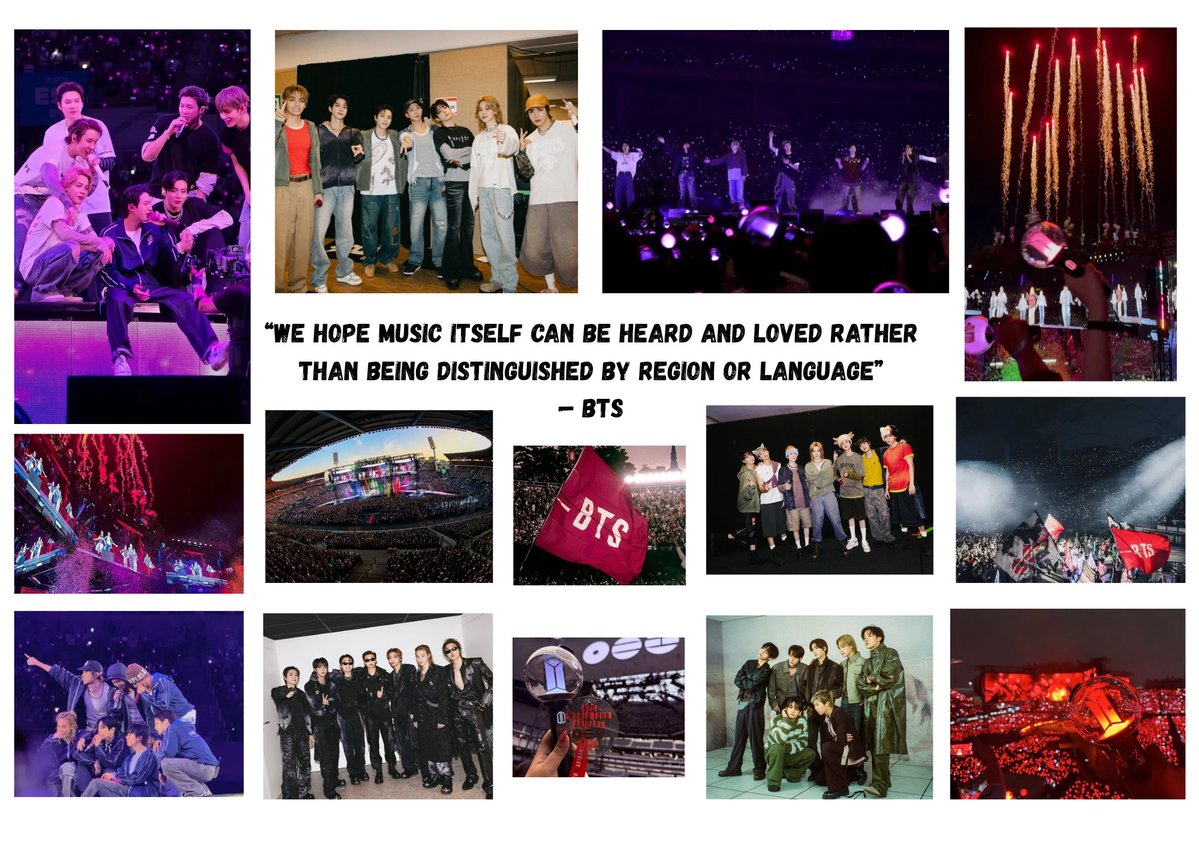
BTS' statement shifts the conversation toward something broader: whether music can truly be judged without prejudice toward language or region. Whether you agree with their decision or not, that's a discussion about the future of global music and not just about one artist or one award show.
If the industry's biggest global acts begin questioning whether the system fairly represents music across languages and cultures, that conversation extends far beyond the Grammys. It becomes a conversation about how the global music industry defines excellence itself.
@keiveiec They couldn’t get a translator for the second most spoken language in USA? Wow, how inclusive! But really, how parochial and backwards! And lazy, actually… Glad they eventually couldn’t stop his popularity.
@MicheBangtan@lsgrlr In other words, Exclusion strategies masquerading as Inclusion? Wow, definitely making sense now you’ve connected the dots, Miche!
@vividdreamer91@silvercatmuse@stessieT Exactly. So no surprise about the high % overlap… but what’s tragic is they’ll believe machine efficiency over human competence.
@stessieT I’m still trying to understand the psychology of folks who make fun of what THEY can’t achieve… I guess it’s consistent with dumbing down to be cool?
@Variety 1. The timing was suspect, you have to admit, Mr Mason.
2. Genuinely talented artists want to be recognised on equal terms.
3. In conclusion, we smelt a rat: its nickname is tokenism, its true name is racist gatekeeping.
#BTS are Back with a huge Bang, and are once again the #1 Act Worldwide on iTunes with 1350 points, over 3 times that of the 2nd Act, as "Aliens" explodes atop the Worldwide and European iTunes song charts, reaching #1 on US iTunes and 70+ countries so far! 💪🕺🕺🏻🕺🏻🕺🏻🕺🏻🕺🏻🕺🏻💣🥇🎵🥷🧨1⃣🌎& 🇪🇺 🎵📈➕1⃣🇺🇸🎵&7⃣0⃣+🌎🔥👑👑👑👑👑👑👑💜
BTS lifts to #5 (+2) on the Global Digital artist Rank with 3594 points!
STREAM:https://t.co/VAh5n33P8E
"Aliens" on iTunes (70x #1)
#1 Argentina
#1 Armenia
#1 Australia
#1 Azerbaijan
#1 Barbados
#1 Belarus
#1 Belgium
#1 Bolivia
#1 Brazil
#1 Brunei Darussalam
#1 Cambodia
#1 Chile
#1 Colombia
#1 Costa Rica
#1 Czech Republic
#1 Dominican Republic
#1 Ecuador
#1 Egypt
#1 El Salvador
#1 Estonia
#1 Finland
#1 France
#1 Greece
#1 Guatemala
#1 Honduras
#1 Hong Kong
#1 Hungary
#1 India
#1 Indonesia
#1 Italy
#1 Kazakhstan
#1 Kenya
#1 Kyrgyzstan
#1 Latvia
#1 Lithuania
#1 Malaysia
#1 Malta
#1 Mauritius
#1 Mexico
#1 Moldova
#1 Netherlands
#1 New Zealand
#1 Nigeria
#1 Norway
#1 Panama
#1 Paraguay
#1 Peru
#1 Philippines
#1 Poland
#1 Portugal
#1 Qatar
#1 Romania
#1 Saudi Arabia
#1 Singapore
#1 Slovakia
#1 Slovenia
#1 South Africa
#1 Spain
#1 Sri Lanka
#1 Sweden
#1 Taiwan
#1 Trinidad & Tobago
#1 Turkey
#1 Uganda
#1 Ukraine
#1 United Arab Emirates
#1 United Kingdom
#1 U.S.
#1 Uzbekistan
#1 Venezuela
@Variety@MusingsBangtan Ahem, he’s deliberately & obtusely missing the point, isn’t he?They’re so stuck in their worldview that they think window dressing with the inclusivity argument will pass. Desperate Gatekeeping is what it is. I wonder who gave the instruction to delete the performance videos.🤔