"The focus is on helping the student become the best version of themselves and, ultimately, not on having them do whatever they want, but on helping them figure out what is best for their own learning."
Beyond Paper vs. Screens: Seeing the Student, Not the Strategy https://t.co/CZWsrwQcKk
I have seen what happens when professional development ends on a Friday and Monday looks exactly the same.
As Katie Martin reminds us, real change happens when learning is continuous, contextualized, and responsive to the needs of both students AND educators.
When we invest in teachers, we invest in every student they will ever teach.
That's how we make lasting change.
@carlopedia@DrGeorge_MU@katiemartinedu #EvolvingEducation #MUEdD
This hits home. When we stop competing and start focusing on what truly matters... our students... that's when the real work begins.
Building teacher capacity is not about who's doing more; it's about ensuring every student gets what they need to succeed. Meaningful change starts with that mindset shift. 🙌
@carlopedia@DrGeorge_MU@katiemartinedu #MUEdD #EvolvingEducation
I agree with this completely and I think you nailed the core issue: the rubric has quietly shifted the goal from student learning to box-checking.
What started as a tool for reflection has turned into a compliance exercise. Teachers aren’t asking, “Did my students really understand this?” They’re asking, “Did I hit all the indicators?” That’s a very different mindset, and it changes what happens in the classroom.
The problem with rubrics is that they reward what’s visible and measurable, not what’s meaningful. Real learning is messy. So you end up with lessons that look “perfect” on paper but don’t necessarily go deep for students.
At some point, we have to admit: a system designed to standardize practice is never going to develop professionals in a deep way.
If we actually want better teaching, the focus has to shift back to:
Ongoing, human conversations about practice
Trust-based coaching
Leaders who know instruction well enough to give real feedback
And most importantly, evidence of student thinking, not teacher performance
Because in the end, the question shouldn’t be “Did the teacher meet the rubric?”
It should be: Are students actually learning?
@DrGeorge_MU@carlopedia #MUEdD
Congratulations, Nykeriah! You are truly an inspiration to your students and to those of us in the program with you. I’m grateful to Monmouth’s Doctoral Program for bringing us together.
The Ed.D. program proudly invites you to Nykeirah Jones’s proposal defense on Monday, March 23, 2026, at 3:30 pm via Zoom. All are invited to attend. Good luck, Nykeirah!
Committee: Dr. Nicole Trainor, Dr. Vernon Smith, Dr. Elford Rawls-Dill @DrGeorge_MU
I’ve been thinking a lot about how we design learning for all students, and how we move beyond simply delivering content to creating meaningful experiences. Human-centered design is more than a framework; it’s a commitment to deeply understanding our learners before making instructional decisions.
This also requires intentionality in meeting the needs of our diverse student populations, ensuring equitable access, and honoring varied backgrounds and abilities.
This shift requires a continued focus on learner agency, relevance, and coherence in every classroom, which is essential for our students' future.
@DrGeorge_MU@carlopedia@katiemartinedu #EvolvingEducation #MUEdD
@RichardC20939@DrGeorge_MU@carlopedia Powerful reminder. Systems create stability, but learning becomes meaningful when students see themselves in it. The shift from “fit the system” to “build around the learner” is where real engagement lives. @DrGeorge_MU@carlopedia#MUEdD
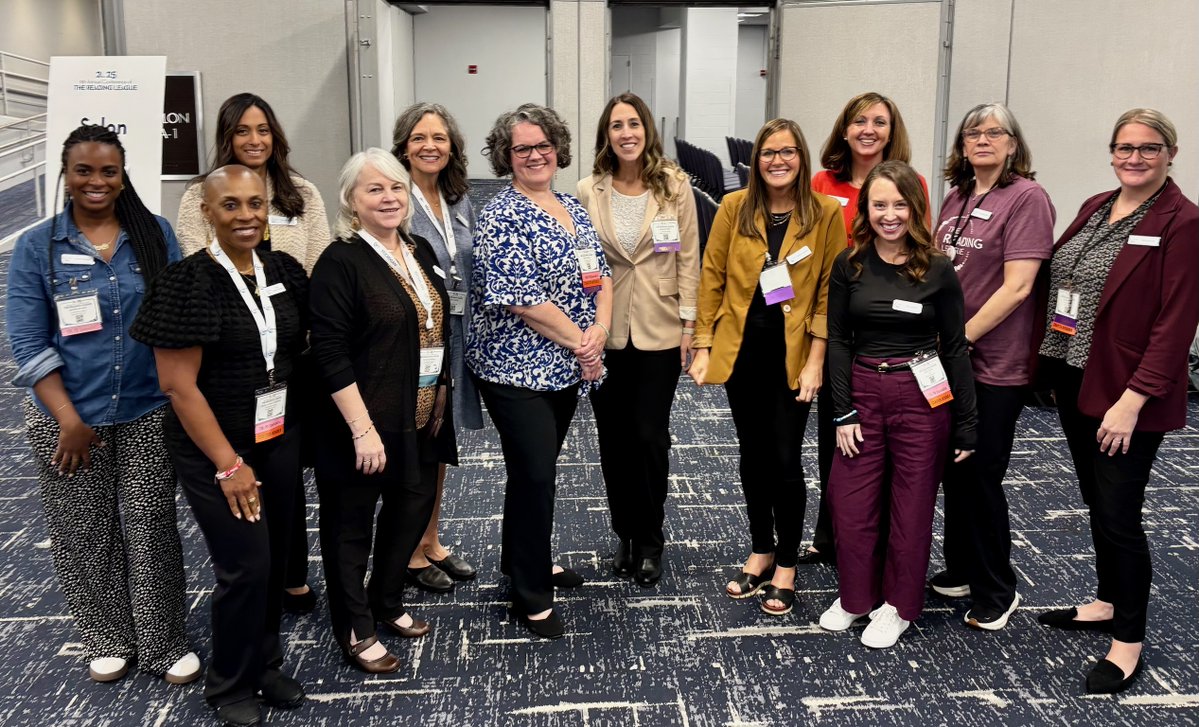
Literacy opens doors—and on International Women’s Day, we’re celebrating its power.
Access to strong reading instruction gives women the knowledge, confidence, and opportunity to lead, advocate, and shape the future.
#GiveToGain#IWD2026
Most schools were designed for efficiency.
Bell schedules.
Standardized pacing.
One-size-fits-all instruction.
But students were never one-size-fits-all.
Reading Evolving Education: Shifting to a Learner-Centered Paradigm by Katie Martin and Personalize: Meeting the Needs of All Learners by Eric Sheninger and Nicki Slaugh reinforced something many educators are recognizing:
The future of education requires a shift from systems designed for efficiency to systems designed for learning.
Learner-centered environments prioritize:
• Student voice and agency
• Authentic, meaningful learning experiences
• Flexibility to meet the variability of learners
• Systems that support personalization rather than standardization
But this shift doesn’t happen through new programs or initiatives alone.
It requires leaders willing to question long-standing structures and redesign learning experiences with students at the center.
The question for educational leaders is no longer if schools should evolve.
It’s how we intentionally lead that change.
How are schools in your district shifting toward more learner-centered practices?
@DrGeorge_MU@carlopedia@E_Sheninger@nickiatquest@katiemartinedu #MUEdD
Today I received an email from a teacher thanking me for a hug I gave her 3 years ago on the day she lost her dad. I had no idea that moment stayed with her. Her message had a bigger impact on my day than she probably realizes. It reminded me that leadership isn’t always about big decisions - it’s the small, human moments that matter most.
Teachers change lives in moments just like this every single day.
The U.S. spent $30 billion to ditch textbooks for laptops and tablets in classrooms.
The result: Gen Z is the first generation to score lower on standardized tests than their parents.
https://t.co/hFuTvhbg3n
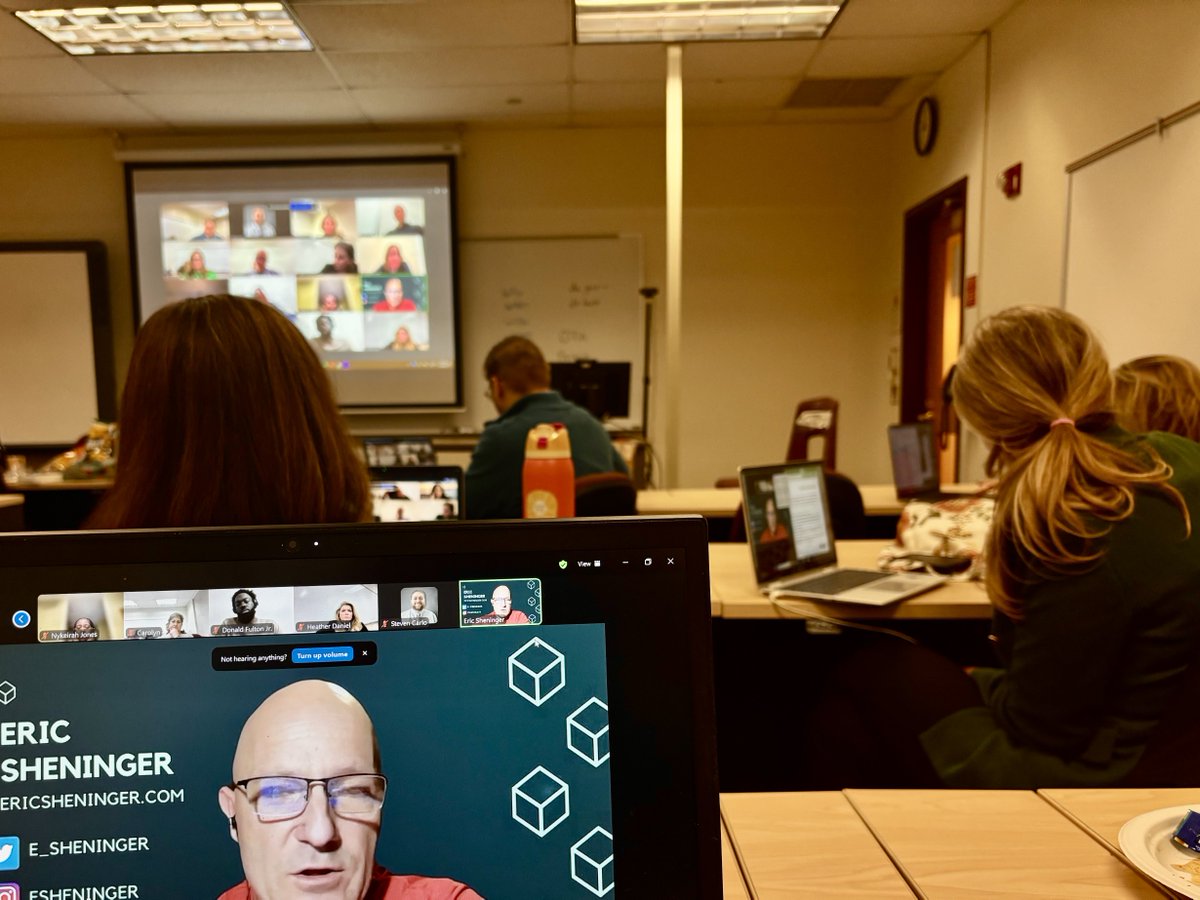
What does learner-centered, disruptive innovation feel like when you’re the learner? This week’s readings pushed me to reflect on my doctoral experience and how theory shows up in practice. Important learning for leaders. @DrGeorge_MU@carlopedia@katiemartinedu@E_Sheninger@nickiatquest #MUEdD
@MsSmithTMS Absolutely agree. Personalization-clear goals, student voice, relevant work, and ownership can be the difference between engagement and disconnection. Engagement isn’t accidental; it’s designed.
@E_Sheninger@nickiatquest@DrGeorge_MU#MUEd
When most students need intervention, that’s not a student failure.
It’s a system failure.
Data alone won’t fix it - data means nothing if instruction doesn’t change.
So the real question isn’t what do kids need?
It’s what do leaders need to change now to make grade-level instruction the norm instead of the exception? #LeadingChange #RedefiningSuccess #EvolvingEducation #MUEdD
@DrGeorge_MU@carlopedia