@ConstantinidouN@EtonCollLibrary@SOAS_SpecColl@perurealfonso At first sight, this seems to be a treatise written in Hindi (or Urdu written in Devanagari?) about an Islam-related subject, since the two titles read as "Allahu akbar" and "bismillāhi r-raḥmāni r-raḥīm".
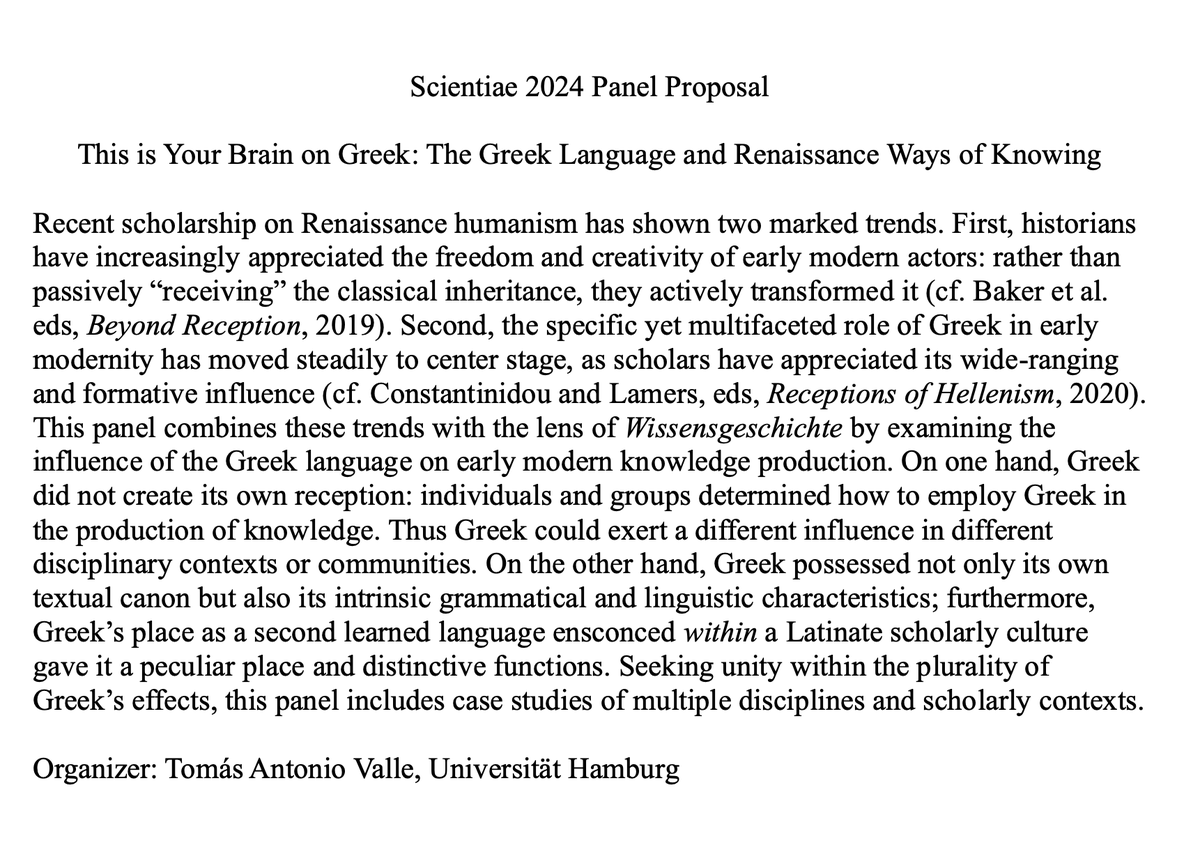
Looking for 1–2 additional participants for a double panel at Scientiae 2024 (Brussels, June 11–14)!! @AcadScientiae
Current presenters include me, @boomloos, @MMaleux, and others. Please share widely! If interested, don't hesitate to shoot me a short message or email.
Wonderful translation and performance!
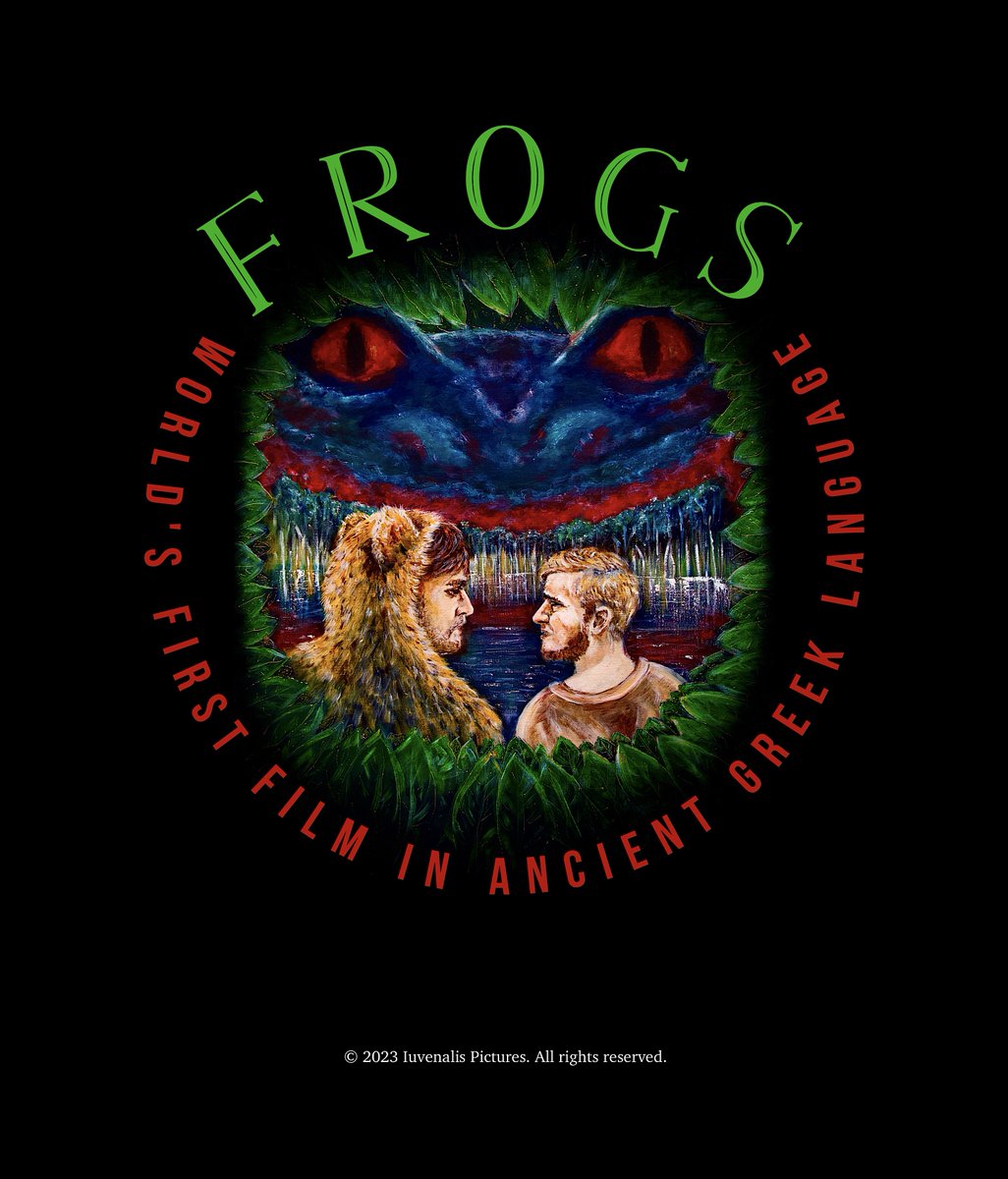
If you want to hear a new interpretation of Aristophanes' hilarious frog song, be sure to watch the Ancient Greek film "Frogs": https://t.co/NZkU9z8i8w
🐸
Only four more days until the first film in Ancient Greek appears for free on YouTube! Subscribe to IuvenalisPictures' channel (https://t.co/sgoq9JQTeJ) not to miss this historic event! 🐸 @edithmayhall
@Dealtrade_Group It's true that the accent has some musicality in it that reminds one of the Scandinavian languages, but this is in fact because we tried to reconstruct the ancient Greek tonal accent as faithful as possible. The used pronunciation aims to reflect the Attic and Doric of 405 BC.
Proud to announce the film “Frogs”, which is (as far as I know) the first movie spoken entirely in Ancient Greek! You can see the trailer (and subscribe) on https://t.co/sgoq9JQTeJ. The movie will be made accessible for free in October on this YouTube channel.
The movie combines pieces from Aristophanes' Frogs, Euripides' Alkestis, Plato's Symposion and the Batrachomyomachia, alongside some self-written scenes. More information can be found on the website https://t.co/UOvgA4DAER 🐸
Visited Bath Abbey last weekend and found a Hebrew inscription on one of the walls. No mene tekel, but a vocalized Tetragrammaton, which is said to have been carved by soldiers during the Civil War (1642-1651). I wonder why!
@NateAKreider Then there are also many other useful contributions to the topic by Theodor Dunkelgrün, Judith Olszowy-Schlanger, Ilona Steimann, Johanna Weinberg, and Irene Zwiep (to name just a few). Hopefully I can soon add my own dissertation to this list…
@NateAKreider Saverio Campanini writes profusely on the subject (often with a focus on Italy an Christian Kabbalah) and recently published an article on learning Hebrew in the Renaissance (in the volume “Hebrew between Jews and Christians”).
An amusing case of Italian-Hebrew code-switching in a letter written a Jew to his Christian patron: “If my horse could talk, it wouldn’t be able to say anything but ‘Alas’” (איכה being also the Hebrew title of the Book of Lamentations).
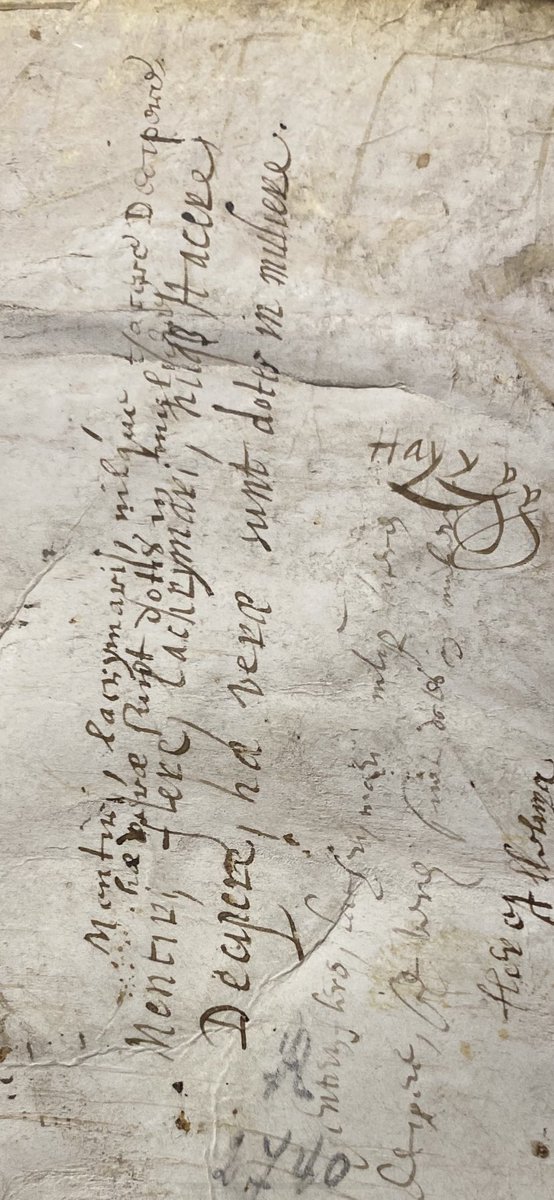
I imagine the owner of this Hebrew grammar had just been rejected by his crush when he wrote this misogynistic probatio pennae on the pastedown of his book:
“Lying, crying, weeping, never shutting up,
Deceiving: these are a woman’s true talents”
(Plantin-Moretus A2740)
@a_gerardus Recte dixisti! Sed, nisi fallor, versus primus habet “mentiri, flere, lachrymari nilque tacere”; quo quidem casu alterum mendum fecit producens secundum e in flere (*flērē).