Build skills to manage stress, low moods, worries, sleep and fears with free online mental health support for anyone aged 16+. No referral or diagnosis needed.
For more information visit 💻 https://t.co/i94UneSHSp
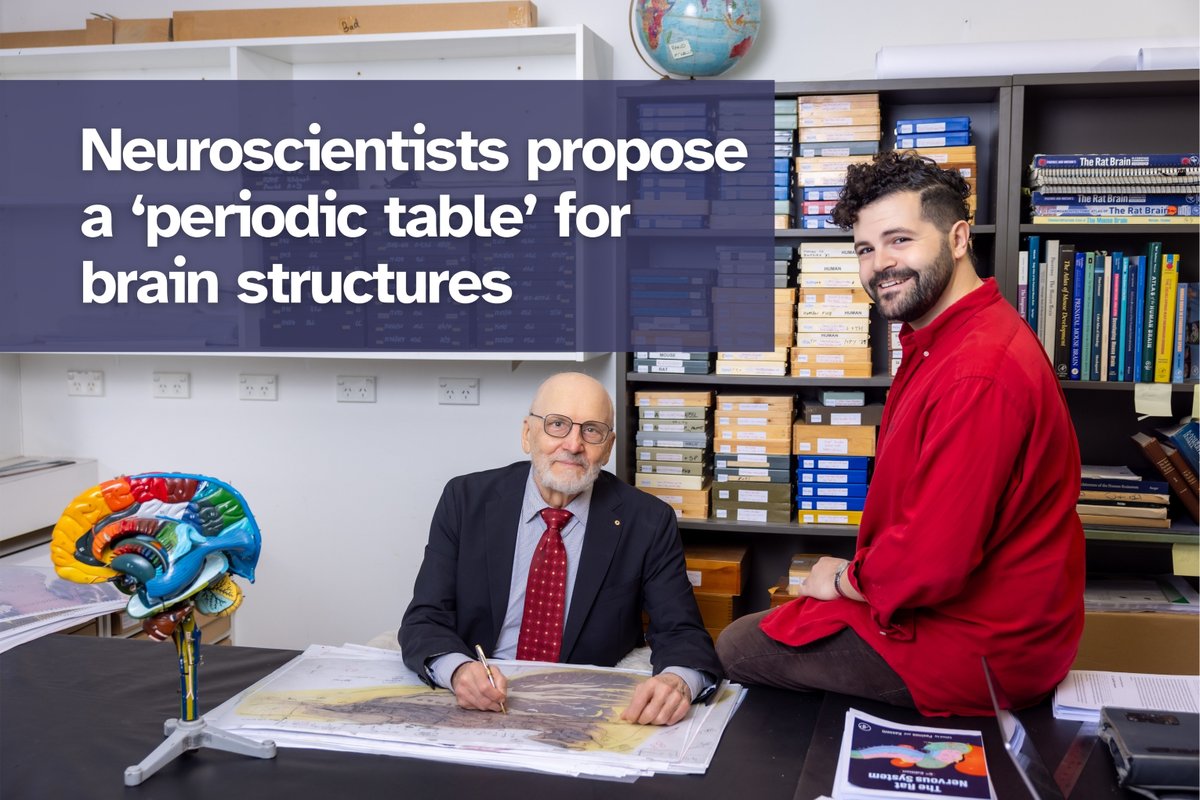
As if the brain were not complex and difficult enough to study, conflicting terms and abbreviations make it even harder to decipher. Now, researchers from NeuRA are proposing the equivalent of a ‘periodic table’ to improve clarity and reduce confusion for neuroscientists and clinicians.
World-renowned brain cartographer and NHMRC Senior Principal Research Scientist at NeuRA, Scientia Professor George Paxinos AO, made the proposal in Trends in Neuroscience after developing this resource.
“Different labs and brain atlases use different abbreviations for the same structure and sometimes the same abbreviations for different brain structures,” Prof Paxinos said.
“Imagine one airport used ‘SYD’ for Sydney and another used ‘SDN’ for Sydney, whilst a third used ‘SYD’ for a completely different city. There would be confusion, similar to what happens now among neuroscientists when they explore the brain.”
Inspired by the periodic table, Prof Paxinos and his colleagues have proposed and developed a solution: a unified system of brain and spinal cord terms and abbreviations.
While other organisations have worked to consolidate central nervous system (CNS) terminology, this covers only a fraction of terms needed to navigate the brain and spinal cord, focuses only on human anatomy and provides no abbreviations.
“For example, the nucleus accumbens has been abbreviated in at least 27 ways. We also see different scientists using the same abbreviation of ‘SO’ to mean different things, including the supraoptic nucleus and superior olive, Prof Paxinos said.
Prof Paxinos and his team developed the ‘Central Nervous System Terms and Abbreviations’ cross-species online resource. Corresponding (homologous) structures across species are given the same name and abbreviation.
“If the proposed abbreviation rules were followed consistently, one could be presented with a figure from an unfamiliar species and yet be able to know the name of the structures just from the abbreviations,” Prof Paxinos said.
“Our resource is intended to evolve, and we encourage others who have collections of terms and abbreviations for other species to contact us.”
You can read the full article as well as the unified list of abbreviations here: https://t.co/vwQ49cphvR
Repurposing a safe and affordable blood pressure medication may help prevent cancer-related cognitive impairment.
NeuRA PhD candidate, Delyse McCaffrey, led the study that looked at using candesartan, an angiotensin receptor blocker used for high blood pressure, to assist with cancer-related cognitive impairment.
The study in a mouse model of breast cancer showed it prevented spatial memory impairment without negatively affecting primary cancer outcomes.
“Up to 75% of cancer patients report cognitive symptoms, with around 30% experiencing persistent deficits that interfere with daily functioning and quality of life,” Ms McCaffrey said.
“This can impact a person’s ability to think, learn, remember, or make decisions. Despite the profound economic and psychosocial burden, there are limited therapeutic options.
“This highlights a potential low-cost strategy to protect cognitive function before chemotherapy begins.”
The research supports further exploration in clinical settings, including examining whether the medication can reverse established cognitive impairment.
You can read the full study here: https://t.co/UFZLrWoQvU
The way to maintain a healthy brain without neurodegenerative disease may be through the immune system. Sharp essay on the crosstalk between the immune system and brain, and how to leverage that to prevent Alzheimer's disease @ScienceTM https://t.co/U1QbRbHezl
On this day in 2015, we launched the Allen Cell Types Database!
This first-of-its-kind database began with the location, electrical activity and shape of more than 240 neurons. Today it has 2333 neurons and counting.
See the data for yourself: https://t.co/gultVMSV6w
I’ve been using Pearls regularly, and feel it’s now ready for a broader release, so I made a small video :)
🔵 Pearls is an app for clinicians I built for capturing clinical pearls while rounding or studying. Some useful features:
- Automatically fetch context: after you add a concept or phrase, an AI agent will (optionally) fetch additional information and augment your note. I like pasting clinical trials, and letting Pearls update my note by fetching more details in the background.
- Auto generate Anki cards: you can convert any Pearl into an Anki card and directly import to your deck.
- Sync across mobile/web devices, auto-tagging, search and filtering Pearls
I’ve been using it quite regularly and have found it valuable in helping me capture and remember my own clinical knowledge.
Available for free: https://t.co/uEYYaGEa33
Great to catch up this morning with someone I admire deeply- the Minister for Indigenous Australians, Senator Malarndirri McCarthy - Northern Territory. A wide-ranging conversation covering Indigenous mental health, suicide prevention, and the critical work that still needs to be done in these spaces.
And of course, wonderful to be able to celebrate the recent funding announcement for the Dr Tracy Westerman Indigenous Psychology Scholarship Program.
Investing in growing our Indigenous psychology workforce isn’t just about filling positions. It’s about ensuring that Indigenous people have access to culturally safe, evidence-based mental health care delivered by people who understand their world. That changes lives. It changes communities.
Thank you Minister McCarthy for your time, your listening, and your commitment to these vital issues.
📢 We’re proud to share NEW research showing how the brain may adapt after stroke. Our study found that undamaged brain regions can exhibit a more “youthful” structure, offering new insights into neuroplasticity and recovery.
Full press release: https://t.co/fOj2CvYFuR
Screening cognitive-communication disorders made easy with the Pocket MEC!
Now for sale on the ASSBI Website with both Hard Copy and PDF versions available. Discounted prices for Members!
Learn more about the Pocket MEC today!
https://t.co/Ow2LzrWlYE
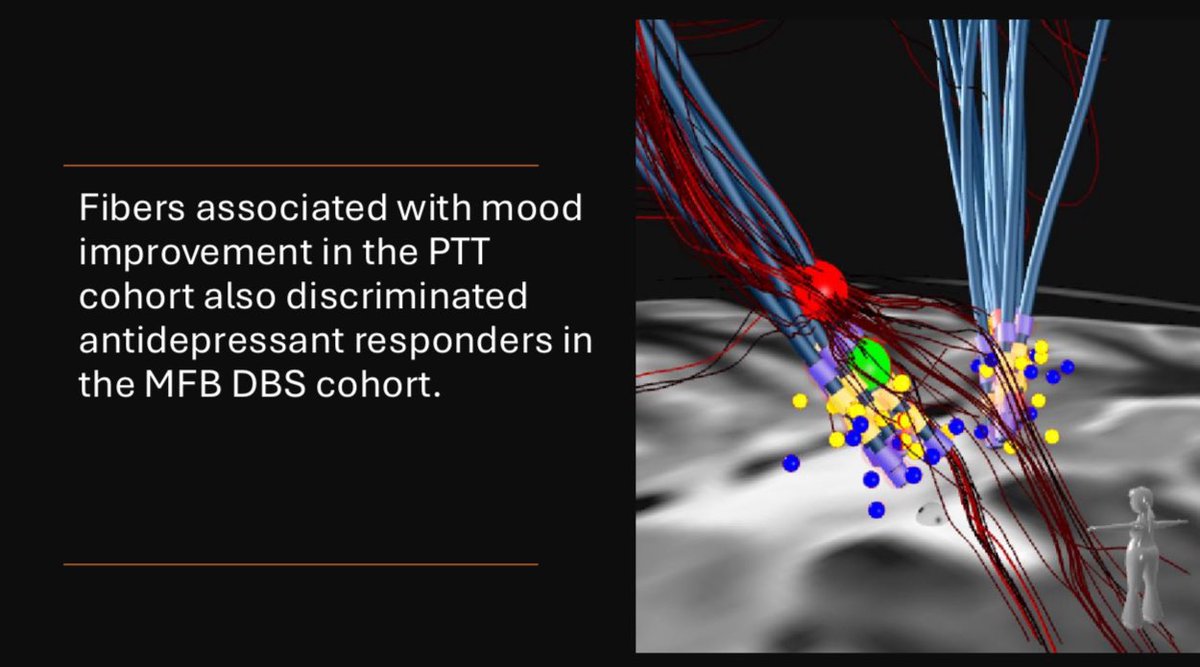
Our research in Freiburg on tardive dystonia revealed a clear functional dissociation between mood and motor circuits in Forel's field H1.
薬剤性(遅発性)ジストニア・ジスキネジアは抗うつ薬や抗精神病薬などの原因薬剤は減ら���ずに不随意運動のみを治すことが十分可能です。アメリカ、ヨーロッパなどの施設でも薬剤性(遅発性)ジストニア・ジスキネジアが完治可能な疾患として治療している施設は一つもありませんでした。
フライブルク大学での遅発性ジストニアの研究で患者さんに役立つ大きな成果を得ることができ、明日からの臨床に役立てていきます。
#Neurosurgery #Dystonia #TardiveDystonia #DrugInducedDystonia #tardive #depression #bipolar #schizo #ジストニア #薬剤性 #遅発性 #ジスキネジア #うつ #統合失調症 #双極性障害 #Freiburg
#Germany
My wife @ShockurashC and I are in awe of the response to the @Neuralink video! All your kind replies... 🥹
I will post an update soon covering the advances we have made since the video was recorded.
I've been working on the visual infographics in https://t.co/pBA03VRt2p, previously some random cartoony ones. Ive standardized them to a pretty solid reference sheet. they could be printed out.
The goal is to make it easier to see a trial's key findings at a glance. Design, population, primary outcome, limitations, and clinical bottom line in one image.
Here's what the INTERACT3 entry looks like now.
https://t.co/pBA03VRt2p
#NeuroCritCare #MedTwitter #MedEd
Ready to take AI in your practice further?
Join Jess Francis for a 3-part webinar series exploring AI in documentation, clinical decision-making & therapy development, with a focus on governance & ethics
https://t.co/2cvanZ24Tr
Can’t attend live? Register to access recordings
The new study is a randomised controlled trial – considered the gold standard for medical research – which first began enrolling participants in the late 1990s. https://t.co/xXZpQsqL6N
How fast could you react to an unexpected slip?
Researchers at NeuRA and UNSW, Sydney have co-designed a novel training program, LEAP (Low-cost, Ecological and Accessible Perturbation), to deliver reactive balance training using simple equipment.
The LEAP program can be tailored to each individual's capacity to ensure appropriate challenge and improvement. The LEAP program specifically targets reactive balance control from unexpected slips and trips while walking, which are the major causes of falls.
The ongoing research study involves eight visits to NeuRA in Randwick, including two assessments and six LEAP training sessions focused on slip and trip recovery.
Contact the LEAP Team if you'd like more information or would like to express your interest at [email protected]
Teaching and support staff are best placed to notice when a student may need additional support at school. In this webinar, we explore how #FASD can present in the classroom and outline the referral, assessment, and diagnostic pathway. https://t.co/d1pa2P8dbI
I just finished Tasma Walton's new book, ‘I Am Nannertgarrook’, which is based on a true story of Tasma’s ancestor who was kidnapped by sealers. It’s a great read! Published by @SimonSchusterAU & available at all good bookstores. 📖👀✅
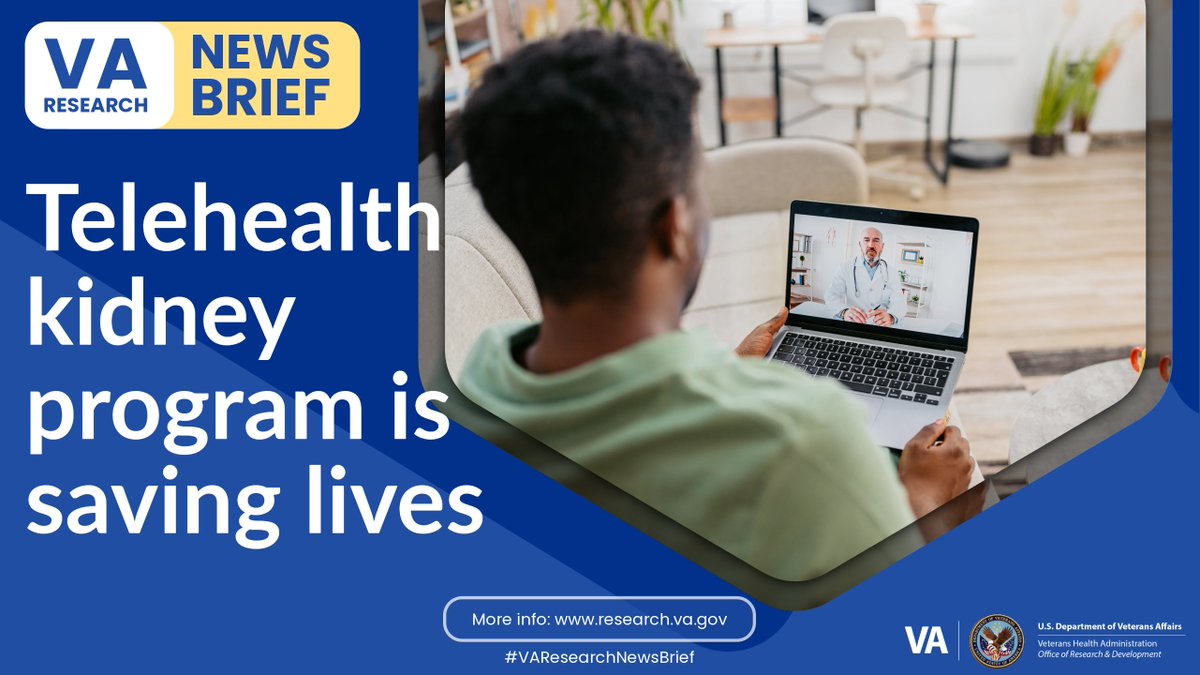
#VAResearchNewsBrief: Veterans whose kidney care was managed by a nephrologist via telemedicine had a 15% lower mortality rate than Veterans seen by a primary care provider alone. These findings demonstrate how specialty outpatient care can be successfully delivered to rural Veterans using telehealth.
#VAResearch #RuralMedicine
https://t.co/xF3FI3EX3p