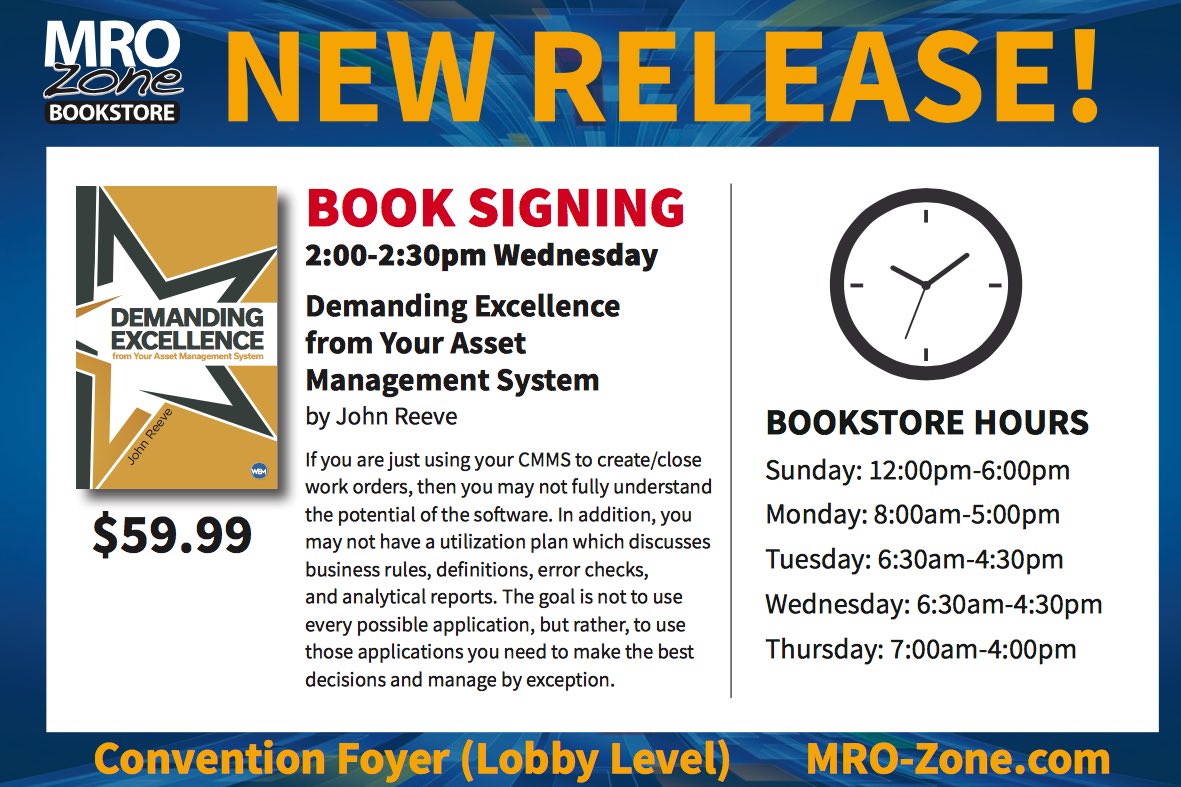
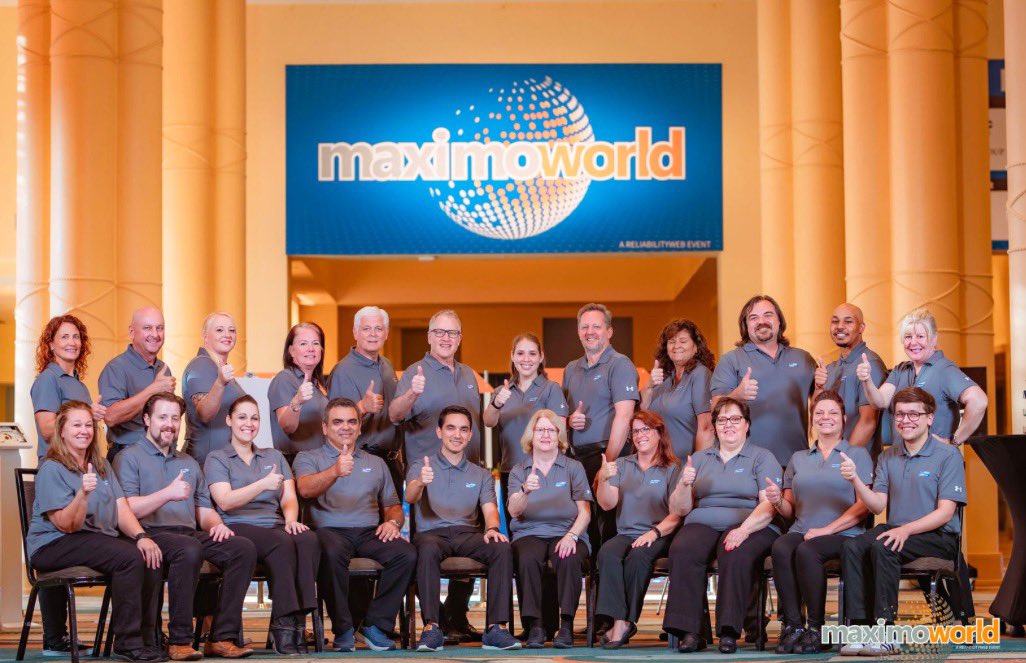
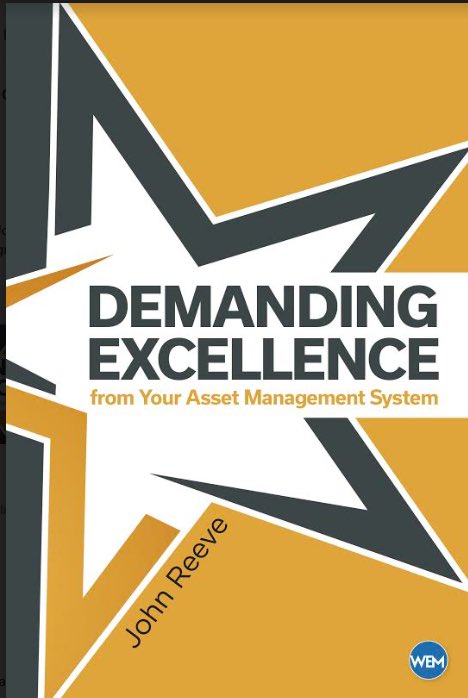
https://t.co/0gxPs8tqqB bookstore this week at #xcelerate19 Fluke Corporation
Maintenance and reliability training, innovation and education @FlukeCorp@ReliabilityPar1
Asset Management Tip
Asset management is all about the function. An asset is reliable if it is doing what the user wants it to do. That implies that the user really understands what they want the asset to do.
For more information: https://t.co/LrR2rKR0RM
Critical Connections
The "Critical Connections" between Failure Modes/Failure Mechanisms and Predictive/Preventive Maintenance programs needed to avoid failures are a key element of reliability improvement.
To read more, get the book here :
https://t.co/rkHI1BP7Im
Mission Based Reliability
A common characteristic of companies suffering from poor reliability and inadequate availability is that a relatively small number of components suffer chronic failures.
To get the book, click here:
https://t.co/CHhWdesU5q
Criticality Analysis Made Simple by Tacoma Zach, P.Eng.
https://t.co/DbBD3hQbRO
Criticality analysis is one of the most important elements in an #assetmanagement program - and perhaps the most overlooked and misunderstood.
Criticality Analysis Made Simple by Tacoma Zach, P.Eng.
https://t.co/DbBD3hQbRO
Criticality analysis is one of the most important elements in an #assetmanagement program - and perhaps the most overlooked and misunderstood.
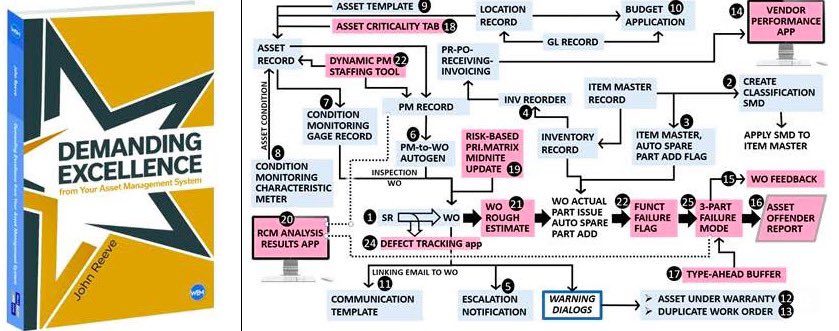
Some organizations are not always aware of the power features within their product, in this case, Maximo. The user may have 10 or more years on the product but was never told about this capability.
You can get the book here https://t.co/csIKKW8dUd bookstore
In a CMMS you can have an ITEM MASTER table. Quite often, these part records can have a COMMODITY CODE (or group label) such as FILTERS or BEARINGS. If you had 10,000 parts you might have 500 commodity codes.
https://t.co/f6oWibbXrt
A Common Sense Approach to Defect Elimination
by Ron Moore https://t.co/DdWXlbUBK9
Engaged employees are three times more productive than average, but only ~30% are engaged, and ~20% are actively disengaged.