@photel@HHampel1 I definitely noticed a difference when working in a clinical diagnostic laboratory setting. The majority of families with 3’ EPCAM deletions that did NOT extend into MSH2 clinically presented with CRC only. Those that extend into MSH2 clinically looked like MSH2.
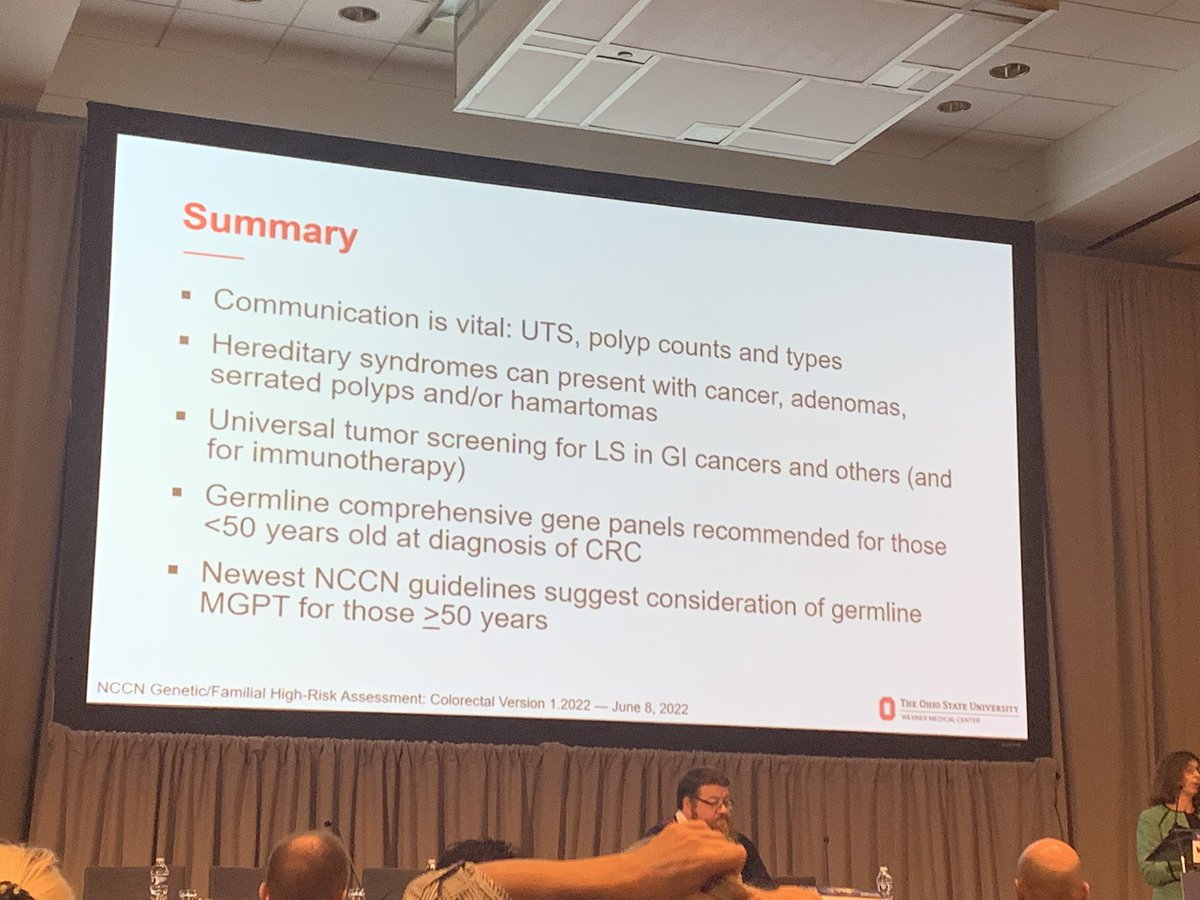
Wendy Frankel, MD gave a great talk on just why GI Pathologist can be your best friend in GI Genetics. Share clinical suspicion and known diagnoses with your GI Pathologists and it can aid in histological classification! #insight2022
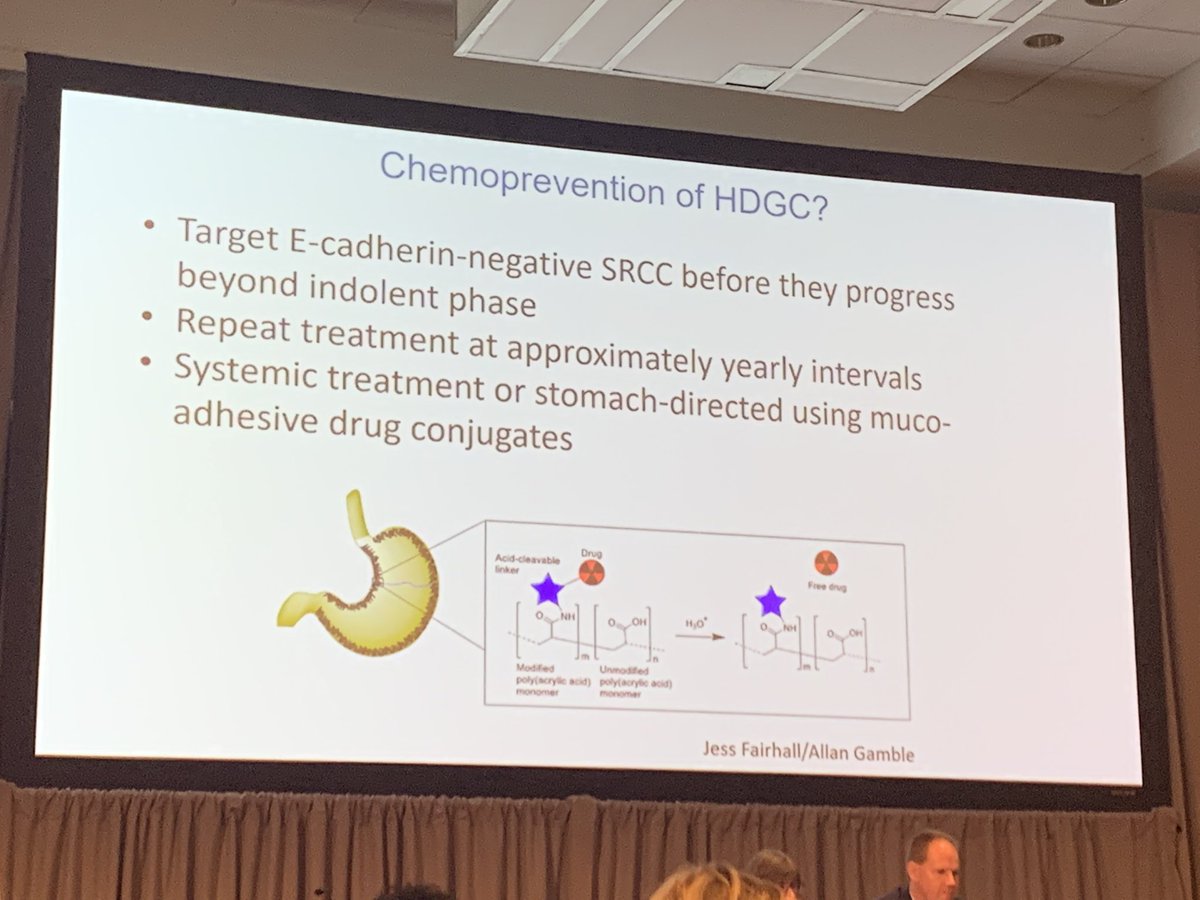
What an honor to hear Parry Guilford, MD, PhD speak at #insight2022. Is chemoprevention on the horizon for individuals with CDH1 PVs? Very excited to hear what comes from his research in the coming years.
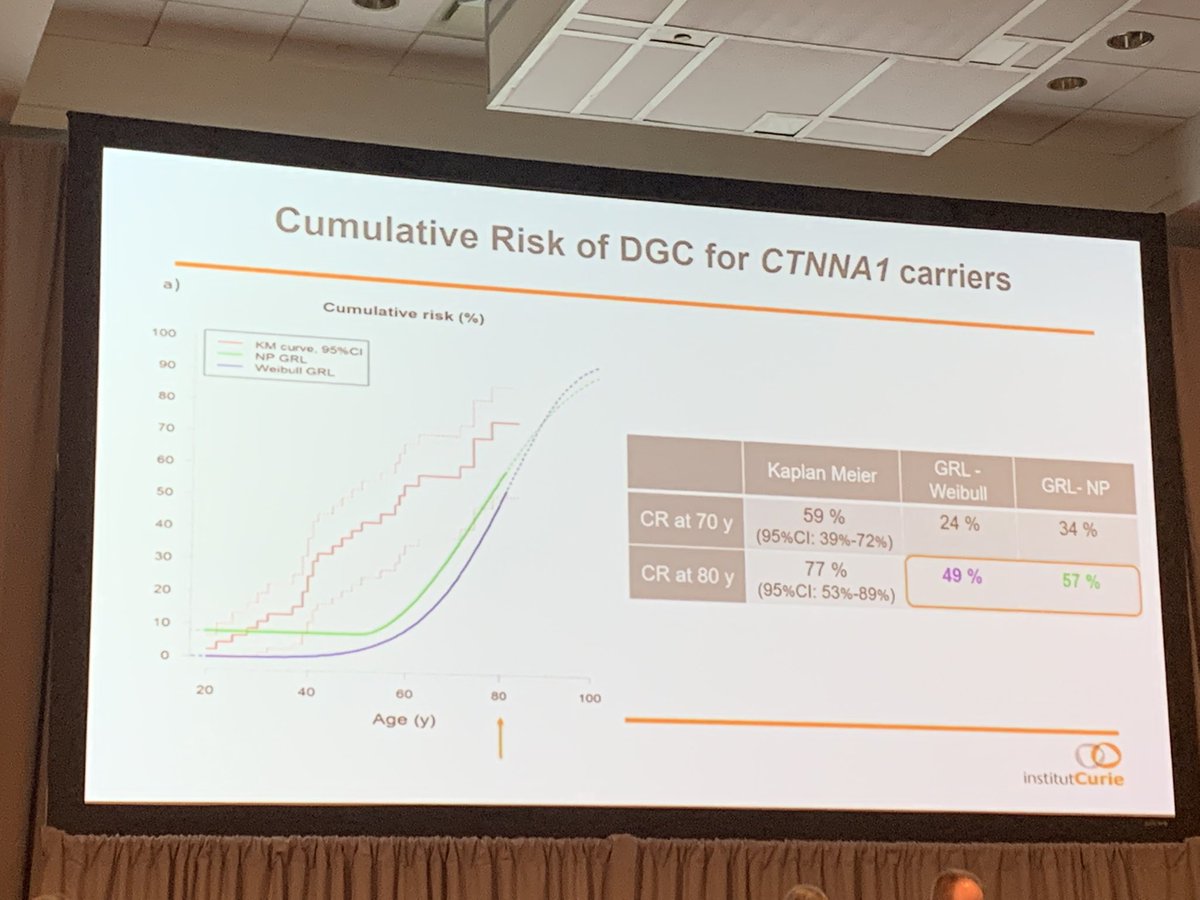
Much needed initial CTNNA1 penetrance estimates! As illustrated by CDH1, these are subject to ascertainment bias and likely lower and presented here. but how much lower? What is needed in the US to conclude that CTNNA1 is disease causing? #insight2022
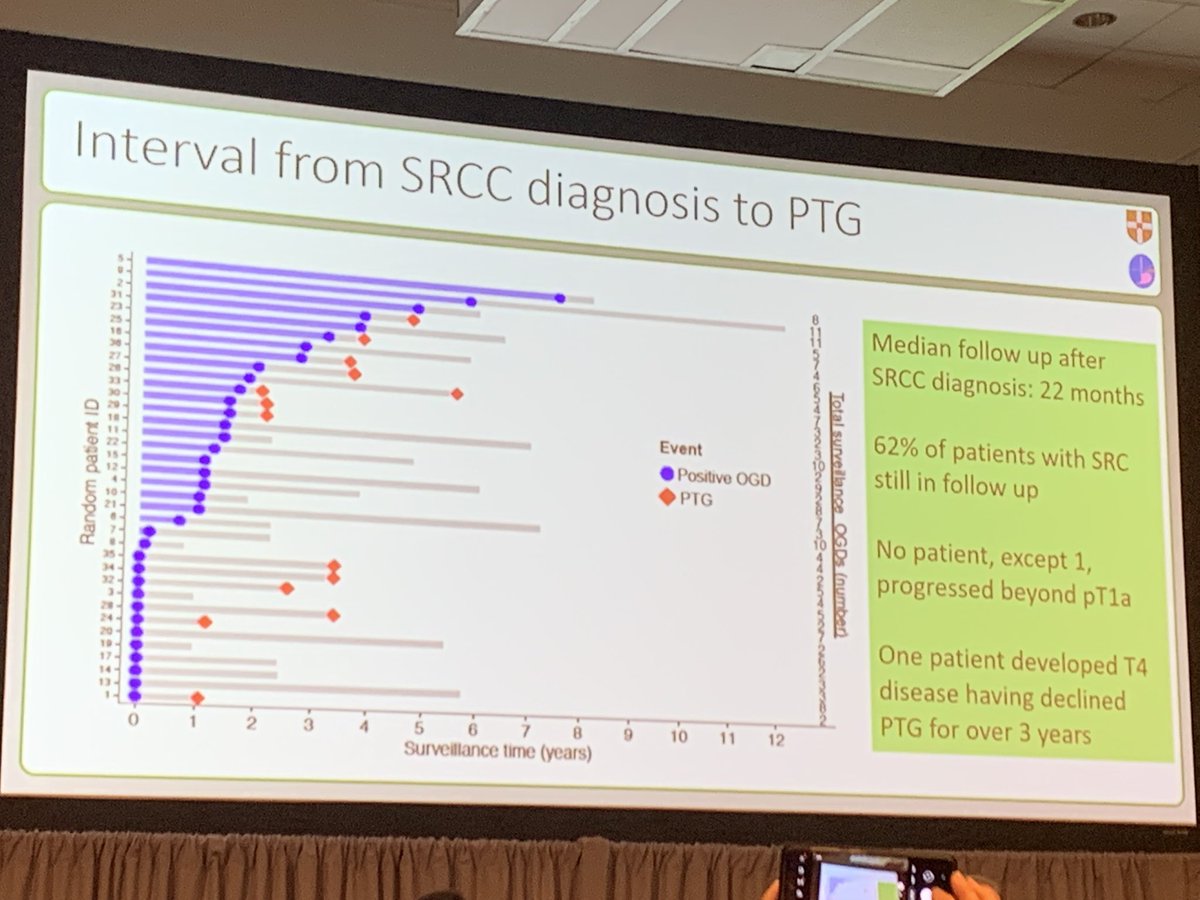
Role of EGD for patients with germline CDH1 pathogenic variants? One patient progressed beyond pT1a but declined PTG despite concerns identified via endoscopy. #insight2022@JeremyLDavisMD@gracefulDNA
@HHampel1 POLE is a good size gene (49 exons, 2287 codons) so VUS aren’t uncommon; however, missense variants within the exonuclease domain with good segregation data warranting a pathogenic classification via ACMG criteria are quite rare. I don’t know of any published gen pop estimates.
@EmilyFassi @chicagogenetics @AlexisCarere @SarahKaliaGC It doesn’t completely surprise me knowing what our CDH1 panel based probands/families look like and how few meet established IGCLC criteria. Check out Clark we al. 2020: 12% probands had DGC and 21% reported a family history of gastric cancer. We still have a lot to learn.
While these new estimates are helpful, we must remind patients that we still are not able to give individualized estimates of cancer risk for #CDH1. This is why research matters @NIH. @NoStomach4Cancr@GoWithoutYoGut
2 important changes to the 2019 USPSTF updated BRCA1/2 screening recommendation:1) Inclusion of women with previous breast cancer or ovarian cancer who are considered cancer free 2. Explicit inclusion of ancestry as a risk factor https://t.co/03ySLsB4Ky
@ElisabethMKing@BeetsWhoTweets My gut is telling me that family history will influence perceived risk. The lifetime risk for gastric cancer was found to be different based on the number of reported gastric cancers: 47-64% with 3 or more & 24-27% with 2 or fewer. 20% report breast cancer but no gastric cancer.
@AForman_CGC@HHampel1@BeetsWhoTweets@GeneDx I couldn't agree more @AForman@HHampel1@BeetsWhoTweets. Moslim et al. 2018 and Jacobs et al. 2019 showed that signet ring cells are often present even in those without a family history. Research regarding disease progression and DGC screening techniques are a must!
Excited to share a new publication from our team here @GeneDx looking at CDH1 penetrance. Lifetime risk for gastric cancer by age 80 is lower than previously reported: 42% for men and 33% for women. 20% of families report a history of breast cancer but no gastric cancer.
Read @GeneDx collaboration with the University of Washington published today in @JAMAOnc https://t.co/WQP8dIzSu3. CDH1 lifetime gastric risks are lower than previously described: 42% in men and 33% in women. #HDGC#CDH1#gastriccancer#GeneDx@UWMedicine
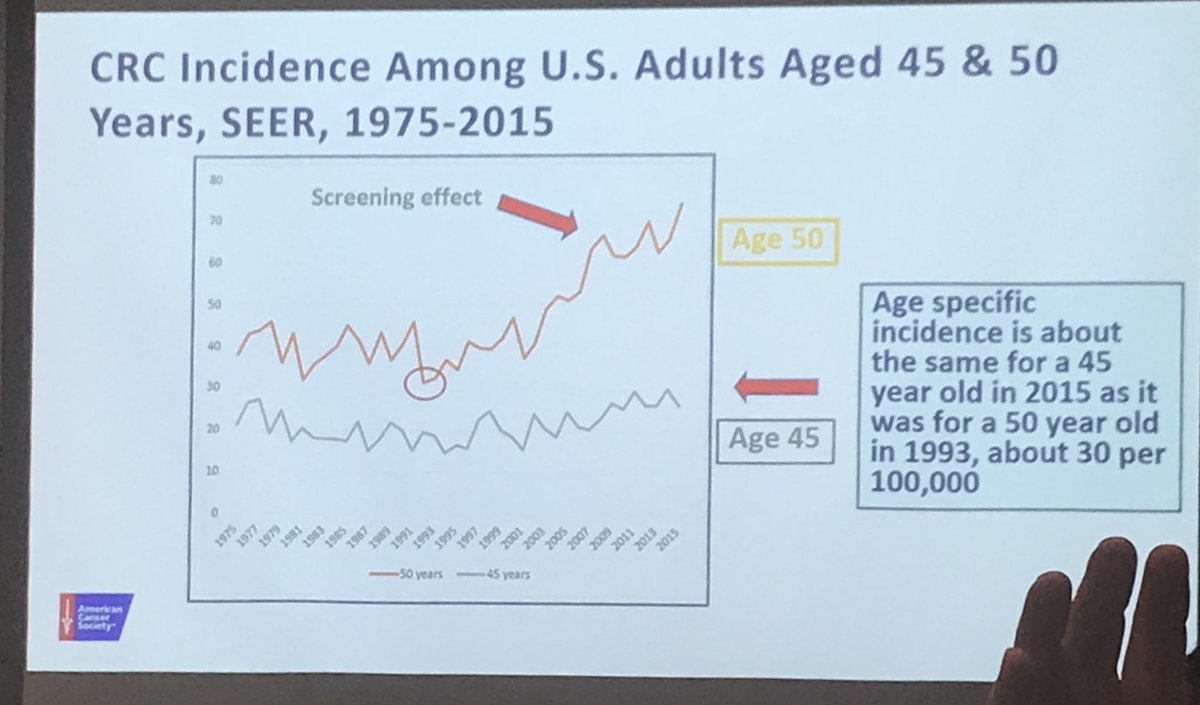
Heard the justification for the ACS moving the starting age for colorectal cancer screening from 50 to 45 yesterday. Bottom line: the incidence of colorectal cancer in 45 year olds in 2015 is the same as it was for 50 year olds back in 1993.
@HHampel1 @DocStanich Additionally, yes, many of these 11 papers were focused on MLH1 and MSH2 so as @HHampel1 suggests looking at MMR deficiency in breast tumors from women with MSH6 and PMS2 pathogenic variants could be helpful. As for the need for a prospective study I couldn't agree more. #CGAjc
@HHampel1 @DocStanich Some numbers to back up @HHampel1. My review of 11 different papers found that MMR deficiency is more common in breast tumors from women with LS (MSI, 53% [32/60]; MMR IHC, 49% [52/106]) than in sporadic breast tumors (MSI, 0.4% [1/270]; MMR IHC, 1.0% [4/365]).
@CGAIGC Thanks everyone for you interest in the paper and the great discussion. @GeneDx looks forward to continuing to contribute to the understanding of hereditary gastrointestinal cancer syndromes. #CGAjc@CGAIGC
@swatigp @eve_karloski @swatigp @eve_karloski #CGAjc The decision to include on smaller breast specific panels would depend on replications of these risks in further studies. We do currently include all MMR genes on the @GeneDx Breast/Ovarian cancer panel.