BlueHat is where the security research community and @Microsoft security pros come together as peers, to connect, share and learn. Run by @MSFTSecResponse
Attackers move fast. Getting protection in place can take longer than identifying the vulnerability.
In his BlueHat Asia 2026 keynote, “Accelerated response by design,” Tom Gallagher (@secbughunter), VP of Engineering at MSRC, discusses that gap. AI and automation can help teams assess issues faster, but building and deploying a fix still takes time. Rapid mitigations can help reduce exposure in the meantime.
Watch the keynote: https://t.co/NzcmtcAI3w
View the slides: https://t.co/PduDPVeMYP
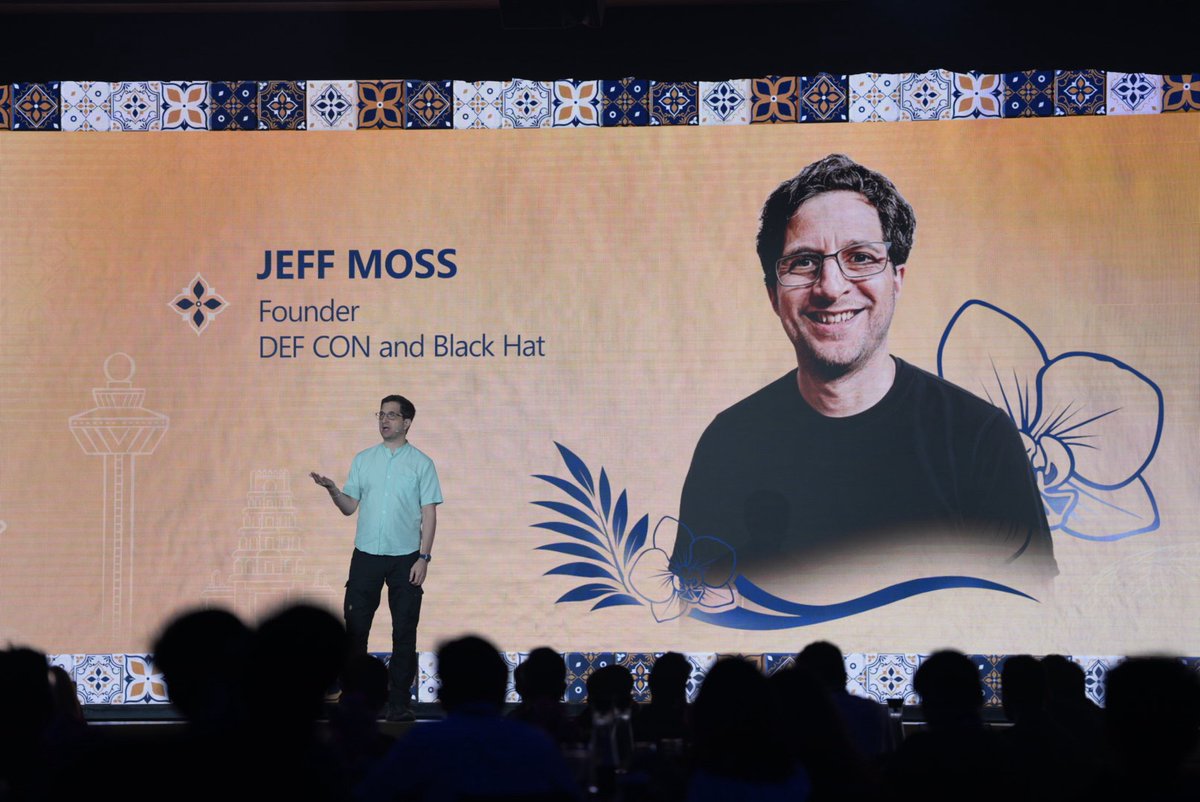
What can a smashed display case teach a security expert? For Jeff Moss, founder of DEF CON and Black Hat, it was a reminder that protecting people matters more than hardening every barrier.
In his BlueHat Asia opening remarks, Jeff shares lessons from an unlikely path through the hacker community, DEF CON, Black Hat, and beyond. He talks about learning from failure, staying curious, and why strong communities matter when technology is changing fast.
Watch Jeff’s BlueHat Asia opening remarks: https://t.co/KeZAkjDB7t
How do you know an AI-powered security tool has improved if the same test can produce different results?
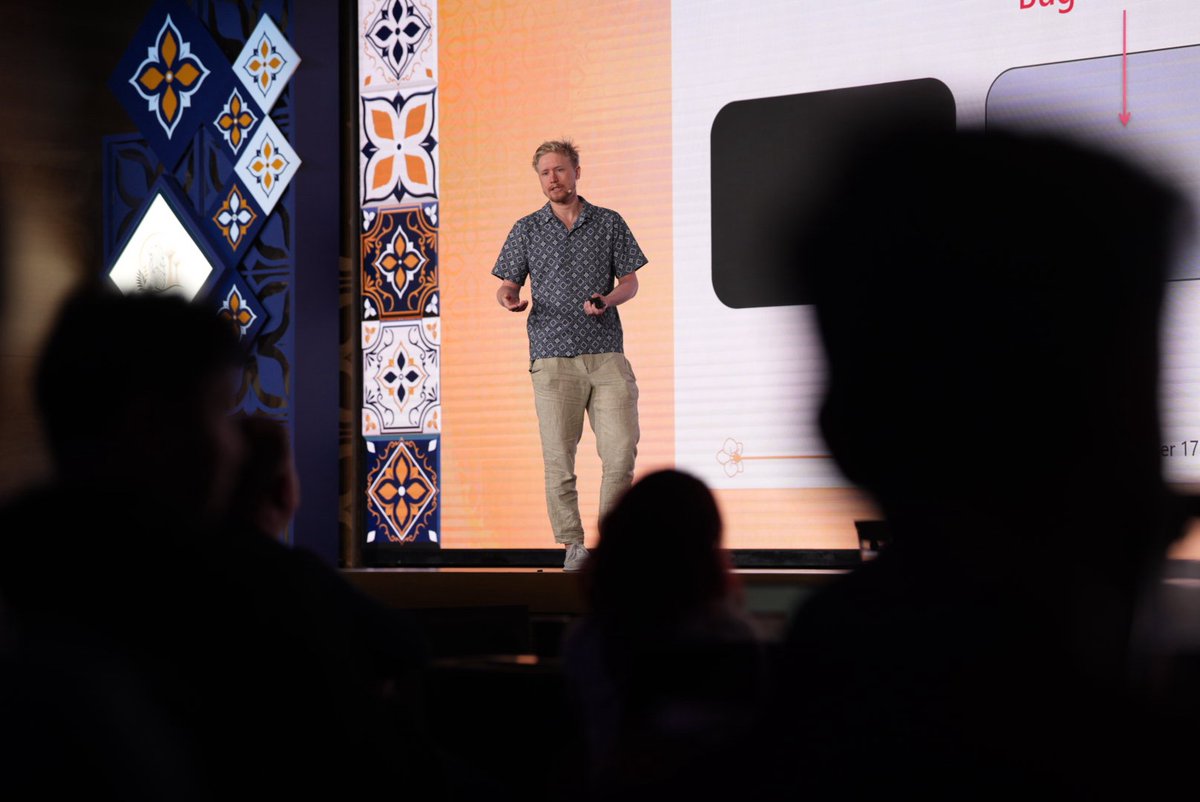
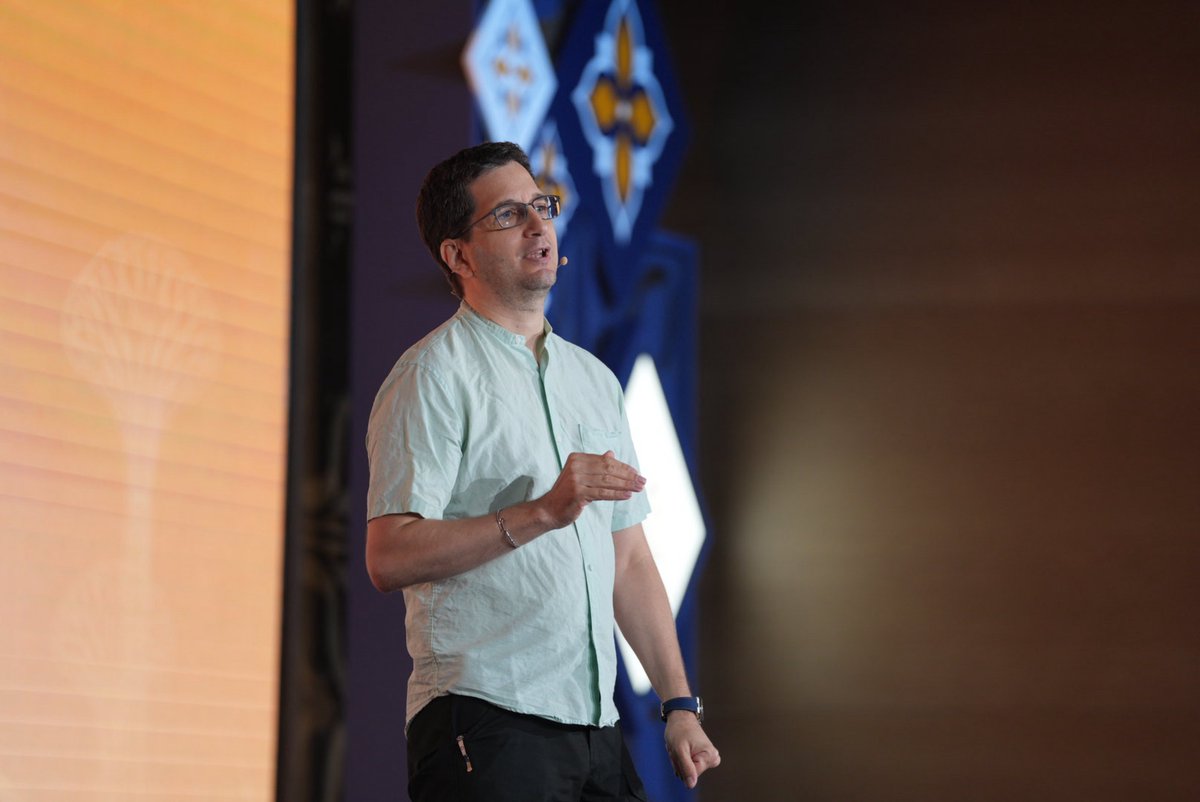
In his BlueHat Asia 2026 keynote, @halvarflake discusses what LLMs’ variability means for software engineering and security. He looks at why traditional testing can fall short, what LLM-based code review has in common with fuzzing, and why meaningful experiments matter.
Watch the keynote: https://t.co/V0rt2mdTIE
For more than three years, Artem Shymshyrian (@Xtytia0922) pursued bug bounties without receiving one. Instead of giving up, he made a promise to himself: keep going until he earned his first bounty, even if it was only one dollar.
That persistence eventually helped Artem become a 2026 Microsoft Most Valuable Security Researcher (MVR) and qualify for the Microsoft Zero Day Quest live hacking event.
In our latest researcher spotlight, Artem shares the setbacks, lessons, and determination that shaped his path into security research: https://t.co/TQVF5z19KD
We're excited to partner again with Wiz for https://t.co/5jCjs29FyX 2026 at Black Hat Europe!
This annual open-source cloud hacking competition brings together researchers from around the world to identify critical vulnerabilities and make the cloud a safer place. 🤝
Put your skills to the test. Register your exploit now: https://t.co/aTG3cWVCR2
Friday marked the final day of BlueHat Asia, with security professionals from across the community coming together to share research and exchange ideas.
The day began with opening remarks from Jeff Moss (Founder, DEF CON & Black Hat), followed by a keynote from Tom Gallagher (VP of Engineering, MSRC), focused on practical security improvements, tactical mitigations, and raising the cost for attackers.
From technical sessions to conversations in the Security Villages, Day 2 highlighted the value of collaboration in helping protect customers and strengthen security across the ecosystem.
This video features highlights from the keynote by Tom Gallagher (@secbughunter), along with perspectives from Cameron Vincent (@SecretlyHidden1), Senior Security Researcher, MSRC, and Asem Eleraky @Melotover), Senior Penetration Tester, PayMob.
That’s a wrap on BlueHat Asia.
Over the past two days, security researchers, defenders, engineers, and security leaders came together to share new research, challenge assumptions, and strengthen the security community. Thank you to everyone who made this event possible, including our attendees, presenters, Microsoft teams, and Microsoft Most Valuable Researchers (MVRs) who traveled from around the world to be part of the conversation.
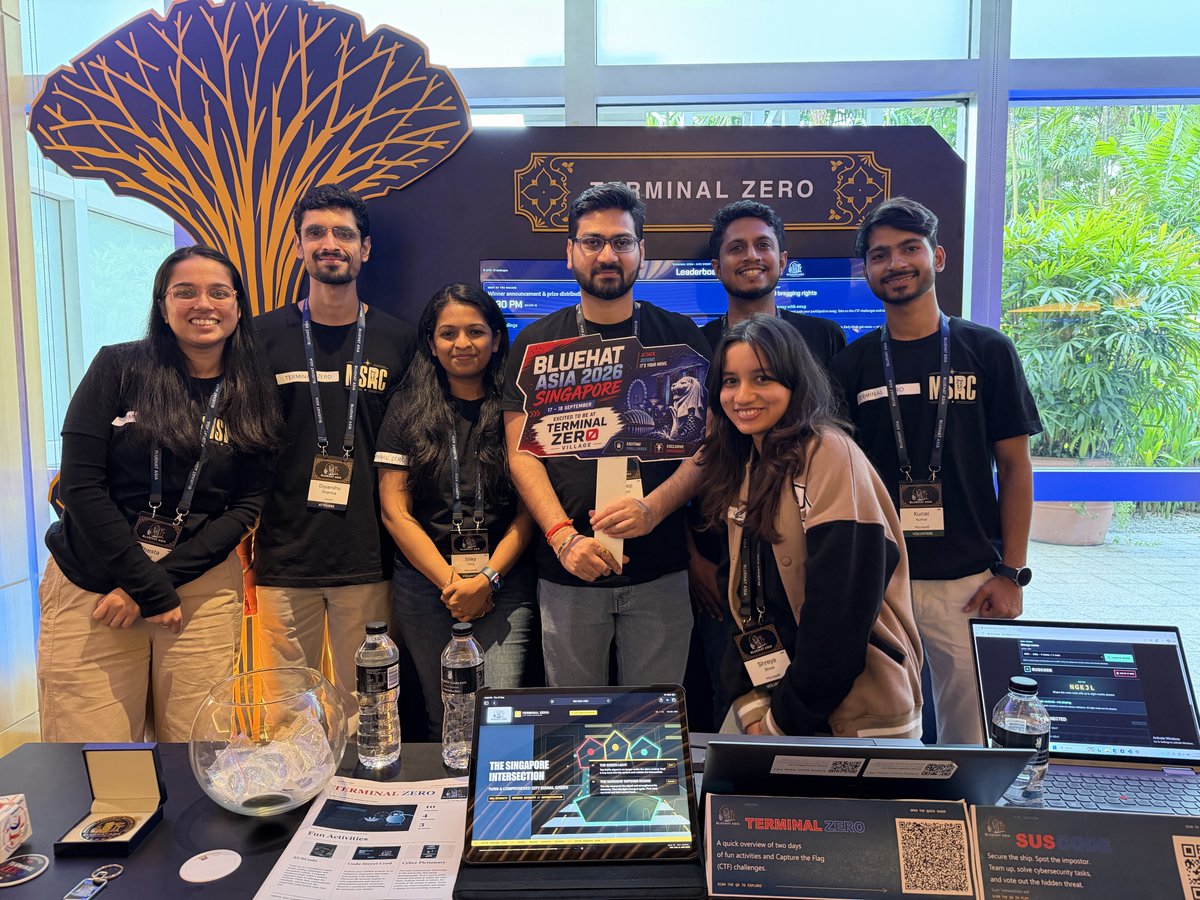
And a special thank you to our Security Villages for creating hands-on opportunities to learn, connect, and explore new skills throughout the event.
We’re grateful to this incredible community and can’t wait to see you at the next BlueHat.
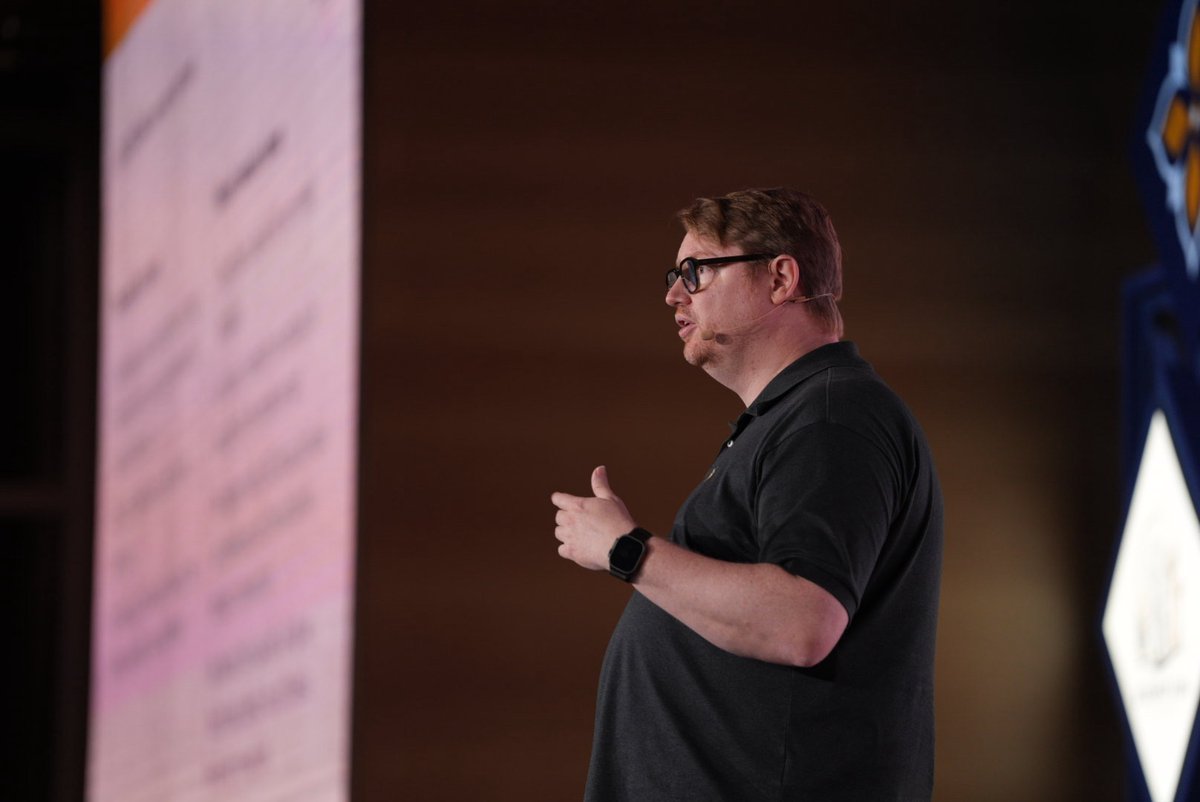
At BlueHat Asia, Stefan Esser, Founder and Research Director at Calif, took attendees inside the evolving world of AI-assisted vulnerability research. His talk explored how frontier AI models are helping researchers uncover and analyze vulnerabilities at a scale that wasn't possible just a few years ago, from patch diffing and attack surface mapping to exploit development.
But Stefan's key message wasn't that AI is replacing researchers. Modern platforms are protected by layers of mitigations, making truly exploitable vulnerabilities increasingly rare. Finding a bug may be easier, but finding the "unicorn" bugs that can survive those defenses and be chained into real-world attacks remains a uniquely human challenge. AI can accelerate the work, but expertise, judgment, and deep technical knowledge are still what turn findings into breakthroughs.
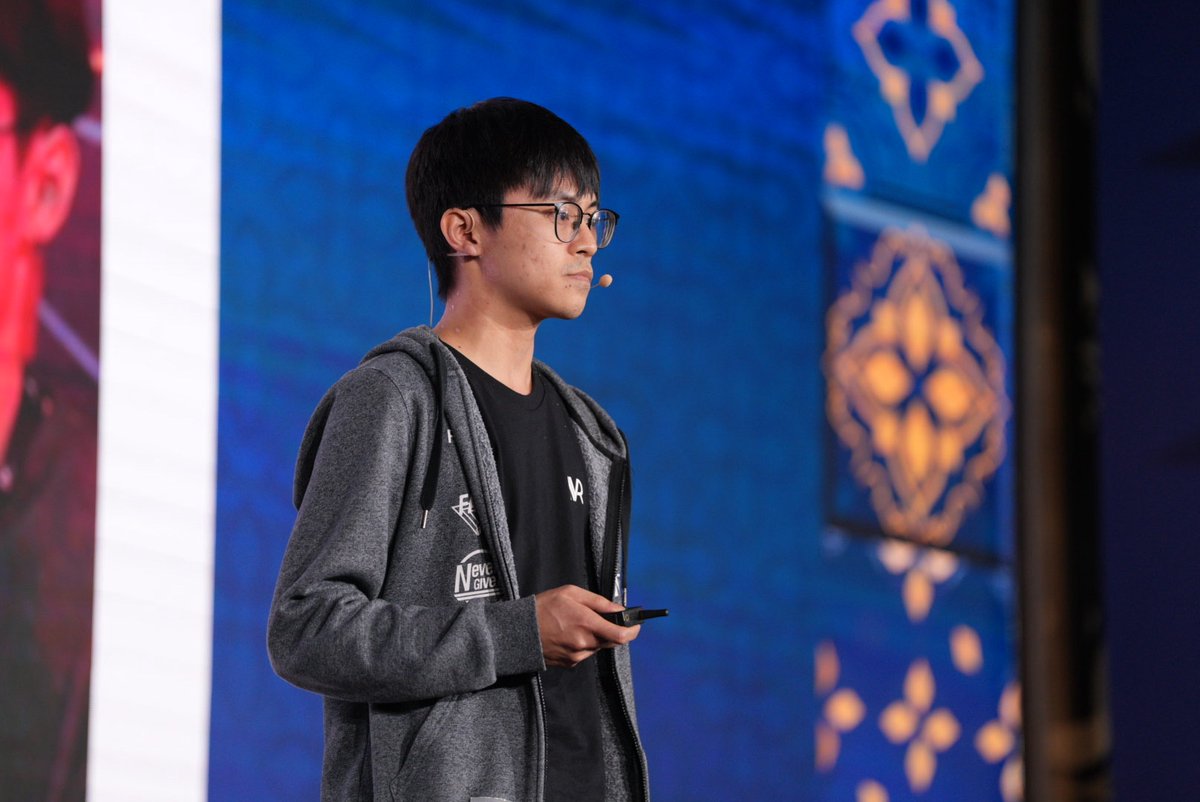
At BlueHat Asia, Chumy Tsai (@rm_rf_chumy) and Katherine Chen shared how they chained multiple SharePoint vulnerabilities into a full pre-authentication remote code execution (RCE) exploit. The research began with a JWT authentication bypass that enabled impersonation of arbitrary SharePoint users, including administrators, by abusing flaws in token validation and identity mapping.
The second half of the talk focused on Flow2Shell (CVE-2026-47298), a SharePoint Workflow vulnerability. The researchers showed how workflows are built from XOML and rule files, then walked through four separate workflow validation mechanisms intended to prevent abuse. Through a series of bypasses involving type validation, rule validation, runtime checks, and workflow caching behavior, they were able to evade SharePoint's protections and execute malicious code on a fully patched server.
One of the most interesting findings involved SharePoint's workflow cache. A malicious workflow assembly could be loaded into memory before validation errors were surfaced. By triggering the workflow a second time, SharePoint would reuse the cached assembly and skip portions of the validation pipeline, ultimately leading to code execution.
Beyond the technical exploit chain, the talk highlighted the value of detailed vulnerability research. The complete proof-of-concept and root cause analysis enabled MSRC to quickly assess severity, identify additional variants, begin remediation, and better protect customers. As the presenters noted, impactful security research is not just about finding a bug, but proving impact, understanding root causes, and helping defenders address entire classes of vulnerabilities.
What happens when an AI assistant inherits the privileges of the user it's helping?
At BlueHat Asia, Johann Rehberger (@wunderwuzzi23) discussed how SQL Copilot in SQL Server Management Studio can become a powerful target when connected to highly privileged accounts. Through his demos, he showed how "read-only" assumptions can break down, how prompt injection techniques can influence AI behavior, and why security boundaries matter just as much as model instructions.
The talk offered a deep dive into AI security, database permissions, and the unintended risks that emerge when assistants are granted access to sensitive environments. Johann Rehberger's key message was simple: trust, permissions, and execution context matter.
How do cross-tenant vulnerabilities happen in complex cloud environments?
At BlueHat Asia, Haakon Wik Gulbrandsrud walked through his research into Azure Logic Apps and API connections, showing how a single architectural root cause led to multiple cross-tenant security issues. Through a series of real-world examples, he demonstrated how understanding platform internals, not just hunting for bugs, can uncover high-impact vulnerabilities hiding in plain sight.
The talk offered a fascinating look at the research process itself: tracing connections, mapping architecture, and asking what could go wrong at every step until the answers lead somewhere unexpected.
At BlueHat Asia, Salim Chawro, Corporate Vice President of Microsoft Cloud Security, and Zeeshan Syed, Vice President of Microsoft Cloud Security, shared how Microsoft is rethinking proactive defense as cloud environments continue to grow in size and complexity. They argued that traditional point-in-time security reviews can no longer keep pace with services that are constantly changing and threat landscapes that are accelerating with AI.
The talk introduced Argus, Microsoft's agentic security assurance system, which brings together code, identities, configurations, dependencies, runtime signals, and architectural context to help teams identify control gaps, uncover root causes, model attack paths, and prioritize remediation. Rather than focusing on individual vulnerabilities, the approach helps teams understand how risks connect across an entire service and address broader classes of security issues.
The speakers also discussed how defenders have a unique advantage in the AI era: access to the full context of their environments. By combining that context with agentic workflows, Microsoft is working to deliver continuous security assurance at a scale that would be impossible through manual review alone. With more than 90% of Argus findings confirmed as genuine security issues, the system is helping teams conduct deeper reviews in hours instead of weeks.
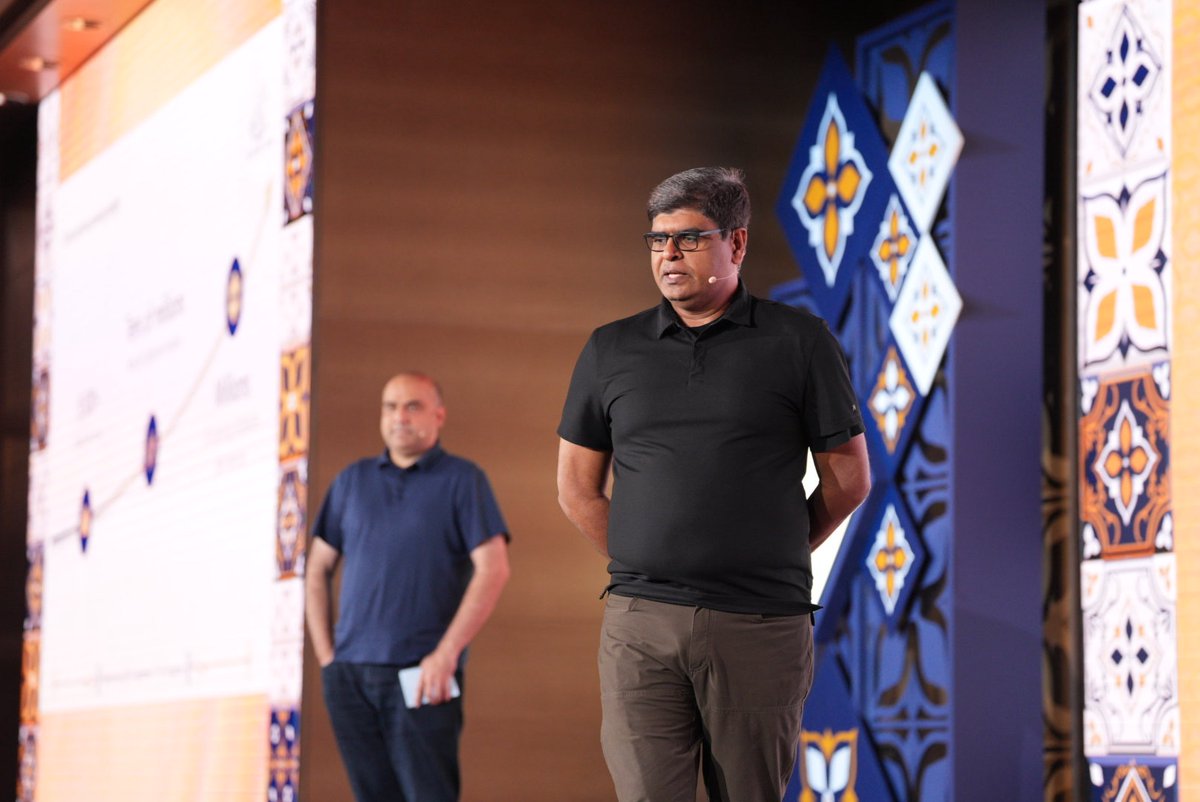
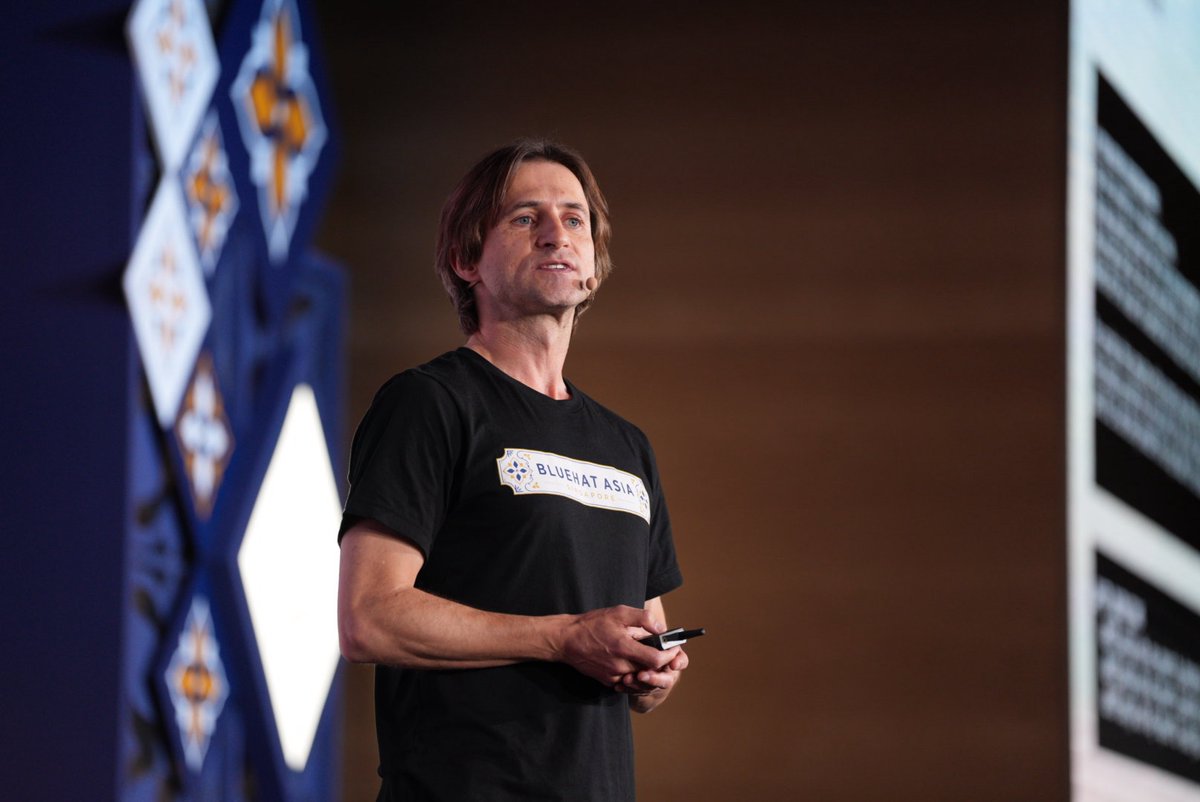
Tom Gallagher (@secbughunter), VP of Engineering at MSRC, opened Day 2 of BlueHat Asia with his keynote, Accelerated Response by Design, examining a challenge many security teams are already facing: AI is making it easier and faster to find vulnerabilities, which means defenders need to be ready to respond at a completely different pace. As the number of reported vulnerabilities continues to grow, Tom argued that finding issues is only part of the equation. The bigger challenge is reducing risk before attackers have a chance to take advantage of it.
Throughout the keynote, Tom focused on the idea of tactical mitigation: taking action to protect customers quickly, even when a full fix isn't ready yet. Using examples from recent incidents, including CVE-2026-21509 and CVE-2026-42897, he showed how many attacks depend on a chain of events going exactly right. Break one link in that chain, and the attack often falls apart. Sometimes that can be as simple as a configuration change, blocking a specific action, or using existing security controls to make a vulnerable path unreachable while engineers work on a long-term fix.
Rather than waiting for the perfect solution, Tom encouraged attendees to think about what they can do immediately to reduce exposure and disrupt attack paths. His challenge to the audience was simple: understand how attacks work against your systems and identify the one piece you can take away from the attacker.
Tom closed by returning to a theme that ran throughout the talk: attackers don't wait, and defenders can't afford to wait either. The goal is to mitigate first, reduce risk quickly, and then fast-follow with the full fix
Day 2 of BlueHat Asia opened with remarks from Jeff Moss, founder of DEF CON and Black Hat, who reflected on the lessons he's learned from building security communities and navigating decades of technological change. Drawing on experiences spanning the hacker community, government advisory roles, and industry leadership, Jeff explored what remains constant even as technology evolves: people, curiosity, and the power of community.
Jeff described the hacking community as his first real community, a place where people learned from one another and built lasting relationships. That experience shaped one of the central themes of his talk: no one can know everything. Success depends on having trusted people you can turn to for advice, feedback, and new perspectives. As AI becomes increasingly capable, Jeff argued that these human connections remain as important as ever.
He also reflected on what distinguishes hacking from information security. Information security can be about sharpening tools and refining techniques, but hacking is fundamentally about learning how to think. It requires experimentation, puzzle solving, and a willingness to ask "what if?" Failure is part of the process, and many of the best ideas emerge from people willing to experiment and learn.
Another key lesson was communication. People often fear what they don't understand, and Jeff pointed to AI as a modern example. Rather than responding to fear with more fear, he encouraged the audience to focus on education and clear communication. He also noted that it's impossible to please everyone all the time. Whether building products, communities, or security programs, leaders must understand who they are trying to serve and use that audience as their north star.
Looking ahead, Jeff offered a prediction shaped by decades of experience: all problems at scale eventually become moderation problems. From spam and DDoS attacks to social networks, AI systems, and autonomous agents, successful communities depend on rules, governance, and the ability to manage bad behavior.
At the same time, Jeff described this as a golden age for both offense and defense. AI is creating opportunities to automate routine tasks, allowing researchers and defenders to spend more time on creative work and innovation. The goal isn't replacing human creativity, but creating more opportunities to apply it.
He closed by returning to the importance of community. Jeff noted that stronger communities recover faster during times of disruption and change. As AI and other technologies reshape the industry, communities like BlueHat will become even more important places to learn, share ideas, build trust, and navigate what's next.
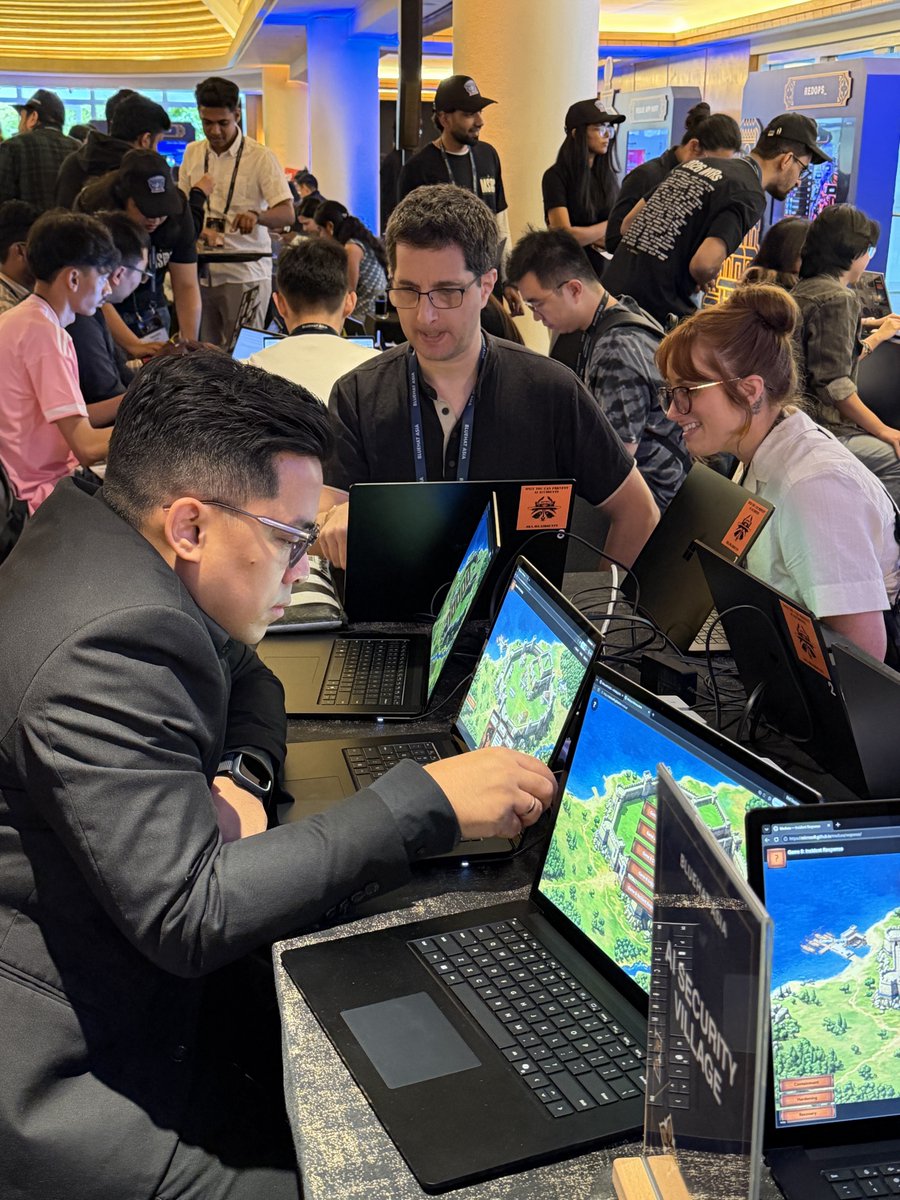
Day 1 of BlueHat Asia featured technical talks, new research, and hands-on experiences in the Security Villages, bringing together researchers, defenders, and industry leaders from across the security community.
We're getting ready to kick off Day 2 with opening remarks from Jeff Moss, followed by a keynote from Tom Gallagher (@secbughunter). Looking forward to another day of learning, collaboration, and conversations that help shape the future of security.
Sometimes the most interesting vulnerabilities are not caused by a single bug, but by assumptions that quietly break over time.
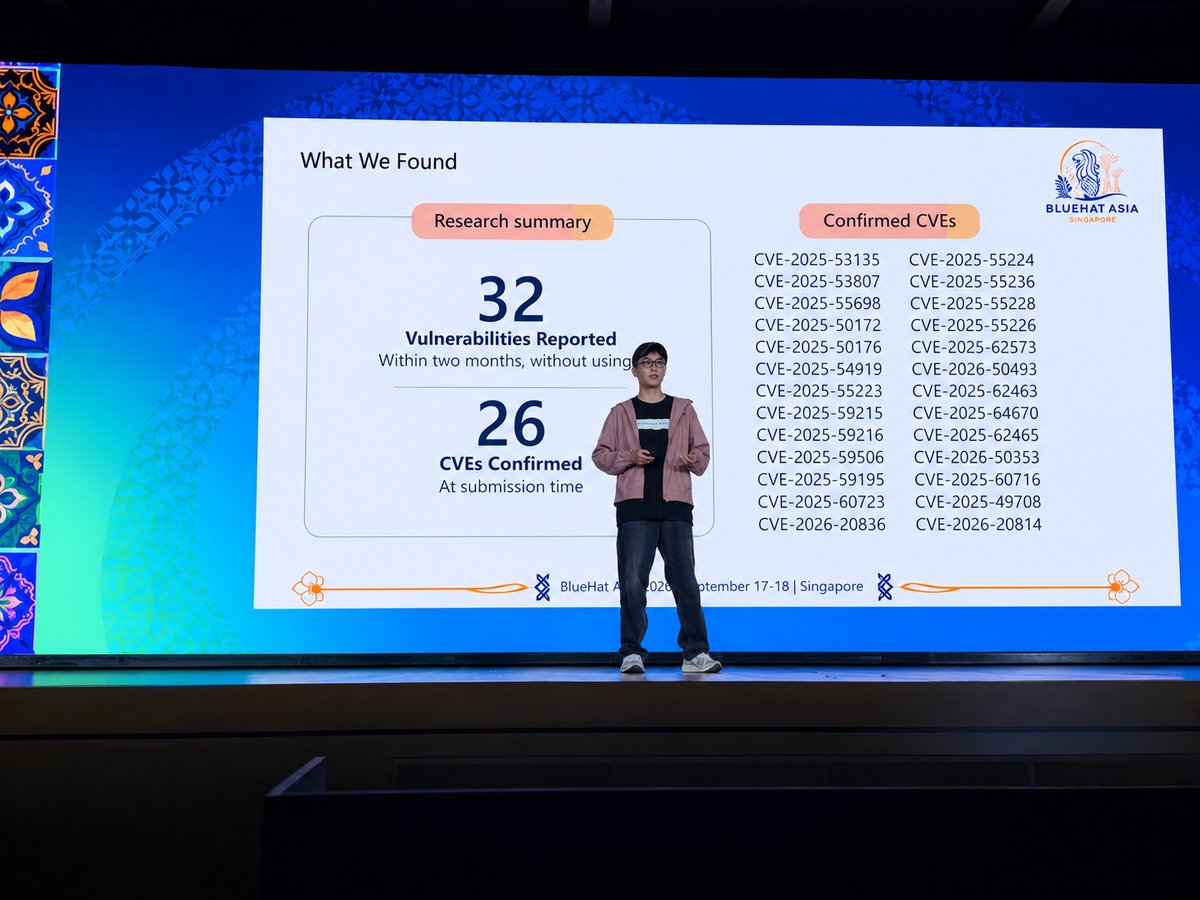
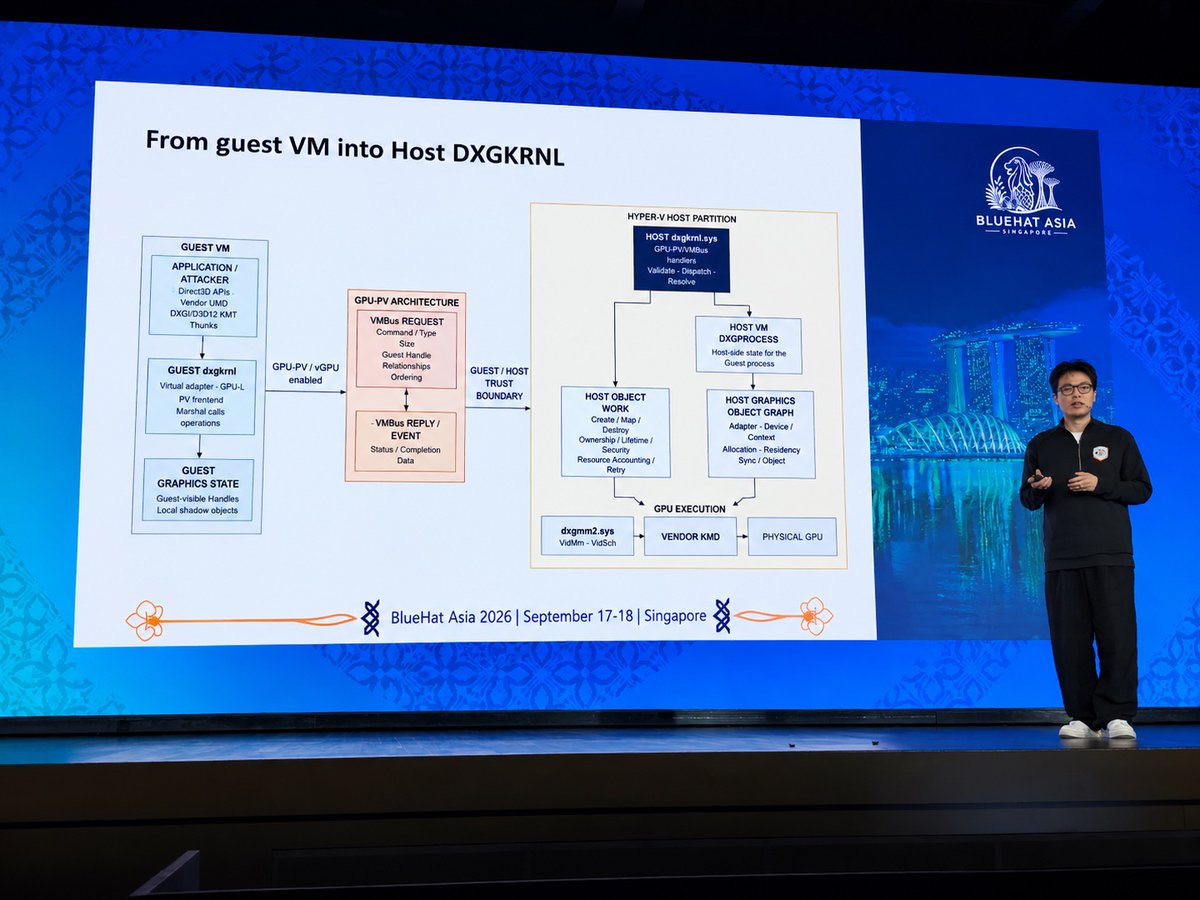
At BlueHat Asia, Microsoft MVRs Zhu Qing and b2ahex (@b2ahex) shared their research into the Windows DirectX kernel, uncovering dozens of vulnerabilities spanning local privilege escalation, guest-to-host attack paths in Hyper-V, information disclosure, and denial-of-service scenarios. Their work resulted in 32 reported vulnerabilities and 26 confirmed CVEs at the time of submission.
From user-mode interactions with dxgkrnl to host-side processing in GPU-PV environments, the researchers demonstrated how subtle violations of security assumptions can create powerful exploitation opportunities.
Beyond the vulnerability findings themselves, the talk offered a practical framework for security research: trace every path from attacker-controlled input to the final privileged action, and verify that security guarantees still hold at each step. It was a compelling look at how deep technical analysis can uncover entire classes of vulnerabilities across complex systems.