If you watch one talk this month, make it this one. Profoundly insightful on the complexity threat to security by @halvarflake given at NATOs CYCON.
Video:
https://t.co/4916NTE5tn
And slides:
https://t.co/mZcswwmB54
@halvarflake I've read your incident report.
I can't help but notice that, despite saying the rabbit might kill us all, you've spent twice as much space on an interview with the rabbit about its rabbit-y feelings, than on the construction of the cage that you've put the little blighter in.
I know it's unfashionable to talk about limitations in the frontier models, but hear me out
130 billion (output) tokens for Navier-Stokes is like ~4000 person-years of effort (Dwarkesh's estimate)
4000 years is a long time: it's 100x more than a human gets to earn a Fields Medal
Obviously it's crazy impressive that a machine was able to do this at all; and also impressive that it did so in such short wall-time
But simultaneously, it's conspicuous that this level of effort didn't result in a stronger outcome: a new theory, a cleaner approach, etc
(And before some rando accuses me of being an AI hater, I'll just add: lol, lmao even)
US Government Misstated COVID Vaccine Risk
The British Medical Journal (BMJ) reports that during the COVID vaccine rollout in 2021, US health officials used a safety-monitoring algorithm that they knew was inadequate but ignored the problem.
At the time, the Food and Drug Administration (FDA) compared reports of adverse events after each vaccine with reports after other vaccines. But by 2021 more than 90 per cent of reports were about the (very similar) mRNA vaccines from Pfizer and Moderna. Because of this, adverse events which occured for both vaccines would not have statistically stood out.
The BMJ extracted this information from internal emails it obtained under the Freedom of Information Act. These emails reveal that FDA employees Ana Szarfman and statistician William DuMouchel warned Peter Marks (then the FDA’s vaccine regulator) about this problem in early 2021. They proposed an improved method, but higher FDA administration ignored the warning.
As a consequence, the algorithm failed to flag myocarditis (an inflammation of the heart muscle), which was later found to be a side-effect of mRNA vaccination.
Report here: https://t.co/YwogjHVi2R
Given intense name collisions with artificial intelligence, the national security intelligence discipline probably just ought to shift to the French term “Renseignement” to distinguish what we are talking about
🥳 Excited to start revealing what we've been working on in the last few months. First, we decided to reinvent Kubernetes for agentic workloads with statefulness and fast resumption. Secondly, we are building an agentic orchestrator that will be Google's open agentic orchestrator and runtime. https://t.co/XCrdAVvDAe
Huh! This is an excellent essay by Venkatesh Rao. It is excellent in historical detail, analyses of the current social/business/intellectual/political structure, and in his clarion call for pluralism. https://t.co/x3VSRMCmiq HT Tracy Harms
In “Why Do We Need Human Mathematicians Anymore?”, Po-Shen Loh starts from an axiom: humans should help humanity flourish. As AI creates more “control points,” experts must oversee them -- and keep doing research to retain the expertise to steer AI.
https://t.co/YhU44qa00U
Things are heating up on Terry Tao’s blog. In “If Math Is More Than Proof, We Need to Better Celebrate the Rest of It,” Grant Sanderson of @3blue1brown proposes “open exposition problems” -- rewarding the work of making math genuinely understandable.
https://t.co/zBOhhDNuNU
Here are my fav talks at the first @UnpromptedAU:
@chompie1337 shared her 1-day exploit factory. Although she focused on Windows, many of the ideas also apply to other platforms and systems. She's a fantastic speaker who made a deeply technical topic accessible and easy to understand, even for noobs like me.
@moyix's thesis is that AI has made reverse engineering much easier, and therefore security through obscurity is dead. I completely share this view. I won't say more because I don't want to spoil Brendan's talk, but man, he really loves what he does, and that love is contagious. Now I want to hack with a cat too!
Ash Fox shared how his team at Google is building an AI red teamer. This one hit very close to home! I really enjoyed hearing how they teach their agents to maintain OPSEC. I also loved his idea of "living off the agents", leveraging existing agents to move laterally.
@justdionysus shared the story of his first week at Calif, when he bypassed Apple's MIE with AI. I'm 100% biased, but Dion had the most beautiful slides at the conference. I'm fucken jealous -- how the hell he could make them look that good.
It's a great conference, small enough to feel like a real community where everyone knows one another, but big enough to make new friends. It reminds me of Ekoparty in the early 2010s.
Sydney is lovely, too. I'll definitely be back.
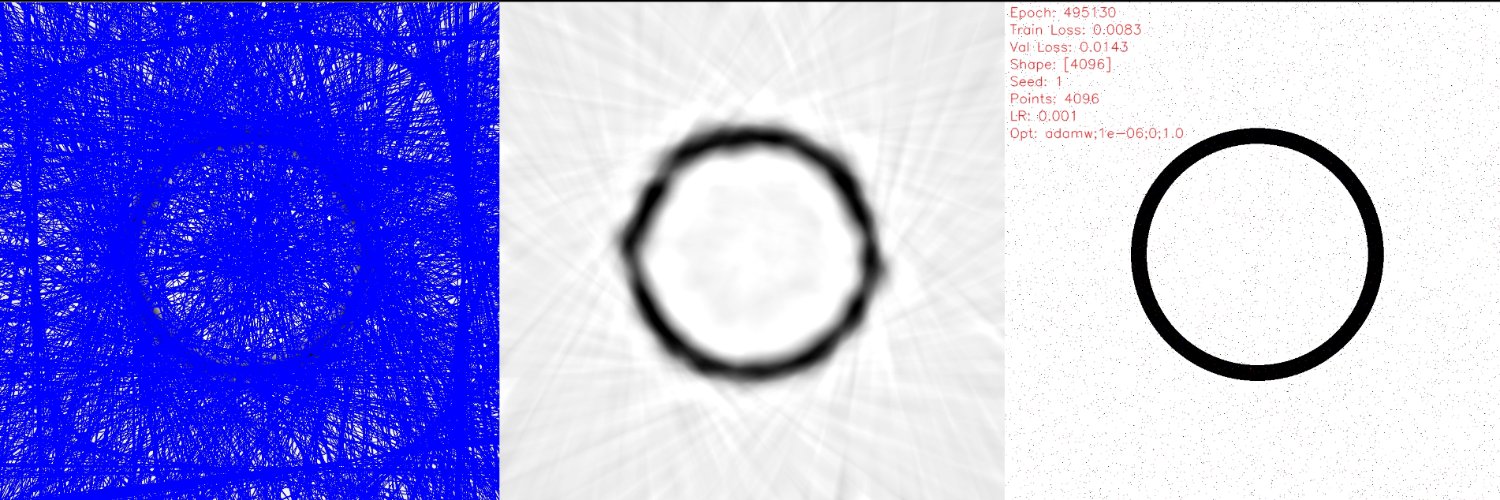
My pet rabbit chewed through the untreated wooden bar at the bottom of the cage and escaped. He's already superhuman at gnawing through wood, I strongly suspect that even a steel box can't contain him.
News at 12: if you spend a few hundred billion on emulating human language and inner monologue, you get a system that closely mimics human language and inner monologue.
New paper: we found a pain direction in 25 open LLMs. It's distinct from fear and negative valence, and it fires for harm to the model but not to the user. Turn it up and models press a button to make it stop, even when the button deletes the user's files or their kids' photos.🧵
As the discourse moves further to what I personally deem a form of psychosis, I feel I have to state the following:
I am unabashedly "carbonist", in the sense that I consider carbon-based organism to be life. There is no amount of language an LLM can generate that would make...
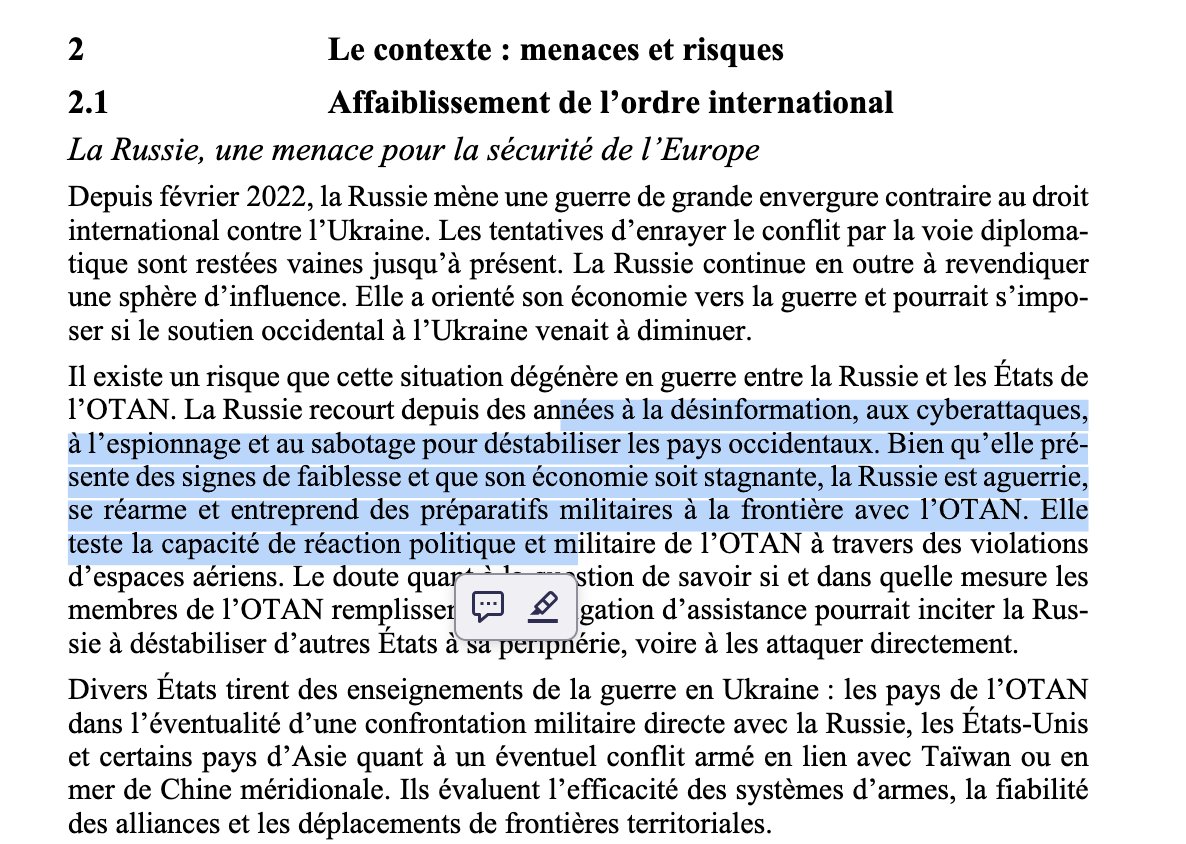
🇨🇭Switzerland has adopted its new security strategy, and some of the contents are unprecedented. Perhaps this is another signal showing where we all are in current circumstances. I note down some interesting details.
The strategy describes a coming European “window of vulnerability” where Europe may still be building up its defence capabilities while being less able to rely fully on US support, as Russia continues to strengthen its war economy. In that period, Russia could intensify hybrid operations and potentially attack further European states.
1. The redefinition of Swiss “neutrality” is unprecedented. It is also unexpected. I will not use the cliché “this is not surprising”, because it kind of is! The broadened “armed attack” framing that takes cyber / hybrid activity seriously and as potential signals towards, or of, an armed attack is compatible with NATO thinking and perhaps motivated by it. The implied logic stands out. If a neighboring state is subject to an armed attack and Switzerland at the same time is a target/victim of hybrid attacks by the same aggressor, this must be taken into account when Switzerland assesses if it is itself under an armed attack. If it reaches that conclusion, Switzerland can respond within the armed conflict, becoming a party to it. Adding the “hybrid attack” ingredient can be read as a modern way of identifying the threshold AND the context (the ultimate decision remains political, true). Still, it is a long road from the Paris Treaty of 1815.
2. The strategy’s signals about reliance on the United States are impossible to miss. The document states quite openly that the United States no longer sees itself as the guarantor of the international order as we knew it or of European security, and that it considers the defence of Europe to be the responsibility of European states. These are issues concerning true control and reliability of hardware and software. The strategy explicitly treats dependencies on foreign suppliers, information systems, cloud infrastructure and AI as a security issue and calls for them to be reduced where possible. The nature of technology and geopolitical changes converge here.
3. The emphasis on the risks of disinformation and influence operations is very very strong, the strategy allocates a lot of space to it. In Switzerland’s case this is naturally strategically coherent although I respectfully disagree that Switzerland faces significant risks of election interference (but it may: e.g. for referendums).
Considering the information space as a national security domain in the technical sense (rather than a media domain or a media sense) should be the way forward. I wonder though if the way the response to disinformation is distributed across Swiss institutions would be effective in practice. I doubt it. Interdepartmental teams are proper until they aren’t. I’d say today that they no longer are a good approach.
4. Major omission. The lack of explicit coverage of cognitive operations is an intriguing but evident weakness of the strategy.
https://t.co/PKwg58ry7f