Rachel Worthington and I started a podcast promoting papers published in Forensic Update. 1st episode discusses sexual boundaries, dual harm in prisons and prison staff with neurodiversity.
@ForensicLets
@MartinSLewis Brilliant show - so helpful. You do so much for financial inclusion - thank you 🙏🏻 Have checked and have full allowance with 2 years more work. So reassuring as have never explored this before!
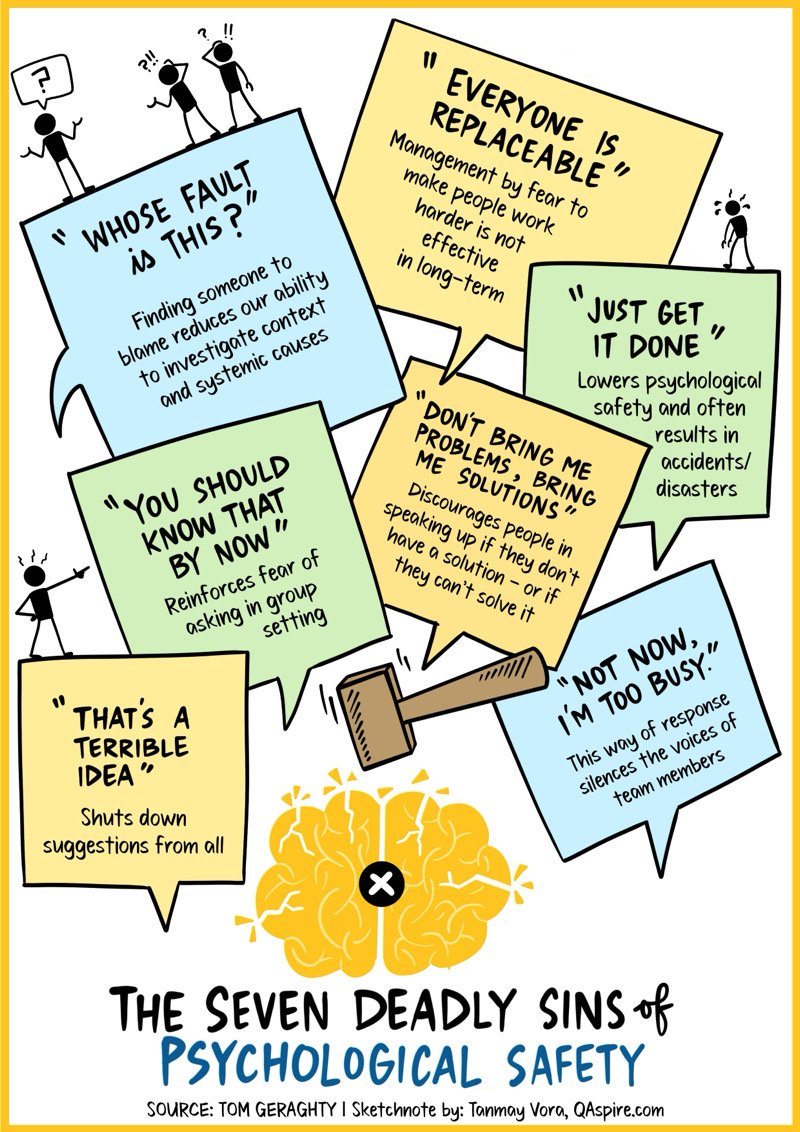
The language we use as leaders shapes workplace culture. It plays a critical role in psychological safety. Our words (& the way we communicate) can encourage the experimentation & risk-taking we want our teams to demonstrate for innovation & improvement. It can also stifle initiative. @tom_geraghty sets out "seven deadly sins of psychological safety" - the most common/damaging things leaders say that crush psychological safety in the workplace:
1) “That’s a terrible idea.”
2) “You should know that by now.”
3) “Whose fault is this?”
4)“Everyone is replaceable.”
5)“Don’t bring me problems, bring me solutions.”
6)“Just get it done.”
7) “Not now, I’m too busy.”
https://t.co/vvre3VOAY0.
@tnvora has translated them into a brilliant graphic: https://t.co/rU7QLzznIg.
Great project - proud to be part of this with Bethany Hills and our community of service users and staff at Rampton! It takes passion and one step towards action and we can keep on creating small changes in #culture - they accumulate over time to #transformation☺️🌈
🌈 During June and July, Rampton Hospital's community came together to share what 'Pride' means to them. Through words, digital pictures, and drawings, they expressed their views on Pride and equality.
👀 Read the full story on our website: https://t.co/tBXaDdmsqW
Still FREE places available for this @bpsofficialdfp reflective space today at 10am with Glenda Liell exploring #bias in #forensic assessment and the importance of #cultural competence. Cant wait to dive into this great conversation! One not to miss!
Don’t forget to register before 10am if you are attending the @bpsofficialdfp Reflective space tomorrow with Glenda Liell on exploring bias in forensic assessment and building cultural competence in your work. Link below https://t.co/9OjRBPLMgi
Don’t forget to register before 10am if you are attending the @bpsofficialdfp Reflective space tomorrow with Glenda Liell on exploring bias in forensic assessment and building cultural competence in your work. Link below https://t.co/9OjRBPLMgi
@RoryStewartUK@RestIsPolitics@campbellclaret@AngelaRayner I look forward to seeing how she brings her lived experience into her new role - from what I’ve already seen she has the grit, authenticity and human heart which politics has desperately needed for some time!
Bravery in government with less politicised sentencing, alternatives to custody & better use of public money - James Timpson’s informed ideas about changing culture in prisons. Grounded in his own experiences of shaping rehabilitative culture - I like it! 👏
Watch this it’s fascinating - I asked James Timpson what he’d do about prisons and sentencing if he was in charge. He believes only a third of prisoners in jail should definitely be there. He’s now in charge of prisons (but not sentencing).
Absolutely agree with this @HelenBevan Need to also recognise the journey of both personal and professional development that this entails for our leaders and the vital component of providing adequate resourcing and support in the environment!
Over the years, I've learnt that the best, highest performing teams are those where everyone feels a sense of belonging & appreciation for the unique & different things they bring to the team. So I'm happy to post this blog & sketchnote on "things boldly inclusive leaders do". They build an inclusive culture through foundations of continuous learning, active listening, authentic communication & creating a psychologically safe environment for people to thrive: https://t.co/SmBQXNjC2w. Thank you @minettenorman for the principles & @tnvora for your powerful interpretation.
What should we do to influence large groups of people to change their behaviour? The most comprehensive synthesis of studies on behaviour change ever undertaken has been published & offers some clear steers:
1) For behaviour change at an individual level:
- giving accurate information or trying to change beliefs is less effective
- providing social support, tapping into individuals’ behavioural skills/habits & removing practical obstacles to behaviour is more effective
2) For behaviour change at a social/structural level:
- interventions seeking to increase trustworthiness or targeting knowledge, general attitudes, beliefs, or mandates or other administrative/legal sanctions have negligible effect
- access to resources that facilitate behaviour change & social support have the greatest impact
https://t.co/d8JorQ46mu. Via @AnnenbergPenn Karen Lord
Making change happen across a system of different organisations & groups is different to managing change within a single organisation. @CollaborateCIC is a great source for approaches to system change. They use the term "system activist" rather than "system leader", as mobilising for change in a system doesn't always need formal power. They say that becoming a system activist requires a fundamental change in the way we think & feel about our work & our own role in it. They suggest seven shifts that system activists make:
1) From Organisations to Outcomes: They know that collaboration beyond the boundaries of their role/organisation is needed to improve outcomes.
2) From Management to Mobilisation: They recognise that they can't rely only on the formal authority of their role & need to build informal authority to influence & generate action by others.
3) From Me to We: They know that their perspective on the challenge & its possible solutions, is partial & limited.
4) From Expert to Explorer: They navigate through uncertainty & adopt a learning approach, guiding others through that.
5) From Delivery to Co-creation: They recognise that disagreement is inevitable & have the ability to harness it productively; they distribute power & put people with lived experience at the heart of decision-making.
6) From Expectations to Agency: They recognise that the patterns, rules & behaviours that have sustained the systems’ old ways of functioning may also need to change.
7) From Head to Heart: System activists recognise that they are a part of the system they are trying to change & they need to change as much as everyone else.
https://t.co/MCL0mcSPjj. Via @annarandle
Please do make someone's year, by telling us just how much their work is appreciated, and we'll do the rest.
Five different award categories, with the winners invited to the DFP conference Cardiff, to receive their award.
Closing date is 9th June.
https://t.co/yv8TI9PKf3
@charlie_psych Completely agree - there is space for all thought and all feelings - the ‘professional’ bit for me is simply about how we express these in our behaviours - with respect and compassion for other perspectives and an openness to reflect and learn.
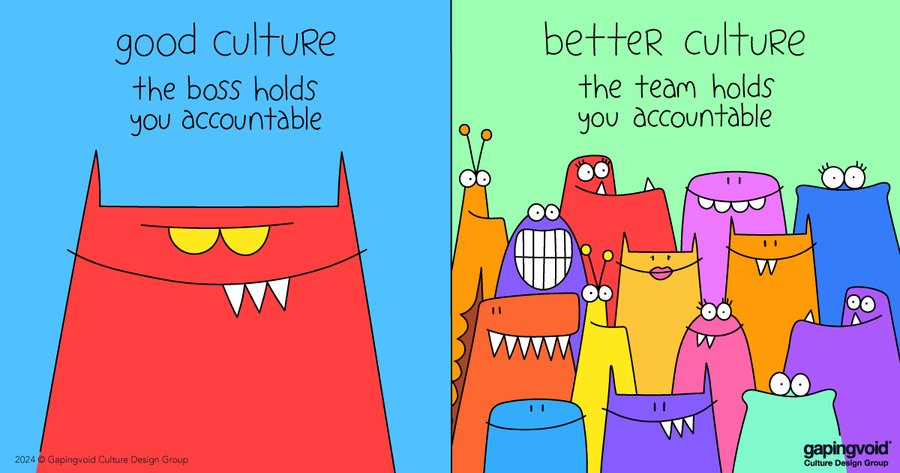
"Building organisational culture from the middle out". Having a positive culture predicts high performance. People often think that it is senior leaders who should define/articulate/role model a healthy culture & mid level leaders who should enact/endorse it. However research newly published in @MITsmr shows the critical role mid level leaders play in developing/enriching the culture. It's through exchanges that support work teams to accomplish their tasks & the practice of daily behaviours, in line with values. It's great to see research that spotlights the contribution of middle managers: https://t.co/AXgmMIbjAW. I teamed this article with a graphic by @GapingvoidArt
Last Call: Free (DFP Members only)
Trauma and Offending – The Impact of Gender
Tomorrow Friday 26th January 2024 10:00am - 12:00pm
DFP Members, all you must do is follow the link below, log on to the BPS Website and click onto the LINK
https://t.co/KHqpxXKSt3