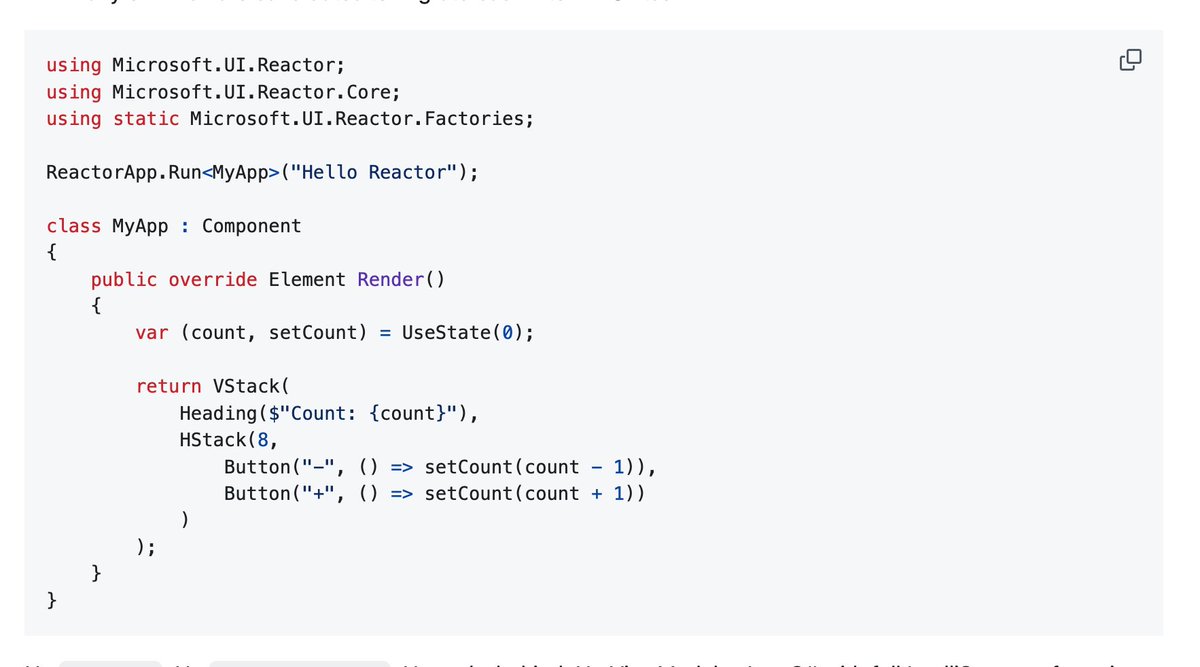
⬅️The "new" Microsoft.UI.Reactor from 2026
➡️My "old" Declarative UI solution for C# from 2023: https://t.co/xEvDXmCXeM
Microsoft should have done this 3 years ago.
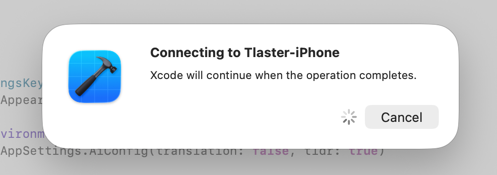
90% of time when optimizing iOS App performance:
waiting the instruments to finishing analyzing for 5 hours.
then save the trace file and drop into CodeX.
Developing #iOS App has lots of fun!
Pokémon Company International has issued a statement regarding the White House using Pokémon Pokopia to promote their agenda
"We are aware of recent social content that includes imagery associated with our brand. We were not involved in its creation or distribution, and no permission was granted for the use of our intellectual property. Our mission is to bring the world together, and that mission is not affiliated with any political viewpoint or agenda."
>Therefore, for KMP apps, you often need to manually link native iOS system frameworks to get these libraries behaving correctly (screenshot #1).
No you don't if you're using androidx.sqlite:sqlite-bundled with room.
Swift for Android vs Kotlin Multiplatform (vs React Native): The curse of the slightly janky system glue
Mobile apps live quite high up on the abstraction pyramid, atop innumerable system frameworks, the operating system kernel, and hardware.
Many popular Kotlin libraries, such as Ktor’s HttpClient or the SQLDelight storage client, require a system plugin to connect to the underlying native drivers on iOS. In the case of HttpClient, it’s the relevant device networking daemons, and in the case of Room, it’s the system’s underlying implementation of SQLite.
Therefore, for KMP apps, you often need to manually link native iOS system frameworks to get these libraries behaving correctly (screenshot #1).
On the Swift for Android side, URLSession on Android builds atop curl and zlib, but it looks like the open-source, cross-platform FoundationNetworking handles these sub-dependencies handily. (screenshot #2)
You’ll probably get similar multiplatform friction when it comes to cryptography, keychains, notifications, haptics, location services, file system, camera hardware, background execution, and more.
Multiplatform brings a nice shared API for your business logic, but isn’t a free lunch.
This is kind of where React Native and Flutter start to shine in comparison: by necessity, they ship with unified bridging wrappers to directly interface with all these across both iOS and Android.
Read my full analysis, Swift Android vs Kotlin Multiplatform, here 🚀 https://t.co/DEFgj35K5P
Valve has announced that it will stop supporting Steam on Windows 10 32-bit next year, but don't worry, it most likely doesn't affect you.
https://t.co/nljrAfvDZU