A narrative review can be your PubMed indexed publication. It is your own perception plus the literature, built around one gap.
Most people never attempt one because nobody teaches the process.
Here it is, start to finish
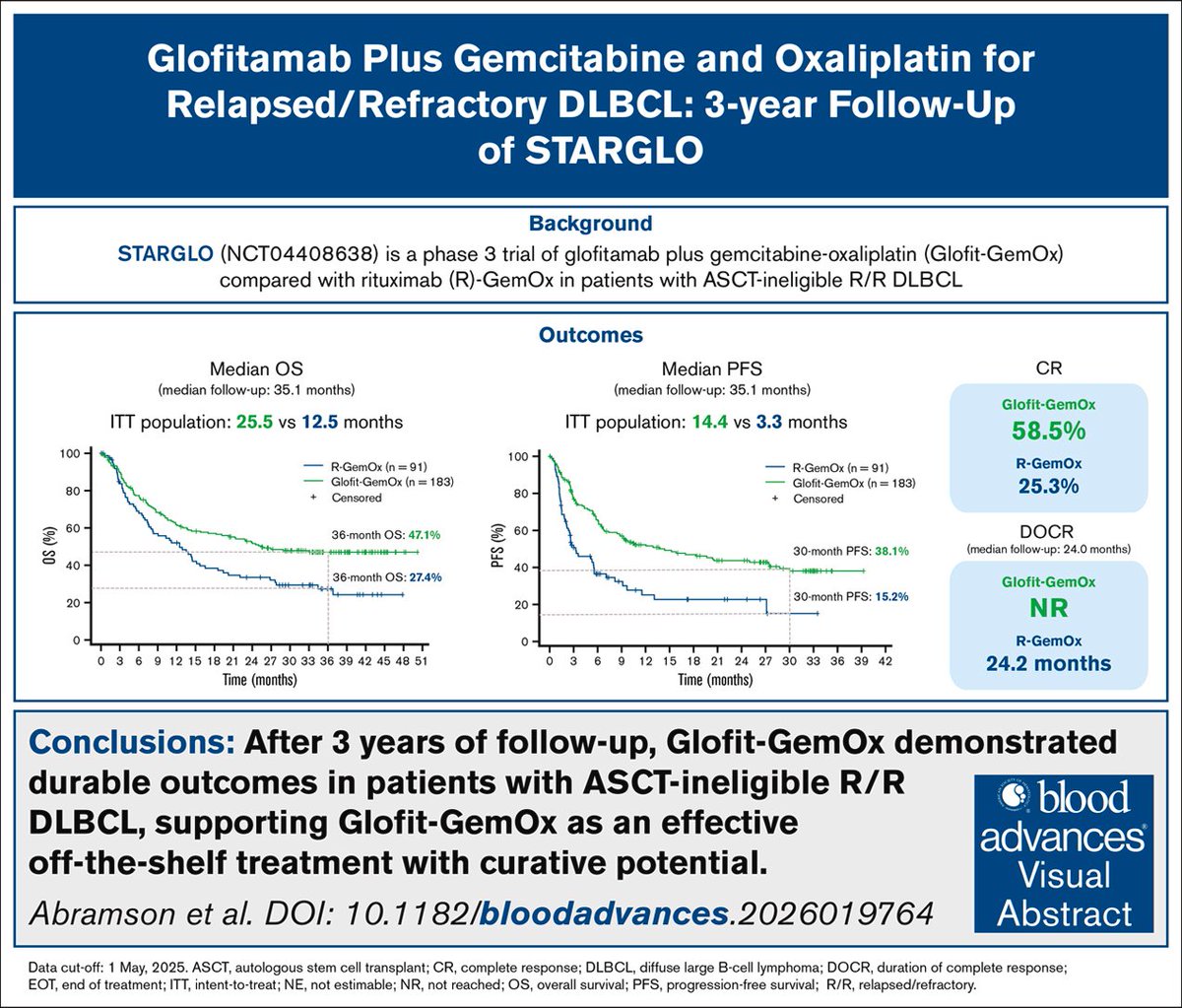
Complete remission in 85% of patients with high-risk #DLBCL#lymphoma by adding #epcoritamab#immunotherapy to standard rx! Congrats to Drs. Falchi and Belada and the whole team and the patients and their families!
https://t.co/PUeylMAIqK
Frontline AML therapy is rapidly evolving with targeted and lower-intensity options.
We created a quick upfront AML treatment algorithm to help guide initial therapy selection by patient fitness and disease biology.
Open Medicine link: https://t.co/3iGC8kBqxy
@OpenMedicineHQ #AML #Leukemia #leusm #PrecisionMedicine
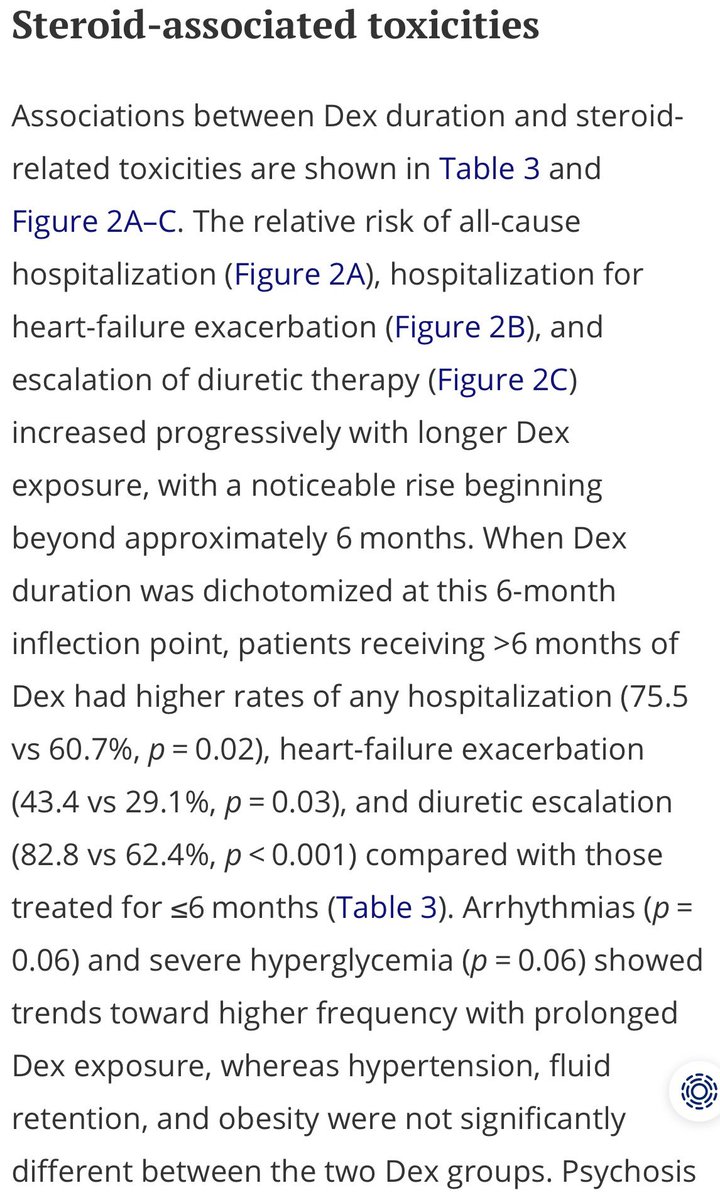
Another chapter of #downwithdex, this time for AL amyloidosis!
By the book, dex 20-40 mg QW for 6 months in ANDROMEDA. No need for this in real life.
No ∆ in efficacy; rise in CHF exacerbations and ⬆️ diuretics with prolonged dex.
I do 4-8 weeks of 12-20 mg then stop.
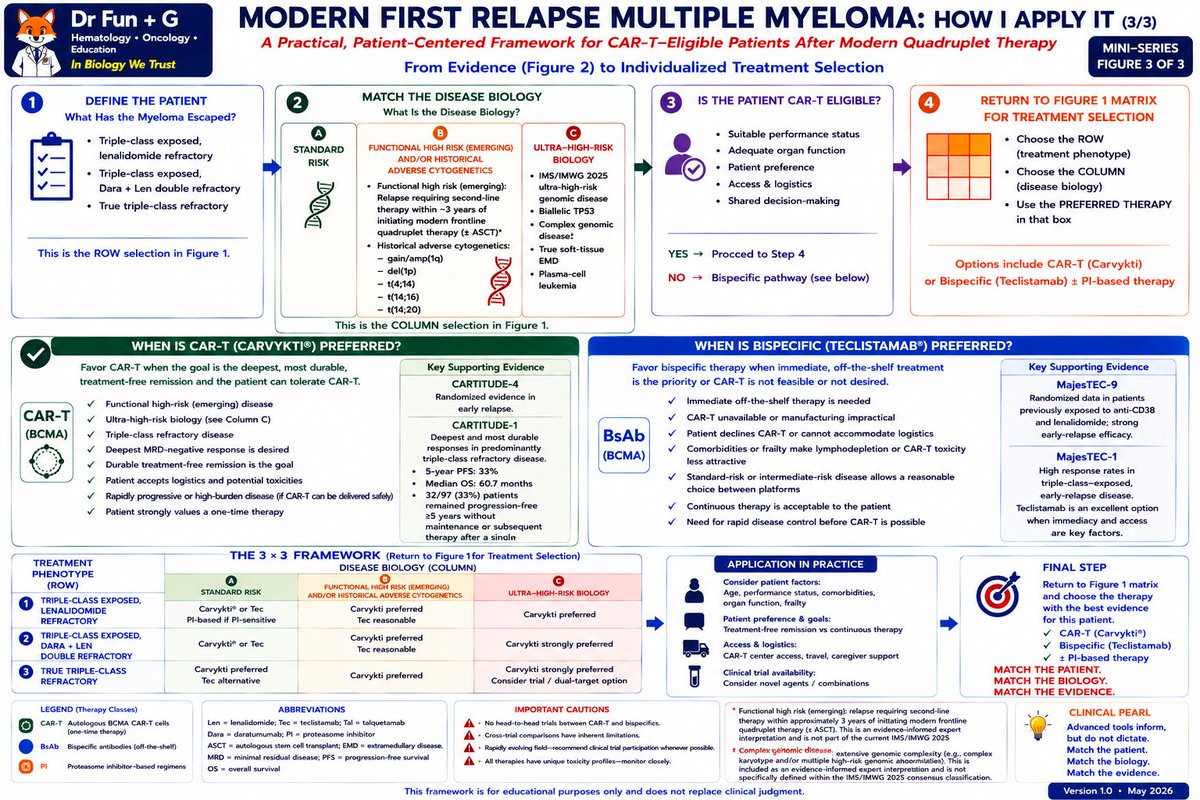
Modern first relapse after quadruplet therapy is increasingly characterized by what the myeloma has already escaped, not simply by the number of prior lines of therapy.
🧬 Match the patient
• Lenalidomide-refractory
• Dara + Len double-refractory
• True triple-class refractory
🧬 Match the biology
• Standard risk
• Functional/cytogenetic high risk
• Ultra-high-risk biology
🧬 Match the evidence
• CARTITUDE-4 and MajesTEC-9 provide the most relevant randomized evidence for early relapse, but neither trial fully reflects today's post-quadruplet, Dara-refractory population.
• CARTITUDE-1 and MajesTEC-1 complement these studies by providing important evidence in predominantly triple-class–refractory disease.
No single trial perfectly represents modern first-relapse, quadruplet-exposed myeloma. This framework integrates the most applicable evidence while recognizing the strengths and limitations of each study.
💡 Clinical pearl:
Match the patient. Match the biology. Match the evidence.
#MultipleMyeloma #Medtwitter
Updated FAQs on newly diagnosed multiple myeloma for 2026!
1. Which frontline regimen to use?
Quad regimen, either Dara-VRd or Isa-VRd
2. How long to give the Quad regimen?
4 months and then transplant, or
6 months if transplant ineligible or deferred
3. What maintenance after initial therapy?
Standard risk: Dara or Isa plus Lenalidomide
High Risk: Dara or Isa plus Lenalidomide; or bortezomib plus Lenalidomide
4. How long to give maintenance?
Standard risk: Lenalidomide for 2 years and stop; Dara or Isa till progression.
High risk: Till progression.
5. Is transplant still recommended in eligible patients?
High risk myeloma: Yes.
Standard risk: Early vs delayed- Shared decision making based on age and patient preference.
6. Definition of High risk myeloma?
Del 17p is high risk by itself
All the others (4;14, 1q, 1p, etc) all need two abnormalities together to call as high risk.
(P53 mutation and bi-allelic del 1p also high risk; but small numbers)
Check out https://t.co/qeXZaqzOpV to make this assessment easily.
7. What about CART or bispecifics in newly diagnosed myeloma.
Totally Investigational. Done only on approved clinical trials
8. What about frail patients who cannot tolerate quadruplet?
Triplet: DaraRd or IsaRd; if that’s not possible or safe: Rd or even single agent Dara may sometimes be needed at least initially till performance status improves.
9. What about patients with acute renal failure?
Prefer Dara-VCd rather than Dara-VRd
10. How long to give the Dex?
Keep Dex only for initial 4-6 months. No dex in maintenance.
Blinatumomab moves the needle in frontline high-risk Ph-negative B-#ALL@BloodPortfolio
In the GRAALL-2014/B QUEST study, blinatumomab consolidation:
✅ Higher MRD negativity: 72% vs 54% (P=0.04)
✅ Improved disease-free survival: ~70% vs ~45% at 5 years (P=0.001)
✅ Improved overall survival: ~75% vs ~60% at 5 years (P=0.03)
The remaining question is whether allogeneic HCT is still required for patients with MRD neg after blinatumomab, an area that warrants prospective evaluation.
Congratulations to Boissel and colleagues on this important contribution.
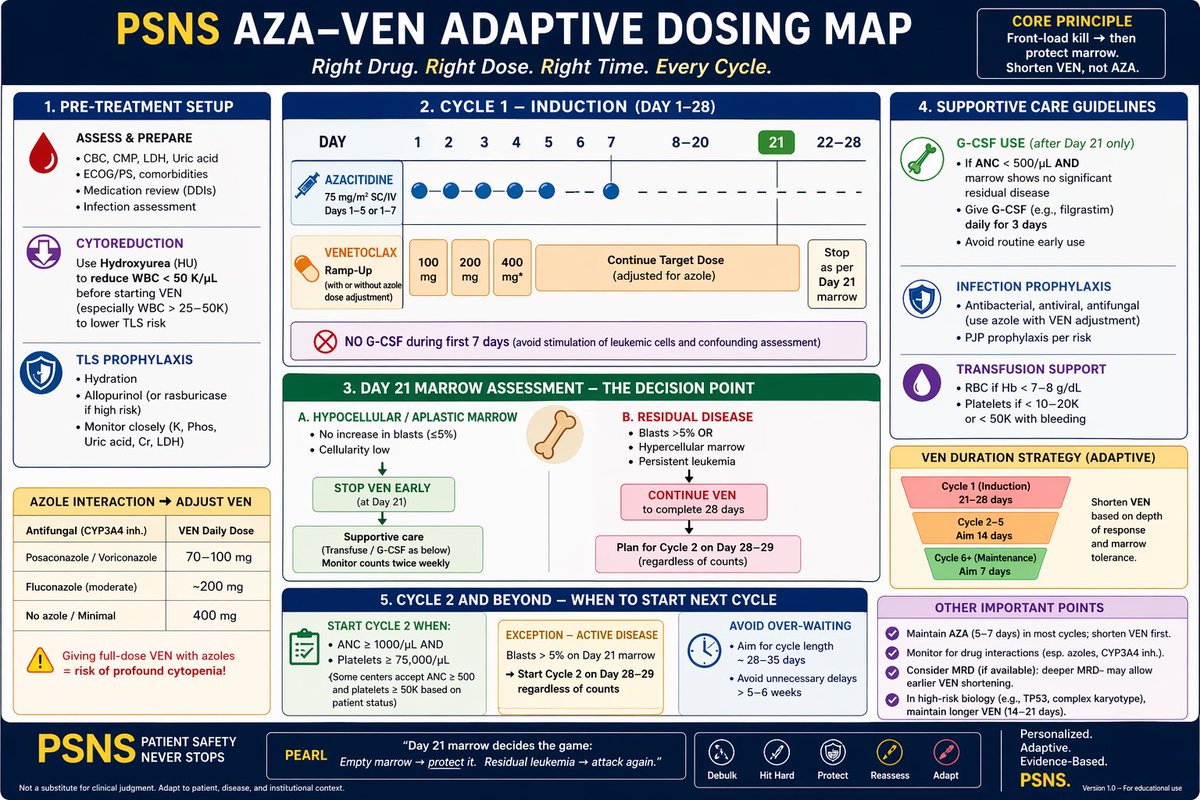
💣 AZA + VEN doesn’t fail—execution does.
Day 21 marrow decides everything.
Shorten VEN, not AZA.
Don’t wait for perfect counts.
Here’s how we induce AML in 2026 👇
Please let us know your approach.
#AML#HemeTwitter
Dr Fun + G
What should be the optimal strategy after AZA–VEN–induced remission in younger AML patients not proceeding to allo-HSCT?
Our recent work explores this clinically relevant question.
Read more in @BloodCancerJnl : 👉https://t.co/D2qYE1Vjbm
Grateful to @ArihantDr, @DrGPrakash, and @DrPMPGI Sir, for their invaluable support and conceptual guidance.
@AML_Hub #leusm #Hematology @blood_academy@SOAsocialmedia@ims_sum
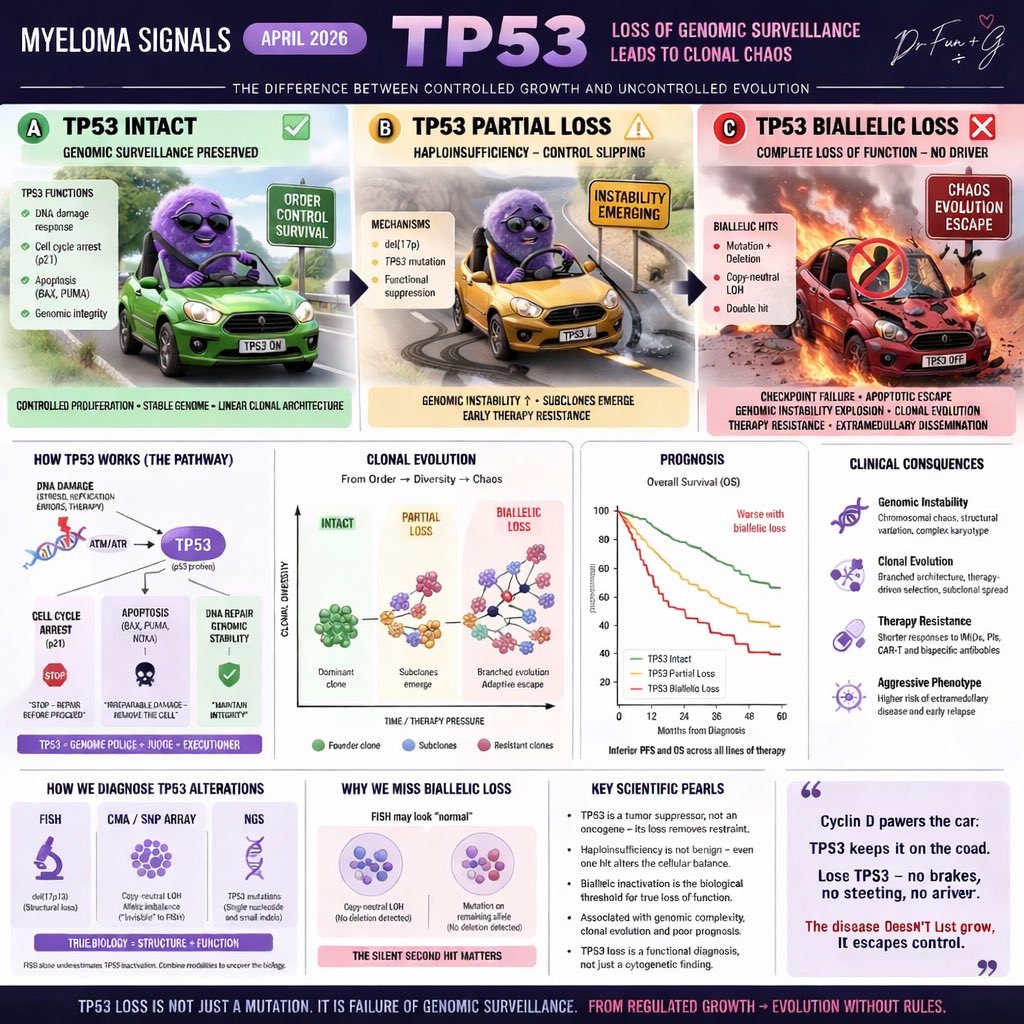
Myeloma Signal: TP53
TP53 is the guardian of genomic integrity.
Cyclin D powers the cell.
TP53 keeps it under control.
Monoallelic loss:
→ genomic instability begins
→ subclones emerge
Biallelic inactivation:
→ checkpoint failure
→ clonal evolution accelerates
→ therapy resistance dominates
This is not just high-risk disease.
This is evolution without control.