Lots of people think philosophy is an "armchair" discipline in which empirical evidence is largely irrelevant. But, humorously, this idea is contradicted by the empirical data. Looking at records from prestigous, generalist philosophy journals, I found something striking.
@jalejandrofdezc That seems right. Though I suppose you could argue that superficial engagement with empirical evidence is at least moving in the right direction. And if others recognize and criticize one's superficiality, then that could nudge one towards more serious engagement.
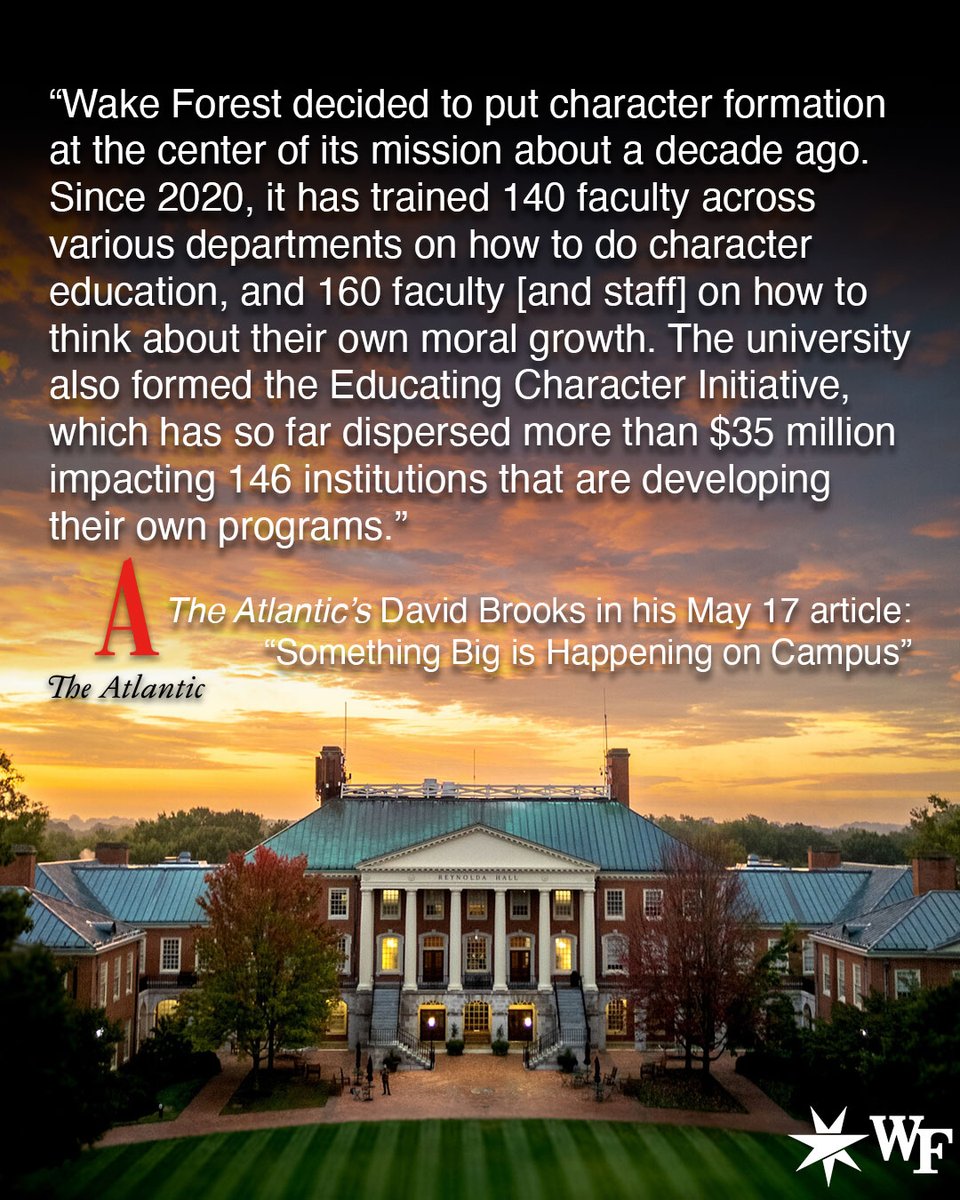
One of these roles is on the Research Team for the Educating Character Initiative! We're looking for someone with empirical expertise who wants to write papers with me about character development!
🚀 We're hiring @character_wfu@WakeForest! With funds from a new grant to build communities of impact around character in higher education, we're searching for several administrative and research positions. The link is below!
https://t.co/9YGLSWBTES
@FriedrichHayek Oh, of course! But the "linguistic turn" in philosophy refers specifically to a movement in which philosophers stopped asking questions about the world and focused instead of questions about language, and tried to answer them using a priori methods.
@FriedrichHayek@MaxNoichl The definition and other methodological details are in the paper (see especially the appendix), but basically it's sources that primarily report the results of scientific research or analyses of quantitative data, including scientific journals, handbooks, etc.
@byrd_nick@xphilosopher Totally! My curiosity started also started specific (in a post on Daily Nous, I looked at this in the literature on well-being) but then it grew.
@lu_sichu True! It's an imperfect metric. That's partly why I also looked at the use of phrases like "empirical evidence", "empirical data," "empirical research", etc. in the text of philosophy papers too. That approach produced a very similar result.
@kzSlider Great question! I controlled for that in the analysis. After accounting for general shifts in citation practices, rates of empirical citations grew by 2% annually in the 20th Cent and 5% since 2000. That might sound small, but it's like compounding interest over time!
Opinion | The Real ‘Diploma Divide’ Is About Identity, Not Beliefs
The familiar narrative that colleges are fueling a growing divide in political beliefs is not backed up by the data. But something else consequential has changed. https://t.co/Bv6B2JcsDP
We think these results, now published in American Psychologist, highlight a need for more theorizing and tests of popular claims about how to cultivate this much-needed trait.
https://t.co/tqOHIarBnt
Intuitively, it seems like bringing people together to discuss complex ethical and political issues should help them to be more intellectually humble about those issues—at least if the conversations are rigorous yet respectful. But, empirically, doesn't seem to work that way.
Michael Vazquez and I tested this "collaborative dialogue hypothesis." But the results of quasi-experiments and a randomized experiment (and using self-reports, behavioral indicators, and text-analytic measures) consistently contradicted the hypothesis.
Dr Michael Prinzing @M_Prinzing presented our latest seminar in the McGill - UofT Wellbeing Research Seminar series (2026 March 4): "The Ordinary Concept of a Good Life".
https://t.co/RUwVtcBocY
For our full series, see https://t.co/bR11HakS9D