It is difficult to understand how Pakistani 'progressive' circles construct their new political heroes. Figures such as Bacha Khan for Pashtuns, the BLA or BYC for Balochistan, GM Syed for Sindh, and Ahmed Khan Kharal for Punjab are celebrated not because they strengthen Pakistan
as a federating political unit, but precisely because they foreground ethnic identity and regional grievance over any shared national imagination. If political legitimacy is derived from emphasising difference rather than cohesion, then on what conceptual basis does the idea of
Good question. More importantly, who will be held accountable for this criminal negligence and reckless abuse of authority? Will anything actually change? One inquiry and the suspension of a few individuals won’t fix what is clearly a systemic failure.
The men of Karbala gave their lives for the truth. The women of Karbala carried that truth through unimaginable grief, preserving the message of Karbala for generations to come. Today, we remember both 🖤 #Ashura
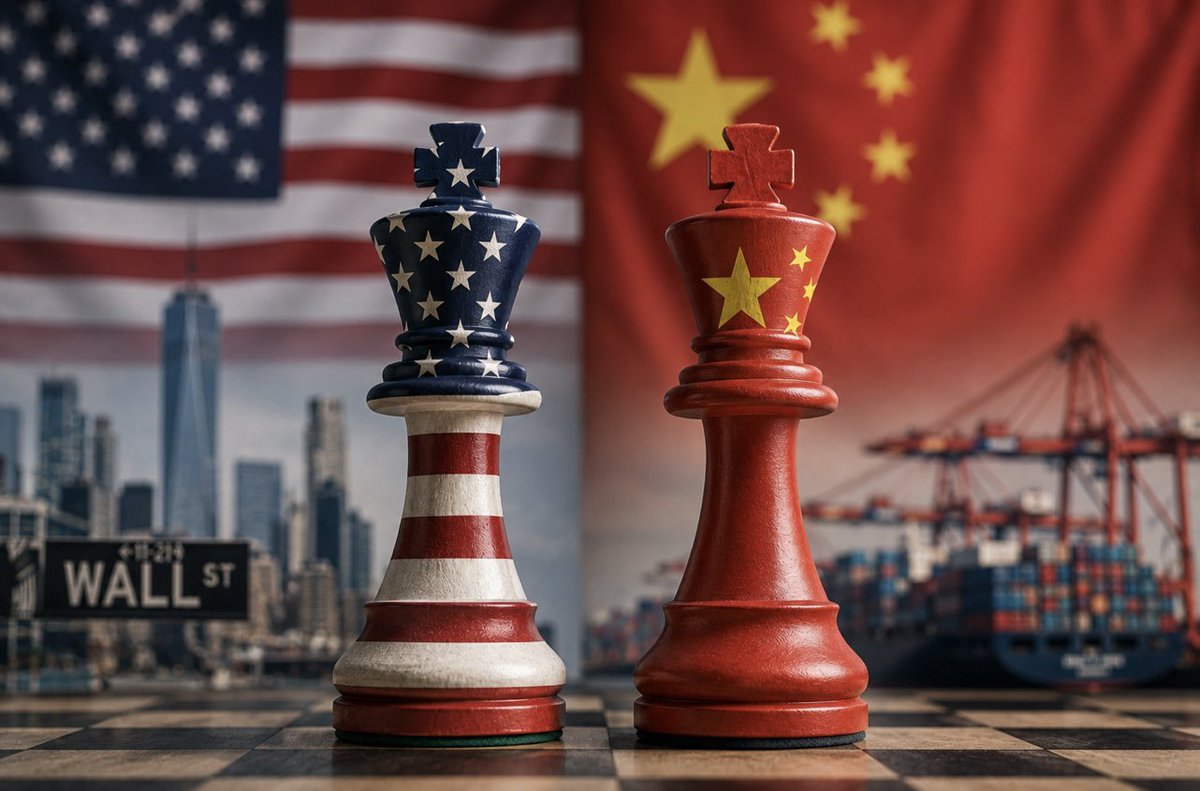
When people compare the US and Chinese economies purely based on GDP numbers, as an economist I laugh a little.
GDP has become the world’s favorite economic scoreboard because it is politically convenient. But the problem is that GDP often measures activity, not necessarily economic well-being, resilience, or productive reality.
A country can have people drowning in debt, paying absurd healthcare costs, juggling three jobs, unable to buy homes, stressed about retirement, and still produce a gigantic GDP number. Congratulations. The spreadsheet is thriving while the population is exhausted.
GDP also heavily rewards financialization and consumption. If money changes hands, GDP gets excited. It does not necessarily ask whether that activity improved long-term economic stability, industrial capability, or quality of life.
This is why I keep saying that PRODUCTIVE CAPACITY MATTERS.
America cannot manufacture everything at scale anymore. China can. Almost everything. From solar panels to drones, EV batteries to ports, textiles to robotics, industrial machinery to high-speed rail systems. That is economic power.
Then there is the purchasing power reality people ignore while obsessing over nominal GDP rankings.
Many Americans today are working multiple jobs just to survive rising rent, healthcare costs, education debt, and inflation.
Many Chinese urban families maintain relatively comfortable lifestyles with one stable job, supported by modern infrastructure, public transportation, lower service costs, and a culture of savings rather than permanent debt consumption.
Economists are supposed to analyze systems honestly, not emotionally. GDP is useful, but treating it like the ultimate measure of success is like judging someone’s health purely based on body weight. It tells you something. Just not enough.
Real economic strength is about whether your society can produce, build, transport, innovate, scale, afford life, and maintain long-term stability without burning out its population in the process.
That conversation is much more uncomfortable than posting GDP charts on social media, which is exactly why we should probably have it more often.
Humans were gifted a planet overflowing with trees, fruit, water, natural medicines, and sunshine. And yet somehow, we decided to invent debt, political parties, capitalism, AI conflict, and war.