An apt day to remember that Dolly Parton once recorded a cover of Stairway to Heaven - and, in defiance of every moral law in the universe, she absolutely owned it.
Sorry I've not posted much this week - been really busy and out each day without any time to concentrate on doing photo work for X, but if you are suffering withdawal symptoms, let me re-share this older piece of work: A 1910 Autochrome, taken at Fernbrook in Lenox, Massachusetts. This was photographed in colour 116 years ago by Thomas Shields Clarke using an early colour glass-plate process. It isn't colourised.
Skellig Michael, off the coast of County Kerry, is one of the most extraordinary surviving sites of early Irish Christianity.
For centuries, monks lived high on this isolated Atlantic rock in tiny dry-stone cells, surrounded by sheer cliffs and violent seas. They built stone steps, oratories and terraces by hand, creating a remote Christian community devoted to prayer, discipline and solitude.
The monastery was founded in the early medieval period and later dedicated to St Michael. Today, Skellig Michael remains one of the finest preserved examples of early Christian monasticism in the British Isles.
Tweed: cool name, warm fabric.
The history of tweed is a fascinating journey from the rugged winters of the 18th-century Scottish Highlands to the heights of high-fashion runways.
In Scottish dialects, 'bawd' and 'baud' is hare
Hare is a symbol of femininity and rebirth, and a messenger, moving by moonlight between this world and The Otherworld
art: Adam Oehlers
Victorian Valentine’s Day was not always about romance.
Alongside sentimental cards was a rather less affectionate tradition known as the Vinegar Valentine.
Cheaply printed and sent anonymously, these cards featured grotesque caricatures accompanied by insulting little verses.
They were sent to unwanted admirers, irritating neighbours, bad employers, tradesmen and just about anyone else the sender wished to ridicule.
Cheap postage helped the custom flourish, and enormous numbers of valentines passed through the postal system each February.
Some Vinegar Valentines were so offensive that postmasters reportedly refused to deliver them.
Most recipients understandably destroyed theirs, which is one reason surviving examples are relatively scarce today.
Victorian trolling, delivered by post.
Follow @oaksandlions for more on England’s history, heritage and culture. 🏴
For a few extraordinary days in 1814, the River Thames became one of London's most remarkable streets.
After days of bitter cold, the river had frozen solid.
Thousands of Londoners ventured onto the ice between London Bridge and Blackfriars, where an impromptu Frost Fair sprang to life.
Stalls appeared across the ice selling hot pies, gingerbread, ale, porter and gin. Fiddlers played as crowds danced, played skittles and tried the swings, while nearby a sheep was roasted over a fire.
Printers even dragged their presses onto the frozen river, selling souvenir sheets printed on the Thames itself.
Among the more unusual attractions was a barber, who set up on the ice and shaved customers in the open air.
It must have been an extraordinary sight.
The festivities lasted only a few days. On 5 February the thaw began, and by the following day the ice was breaking apart.
The great Frost Fair of 1814 would be the last of its kind on the Thames.
📷: The Fair on the Thames by Luke Clenell, 1814.
Follow @oaksandlions for your daily dose of English history, heritage and culture. 🏴
On December 20, 1945, seven German war criminals convicted of war crimes in the Smolensk region were publicly hanged at Kolkhoznaya Square in Smolensk, USSR. They had been tried by a Soviet military tribunal earlier that month.
1. Roman Robert Kirschfeld. Unteroffizier and translator at the Smolensk German military commandant’s office. He was accused of participating in punitive operations, shootings, and the burning of villages.
2. Rudolf Modisch. Obergefreiter and medical orderly at German Military Hospital No. 551. He was convicted in connection with the killing and mistreatment of Soviet POWs and other crimes involving prisoners.
3. Willi Weiss. Unteroffizier with the 335th Security Battalion. He participated in punitive operations and atrocities against Soviet civilians and POWs.
4. Kurt Gaudian. Gefreiter with the 335th Security Battalion. He was involved in punitive operations, executions, and the destruction of civilian settlements.
5. Fritz Gentschke. Gefreiter with the 335th Security Battalion. He participated in punitive operations and killings of Soviet civilians and prisoners.
6. Erich Müller. Gefreiter with the 335th Security Battalion. He was convicted for participation in punitive operations and the killing and mistreatment of civilians and Soviet POWs.
7. Willi Krause. Gefreiter with the 335th Security Battalion. He participated in punitive operations, executions, and atrocities against civilians and prisoners.
“We have more Saxons than Alfred had when he founded the English realm. We have more Celts than Brian Boru had when he put his heel on the neck of Odin. We have more Normans than William had when he marshalled his invading host.”
~Thomas D’Arcy McGee, Father of Confederation 🍁☘️
About 5000 years ago, a family sat beside a stone hearth in Orkney and arranged their belongings on a stone dresser. The dresser is still there. The hearth is still there. The stones they shaped with their hands are still fitted together, dry-laid without mortar, without cracking, after fifty centuries of Orkney winters. Skara Brae is the oldest surviving domestic settlement in northern Europe, and almost nothing about it has decayed. It is not ruins. It is a home.
The village was buried in a sandstorm around 2500 BCE and stayed buried until a violent storm in 1850 stripped the dunes back and revealed it to an astonished farmer. What the excavations uncovered over the following decades was almost impossible to credit: eight interconnected stone houses, linked by covered passages, each with its own hearth, storage alcoves, box beds defined by stone slabs, and a shelved dresser facing the entrance. Whoever lived here arranged their space with taste and care. They had privacy. They had community. They had, in the stone dresser placed where a modern family might put a television, something they wanted to see the moment they walked in the door.
No one knows exactly who built Skara Brae, what language they spoke, or where they went. We know they built their homes together, shared resources through the connecting passages, and lived here continuously for about 600 years. Older than the Egyptian pyramids. Older than Stonehenge. Built by people whose names we will never know on an island at the edge of the world. The oldest thing about Scotland is not a castle or a clan. It is a hearth, and it is waiting in Orkney.
#drthehistories
The Anglo-Saxon Cross at Eyam, Derbyshire.
Standing in the churchyard of St Lawrence’s, this remarkable stone cross dates from around the late 8th or early 9th century, when the area lay within the Anglo-Saxon kingdom of Mercia.
Its shaft is covered with intricate vine-scrolls, interlacing and Christian figures, including the Virgin and Christ Child, while the surviving cross-head carries carved angels.
Around 1,200 years old, it is one of England’s great surviving monuments from the early Christian Anglo-Saxon age, a piece of Mercian faith still standing in the Derbyshire landscape 🏴
English pitmen at Trimdon Grange Colliery, County Durham, circa 1920, ready for the next shift underground.
Working-class men heading into brutal, dirty and dangerous work, yet still dressed in shirts, waistcoats, jackets, proper trousers and caps.
Compare that with today, where grown men increasingly dress like overgrown teenagers in hoodies, tracksuits and pyjama bottoms.
We became richer and more comfortable, but lost a lot of the pride ordinary English working men once took in how they presented themselves 🏴
@Martyupnorth As archived documents show, British intelligence had learned the Germans knew a raid was coming to Dieppe and I guess the call was to go anyway.
A spectacular mess, should be a much bigger story.
Standing in the centre of a 15th-century Irish cloister is a living relic: a massive yew tree that predates the ruins themselves. 🌲✨
Built in 1448, the Franciscan friars of Muckross Abbey constructed their stone courtyard directly around this sacred tree, honouring its ancient Celtic roots.
Arborists estimate it has been growing here for over 550 years!
Blacklock's: In 2022, the Cabinet declared a national emergency and froze $7.8 million in savings held by Freedom Convoy sympathizers in 437 bank and credit union accounts and bitcoin wallets.
The Federal Court of Appeal ruled last January 16 that the action was unconstitutional.
Fed focus groups say @CBCNews has pro-Lib "angle," "agenda" & "political slant" and is rated less reliable than X, Reddit or social media.
https://t.co/qzndJTDWEj #cdnpoli@ShaunPoulter@SenatorACardozo
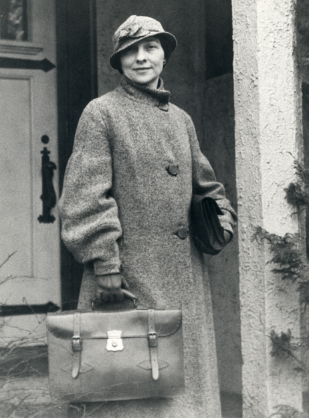
Elizebeth Friedman, widely regarded as America’s first female cryptanalyst, made one of the most vital breakthroughs of WW2.
In 1942, she deciphered Axis communications that revealed a plot to sink the Queen Mary; the largest troopship in Allied service, carrying over 8,000 men.
Her outstanding work helped save the ship and the lives of every soldier on board.
Federal Court of Appeal (FCA) ruled using the Emergencies Act to freeze bank accounts during the 2022 Freedom Convoy violated the Charter & lacked objective standards & procedural safeguards, turning banks into unverified extensions of the state.
⬇️