THIS IS HOW SCIENCE WORKS
Two huge clinical trials just delivered bad news:
GLP-1 drugs - the Ozempic-style “miracle meds” - failed to slow Alzheimer’s.
Yes, failed.
And this is exactly what real science looks like.
For years, anecdotal reports + early studies hinted at something exciting:
• People said they felt “sharper” on GLP-1s.
• Small trials hinted at cognitive benefits.
• Animal studies looked promising.
• Real-world data suggested protection.
Hope was real - and reasonable.
But hope ≠ evidence.
So scientists did what responsible scientists do:
They ran two massive, well-designed, placebo-controlled trials.
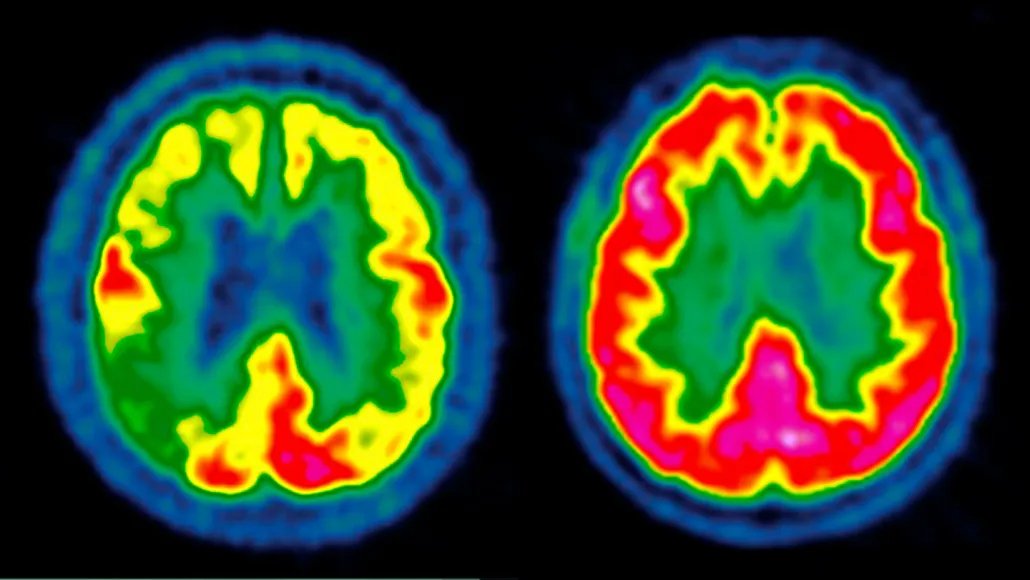
Nearly 4,000 patients, followed for two years, all early-stage Alzheimer’s.
The question:
Can semaglutide actually slow the disease?
The answer: No. Not in this population, not at this dose, not in this form.
There were tiny biomarker changes - signals that something might be happening biologically.
But clinically?
Zero difference.
No better memory.
No slower decline.
No measurable benefit.
A clean, unambiguous result.
That’s what gold-standard data does: it cuts through noise.
And yes - this is disappointing.
Researchers who helped invent GLP-1s hoped this would work.
Patients hoped.
Families hoped.
But science doesn’t care about hype or headlines.
It cares about truth.
And today’s truth is simple:
GLP-1s don’t slow Alzheimer’s - at least not like this.
Is this the end?
Not at all.
Scientists are already asking the next questions:
• Wrong dose?
• Wrong timing?
• Wrong population?
• Not enough drug reaching the brain?
• Maybe GLP-1s help prevent, not treat?
• Or maybe we need better molecules entirely?
Each “failure” narrows the path toward a breakthrough.
This is the opposite of pseudoscience.
No excuses.
No YouTube gurus.
No cherry-picking.
Just data → conclusion → next hypothesis.
It’s slow.
It’s painful.
It’s frustrating.
But it’s honest.
The Alzheimer’s field didn’t collapse today.
It adjusted.
It recalibrated.
It moved forward.
Real science isn’t a straight line.
It’s a messy, disciplined climb toward answers that actually help people - not ones we wish were true.
So yes, GLP-1s stumbled.
And that’s fine.
Because this is how science works:
We test big ideas.
Most fail.
Some don’t.
But every trial - even the disappointing ones - pushes us closer to something that will work.
Dear Swammers,
Among all the excitement and record-breaking performances at SECs, ACCs, and beyond, many of you just swam in your last race. Some of you even went a best time, and now you're left with EVEN MORE mixed emotions as you look ahead to the next chapter of your life.
Well, as someone who went through this and found his way back to the sport in an incredibly turbulent way, I figured I'd try to offer some advice and maybe even a little bit of hope.
Some of you are FIRED UP to be done with the sport, and I'll be the first to tell you that’s okay.
It’s a hard sport, it demands a lot, and you don’t leave it, even at the highest level, with your pockets full of cash. Others of you, however, might be terrified of what life looks like without swimming.
Spoiler Alert: Life after swimming is incredibly strange.
You go from having hyper-specific goals and a plan to accomplish them to trying to figure out how to just go to the gym and "work out" instead.
You go from having teammates and coaches relentlessly pushing you to be better every day to having to push yourself, sometimes to even just get out of bed.
The road ahead is rocky, and there’s no clear path, but if you take one piece of advice out of this, let it be this:
Don’t expect to do things perfectly or have it all figured out right away.
You don’t need to love swimming again right away.
You don’t need to be super motivated to go to the gym right away.
You don’t need to know how to live a life you've never lived right away.
Give yourself time to figure it out.
I’ve probably gone on too long at this point and could’ve kept it shorter (shocking, right?), so I’ll leave you with some quick hits of advice:
Turn off the clock. We’ve lived and died by the clock our entire lives. It’s time to ignore it for a bit and just pretend to be a fish.
Don’t force yourself back into the water. Swimming has a weird way of drawing you back when the time is right. Let it pull you back in.
Stay competitive in SOMETHING. Mine is intramural volleyball. New season starts in April, and there's a 62% chance I’ll get into a fight with someone.
Stay connected to swimming. There have never been more opportunities to stay connected to this sport, and it has never needed you more than it does right now.
If you're hanging up the cap and goggles, make sure they're hung up in an easy-to-reach place. There's a good chance you'll take them off that hook again sooner than you think.
See you on the pool deck.
Oh god.
What a dorky way to end that.
What is wrong with me?
"SeE yOu ON tHe pOol dECk."
Too late.
Bye.
On October 3rd, a KC resident asked the climatological normals for this date. Normal high is 73. Normal low is 52. Record is 95 and 31.
In 2004 on this date, KC hit 80 in the afternoon, with a of low 40 that morning.
Enjoy your October 3rd!
If you are in Medical school or planning on going to Medical school
And you would not provide medical care because someone is gay or trans or whatever
Go into finance
Or anything else
Medicine is not for you