I'm on the Econ Job Market this year 🤓
I am an applied economic theorist, with a focus on political economy and information economics.
My JMP, "Environmental Policymaking with Political Learning", is available here: https://t.co/5R5bgJe6nY
Aux Européennes, environ 20% des votes sont simplement ignorés à cause du seuil de 5%.
Avec d'autres chercheurs du CNRS, nous proposons des solutions et nous vous invitons à les tester dans cette expérience de vote, en parallèle de la vraie élection ! ⬇️
https://t.co/hAJHaTO7g4
💬 «Vous m'avez élu pour faire barrage à l'extrême droite. Ce vote m'oblige»
Emmanuel Macron, 24 avril 2022
💬 «Pour le RN, la loi immigration signe une victoire idéologique»
Marine Le Pen, 19 décembre 2023
C'est la une de @Libe ce mercredi.
Lire : https://t.co/nj2k4mQp7h
@DominikPeters I think JF and Matias' paper partly address your question (indeed you use all 10, and on the same candidate), if I understand correctly: https://t.co/1OQ9o0wu4m
This is a really nice paper. I'll describe my favorite result:
Suppose there's a minority of voters who observe policy choices and a majority of less informed voters who only observe something like their own allocation or outcome.
1/
Benjamin Blumenthal (@bnjmnblmnthl) is a fantastic political economist on the market this year (I was lucky to sit on his Ph.D. committee at @PSEinfo this year). Have a look at his JMP on Voter Information and Distributive Politics ! 1/2
https://t.co/PrFbm2pcqL
📣I'm on the Econ Job Market this year, and it's JMP time! 🤓
My JMP "Voter Information and Distributive Politics" is available here (https://t.co/G21ZiI8SLv)
More details on my work can be found on my website: https://t.co/N4eLTOgqSn
🏛️De quoi parlent vraiment les députés pendant les séances publiques de l’Assemblée nationale ?🧐
J’ai utilisé les comptes-rendus des débats pour extraire le vocabulaire et les comportements des différents groupes de l'Assemblée⬇️[1/18] #DirectAN (lien de l'article à la fin)
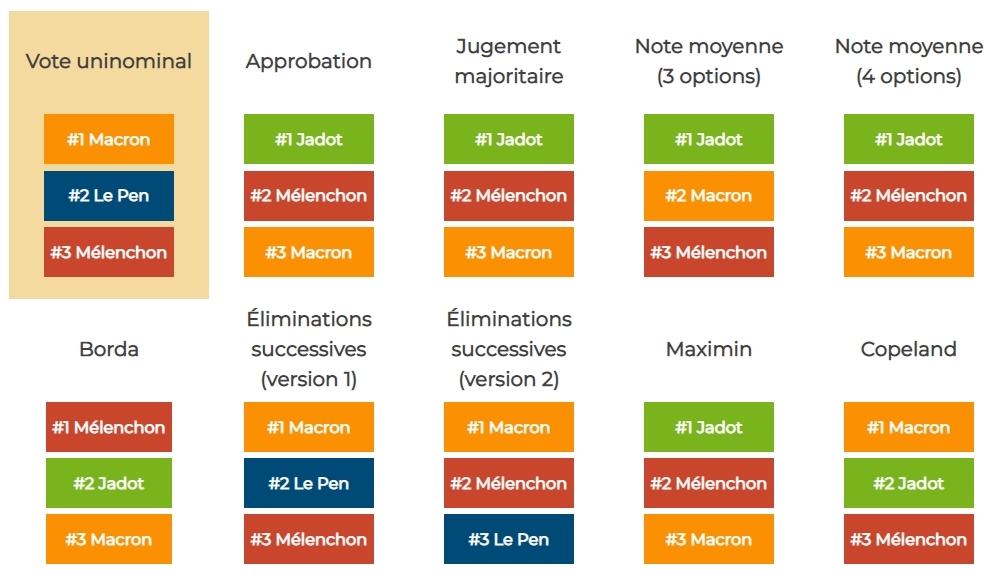
Quel candidat aurait été élu avec un autre mode de scrutin que le vote majoritaire à deux tours ? Les résultats de l'expérience en ligne https://t.co/A5LQsNjgQM menée par le CNRS montre que le classement des candidats peut différer selon le mode de scrutin utilisé 1/18⬇️
@aaronfhamlin Hi Aaron, do you have access to full election data (by which I mean the joint distribution of approvals) ? This would be helpful, for instance, to know how many voters approved at least one of the two commissionners. Thanks !
Tenure-track professor position opened at GATE (Chaire Professeur Junior) in economic design, cooperative game theory and social choice. 278k€ funding and very limited teaching load during the tenure period. Working language: english. Deadline: May 20.
https://t.co/EB7Wngu5tk
The LEMMA, a research center affiliated to the department of economics of Université Paris-Panthéon-Assas, invites applications for an associate professor (tenure-track), scheduled to start between September 2022 and January 2023.
@ChloeRidel@LarakiRida Quel dommage que les résultats complets (distribution des votes individuels) n'aient pas été rendus publics par @PrimairePop ! Ces données auraient justement permis d'alimenter ce débat sur les modes de scrutin.
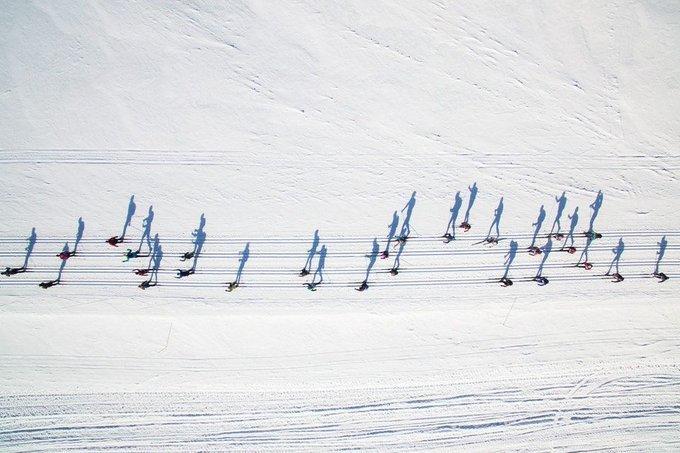
Le photographe Haukur Sigurðsson a pris cette photo de skieurs de fond qui ressemblent à des notes de musique. On vient de les mettre en musique https://t.co/crjWnga10s #Culture
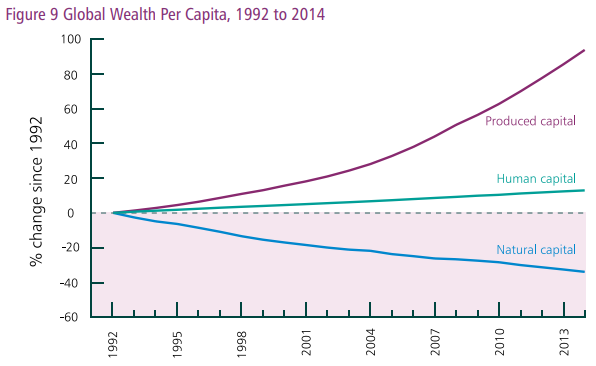
La croissance a un "coût dévastateur pour la nature", selon un rapport britannique
(Le Monde)
https://t.co/01YBNW7nxA
👉 The Economics of Biodiversity: The Dasgupta Review
https://t.co/l0HvvCVMDq
Kandinsky was an economist before changing careers at age 30 to become a world renowned painter; his art remained highly influenced by math we use in Econ: e.g. Kakutani developed his famous Fixed Point theorem in 1941. A year later, Kandinsky painted Fixed Points. Beautiful, no?


![DelemazureTheo's tweet photo. 🏛️De quoi parlent vraiment les députés pendant les séances publiques de l’Assemblée nationale ?🧐
J’ai utilisé les comptes-rendus des débats pour extraire le vocabulaire et les comportements des différents groupes de l'Assemblée⬇️[1/18] #DirectAN (lien de l'article à la fin) https://t.co/b1aDdFHBle](https://pbs.twimg.com/media/FcdqS_LXoAIwQAe.jpg)
![DelemazureTheo's tweet photo. 🏛️De quoi parlent vraiment les députés pendant les séances publiques de l’Assemblée nationale ?🧐
J’ai utilisé les comptes-rendus des débats pour extraire le vocabulaire et les comportements des différents groupes de l'Assemblée⬇️[1/18] #DirectAN (lien de l'article à la fin) https://t.co/b1aDdFHBle](https://pbs.twimg.com/media/FcdqS_JXwAMEJgL.jpg)
![DelemazureTheo's tweet photo. 🏛️De quoi parlent vraiment les députés pendant les séances publiques de l’Assemblée nationale ?🧐
J’ai utilisé les comptes-rendus des débats pour extraire le vocabulaire et les comportements des différents groupes de l'Assemblée⬇️[1/18] #DirectAN (lien de l'article à la fin) https://t.co/b1aDdFHBle](https://pbs.twimg.com/media/FcdqS_EWQAMb71u.jpg)


![DelemazureTheo's tweet photo. 🏛️De quoi parlent vraiment les députés pendant les séances publiques de l’Assemblée nationale ?🧐
J’ai utilisé les comptes-rendus des débats pour extraire le vocabulaire et les comportements des différents groupes de l'Assemblée⬇️[1/18] #DirectAN (lien de l'article à la fin) https://t.co/b1aDdFHBle](https://pbs.twimg.com/media/FcdqS_dWAAEWXZ9.jpg)