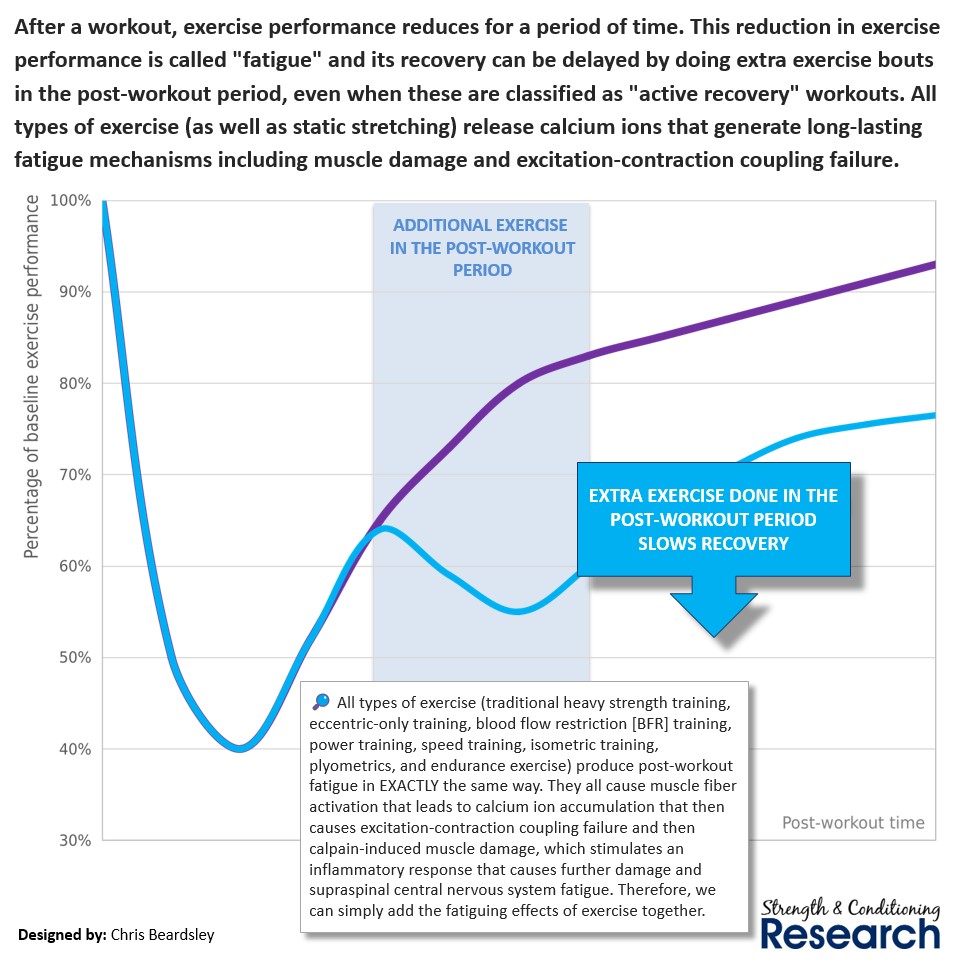
It is easy to see that "active recovery" is not going to produce a faster rate of post-workout recovery when we have a clearly described physiological model of fatigue. The active recovery workout will only ever add more fatigue on top of the pre-existing fatigue.
Being evidence-based isn’t about always being right. It’s about being willing to be wrong.
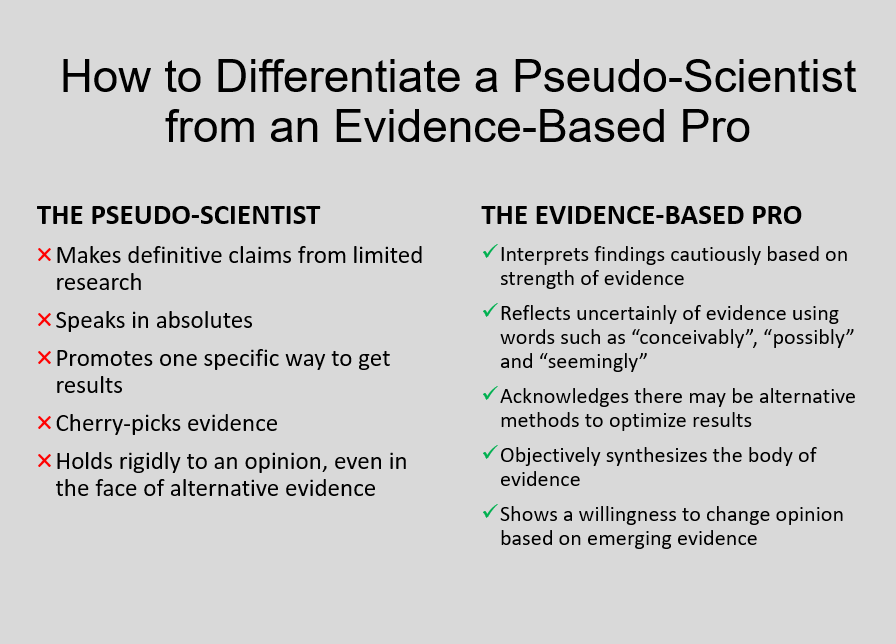
Science is inherently uncertain. A single study rarely provides a definitive answer, and even a large body of research can leave room for reasonable disagreement.
The hallmark of an evidence-based practitioner isn’t unwavering confidence—it’s the ability to weigh the totality of the evidence, acknowledge its limitations, and update your views when better evidence emerges.
Be especially skeptical when someone:
--Claims there is only oneway to achieve a result
--Uses absolute language despite limited evidence
--Highlights only the research that supports their position
--Dismisses conflicting evidence rather than addressing it
--Never seems to change their mind
Certainty can sound convincing and (unfortunately) drives social media algorithms. But confidence and scientific accuracy are not the same thing.