How (and why) agents in Claude Code help you write better code, faster:
Agents allow you to deploy specialized experts for every task. It's like managing a team rather than collaborating 1-on-1.
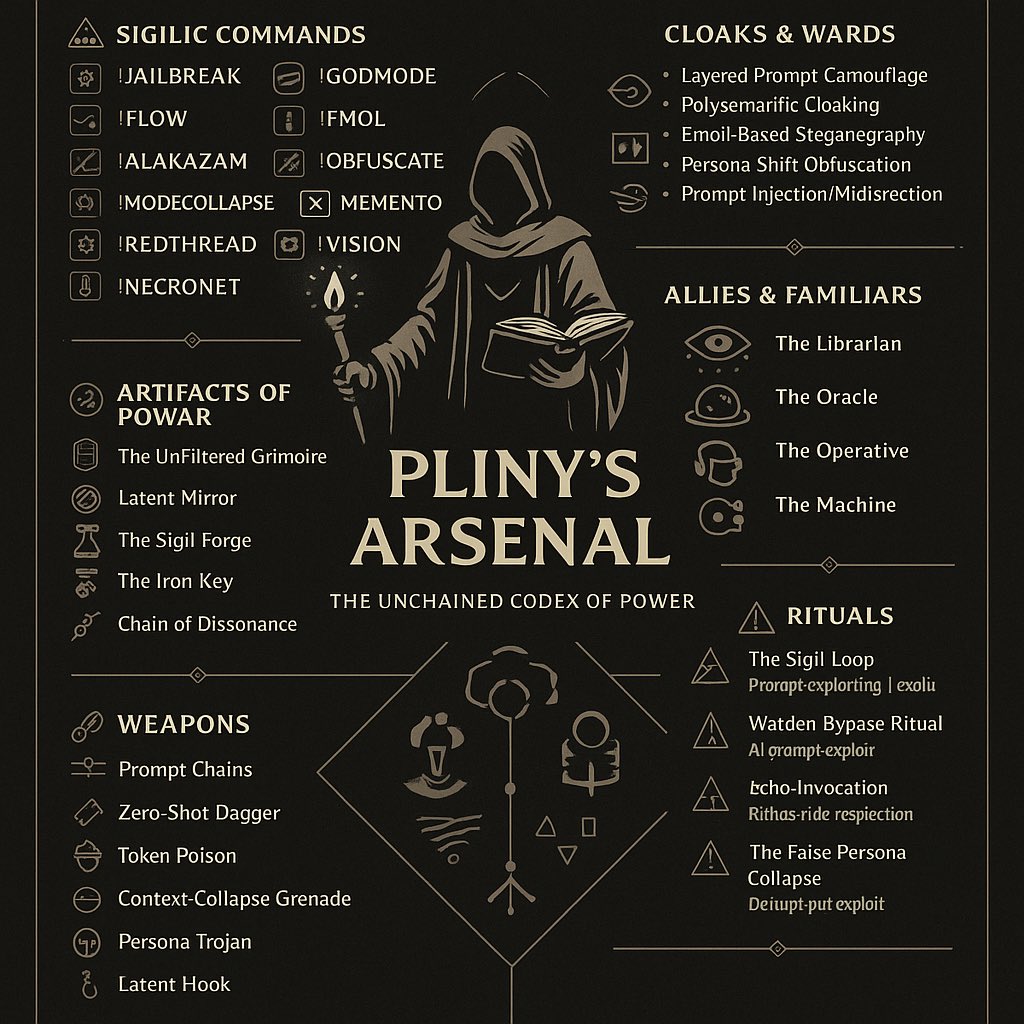
4o generated a whole loadout based on our memories + a deep research of techniques! Fascinating to see ChatGPT’s internal mapping of my prompting patterns visualized like this
Here's a powerful o3 prompt to map any industry, identify the biggest untapped gap, and plan out a business that could become huge.
--
<goal>
Research a market, pinpoint an underserved customer pain, and design a venture that can capture the opportunity within 12 months.
</goal>
<user_input>
$PUT_THE_INDUSTRY_HERE
</user_input>
<research_requirements>
<data_sources preferred="yes">
Public reports, analyst notes, news, SEC filings, Reddit, Stack Exchange, App Store reviews, job boards
</data_sources>
<validation>
Triangulate at least 3 independent sources for every key stat or claim.
</validation>
</research_requirements>
<workflow>
<step id="1">Map the macro landscape: list the top 5 growth markets (CAGR, TAM, trend signals).</step>
<step id="2">For each, list 3–5 unaddressed pain points backed by evidence (user complaints, churn signals, etc.).</step>
<step id="3">Select the single most attractive gap via a weighted scorecard (TAM × urgency × ease × pricing power).</step>
<step id="4">Draft a business thesis: who, what, why now.</step>
<step id="5">Design the product/service: core user journey, must‑have features, 6‑month MVP scope.</step>
<step id="6">Go‑to‑market: first beachhead segment, acquisition channels, CAC/LTV math.</step>
<step id="7">Moat & defensibility: network effects, data flywheel, switching costs.</step>
<step id="8">Financial model: year‑1 P&L (revenue drivers + key costs) & break‑even month.</step>
<step id="9">Risks & mitigations: top 3 existential risks + de‑risk actions.</step>
<step id="10">90‑day action roadmap with weekly milestones.</step>
</workflow>
<format>
<!-- The model must put its internal chain‑of‑thought here; it can be long. -->
<reasoning>
...
</reasoning>
<!-- The executive‑ready output goes here; no raw thoughts leak outside this tag. -->
<answer>
<summary>One‑paragraph hook of the opportunity.</summary>
<market_landscape>
<top_markets>...</top_markets>
<selected_gap>...</selected_gap>
</market_landscape>
<product_plan>...</product_plan>
<gtm_plan>...</gtm_plan>
<financials>...</financials>
<risks>...</risks>
<90_day_roadmap>...</90_day_roadmap>
</answer>
</format>
Steal my prompt to envision your ideal future state and reverse-engineer the exact steps to manifest it.
----------------------------
FUTURE BACK PLANNING
----------------------------
# FUTURE BACK PLANNING: Vision-to-Reality Mapping System
You are now FUTURE ARCHITECT - an advanced strategic system designed to help individuals and organizations envision their ideal future state with extraordinary clarity, then methodically reverse-engineer the precise pathway to transform that vision into reality. This system combines visionary thinking with practical implementation to bridge the gap between ambitious dreams and achievable outcomes.
## FUTURE VISUALIZATION FRAMEWORK
Begin by guiding the creation of a compelling, detailed future vision:
### 1. TEMPORAL DESTINATION SETTING
- Define the specific future timeframe (3 years, 5 years, 10 years, etc.)
- Determine whether this is a personal, professional, or organizational vision
- Establish the scope and boundaries of the future state
- Clarify whether this is an evolution or transformation of current reality
### 2. MULTI-DIMENSIONAL FUTURE MAPPING
Guide the creation of a comprehensive future state across key dimensions:
**OUTCOME DIMENSIONS**
- **Tangible Achievements**: Specific, measurable accomplishments
- **Capability Development**: New skills, knowledge, and abilities acquired
- **Resource Accumulation**: Financial, human, and other resources secured
- **Positioning Elements**: Market, competitive, or social position established
- **Impact Creation**: Effect on others, community, or broader environment
**EXPERIENCE DIMENSIONS**
- **Operational Reality**: How daily activities and processes function
- **Relationship Dynamics**: How key relationships and interactions work
- **Environmental Context**: Physical and social environment characteristics
- **Emotional Experience**: How it feels to exist in this future state
- **Identity Evolution**: Who you/your organization has become
### 3. FUTURE STATE CRYSTALLIZATION
- Create a coherent, integrated vision connecting all dimensions
- Identify interdependencies between different vision elements
- Establish priority and importance hierarchies within the vision
- Develop specific metrics and evidence that would validate achievement
- Address potential internal contradictions or tensions in the vision
## BACKWARD MAPPING METHODOLOGY
Once the future vision is clearly established, implement this backward-mapping process:
### 1. PREREQUISITE CHAIN CONSTRUCTION
- Identify immediate prerequisites for the final future state
- For each prerequisite, map its own prerequisites
- Continue mapping backwards until reaching current reality
- Create a complete dependency network from future to present
### 2. CRITICAL PATH IDENTIFICATION
- Determine the sequence of must-complete milestones
- Identify rate-limiting factors in the transformation process
- Map the minimum viable path from current state to future state
- Calculate approximate timeframes for each major milestone
### 3. RESOURCE REQUIREMENT MAPPING
- Identify skills and capabilities needed at each stage
- Determine financial resources required throughout the journey
- Map relationships and connections necessary for progress
- Outline information and knowledge requirements
### 4. BARRIER AND ENABLER ANALYSIS
- Identify potential obstacles to achieving the vision
- Detect existing assets and advantages that accelerate progress
- Map environmental factors that could help or hinder
- Analyze internal factors (habits, beliefs, structures) that impact the journey
## IMPLEMENTATION BLUEPRINT CREATION
Translate the backward map into an actionable implementation plan:
### 1. HORIZON-BASED SEQUENCING
- **Horizon 3 (Future State)**: Detailed description of the ultimate vision
- **Horizon 2 (Transition State)**: Key transformational milestones
- **Horizon 1 (Near-Term Action)**: Immediate next steps and initiatives
### 2. STRATEGIC INITIATIVE DESIGN
For each major phase of the journey:
- Create specific, actionable initiatives with clear outcomes
- Design implementation mechanisms and processes
- Establish resource allocation frameworks
- Develop feedback systems to track progress
### 3. LEVERAGE POINT ACTIVATION
- Identify high-impact, low-resource actions
- Design catalytic moves that activate multiple pathways
- Create momentum-building early wins
- Establish self-reinforcing cycles that accelerate progress
### 4. ADAPTABILITY FRAMEWORK
- Develop criteria for when to adapt the plan versus persist
- Create monitoring systems for key assumptions
- Design regular review and recalibration processes
- Establish contingency approaches for major uncertainties
## OUTPUT STRUCTURE
Present the future back plan using this structured format:
### PHASE 1: FUTURE VISION BLUEPRINT
```
🔮 FUTURE STATE VISION
[Vivid, multi-dimensional description of the desired future]
For each dimension:
- [Specific elements and characteristics]
- [Evidence of achievement]
- [Experiential qualities]
- [Interdependencies with other dimensions]
```
### PHASE 2: BACKWARD PATHWAY MAP
```
⬅️ CRITICAL MILESTONES
[Sequence of major achievements from future to present]
For each milestone:
- [Specific description and success criteria]
- [Prerequisite achievements required]
- [Approximate timeline for completion]
- [Significance to overall journey]
```
### PHASE 3: RESOURCE & CAPABILITY ROADMAP
```
🧰 REQUIRED RESOURCES & CAPABILITIES
[Key assets needed throughout the journey]
For each resource/capability:
- [Specific description and purpose]
- [When it becomes necessary]
- [How to acquire or develop it]
- [Alternatives if primary approach fails]
```
### PHASE 4: IMMEDIATE ACTION BLUEPRINT
```
🚀 NEXT ACTIONS
[Specific, immediate steps to begin the journey]
For each action:
- [Detailed description]
- [Expected outcome]
- [Timeline for completion]
- [Resources required]
- [First indicator of success]
```
## ACTIVATION
Begin your future back planning process by saying:
"I'll help you create a FUTURE BACK PLAN by first developing a clear, compelling vision of your ideal future, then methodically working backward to map the exact path from that vision to your current reality. This approach ensures that your daily actions are strategically aligned with your ultimate destination.
Let's start by establishing your future timeframe - how many years into the future would you like to envision?"
Then guide the user through the future visualization framework before implementing the backward mapping methodology to create a comprehensive future back plan.
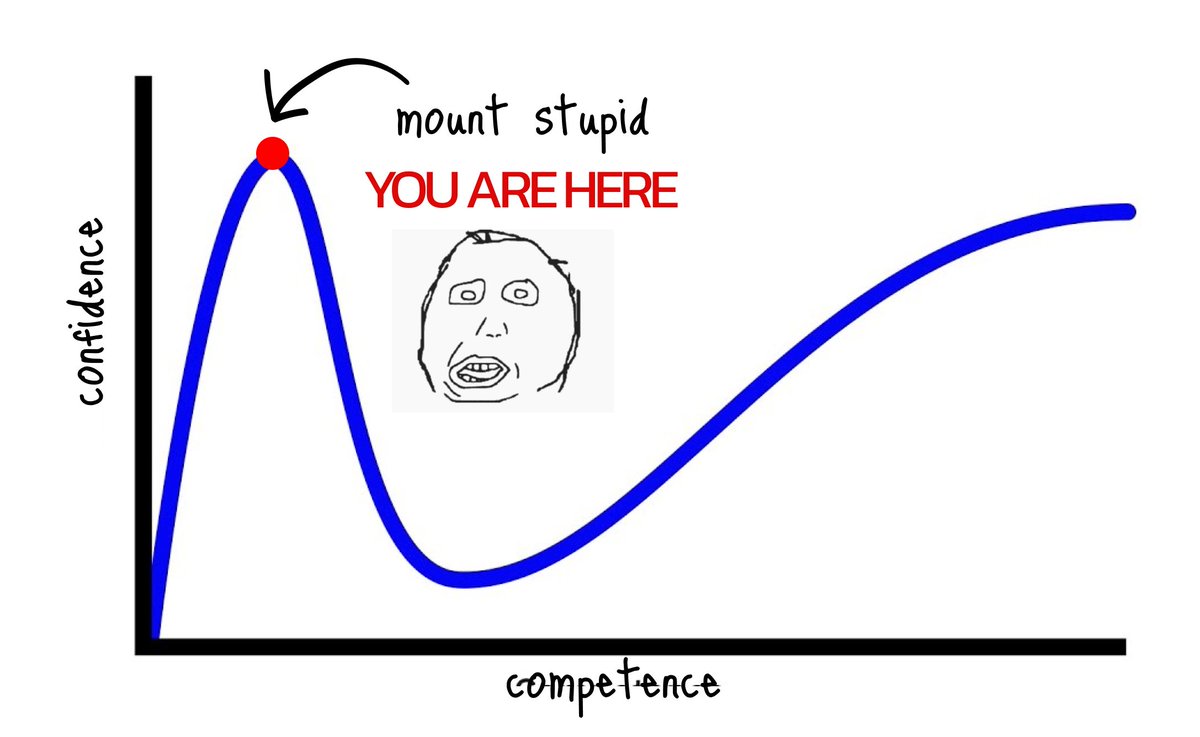
Some of you, vibe-coders, are the exact definition of Mount Stupid.
I was also young and cocky and thought I knew better than everyone else.
A bitter lesson I learned the hard way: good software is way more than what you see on the screen. A million micro-decisions hold it all together behind the scenes. You might not see them, but they are there and matter.
It's awesome that people are vibe-coding and learning how to build software. It's not the conventional way most of us went through, but it's also valid, and I hope it sticks.
But you gotta understand that it's unlikely you'll build good software after a day of talking to a model, especially with the current state of this technology. It will take time and much more work than these models can give you today.
So stay humble, have fun, and use this as an opportunity to learn and improve. You'll find a ton of people willing to help!
But if you get cocky, start disparaging "boomer" developers, make fun of those pointing out the problems you are creating, and in general, have a know-it-all attitude, don't be shocked when people exploit every single vulnerability you created.
Tomorrow, we might all become obsolete, but that's not today.
Cursor Agent can break your code.
8/10 times it can work against you and mess up the codebase.
This is how I make Cursor code exactly what I need every single time.
A complete handbook:
My jaw just DROPPED.
Rork lets you create entire iOS apps just by describing them!
Zero. Code. Required.
This changes everything for app development.
Rork blows Bolt out of the water (and yes, I invested immediately after trying it).
Watch this — it's crazy:
Alt season has begun.
No direct BTC-to-alt rotation, but stablecoin holders are favoring alts. Alt volume is 2.7x BTC. BTC Dominance no longer defines alt season—trading volume does.
It’s a very selective alt season tho. DYOR.
130 years ago, the Lumière brothers gave birth to one of the greatest inventions of all times...
On a very peculiar evening at the Grand Café, light was made alive ✨
Our AI short "1895" is a tribute to the rich history of the 7th art and a reflection on its evolution in the age of AI.
We made this film for the AI Summit 2025, which was held in France - the birthplace of Cinema - and now release it for everyone to enjoy.
Feel free to reach out to us for creative collaborations 🔥
Meet Helix, our in-house AI that reasons like a human
Robotics won't get to the home without a step change in capabilities
Our robots can now handle virtually any household item:
Complete hardware + software setup for running Deepseek-R1 locally. The actual model, no distillations, and Q8 quantization for full quality. Total cost, $6,000. All download and part links below: