Recently i've been thinking about how the rise of pain science has influenced our views and understanding of pain. While pain science is definitely a step forward from the biomedical model, combining pain science with the BPS model might still have some challenges in practice. 1/
Once again - This pretty much sums up how little of a concern the pain itself is, and how much of a concern, the impact pain has on every other aspect of ones life, is. Most of us can endure a painful period, but the tough part is handling the impact on life in general.
@CorKinetic Some would say 😆 - Fortunately, i think we can work the other way around as well. Pain could probably have resolved on its own, if it didn’t lead to all the suffering-related aspects. So, let’s adress some of these aspects instead of solely focusing on pain reduction.
@CorKinetic And i agree. But at the same time i fear, that this will never be more than a “cleaning job”, if the unfortunate beliefs keeps spreading like thought virusses through the culture and social environments we engage in.
@CorKinetic 2/2: important. However, i think many of the problems we see within the field of MSK pain stems from beliefs and behaviors rooted in unfortunate traditions, culture, etc. In other words; the problem is larger than 1-to-1 cons. Societal problems don’t call for indv. solutions.
@CorKinetic 1/2: The danish professor in psychology, Svend Brinkmann, writes something like: “Societal problems don’t call for individual solutions” in one of his books. This really made me reflect. We tend to focus so much on improving clinical practice (1-to-1 consultations), ans this is..
@LennartBentsen Agree. I often hear comments like: “..remember that radiographic findings actually increased the risk of pain in the Brinjikji 2015 paper!” - Ehm, yes? Doesn’t change that radiographic findings are still highly prevalent among asympt people, i.e. a ‘probable’ contributor at best.
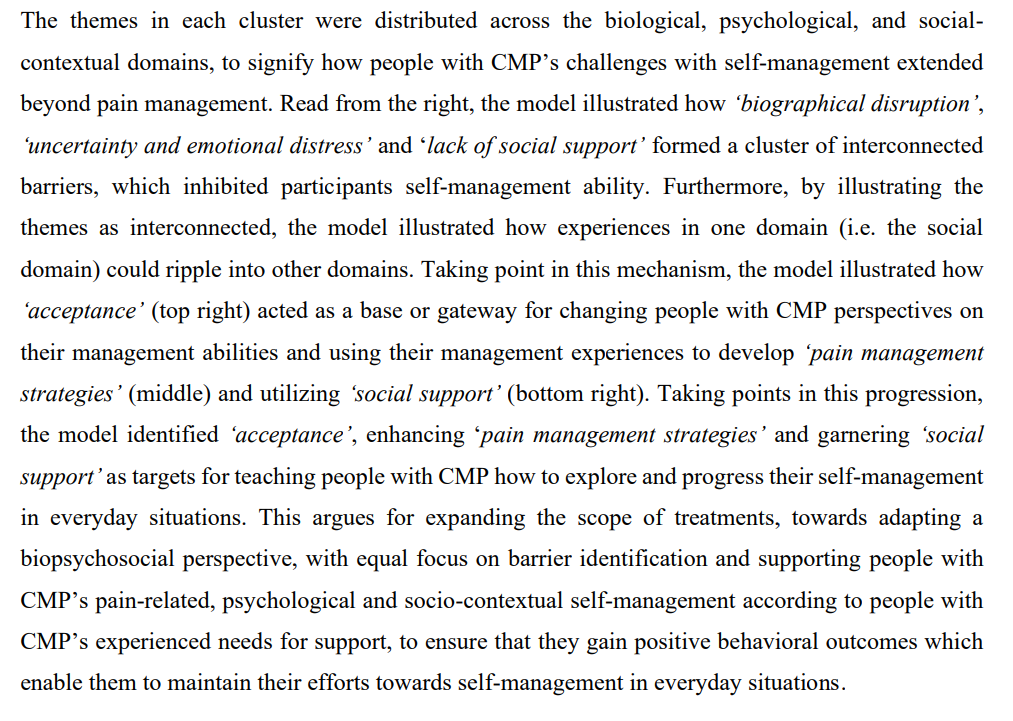
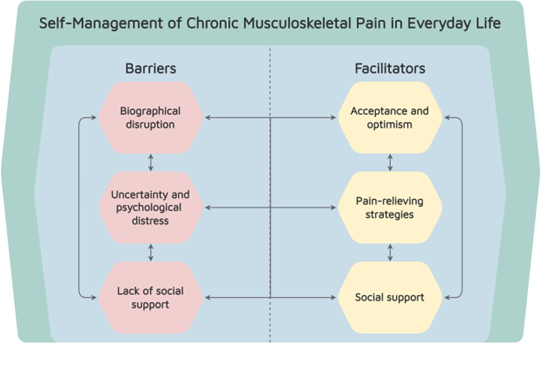
@ArthriticChick@GregLehman@SimonKJohansen@mgibsonphysio That people with CMP find it easier to manage their condition, if they’re able to find acceptance concerning their situation and spend their energy on getting the best out of it.
@GregLehman@SimonKJohansen@mgibsonphysio start accepting the situation and work towards getting the best out of it. However, pain relief wasn’t a necessity for acceptance, as acceptance could also occur without. For some acceptance/optimism was just facilitated even further by experiencing pain relief. 2/2
@GregLehman@SimonKJohansen@mgibsonphysio Hi Greg - Hope you’re well! And thanks for asking 😄 So, most participants appreciated the experience of pain relief, as it gave them a feeling of hope for a better future (e.g. optimism). And when having a positive expectation of the future, it also became easier to.. 1/2
@LSaugman@SimonKJohansen@MichaelRathleff Agreed. Would love to share my experiences, so maybe we should grab a cup of coffee sometime? At one side i feel like there’re things, we should be asking about, but in this project we decided to not “prime”, the patients and instead identify the most important things for them.
Our new paper: “Exploring Self-Management Barriers and Facilitators Experienced by People with Chronic Musculoskeletal Pain - A Qualitative Study” is now available in preprint 🤩🧠💭 - Thanks for such a great collab to Emil, Søren, Anne, @SimonKJohansen & @MichaelRathleff ☺️🙏🏼
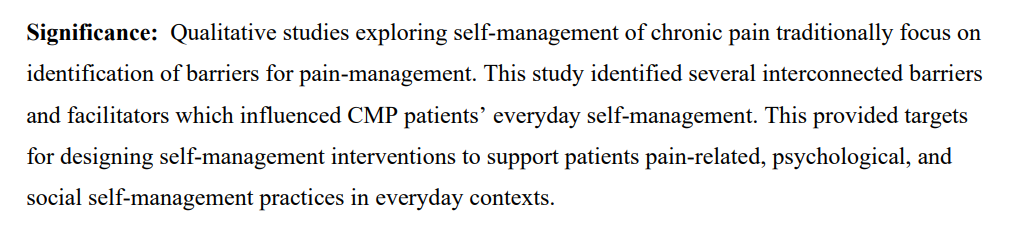
PREPRINT: What is the relationship between the pain-related, psychological and social barriers and facilitators for self-management experienced by patients living with chronic musculoskeltal pain? Read the preprint of our latest qualitative study here: https://t.co/A6VJso20gU
@LSaugman@SimonKJohansen@MichaelRathleff Yes, as a couple of them actually did and “thanked” us afterwards for really listening to her story, and make her reflect upon here history and how far she’d come.
@LSaugman@SimonKJohansen@MichaelRathleff Afterwards we actually spoke about that we felt this is how history taking could be done in a better way. The insights gained from our method during the interviews gave so much more value, than how our usual physio-biased way of questioning does. True presence and curiosity.