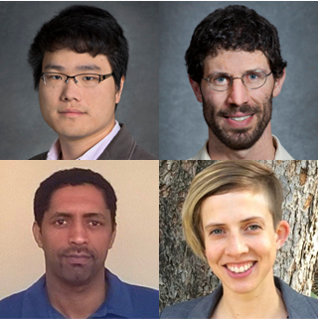
Honored to present our research today at #ASA_CSSA_SSSA demonstrating mode of action & efficacy of the 1st remodeled microbes to boost biological N fixation in corn systems, enabling fertilizer cuts without yield penalty. A collaboration with @pivotbio@UWMadison & Purdue Univ.
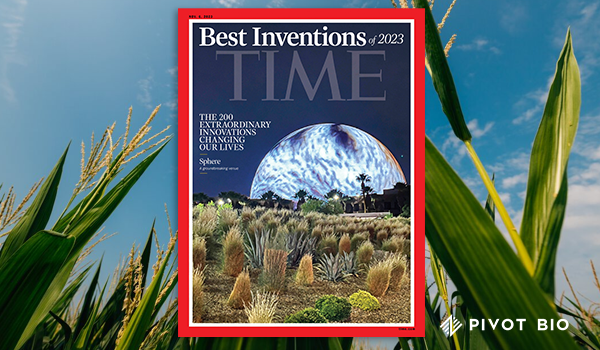
Pivot Bio PROVEN 40 OS is named a 2023 #TIMEBestInventions for transforming crop nutrition. We are honored to be recognized again by @TIME for delivering breakthrough innovations to farmers as one of the most promising climate solutions. https://t.co/P00Nyodg7H
The Data Science by Design community is excited to release the Future of Data Science Anthology⚡️⚡️
This book is a collaboration featuring data designers, scientists, and artists aimed to be both a call to action and vision for what data science can be. https://t.co/2AdyAM9LmA
Happy to share our paper published today on best practices in archiving land model data to enhance usability, intercomparison & synthesis. Provides helpful guidelines for anyone organizing model data for publication. https://t.co/TpiAfuvvO5 @CODATANews@ESSDIVE
En route to AGU! After a major flight delay yesterday, hope to arrive tonight. Excited to present on Thursday, and to learn all the latest in nitrogen fixation, negative emission technologies, field sensors, and soil carbon biogeochemistry! #agu21
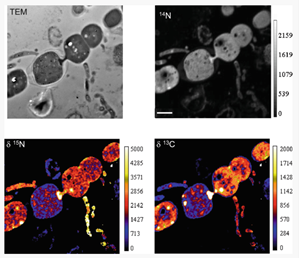
Nearly 10yrs ago, Peter Weber @Livermore_Lab and I wrote a comprehensive 'best practices' on nanoSIP--isotope tracer studies + NanoSIMS single cell imaging.
Check out this completely revised and updated version: https://t.co/E8kR5tQzJ4
(& yes, i'm happy to share the pdf)
Pivot Bio is recruiting 2022 #interns! We offer internships across the business, including #agronomy#microbiology#research and more. See what the Pivot Bio internship experience is like and apply today: https://t.co/cdCINMdnAY
I am very proud to announce @PivotBio has closed its $430 million Series D. Thanks to our team for their tireless work, our investors for believing in our mission, and our farmer customers across the country who have turned to a better source of nitrogen. https://t.co/tmTfBzplBg
Our new paper, lead by Alan Di Vittorio, shows how the interplay among land management practices with differing goals, land use change & #wildfire warrants an integrated approach to quantifying land-based climate mitigation @eesalbnl@calnatresources https://t.co/jnETCkUByi
New in Nature... BIDS Faculty Affiliate David Anthoff @davidanthoff and colleagues present Eight priorities for calculating the social cost of carbon: Advice to the Biden administration as it seeks to account for mounting losses from climate impacts. https://t.co/lfB8OEwSbC
What are the #BayArea's climate change hotspots?
☑️ out this @nbcbayarea story highlighting 🔟 places where #climatechange impacts the Bay. EESA expert, Margaret Torn, speaks about extended CA #wildfire seasons and the potential impacts we will see without climate mitigation.
A key finding is the large scale wildfire mitigation needs in California need to be offset with more widespread emissions-reducing (or sequestering) practices in order to make a considerable contribution to broader carbon emissions reduction targets, such as #netneutrality
🌲⚖️🔥 The culmination of policymakers & scientists working together in our 1st #CALAND manuscript published on the #carbon & #wildfire impacts of California's land use policy scenarios & the role of climate change https://t.co/xSOg3wv5ts @eesalbnl@BerkeleyLab@calnatresources