@boerscht Geht mir gerade genauso. Seit 2 Wochen von Tag zu Tag schlechter trotz Pacing und ohne dass ich irgendwas anders gemacht habe... Es ist soooo furchtbar anstrengend und das jedesmal aufs Neue 🥺
A scientist spent 30 years studying an organ every textbook said was irrelevant. In 2026, two papers in Nature proved she had been right all along. The papers were not written by her.
Her name is Noel Rose Mackay. She is a thymic biologist who has studied the thymus since the 1990s, at a time when the field was considered a professional dead end.
The thymus is a small immune organ behind the breastbone. By the 1980s, medical consensus had settled: the thymus trains immune cells in childhood, shrinks at puberty, and stops functioning meaningfully in adults. Researching adult thymic function was considered a waste of time and grant funding.
Mackay and a small number of colleagues disagreed. They published research throughout the 1990s and 2000s arguing the thymus remained active in adults and that its ongoing T cell production mattered for immune health. The papers were published in smaller journals, cited rarely, and largely ignored by mainstream medicine.
For 30 years, clinical practice did not change. Radiologists reading millions of CT scans did not measure thymic health. Oncologists designing immunotherapy did not account for it. No clinical guideline mentioned it.
In March 2026, researchers at Mass General Brigham used artificial intelligence to analyse CT scans from over 25,000 adults. The AI found exactly what Mackay had argued for three decades.
Adults with healthier thymuses lived longer. 50% lower risk of death from any cause. 63% lower risk of cardiovascular death. 36% lower risk of lung cancer. In cancer patients receiving immunotherapy, stronger thymic health predicted a 37% lower risk of cancer progression and a 44% lower risk of death.
Two papers. Published simultaneously in Nature. Covered by Harvard Medical School, Mass General Brigham, and dozens of international outlets.
The researchers who wrote them work in artificial intelligence and cancer imaging. They were not thymic biologists. They were not looking for the thymus. The AI found it for them.
The science that spent 30 years being ignored was correct.
It took a machine looking at 25,000 scans without any prior assumptions to confirm what a small group of scientists had been saying for three decades.
Sometimes the reason a field is underfunded is not that the question is unimportant.
It is that the answer is inconvenient.
A recent review proposes integrating POTS, ME/CFS, and Long COVID into the neuroimmunology subspecialty. Here is their compelling case.
\ Overlapping Drivers of Disease:
The authors outline several major overlapping pathophysiological mechanisms shared by POTS, ME/CFS, and Long COVID. This includes:
1. Autonomic Dysfunction (Dysautonomia)
2. Mitochondrial Dysfunction
3. Cerebral Hypoperfusion
4. Immune Dysregulation
5. Neuroinflammation
6. Autoimmunity
\ The Harm of Psychiatric Misdiagnoses:
For decades, patients have been wrongly labeled with "functional neurological disorder," anxiety, or somatization because routine tests often look normal.
\ A Call for Better Diagnostics:
Researchers and clinicians urgently need advanced tools such as:
- 7T MRIs
- Targeted PET scans
- Autoantibody and cytokine panels
- Comprehensive autonomic function testing
Routine tests are simply not enough.
\ The Authors’ Core Proposal:
Classify and treat POTS, ME/CFS, and Long COVID as neuroimmune disorders under the subspecialty of neuroimmunology.
This shift would:
• Improve clinical care
• Accelerate research
• Enable effective neurotherapeutics (including repurposed immunomodulatory and anti-inflammatory treatments)
Thanks, Dysautonomia Clinic, for the awesome paper!
#MECFS #POTS #LONGCOVID #PASC
Read more here: https://t.co/QD2SJuwQu3
Millions worldwide suffer from ME/CFS & Long COVID — without objective diagnostics. New Swedish study from Bragée Clincs in Scientific Reports (Nature) identifies protein markers linked to disease severity.
A step toward biomarkers. https://t.co/oqbshUVdyd
#MECFS#LongCovid#KI
@DrRebeccaRyan@steves_beebs I started with 0.25mg of tirzepatid weekly, but unfortunately it worsened my POTS and GI symptoms. Therefore, I stopped after 3 weeks. Should I try again with a lower dose or change to semaglutid? How much would be advisable and how should I increase it?
Bei PEM keine Reha!
Carmen Scheibenbogen @C_Scheibenbogen stellte die CFS_CARE-Daten vor:
Nach stationärer Reha 44 % Verschlechterung, nur 13 % Verbesserung im Bell-Score. Keine Effekte auf Fatigue, Schmerz oder Kognition.
➡️Die Daten zeigen: Reha bei #PEM#MECFS ist ein Risiko!
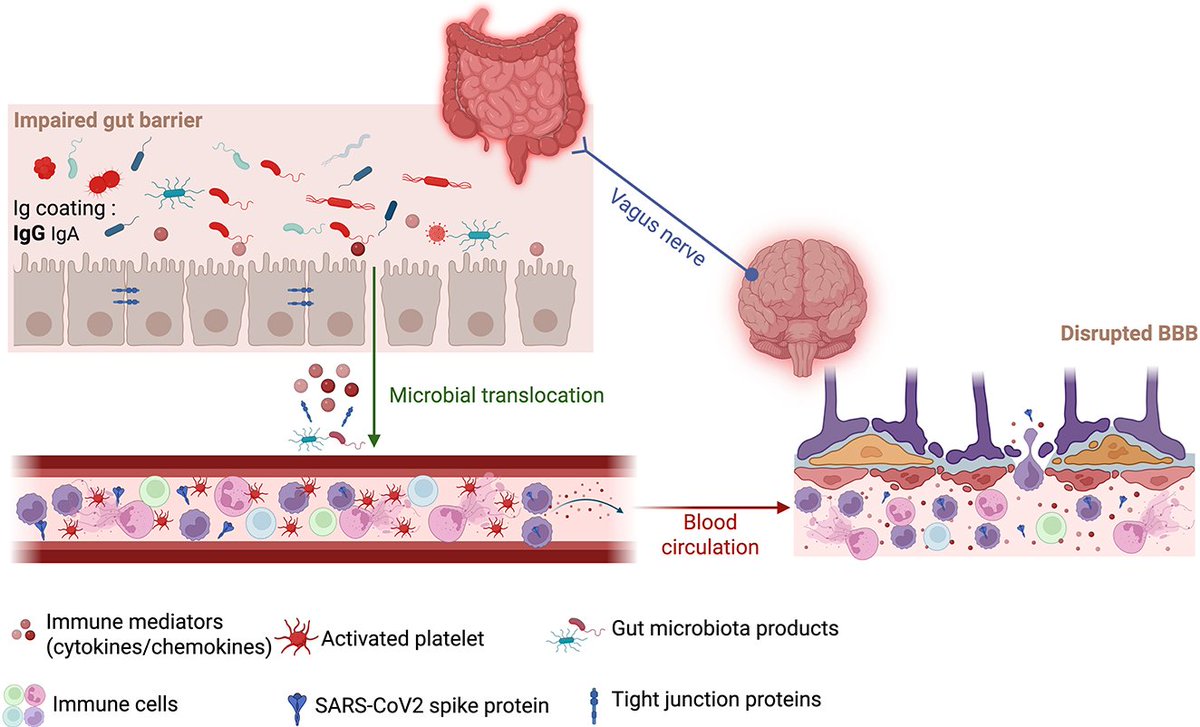
Intestinal barrier compromise, viral persistence, and immune dysregulation converge on neurological sequelae in Long COVID
🔥An elegant Canadian synthesis of the mounting evidence on Long COVID's neurological toll, essential reading for those still lingering in denial at the back of the COVID classroom!
➡️"LC encompasses diverse endotypes and disease trajectories, implying multiple, intersecting mechanisms."
➡️"Evidence points to roles for:
- Viral persistence,
- Intestinal dysbiosis and barrier compromise,
- Innate/myeloid activation with coagulopathy,
- Adaptive immune dysregulation and autoreactivity, and
- Neurovascular/BBB injury."
➡️"Targeted functional studies are needed to define causal pathways, refine endotype-specific biomarkers, and guide precision therapy."
➡️"A practical implication, echoing lessons from HIV, is the value of early intervention."( Better= PREVENTION!)
➡️"Where feasible, timely antiviral therapy during acute infection may reduce inflammatory injury and risk of chronic sequelae."
➡️"For individuals with LC, rational therapeutic combinations that address reservoirs/antigen load, restore intestinal barrier integrity, and modulate dysregulated immune/coagulation pathways may be required."
➡️"Systematic comparisons across post-infectious syndromes can help identify shared targets and accelerate therapeutic development."
‼️URGENT: LC's heterogeneity demands biomarker-driven, precision therapies. Meanwhile #Mitigation should have our highest priority!
‼️So, AGAIN, Long COVID represents a devastating convergence of persistent infection and immune chaos that urgently requires targeted interventions to prevent lifelong neurological damage. With the ongoing reinfection pandemic, we’re really looking at a grim future!
https://t.co/9gzyEEmwHf
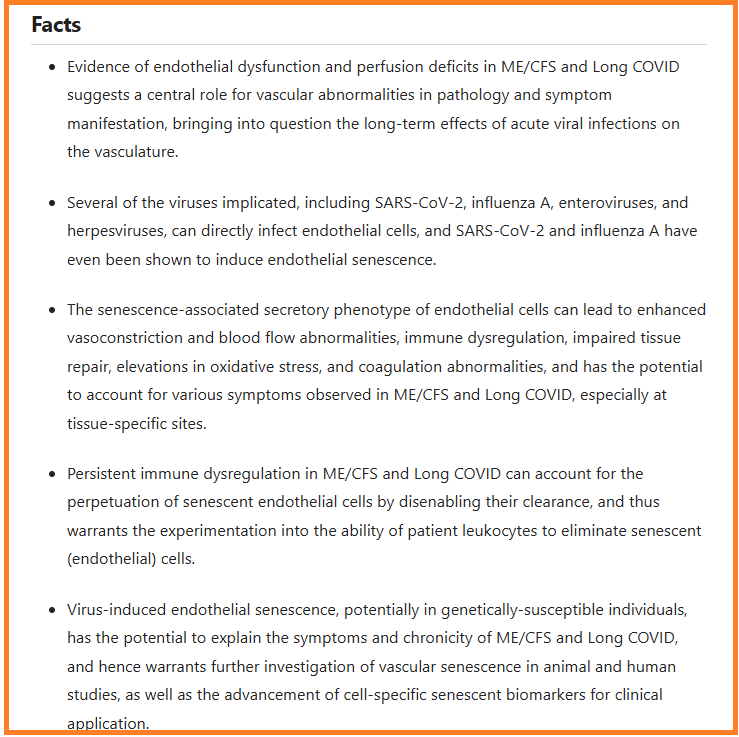
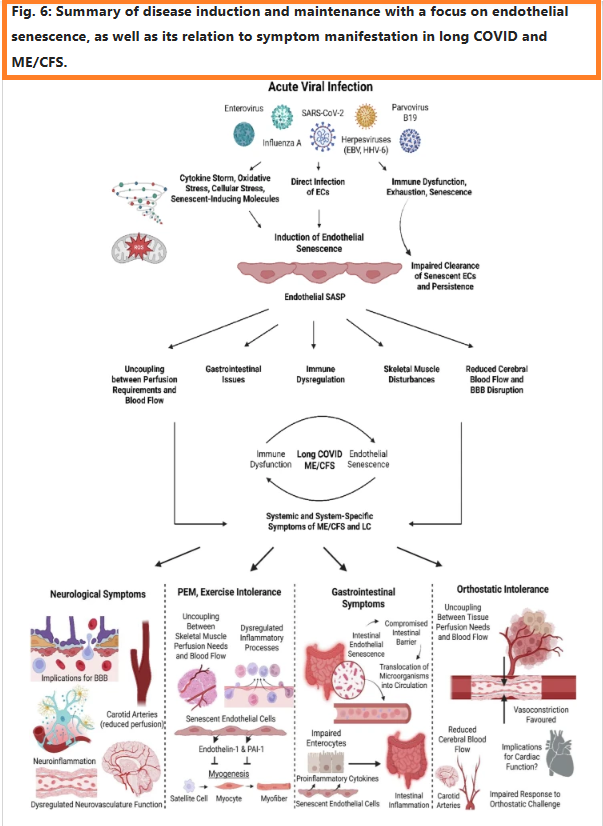
Virus-induced endothelial senescence as a cause and driving factor for ME/CFS and long COVID: mediated by a dysfunctional immune system
🔥Again, EXCELLENT work from @resiapretorius et. al 💪👇
➡️This review article proposes a combining mechanistic hypothesis for myalgic encephalomyelitis/chronic fatigue syndrome (ME/CFS) and long COVID as post-viral syndromes.
➡️The hypothesis synthesizes existing evidence(The facts= fig) without new primary data, emphasizing the endothelium as the core driver.
➡️Main points :
1. Acute viral infections (e.g., SARS-CoV-2, influenza A, EBV, HHV-6) trigger direct or indirect endothelial cell dysfunction and senescence in tissues like the blood-brain barrier, cerebral arteries, gastrointestinal tract, and skeletal muscle.
2. Senescent endothelial cells exhibit a senescence-associated secretory phenotype (SASP) that is proinflammatory (e.g., IL-6, TNF-α), pro-oxidative, procoagulant (e.g., PAI-1, TF, vWF), vasoconstrictive (e.g., elevated ET-1, reduced NO), and impairs tissue repair, leading to multisystem symptoms including reduced cerebral blood flow, perfusion deficits, post-exertional malaise (PEM), fatigue, cognitive issues, and gut disturbances.
3. Immune abnormalities/DYSFUNCTION (e.g, reduced NK cell cytotoxicity, T-cell exhaustion, complement deficits, macrophage impairment) prevent clearance of senescent cells, often via HLA-E evasion, creating a bidirectional vicious cycle:
→ Senescence-Associated Secretory Phenotype (also called the senescence messaging secretome or SMS)(SASP) promotes immune dysfunction, while dysfunctional immunity sustains chronic endothelial senescence beyond the acute infection.
4. This framework explains the shared chronicity, heterogeneity, and vascular origins of both conditions, with elevated SASP markers (e.g., ET-1, VCAM-1, ICAM-1) observed in patients.
5. The clear implications include developing endothelial-specific biomarkers (e.g., microRNA-126) and senotherapeutics (Therapeutic agents/strategies that specifically target cellular senescence) to clear senescent cells and alleviate symptoms, potentially revolutionizing diagnosis and treatment.
‼️So, both ME/CFS and long COVID are fundamentally driven and chronically maintained by PERSISTENT ENDOTHELIAL CELL SENESCENCE, triggered, by acute viral infection and prolonged by IMMUNE DYSFUNCTION, which causes multisystem inflammation, impaired tissue perfusion (especially in the brain), and the full spectrum of devastating symptoms including PEM and profound fatigue.
🤔VERY INTERESTING, now looking forward to future research that builds on this model by examining how SARS-CoV-2 reinfections, viral variants, and vaccination status affect endothelial senescence induction, SASP persistence, impaired immune clearance, and chronic disease progression.
https://t.co/1DfsTK95Mo
1/7
In this study, a lot can be learned about the potential role of the endothelium in the pathobiological matrix of #MECFS:
https://t.co/yFGqBDy68l
A critique that I have is that the most central question in any #MECFS hypothesis ....
Paper, worthwhile reading, for an interesting hypothesis: Virus-induced endothelial senescence as a cause and driving factor for ME/CFS and long COVID: mediated by a dysfunctional immune system | Cell Death & Disease https://t.co/IopY2qV5Nt