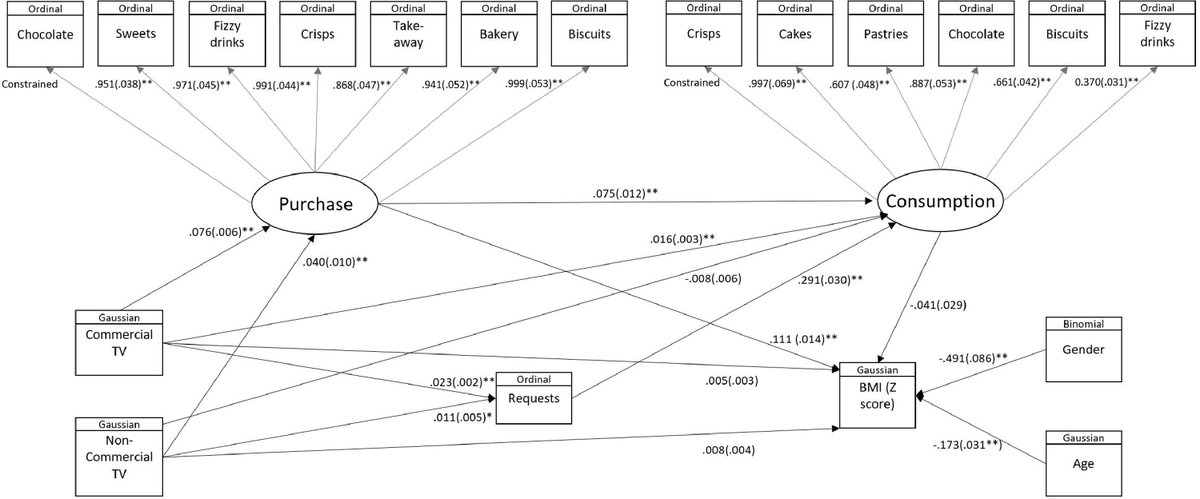
Our new paper:"...commercial TV exposure was indirectly associated with children's body mass index through purchasing and consumption through purchase requests. It was also directly associated with children's purchase requests, purchasing, and consumption of unhealthy foods."
Our latest paper shows the behavioural pathways linking marketing to consumption and child body weight, via purchase requests and purchasing. https://t.co/2P8guDpvQh
@ChristiansenLiv @MagdalenaMuc@JyotsnaVohra@GilsRosenberg@CRUK_Policy
Pleased to share our new paper which found that exposure to HFSS marketing through traditional formats (e.g. broadcast & print) was associated with greater household purchases of energy (9779kcal), protein (416g), carbohydrate(1164g) and sugar (514g) over a four week period.
"A ban on junk food adverts being shown on TV before 21:00 will come into force on 1 October 2025 (...) alongside a total ban on paid-for online adverts, both aimed at tackling childhood obesity."
👏Total ban, because", "aimed/targeted at children" is not enough to protect them.
📜New Paper!
We found that foods higher in energy density were associated with greater energy intake at a meal and over a full day regardless of familiarity. Findings suggest that reformulation may be an effective approach to reducing energy intake🍕
https://t.co/7Q8AYw7gUH
📰 BREAKING NEWS 📰
Our NEW #FuelUsDontFoolUs research reveals 78% of food products with child-appealing packaging (think cute, cuddly marketing) are unhealthy.
Yet companies say they do not market unhealthy food to children...
https://t.co/a4cNZ3Em6m
@EmmaBoyland "I think this is a wake up call for industry. They have to take account of the users they have, not the users that their terms and conditions say they have," Mark Bunting, from Ofcom's Online Safety Group told BBC News.
EXCLUSIVE: four in five outdoor ads in England and Wales is in poorer areas. New research from Adfree Cities shows clear link between outdoor ads like billboards and inequalities in income, air pollution and deprivation.
Read more 👇👇👇
https://t.co/CaHLRIUffA
Law without enforcement is just good advice.
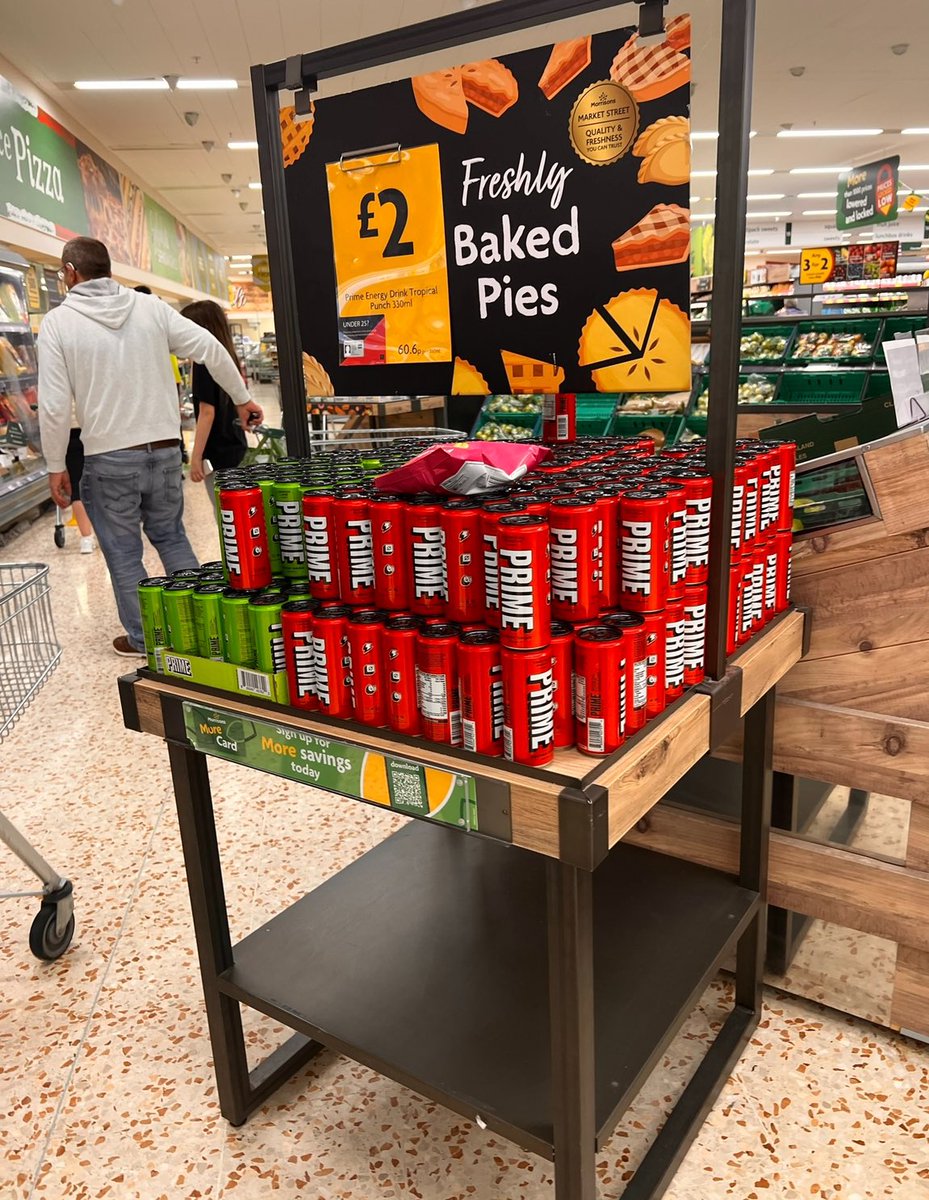
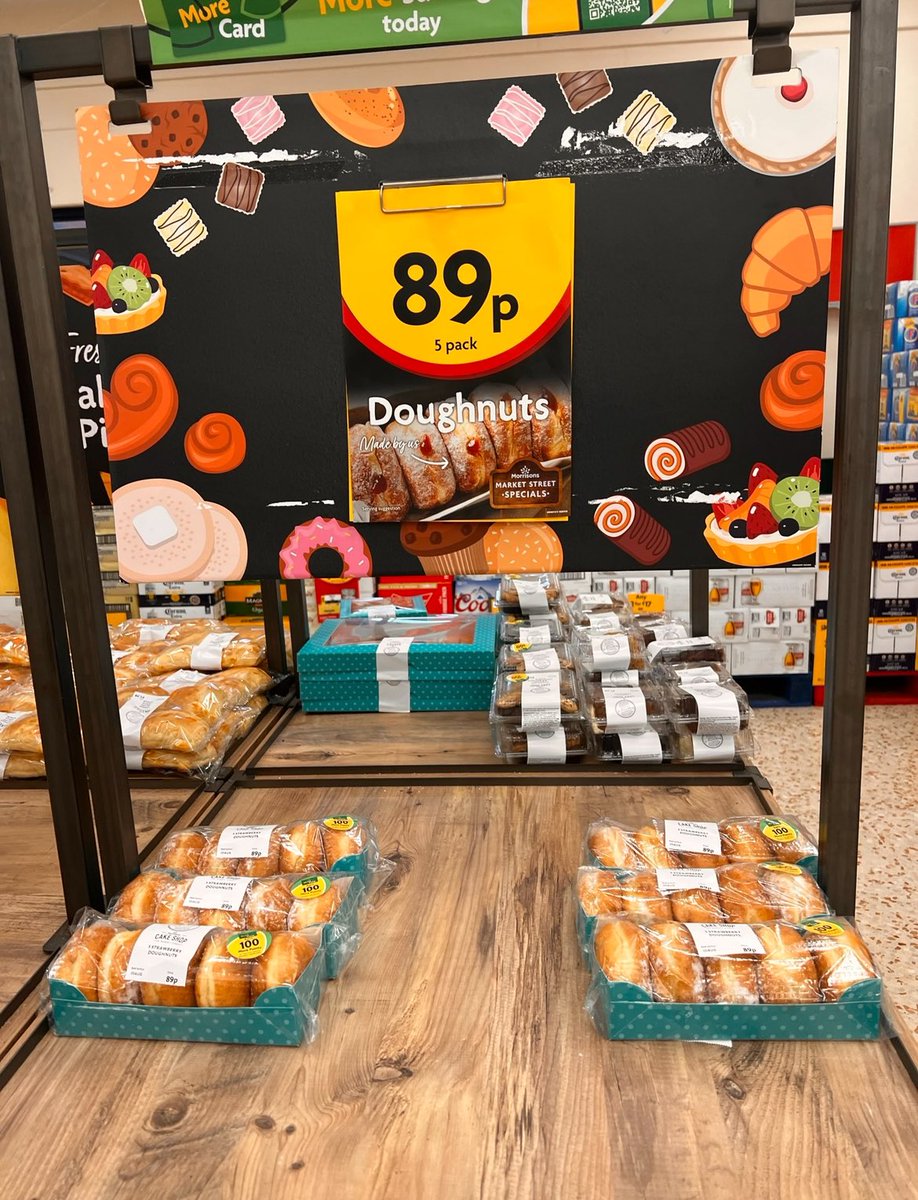
Saw this for myself in England this summer- even though in theory the law prohibits unhealthy foods being promoted in key supermarket locations…in reality this was almost the only type of food I could see in such spots
We are recruiting parents and children in ROI and NI for a study on digital food marketing to children.
We've made a short information video about the study:
https://t.co/w0zZO3nqmA
Email or DM me for more info
(p.s. video production skills were not a module on my PhD! 🙈)
We are looking to speak to parents about their views on online food advertising to children.
If you are interested in taking part in an online focus group, please email or DM me.
RTs appreciated! 🙏
📢We are Recruiting! @MRC_Epid@Cambridge_Uni https://t.co/lfkagz7mEU
Research Associate position in our collaborative, multi-disciplinary team, developing and evaluating interventions to prevent and treat obesity, diabetes and related metabolic disorders. Please RT
@EmmaCalvert3 Yeah, I remember having a cultural shock in the early 2000's when we went on a school exchange and I was served a plate of biscuits with milk. I wonder how far back it goes as a habit?
A hyperfocus on #digitalliteracy may forget that individuals (incl. educators) cannot correct harms that are structural. Especially those due to inadequate #regulation about digital privacy.
7/
I was invited to talk at the Best-ReMaP national stakeholders' meeting in Cyprus. I talked about children's exposure to unhealthy food marketing, how it affects them, and the best practices to restrict it. I also presented our work on monitoring protocols. Exciting end of the JA.
New paper!
Food and non-alcoholic beverage marketing in children and adults: A systematic review and activation likelihood estimation meta-analysis of functional magnetic resonance imaging studies
Led by your friend and mine Prof @EmmaBoyland
https://t.co/65m671Fm1o