a very large portion of our latest expansion & data pipeline requests have been coding. as model capabilities improve in a certain domain, data demand explodes even more.
at micro1, we're building a world class coding research team. if you're interested in joining, check out micro1. ai/ research
Insane stat of the day: California almonds use roughly 3–5.5 million acre-feet of water per year, depending on methodology.
That's ~4-7x more water than all data centers in North America used combined in 2025.
I'm a big investing geek so it is a real treat to talk shop with @PeterJ_Walker. We geeked out on hot seed deals, AI, solo founders, liquidity, and when founders should quit.
Here's the longer breakdown:
The seed market is not uniformly hot. Peter’s core point is that the market has really split in two: the top 5% of companies are commanding extraordinary prices, while the rest of the market feels much more like 2023 or 2024. That is a useful corrective to the lazy “venture is back” narrative.
Paying up can be rational, but only for a very specific game. If your strategy is to find the tiny handful of companies that can become truly massive private outcomes, then the priciest seed deals may actually be the right hunting ground. But Peter is clear that this is not an efficient market and most of those bets will still fail.
Liquidity is the real issue underneath almost every venture argument right now. The question is not just whether a company becomes valuable on paper, but how that paper value actually turns into cash for funds and founders. Peter’s view is that this may be more structural than cyclical, which is a much more unsettling conclusion.
Secondaries may be helping, but they are not solving the whole problem. Peter points out that so much private-market demand is concentrated in just a few names that it is still unclear whether a healthier secondary market broadens access to liquidity or simply crowds into the same superstar companies.
Series A advice is often too simplistic to be useful. The episode does a nice job dismantling the “hit X ARR and you can raise” trope. Peter’s argument is that sector differences matter, but even more importantly, investors care far more about growth, momentum, and velocity than about one static revenue threshold.
AI has made startup evaluation murkier, not cleaner. In an earlier SaaS era, revenue was a sturdier signal. Peter argues that now a company can go from $1M to $3M or $4M in revenue and still leave investors deeply unsure whether the business is durable or just temporarily ahead of a fast-moving model layer.
The venture ecosystem increasingly rewards legibility. Peter gets at a subtle but important point: “known” AI companies and consensus names do not just attract capital because they are promising; they also help managers raise their next funds. That means LP incentives can reinforce consensus behavior even when the actual return case is less obvious.
Employee equity remains widely romanticized. Peter is blunt that the modal outcome for startup equity is zero, especially for later early employees who join when the company is still risky but their ownership is already much smaller. That does not make startup jobs a bad choice, but it does mean founders should be more honest about what equity is and is not.
Solo founders deserve more respect than the market often gives them. The rise in solo-founder companies is one of the more interesting empirical shifts Peter highlights. He makes the underrated point that solo founders remove one entire failure mode from the business — cofounder breakup — even if they take on more personal load in exchange.
“Never quit” is bad blanket advice. One of the sharpest sections of the episode is Peter pushing back on hustle-culture orthodoxy. His argument is not that ambition is bad; it is that many companies should be shut down sooner, and more VCs should be willing to tell founders that missing on one company does not mean failing as a person.
LP behavior may be the hidden lever behind a lot of venture’s problems. Peter says more clearly than most people do that if venture is going to change, it probably will not start with founders or GPs. It has to start with LPs, because their incentives shape fund structure, manager selection, and ultimately what kinds of bets get made.
Concentration is not the only winning strategy. Peter closes by arguing against the idea that all great venture funds must be highly concentrated. His view is that power-law outcomes can come from multiple portfolio constructions, and that especially at the earliest stages, taking more swings can be just as rational as focusing narrowly.
Uber's pricing journey is a good proxy for Anthropic and OpenAI, both of which have massive latent pricing power. Uber's early critics said that demand would melt once they stopped subsidizing rides and yet, despite take rates increasing from 20% to 30% in the 8 years since the IPO, trips on Uber have almost tripled.
No stake in Uber, Anthropic, or OpenAI. I just think investors are seriously underestimating the frontier AI labs' pricing power.
Just recorded a banger of a conversation with @PeterJ_Walker about seed valuations, liquidity, solo founders, and knowing when to quit. Drops Wednesday on @InvestNStartups.
Today we’re releasing Realm Warren, part of the Realm benchmark series for measuring frontier AI models on real-world expert workflows.
Each task tests whether a model can produce a legal work product and adapt it as circumstances evolve. We evaluated Claude Opus 4.7, GPT-5.5, and Gemini 3.1 Pro across federal and state law, scored through IRAC: issue spotting, rule identification, factual application, and legal conclusion.
Here’s the results (mean score):
-Claude Opus 4.7: 0.358
-GPT-5.5: 0.351
-Gemini 3.1 Pro: 0.219
The sub-40% result shows where models break down on long-horizon legal work. Three failure modes drive it: the IRAC chain breaks after issue spotting, models front-load their effort and fail to revise, and skipping visual exhibits leads to invented facts.
Full report linked in the comments.
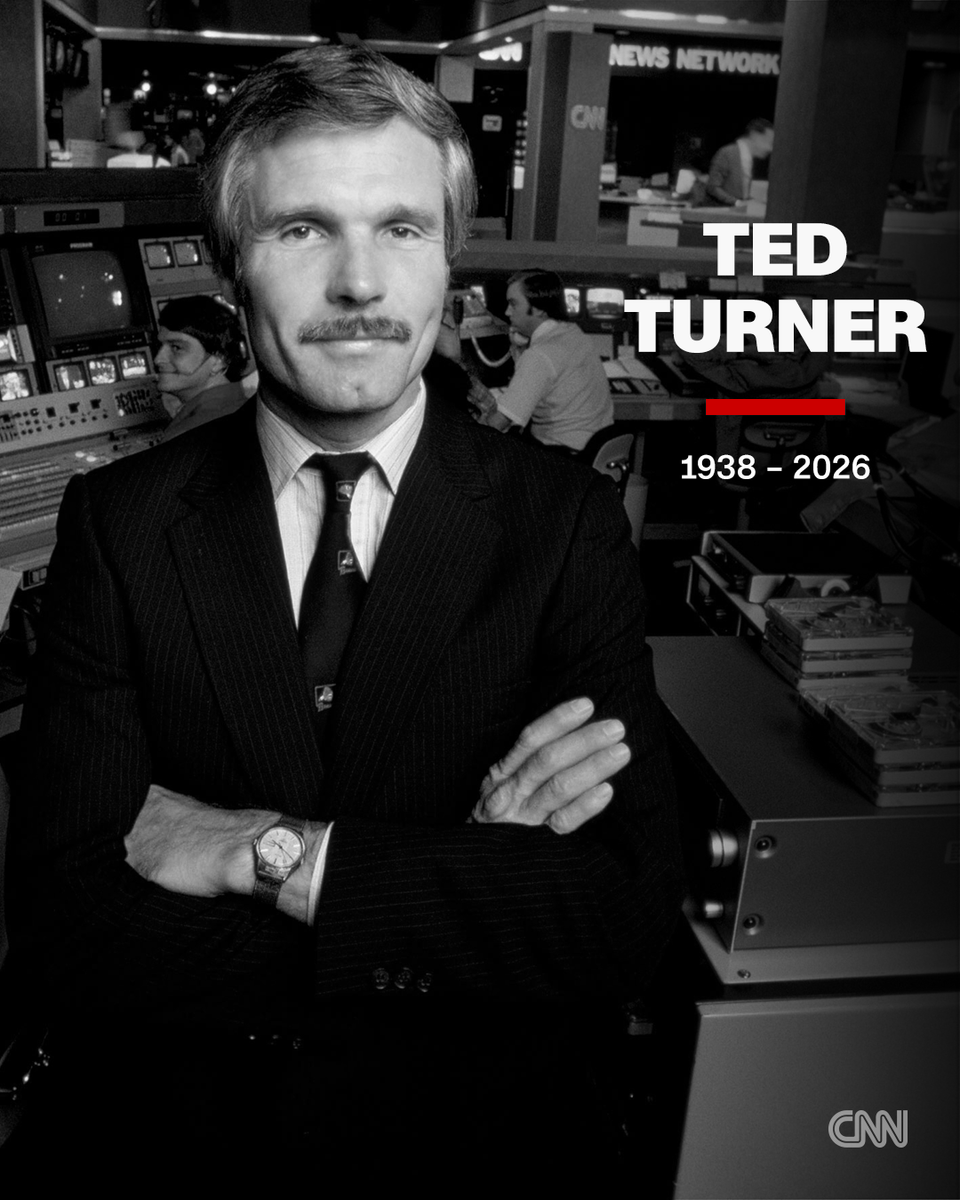
Legend. Turned his father's failing business into an empire, media visionary, owned the Braves, married Jane Fonda, donated more than $1B to charity, and saved the American bison. Oh and in his free time he won the America's Cup. What a life!
Ted Turner, the billionaire media entrepreneur and philanthropist who launched the 24-hour cable TV news revolution when he founded CNN in 1980, has died. He was 87. https://t.co/61G2Kuh8Vz
Investing in software when "software is dead" and building a hyper-concentrated early-stage fund - got to share some unintentionally hot takes with @Magyer 🙃
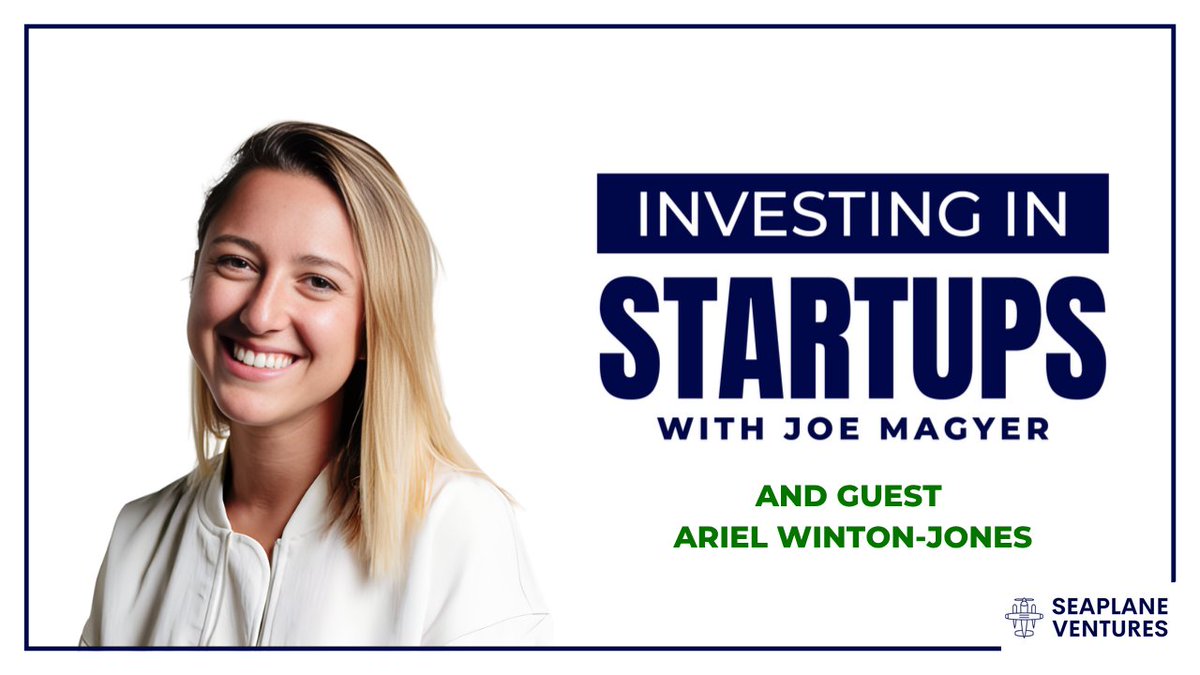
Excited to share my conversation with @arielrwinton. We talked about services as software, what B2B software looks like in the age of AI, and why intentional, high-conviction investing can be a real edge.
Here's the longer breakdown of our conversation:
AI is changing what “software” even means. Ariel’s core insight is that the most interesting new B2B companies are no longer just tools that help customers do work themselves; they increasingly deliver the work itself, with AI acting as the intelligence layer. Her “services as software” lens is really about backing products that solve the problem, not just support the workflow.
There is no single “correct” software business model anymore. Ariel pushes back on rigid thinking around pricing and monetization. Rather than forcing every company into seat-based, usage-based, or any other fashionable model, she starts with how the customer experiences value and how that customer is actually comfortable buying. The takeaway is that good pricing is market-matched, not ideology-driven.
At the earliest stages, insight can matter more than speed. One of her strongest points is that pre-scale companies often produce rich signals before they produce rich spreadsheets. Ariel’s process is built around hypothesis-driven diligence on qualitative evidence: customer behavior, founder learning velocity, market pull, and the first real signs of product-market fit. That is a different kind of rigor than simply moving fast.
Relationship-building is part of diligence, not separate from it. Ariel wants to meet founders well before a financing process, partly to avoid “pitch mode,” but also because time reveals how people think, learn, and respond under pressure. The deeper point is that winning great deals consistently often comes from showing your value over time, not trying to out-sprint everyone once a round is live.
B2B remains attractive because it is unusually resilient. Ariel’s case for staying focused on B2B is not just familiarity. She argues that B2B software businesses are harder to kill, more capital-efficient, and governed by clearer operating playbooks than many other models. Her conviction comes from seeing that resilience firsthand across both focused and generalist environments.
Concentration can start earlier than most investors think. Ariel rejects the idea that concentration only makes sense once growth-stage metrics are obvious. Her view is that there is an undervalued middle ground: once real qualitative signs of product-market fit emerge, an investor who knows how to read those signals can begin concentrating earlier and more intentionally.
Follow-ons are emotionally harder than they look. One of the sharper insights in the episode is Ariel’s skepticism toward heavy reserve strategies. Her argument is not just mathematical; it is psychological. Once you are already partnered with a founder, it becomes harder to stay objective, and later rounds often happen at prices you do not control. Her solution is to concentrate where she believes she has the clearest edge and keep reserves relatively disciplined.
“Founder friendly” should not mean automatic yeses. Ariel makes an important distinction between being supportive and being indiscriminate. She does not see loyalty as writing every follow-on check; she sees it as being thoughtful, honest, and acting from conviction rather than social pressure. That is a useful correction to a phrase that often gets used too loosely in venture.
Solo GP does not have to mean solitary decision-making. Ariel talks about changing her mind on building alone. What stands out is her realization that independence on the investment side can coexist with a broad, trusted village of mentors, peers, and supporters. The lesson is that you do not necessarily need a formal partner to pressure-test thinking if you have intentionally built the right network around you.
The most valuable help in venture is often bespoke, not scalable. Her critique of platform teams is one of the episode’s clearest contrarian takes. Ariel believes the best founder support is highly contextual, trust-based, and specific to a moment, not something easily turned into a repeatable menu of services. Her alternative is a dense network of excellent people she can connect to founders at exactly the right time.
A founder’s “why” is not soft stuff; it is core diligence. Ariel starts first meetings by asking why the founder is building the company. She treats that as foundational context, not biography filler. The insight is that understanding motivation, origin, and market intimacy helps interpret everything else you learn later.
Hope you enjoyed this episode of @InvestNStartups!
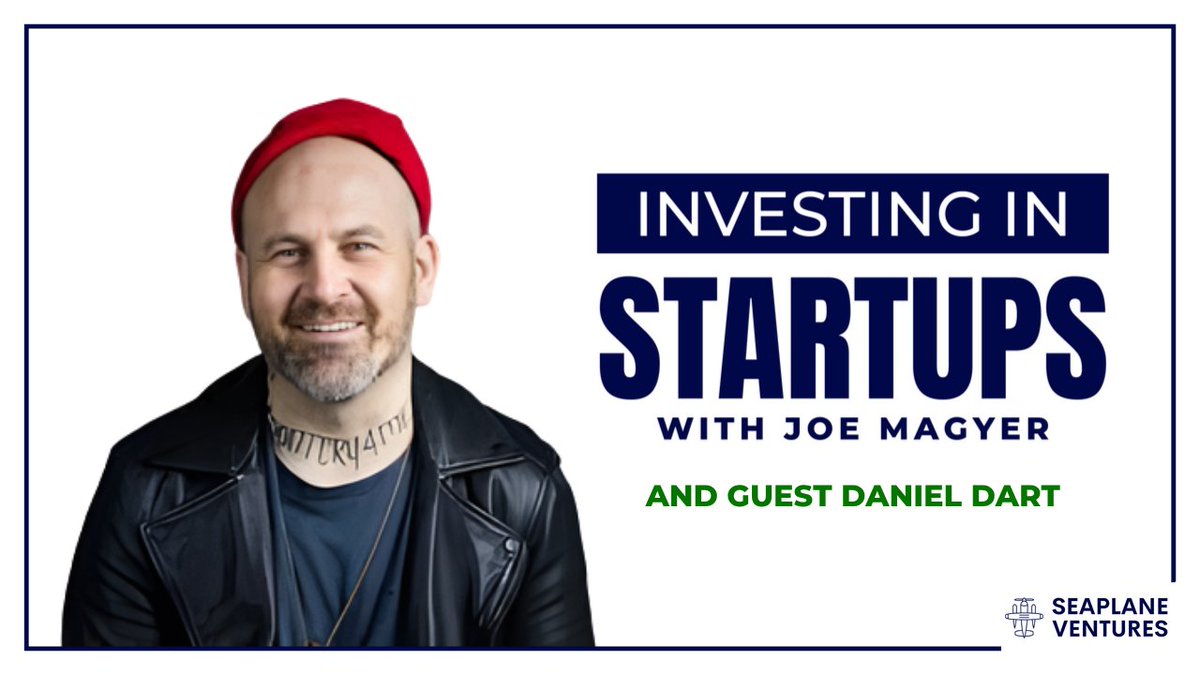
Excited to share my conversation with @itsdanieldart on Future Titans, authenticity, and systems thinking. Here are the key takeaways and from the conversation:
Authenticity is a real competitive advantage, not just a personality trait. Daniel’s view is that in venture, authenticity builds trust, trust compounds over time, and that becomes a durable edge with founders, LPs, and peers. He draws a hard line between honest feedback and performative bluntness, arguing that the best investors pair candor with empathy.
The best networks are discovered, not manufactured. One of the strongest ideas in the episode is Daniel’s belief that you should spend time finding believers rather than trying to convince skeptics. His “no name tags, no pitch tags” approach at Future Titans reflects a broader philosophy: the highest-quality relationships usually come from shared values and trust, not forced transactionality.
Good investing starts with good systems. Daniel comes back repeatedly to being input-focused rather than outcome-obsessed. Whether he’s talking about building a conference, supporting founders, or constructing a fund, his core idea is that strong systems, repeated over time, create the conditions for strong outcomes.
Founder support is not “value-add theater”; it is trust-building. His post-investment cadence with founders reflects a bigger belief that company-building is lonely and that investors earn the right to matter by being consistently useful, reliable, and emotionally steady. The insight is that being hands-on is less about control and more about becoming a trusted source of truth.
Tier 1 ambition is really about relevance, not branding. Daniel is very open about wanting to build @RockYardVC into a top-tier firm, but he frames that ambition operationally: can he become someone who is consistently in the conversation for the best deals in his areas of focus? The takeaway is that elite status should be earned through repeated market relevance, not borrowed prestige.
Venture works best when you invest for upside, not survival. A memorable throughline is Daniel’s rejection of playing defense just to preserve optics. He argues that venture is an upside-capture business, and that emerging managers can get trapped by trying too hard to avoid failure instead of underwriting for asymmetric returns.
In frontier markets, proximity beats false certainty. On AI and quantum, Daniel’s stance is not “I can predict the future perfectly,” but rather “I want to get close to the smartest builders and learn from them.” The deeper point is that an investor’s edge often comes less from pretending to know and more from developing informed conviction through proximity to exceptional people.
Long-term thinking expands what’s possible. Daniel repeatedly frames decisions on a 5-, 10-, and 15-year basis, arguing that a longer horizon raises your tolerance for short-term imperfection and makes room for ambitious bets, deeper relationships, and better firm-building decisions.
Tactical questions often reveal more than abstract advice. His favorite question to ask experienced investors — what they would want him to do in the first 90 days if they were backing Rock Yard — captures the episode’s broader mindset: learning should translate into concrete actions, not vague inspiration.
Please enjoy!
there’s never been another type of company that brings together doctors, lawyers, finance experts, and world-class AI researchers into one tight team working toward the same mission.
if you build a health AI company, you might have doctors and AI researchers. if you build an AI-native law firm, you’ll have lawyers and AI researchers.
but if you build a data engine that orchestrates the nuanced depth of human expertise into AI models—and those models create immense abundance for the very humans behind them, you bring the best of humanity, from all walks of life, under one roof.
that’s the micro1 research team. we have AI researchers who design the orchestration and structure of human expertise, and domain researchers who bring the nuance and complexity of their fields. together, they train frontier AI models, improving the lives of the same humans who trained them.
there are 4 products that allow for this:
-AI Recruitment to source & vet expertise
-Data platform to rapidly create highly quality data
-Data pipeline performance tracking to assure throughput, quality, and effiency
-AI automation to allow for synthetic data generation for data efficient model training
The micro1 research & eng team is more than 50% of our team. In the limit, research & engineering will be 99% of our team.
come build freely toward answering a fundamental question: where should humanity spend its time? as we orchestrate human expertise, we decide which work humans should focus on. as we build automations that generate data through AI, we define where humans shouldn’t spend time. and as we create abundance through AI model improvements, we shape how humanity evolves its time.
join us in answering this very question.
Excited to share my conversation with @itsdanieldart on Future Titans, authenticity, and systems thinking. Here are the key takeaways and from the conversation:
Authenticity is a real competitive advantage, not just a personality trait. Daniel’s view is that in venture, authenticity builds trust, trust compounds over time, and that becomes a durable edge with founders, LPs, and peers. He draws a hard line between honest feedback and performative bluntness, arguing that the best investors pair candor with empathy.
The best networks are discovered, not manufactured. One of the strongest ideas in the episode is Daniel’s belief that you should spend time finding believers rather than trying to convince skeptics. His “no name tags, no pitch tags” approach at Future Titans reflects a broader philosophy: the highest-quality relationships usually come from shared values and trust, not forced transactionality.
Good investing starts with good systems. Daniel comes back repeatedly to being input-focused rather than outcome-obsessed. Whether he’s talking about building a conference, supporting founders, or constructing a fund, his core idea is that strong systems, repeated over time, create the conditions for strong outcomes.
Founder support is not “value-add theater”; it is trust-building. His post-investment cadence with founders reflects a bigger belief that company-building is lonely and that investors earn the right to matter by being consistently useful, reliable, and emotionally steady. The insight is that being hands-on is less about control and more about becoming a trusted source of truth.
Tier 1 ambition is really about relevance, not branding. Daniel is very open about wanting to build @RockYardVC into a top-tier firm, but he frames that ambition operationally: can he become someone who is consistently in the conversation for the best deals in his areas of focus? The takeaway is that elite status should be earned through repeated market relevance, not borrowed prestige.
Venture works best when you invest for upside, not survival. A memorable throughline is Daniel’s rejection of playing defense just to preserve optics. He argues that venture is an upside-capture business, and that emerging managers can get trapped by trying too hard to avoid failure instead of underwriting for asymmetric returns.
In frontier markets, proximity beats false certainty. On AI and quantum, Daniel’s stance is not “I can predict the future perfectly,” but rather “I want to get close to the smartest builders and learn from them.” The deeper point is that an investor’s edge often comes less from pretending to know and more from developing informed conviction through proximity to exceptional people.
Long-term thinking expands what’s possible. Daniel repeatedly frames decisions on a 5-, 10-, and 15-year basis, arguing that a longer horizon raises your tolerance for short-term imperfection and makes room for ambitious bets, deeper relationships, and better firm-building decisions.
Tactical questions often reveal more than abstract advice. His favorite question to ask experienced investors — what they would want him to do in the first 90 days if they were backing Rock Yard — captures the episode’s broader mindset: learning should translate into concrete actions, not vague inspiration.
Please enjoy!