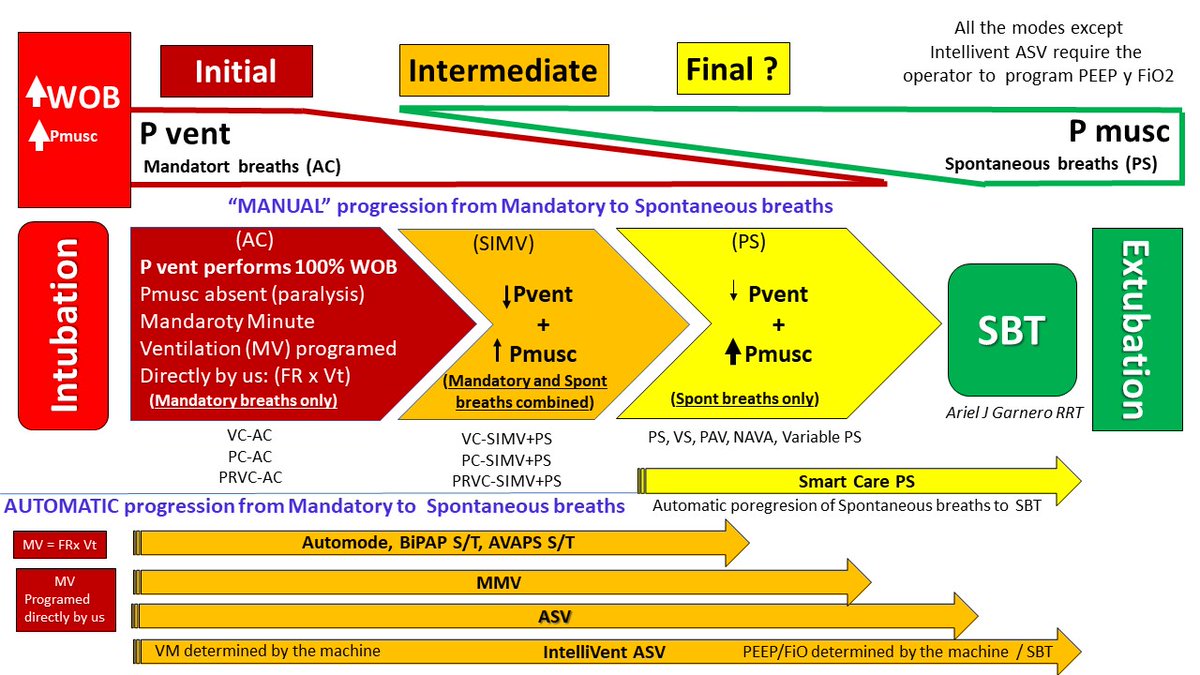
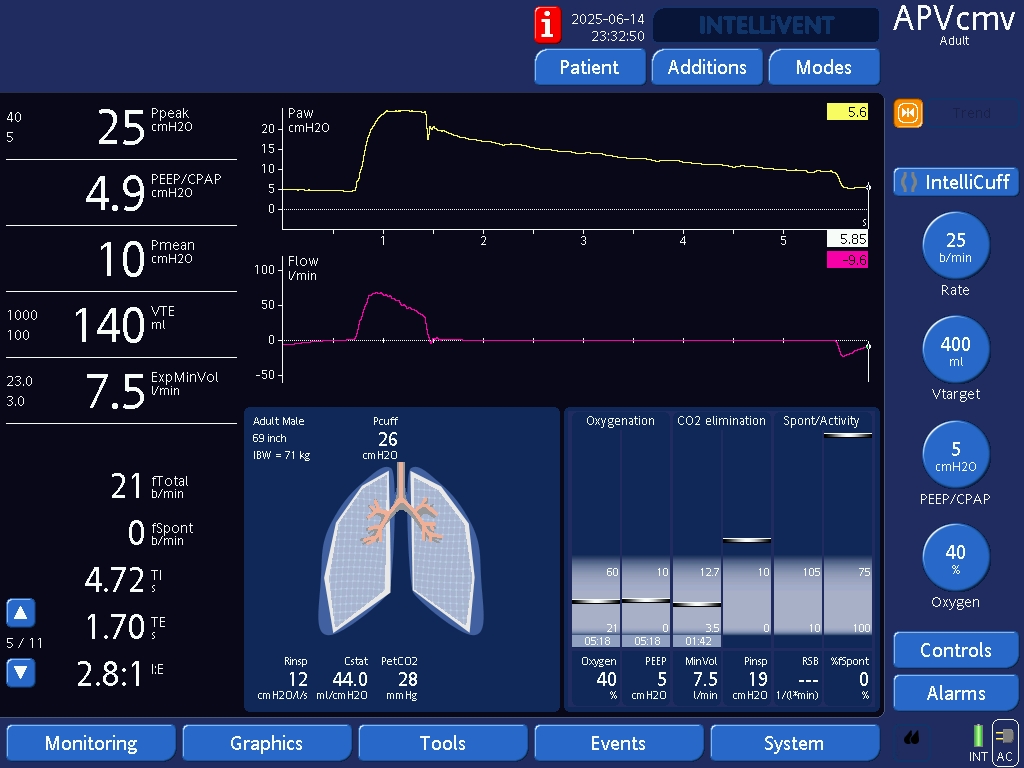
للناس المهتمه ب Mechanical ventilation راح احط هنا قناة لدكتور / محمد أمين ، أستشاري
في طب الحالات الحرجه بوحدة د.شريف مختار بجامعه القاهرة .
الله يكرمه ويجزاه خير واحد من أفضل الدكاتره المحترمه في خلقه وعلمه وتواضعه .
https://t.co/HGbtbJh1A6
-Genève 23/06/26 - La Mission permanente du Tchad à Genève et ses cosponsors ont réuni les acteurs principaux, États et ONGs pour un side event sur la traite des enfants en zone de conflit et les mécanismes de leur protection. Avec la rapporteure spéciale Mme Mullaly, les échanges ont été vrais et constructifs. Le Tchad est honoré par cette sollicitude. @ONUGeneve
🫁 PEEP titration in ARDS remains one of the most controversial decisions in mechanical ventilation.
In my recent X and LinkedIn polls, most clinicians selected compliance optimization as their primary method, followed by individualized multimodal assessment. ARDSNet tables and driving pressure were less frequently chosen.
This reflects where the field is moving.
Recent PubMed indexed guidelines and meta analyses suggest that PEEP should not be treated as a fixed table value, but as a bedside physiological test. The 2023 ESICM ARDS guideline did not endorse one universal PEEP strategy, while the 2024 ATS guideline conditionally suggested higher PEEP without prolonged recruitment maneuvers in moderate to severe ARDS (Grasselli et al., 2023; Qadir et al., 2024).
Compliance optimization is useful, but incomplete. A higher compliance may reflect recruitment, but it can also miss regional overdistension.
Driving pressure is powerful, but it is also global. It does not tell us whether one lung region is opening while another is being overstretched.
The recruitment to inflation ratio offers a bedside estimate of recruitability, but recent CT validated data suggest limited diagnostic performance, especially in focal ARDS (Richard et al., 2025).
Electrical impedance tomography may better identify regional collapse and overdistension, and recent systematic reviews show improvements in compliance, driving pressure and mechanical power, but outcome evidence remains evolving (Songsangvorn et al., 2024).
The best answer may not be one method.
A modern PEEP strategy should integrate:
Compliance
Driving pressure
Oxygenation
CO₂ clearance
Hemodynamics
Right ventricular response
Recruitability
Imaging pattern
EIT when available
Esophageal pressure in selected patients
References 📚
Grasselli, G., Calfee, C. S., Camporota, L., Poole, D., Amato, M. B. P., Antonelli, M., et al. (2023). ESICM guidelines on acute respiratory distress syndrome: Definition, phenotyping and respiratory support strategies. Intensive Care Medicine, 49, 727–759. https://t.co/67nFMfpurf
Qadir, N., Sahetya, S., Munshi, L., Summers, C., Abrams, D., Beitler, J., et al. (2024). An update on management of adult patients with acute respiratory distress syndrome: An official American Thoracic Society clinical practice guideline. American Journal of Respiratory and Critical Care Medicine, 209(1), 24–36. https://t.co/Cf5W5R79KU
Richard, J. C., Dhelft, F., Deniel, G., et al. (2025). Diagnostic performance of the recruitment-to-inflation ratio to assess lung recruitability by PEEP in ARDS: A computed tomography study. Critical Care, 29, 220. https://t.co/JZp9cxdsKn
Songsangvorn, N., Xu, Y., Lu, C., Rotstein, O. D., Brochard, L., Slutsky, A. S., Burns, K. E. A., & Zhang, H. (2024). Electrical impedance tomography-guided positive end-expiratory pressure titration in ARDS: A systematic review and meta-analysis. Intensive Care Medicine, 50, 617–631. https://t.co/BsnCgclUEZ
ليس كل شعور بالنقص سببه غياب شيء ما.
أحيانًا يكون سببه اعتيادنا على النعم حتى تصبح غير مرئية.
فكلما اشتكينا مما ينقصنا، ربما كان يجدر بنا أن نسأل أنفسنا:
ما النعمة التي اعتدت وجودها في حياتك حتى توقفت عن شكر الله عليها؟
#قال_العارفون
🫁 ARDS is not one disease...It is a syndrome with multiple phenotypes that may respond differently to the same ventilator strategy.
Recent PubMed indexed guidelines and reviews emphasize that ARDS should be analyzed by severity, cause, timing, mechanics, recruitability, radiology, inflammation, hemodynamics, and response to treatment (Grasselli et al., 2023; Qadir et al., 2024).
A practical bedside phenotype includes:
Clinical cause: sepsis, pneumonia, aspiration, pancreatitis, trauma, transfusion, COVID, postoperative lung injury.
Severity: PaO₂/FiO₂, SpO₂/FiO₂, need for HFNC, NIV, invasive ventilation, prone position, or ECMO.
Respiratory mechanics: driving pressure, plateau pressure, compliance, mechanical power, dead space, ventilatory ratio.
Radiology: focal versus diffuse ARDS. Focal ARDS may be less recruitable and more prone to overdistension. Diffuse ARDS may tolerate higher PEEP better if recruitability is present.
Recruitability: response to PEEP, recruitment-to-inflation ratio, compliance change, oxygenation, CO₂ clearance, EIT when available, and hemodynamic tolerance.
Biology: hyperinflammatory versus hypoinflammatory phenotypes. Hyperinflammatory ARDS is associated with higher inflammatory biomarkers, shock, acidosis, worse outcomes, and may respond differently to PEEP, fluids, corticosteroids, and future targeted therapies (Das et al., 2025; Petrick et al., 2025).
Treatment must follow phenotype, not habit.
All ARDS: lung-protective ventilation, low tidal volume, plateau pressure limitation, driving pressure awareness, conservative fluids when shock is controlled, and prevention of VILI.
Moderate-severe ARDS: early prone positioning.
Recruitable diffuse ARDS: consider higher PEEP carefully.
Poorly recruitable focal ARDS: avoid aggressive recruitment and excessive PEEP.
Severe refractory hypoxemia: evaluate early for VV ECMO.
Inflammatory early ARDS: corticosteroids may be considered according to recent guidelines, but timing, cause, infection risk, and phenotype matter.
References 📚
Das, S. K., et al. (2025). Critical Care. PMID: 40734796
Grasselli, G.. Intensive Care Medicine, 49, 727–759. https://t.co/67nFMfpurf
Petrick, P. L., et al. (2025). Journal of Clinical Medicine, 14(20), 7204.
Qadir, N. American Journal of Respiratory and Critical Care Medicine, 209(1), 24–36. https://t.co/Cf5W5R79KU
« Les autres pays africains se taquinent en ligne et discutent Foot, Coupe du monde, Autoroutes, Satellite, Capitale propre, Rayonnement culturel, Nasa : nous on passe à côté, on ne peut même pas ouvrir notre bouche, sur aucun sujet là-bas. Vous voyez maintenant le fruit de votre travail, chers dirigeants Tchadiens! »
Detecting leaks on waveforms (3/3):
We saw that a sharp reset in the volume-time curve and an insp hold Paw that doesn’t plateau are signs of leaks.
Click below to see a third waveform sign of leaks and how we treated last post’s case of a tracheal pleural fistula!
Notre compatriote nous rend tous fiers et fait honneur au #Tchad en rendant les maths accessibles à des millions de personnes sur les réseaux sociaux. Bravo !
@allangahissein@mouminkellehi قال الرسول صلى الله عليه وسلم : "مَنْ رَأَى مِنْكُمْ مُنْكَرًا فَلْيُغَيِّرْهُ بِيَدِهِ، فَإِنْ لَمْ يَسْتَطِعْ فَبِلِسَانِهِ، فَإِنْ لَمْ يَسْتَطِعْ فَبِقَلْبِهِ، وَذَلِكَ أَضْعَفُ الْإِيمَانِ".
Moumine a eu le courage de parler au moins, c'est l'essentiel. Merci !
POCUS in Shock: The Modern ICU Stethoscope 🩺
The evaluation of hypotension in critically ill patients is a race against time.
The "Pump, Tank, Pipes" Approach
The most widely used protocol for undifferentiated shock remains the RUSH examination:
🫀 Pump • Cardiac function • Pericardial effusion/tamponade • Right ventricular strain • Global ventricular performance
🪣 Tank • IVC assessment • Intravascular volume status • Free abdominal fluid • Fluid responsiveness clues
🩸 Pipes • Pneumothorax • Aortic pathology • Deep vein thrombosis • Massive pulmonary embolism indicators
This systematic approach allows clinicians to rapidly classify shock as hypovolemic, cardiogenic, obstructive, or distributive.
Why POCUS Changes Management
Structured ultrasound protocols improve diagnostic accuracy from approximately 60% with clinical examination alone to 85%, while altering management decisions in up to 50% of patients.
In many cases, POCUS provides the decisive clue before laboratory or radiologic confirmation becomes available.
Lung Ultrasound: A Critical Extension
Lung ultrasound has transformed bedside respiratory assessment.
Key findings include:
🌊 Diffuse B-lines • Suggest pulmonary edema • Sensitivity ≈94% • Specificity ≈92%
🏖️ A-lines • Usually indicate normally aerated lung
🚫 Barcode Sign • Supports pneumothorax diagnosis
🏝️ Seashore Sign • Normal lung sliding
In unstable patients, lung ultrasound frequently identifies life-threatening pathology faster than chest radiography.
The New Frontier: Venous Congestion and AI
POCUS is evolving beyond simple volume assessment.
Emerging applications include:
• Venous Excess Ultrasound Score (VExUS)
• Critical care transesophageal echocardiography (TEE)
• Automated AI-assisted image acquisition
• Real-time calculation of ejection fraction
• Automated IVC and stroke volume assessment
• Handheld ultrasound devices integrated into ICU workflows
These innovations may reduce operator dependence while expanding access to advanced hemodynamic assessment.
Important Caveat
One of the most valuable statements from this review is also one of the simplest:
"While POCUS is a powerful tool, it requires humility and awareness of its fallibilities."
Ultrasound should complement clinical reasoning, not replace it. Poor image quality, operator dependency, confirmation bias, and overreliance on isolated findings remain important limitations.
Reference 📚
Rowe M, Ferrada P. Ultrasound to guide critical decisions: What you need to know. Journal of Trauma and Acute Care Surgery. 2026;100(5):692–699. DOI: 10.1097/TA.0000000000004815.
@allangahissein@Berem_kissir Depuis que qu’on a commencé à dénoncer cette injustice, combien de fois certains choses ont changé. Désolé mais on peut pas rester nos bras croisés et voir tes mentors font des la merde