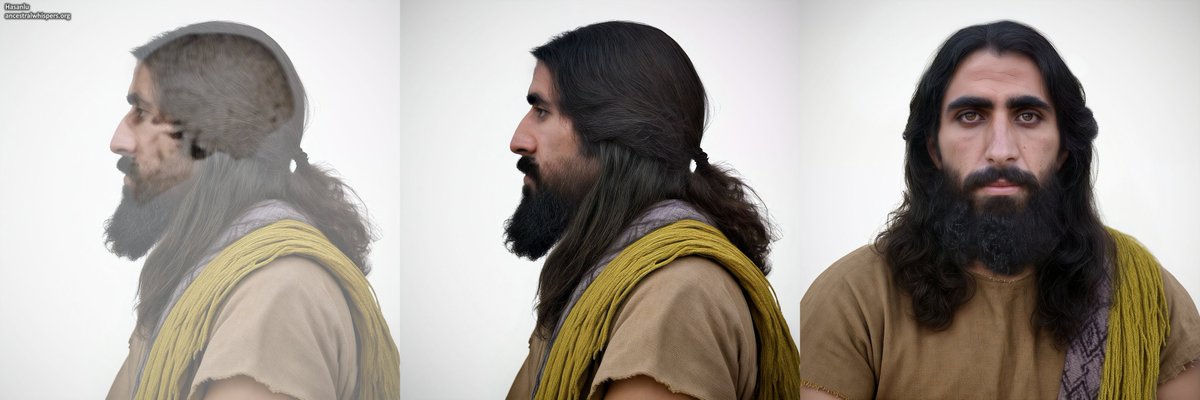
Facial reconstruction of a 2,900-year-old man(?) from Tabriz, Iran
The Iron Age cemetery of Masjed-e Kaboud in Tabriz is one of the most significant archaeological sites associated with the Iron Age in the eastern part of the Lake Urmia Basin. The most important and valuable finds from this site are the tombs, which are dated to the Iron Age (Petruff, M., 1932; Pour Faraj, A., 1952).
Iron Age burial practices were influenced by religious beliefs, among which the belief in life after death was particularly important (Azadegan, J., 1994). Consequently, food and other items required for everyday life were buried with the deceased to provide them with the necessities for the afterlife (Talaei, H., 1952). As a result, numerous objects were recovered from Iron Age tombs, many of which shared common characteristics. The crouched position of the deceased was reminiscent of a fetus in the womb and symbolized birth and death as two significant stages of human existence (Tavakoli Moqadam, H., 1992). Furthermore, the orientation of tombs was an important consideration for prehistoric societies, as sunrise and sunset marked the eastern and western directions, respectively (Majidzadeh, Y., 1938).
The skeletons discovered in the tombs surrounding Masjed-e Kaboud were buried in a crouched position. In accordance with Iron Age burial practices, grave goods included pottery, animal bones such as those of sheep, metal objects, and decorative items (Tabrizi, M., 1940).
Most of the Iron Age tombs in the vicinity of Masjed-e Kaboud contained grave goods such as buff and gray pottery, iron and bronze objects, bone and stone beads, and sheep ankle bones. Bronze objects were found in many of the tombs. Typologically, the pottery is comparable to that discovered at Ziwiyah in Kurdistan. The use of gazelle heads on metal objects and ceramics is also similar to examples from Amlash and Hasanlu (Bassampour Fakhrolsadat, 2014).
Reconstruction created in collaboration with anthropologist Alexey Nechvaloda.
Reconstruction commissioned by @shoresh03
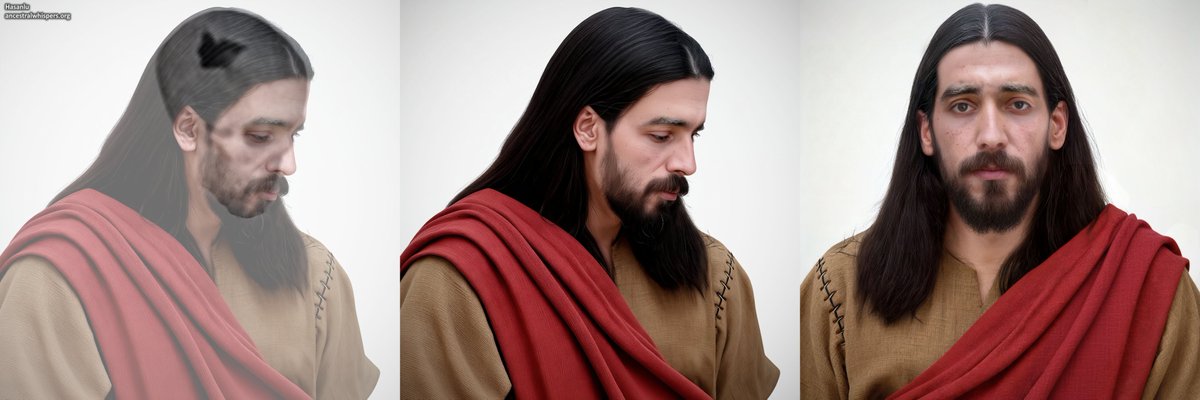
Facial reconstructions of the Hasanlu Lovers
The people of Iron Age Hasanlu were genetically a mixture of Zagrosians, Upper Mesopotamians, and Proto-Armenics.
Hasanlu is an archaeological site of an ancient city located in northwest Iran, in the province of West Azerbaijan, just south of Lake Urmia. The settlement was likely associated with the Mannaeans, a Hurro-Urartian people with a possible Indo-European substrate related to the Armenic branch.
The site is most famous for its catastrophic destruction. At the end of the 9th century BC, Hasanlu was violently sacked and burned, preserving a single moment in time, much like Pompeii. Buildings, artifacts, and even human remains were sealed beneath layers of ash and collapsed debris.
The attackers were most likely the Urartians. Excavations uncovered the remains of more than 285 people, many of them slain in battle or executed afterward. Several bodies showed signs of mutilation, while the positioning of others revealed desperate attempts to escape.
Among the thousands of objects discovered in situ were weapons, ornaments, and household items, all abandoned in the chaos. This destruction layer, known as Hasanlu IVb, stands as one of the most important archaeological contexts of the early Iron Age Near East. Following the devastation, the city’s High Mound was repurposed as the site of a Urartian fortress.
One of the most poignant discoveries is the burial of two individuals known as the “Hasanlu Lovers.”
The two men - one around 20 years old, the other about 32 - died side by side in a collapsed structure. Both perished of asphyxiation as the building filled with smoke and ash during the conflagration. They were found lying close together, their arms entwined and their faces turned toward one another in their final moments.
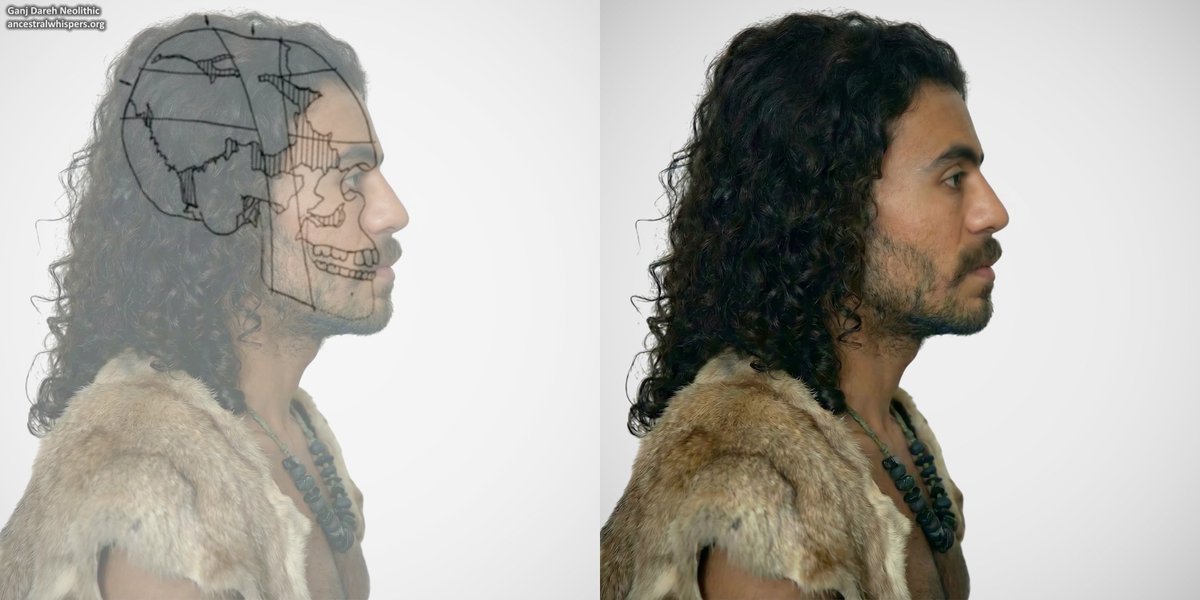
Facial reconstruction of a 10,000-year-old man from Iran
Found at Ganj Dareh Tepe, a Neolithic site with some of the earliest evidence of goat domestication in the world. The individuals from Ganj Dareh belong to the Iran_N genetic cluster, and most carry Y-DNA haplogroup R2, which is associated with the dispersal of Ancient North Eurasian ancestry.
This young adult was described by anthropologist Peter Lambert as follows:
This individual is the third of the sarcophagus burial group and is complete except for several vertebrae and portions of the skull and pelvis. The mandible and both maxillae are well preserved. Overall, the large and robust musculature suggests that this is a male, whose age—estimated from epiphyseal fusions (Krogman, ’73)—is approximately 15–18 years at death... The third mandibular molars are partially erupted. Gray’s Anatomy (’77) gives an estimated age range of 18–25 years.
The reconstructed cranium is complete except for the basal elements. The vault is artificially deformed and represents the best example of the Ganj Dareh deformation style.
The teeth show deposits of salivary calculus in the anterior arcades, but no other pathology is present.
Reconstruction commissioned by @shoresh03
@elonmusk@farzyness Thank you for highlighting Iranian talent! 1,000+ of us accepted to top U.S. programs are stuck in visa admin processing for over 6 months. Many have just 1 month left to arrive for spring semester or lose admissions. Raising awareness could help us bring our skills to the U.S.
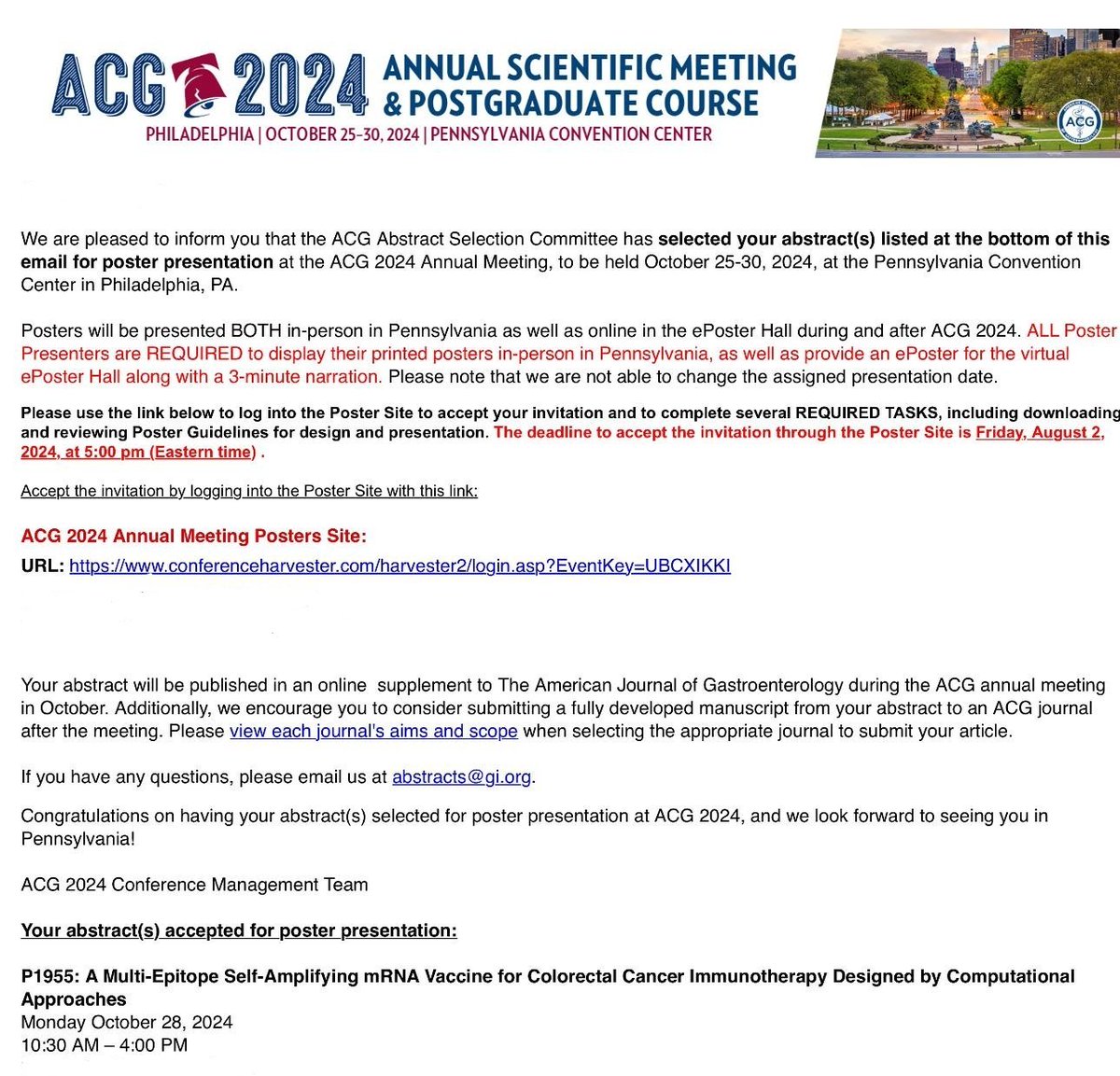
I’m honored to announce that my research abstracts, “A Multi-Epitope Self-Amplifying mRNA Vaccine for Colorectal Cancer Immunotherapy” and “Unraveling the Genetic Overlap between Autism, Inflammatory Bowel Diseases, and Celiac Disease,” have been accepted for ACG2024 congress! 🎉
کتابفروشی عبداللهی شیراز بعد سی سال تعطیل میشود و درخواست کرده –با توجه به قیمت قدیم پشت جلد کتابها– «جهت تهیهٔ کتابهای خوب و عالی بنده را سرفراز فرمایید». شیراز، ابتدای خیابان ملاصدرا، جنب کوچهٔ یک:
https://t.co/bZHadGh2gb
@saeed_abdf @anowingbird دیروز تو بخش یکی از اینترنا با صیمیت زیاد اومد به من گفت میبینم که اومدی گوارش اطفال، بعد عذرخواهی کرد که منو با تو اشتباه گرفته رفتش
@EyeFlyMD@ophtho_res From Dr. Khododoust, founder of the Khodadoust Eye Hospital in Shiraz, Iran and a long-time faculty member @YaleOph. I met many patients of his during my ophtho elective that spoke of him fondly. May he rest in peace https://t.co/G0eLwbRitu
In this review, the authors highlight key promises and achievements in integration of #MachineLearning platforms into #ClinicalMedicine and outline limitations and challenges toward enhanced integration of #LearningSystems into the medical realm. https://t.co/b1LGLV8JFQ
Cancer screening with genetic sequencing and liquid biopsy could facilitate early cancer detection. But testing these technologies will require rethinking how clinical trials are run.
Comment from Sana Raoof and colleagues @harvardmed
https://t.co/fVljzlTeDb
جدی برام سواله، چطوری میتونید هر روز برید آزمایشگاه و ریسرچ کنید در حالی که میدونید ریسرچتون دقیقا به «هیچ» دردی نمیخوره؟!
بعد چجوری این کار رو ۲ تا ۵ سال ادامه میدید بدون اینکه ناامید یا خسته بشید؟!