#Article370 It is a historical day for all Indians !!! So happy today. Sacrifice of Dr Syama Prasad Mukherjee got the due respect today. Jai Hind !!! Vande Mataram !!!
This is the core of my speech on how a Gen Z is being created in India which I am happy The Hindu has captured it accurately. I said refering to Gen Z abroad
Quote:
While the Gen Z in Europe, America and Japan want to listen to the music of 1970s and 1980s, read the books of 1960s....
A Gen Z is being created in India as some one who rebels, rebels againt the system, rebels against the society, rebels against parents, rebels against tradition, rebels against religion. This is how a new Gen Z is being created. Gen Z is being told that you are not Gen Z if you don't do it. This is very peculiar consumerist approach of the western communication experts"
I pointed out with evidence that this is completely contrary to truth as most young people in India go to temples, visited Kumbhmela in large numbers and they included software engineers CAs teachers Businessmen company executives among others
The largely Gen Z audience repeatedly applauded these points as it resonated with their own life and perspectives.
Thuglak digital will upload the full speech soonest. Those interested to know the civilisational paradigm emerging world over and in India and how the Gen Z is an integral part of it and not rebels may like to listen to it
Nothing is more important than the welfare and future of our youth!
We have decided to set up fast-track courts to ensure swift and stringent punishment for those involved in paper leaks. Have directed the concerned authorities and officials to take all necessary steps in this regard. This continues our series of steps for safeguarding the interests of students.
Those who try to harm the future of our youth will not be spared.
देश के युवाओं का हित और उनका भविष्य हमारी सर्वोच्च प्राथमिकता है।
पेपर लीक के सभी मामलों में दोषियों को जल्द से जल्द कठोर दंड देने के लिए, केस के त्वरित निस्तारण के लिए फास्ट ट्रैक कोर्ट्स का गठन किया जाएगा। इस संबंध में निर्देश दे दिए गए हैं कि संबंधित विभाग आवश्यक कार्रवाई सुनिश्चित करें।
विद्यार्थियों के हितों को सुरक्षित करने के लिए, सरकार द्वारा लिए जा रहे निर्णयों की श्रृंखला में ये एक महत्वपूर्ण कदम है।
युवाओं के भविष्य के साथ खिलवाड़ करने वाले किसी भी व्यक्ति को बख्शा नहीं जाएगा।
পশ্চিমবঙ্গ দিবস উপলক্ষে পশ্চিমবঙ্গের আমার বোন ও ভাইদের জানাই আন্তরিক শুভেচ্ছা।
এই দিনটি এমন এক রাজ্যকে উদযাপন করে যা সাহিত্য, সঙ্গীত, শিল্প, আধ্যাত্মিকতা, বিজ্ঞান, বাণিজ্য ও ব্যবসা, সমাজ সংস্কার এবং আরও অনেক বৈচিত্র্যময় ক্ষেত্রে তার অবদানের মাধ্যমে ভারতের ইতিহাসকে রূপদান করেছে। বারবার, অগণিত ভাবে পশ্চিমবঙ্গ ভারতের জাতীয় চেতনাকে সমৃদ্ধ করেছে।
পশ্চিমবঙ্গের ইতিহাসে ২০ জুন দিনটি অত্যন্ত তাৎপর্যপূর্ণ। এই দিনেই নিশ্চিত করা হয়েছিল যে পশ্চিমবঙ্গ ভারতের একটি অংশ হিসেবেই থাকবে। এর পেছনে ছিল ড. শ্যামাপ্রসাদ মুখার্জীর অমূল্য অবদান। ২০২৬ সালে, আমরা ড. মুখার্জীর ১২৫তম জন্মজয়ন্তীও পালন করছি।
জনগণের স্বপ্ন ও আকাঙ্ক্ষা পূরণের জন্য কেন্দ্রীয় সরকার পশ্চিমবঙ্গ সরকারের সঙ্গে যৌথভাবে কাজ করবে। আমি পশ্চিমবঙ্গের অগ্রগতি এবং পশ্চিমবঙ্গবাসীর সমৃদ্ধির জন্য প্রার্থনা করছি।
Research shows that negative news travels 15 times more than positive news. This “news”👇- though now retracted - must have gained legs. Beware of manufactured narratives.
I feel sad for #RomilaThapar.
She went unchallenged for decades under benign Nehruvian ecosystem. She was challenged earlier too, but she kept mum. Now she must answer for her sustained misinterpretation of History. Dhanyawad @MisraNityanand ji
Did you know that the U.S. defaulted on its sovereign obligations in 1971 when it unilaterally reneged on dollar-gold convertibility.
Russia defaulted in 1998 and 2022.
Argentina: 9 times since independence.
Pakistan: required IMF bailouts 23 times.
Greece defaulted in 2012.
And India? Zero defaults. Not even in 1991!
Yet Western investors classify India as "emerging risk" and call U.S. Treasuries the "risk-free rate."
This isn't risk analysis. This is cognitive bias a la Daniel Kahneman's book "Thinking, Fast and Slow". Humans systematically overweight culturally proximate information while underweighting statistical patterns that don't fit our mental models.
Western strategic planners trust Western partners not because the data supports it, but because the cultural markers feel familiar.
Three facts that challenge everything about how we assess partnership risk:
FACT 1: Across 5,000 years of recorded history, India has rarely waged wars of territorial conquest. Not in 3000 BCE when the Indus Valley Civilization had technological superiority. Not in 1000 CE when Indian mathematics and metallurgy exceeded Europe by centuries. Not in 2026 when it possesses nuclear weapons and the world's 4th-largest military. Not in 2047 when it projects to be a top-two economy.
Compare: China (annexed Tibet 1950, 14 territorial disputes, South China Sea expansion). Russia (Georgia 2008, Crimea 2014, Ukraine 2022). Europe (500 years of colonial conquest across three continents). U.S. (military interventions in 20+ countries since 1945).
This pattern is observable strategic behavior anchored in the Arthashastra, Kautilya's 2,300-year-old treatise arguing that short-term territorial expansion undermines the systemic conditions for sustained prosperity. The concept of "mandala" (circle of states) recognizes that each power's long-term interest depends on system equilibrium.
FACT 2: India has never defaulted on debt, treaties, or security guarantees since independence in 1947. The most revealing test: 1991 balance of payments crisis. Reserves fell to $1.2 billion = just three weeks of imports. Default appeared certain. Instead, India implemented painful reforms, honored every obligation. India didn't use political costs as an excuse to default. Commitments were kept.
This behavior isn't accidental. It's anchored in the Sanskrit concept of ṛṇānubandhaḥ, that obligations are metaphysically binding across time. The Mahabharata established 2,000 years ago that rulers who break commitments violate cosmic order and create systemic instability.
Philosophy became institutional architecture: investment-grade credit through multiple crises, $600B forex reserves (6th globally), zero defaults on government securities across 77 years.
FACT 3: During COVID-19, India exported 300 million vaccine doses to 110 countries while its own vaccination was incomplete. 96 countries received doses free through "Vaccine Maitri."
Meanwhile: U.S. ordered 1.2 billion doses for 330 million people (4x population). EU ordered 4.6 billion for 450 million (10x population). Canada ordered 400 million for 38 million people (10x population).
Western nations didn't begin international distribution until domestic targets were substantially met.
The distinction? India's Economic Survey 2020-21 quoted Sanskrit: "āpadā hi prāṇa rakṣā hi dharmasya prathama aṅkuraḥ" (in calamity, protecting life is the first duty). Not Indian life. Life in general.
This aligns with Vasudhaiva Kutumbakam (the world as one family), not as rhetoric but as policy. India supplies 60% of global vaccines and 20% of generic medicines normally, maintained production during its own constraints, built digital public infrastructure (UPI processes more transactions than all nations combined) and offers it open-source to developing countries.
WHY THIS MATTERS NOW:
Every CFO, sovereign wealth fund, and policymaker is asking: "Who can we depend on for the next 50 years?"
Ukraine shattered the illusion that economic integration prevents aggression. COVID exposed single-source dependencies. Taiwan reveals semiconductor concentration risk.
The global economy is re-optimizing from efficiency to trust.
But here's where Kahneman's research becomes critical: most strategic planners are making decisions using "System 1" thinking (fast, intuitive, pattern-matching based on cultural familiarity) rather than "System 2" thinking (slow, analytical, data-driven assessment of long-horizon behavioral patterns).
The result? Systematic mispricing of partnership risk.
Strategic planners face a choice:
- China: manufacturing efficiency + demonstrated willingness to weaponize interdependence (sanctions on South Korea over THAAD, Australia over COVID inquiry, Lithuania over Taiwan, Belt & Road debt traps in 60+ countries)
- Russia: resource access + repeated weaponization (invaded Ukraine despite economic integration, cut gas to freeze European cities)
- U.S.: innovation + extraterritorial enforcement (billions in fines on European banks for transactions legal in Europe, CLOUD Act overrides local privacy laws, "America First" tariffs hit Canada, Mexico, EU alongside rivals)
- India: 5,000-year track record of territorial restraint + zero defaults + systemic thinking during crises +
challenges (infrastructure gaps, bureaucratic complexity, uneven state capacity).
The question isn't perfection. It is: which risk profile aligns with 50-year partnership objectives when analyzed through System 2 rather than System 1 thinking?
THE UNCOMFORTABLE TRUTH:
If India's pattern suggests lower long-duration risk, why is trust in India still "emerging"?
Kahneman would predict exactly this outcome. Three cognitive biases at work:
1. **Availability bias:** We assess risk based on vivid, recent, culturally proximate information. NATO expansion incorporated Poland, Czech Republic, Hungary rapidly because they registered as "European." India's democracy, rule of law, English-language business environment gets discounted because cultural markers differ.
2. **Confirmation bias:** Western institutions have decades of frameworks built around current partnerships. New data contradicting established models gets filtered out rather than integrated.
3. **Status quo bias:** Existing relationships are comfortable. The U.S.-Europe alliance, U.S.-Japan partnership, Five Eyes intelligence sharing operate with established protocols. Structural change requires crisis-level disruption to overcome inertia.
The crisis arrived.
For boards evaluating long-term partnerships—semiconductors, pharmaceuticals, digital infrastructure, maritime security, critical minerals—India presents a risk profile worth systematic, System 2 analysis.
Because of demonstrated behavior across sufficient time horizons to be statistically meaningful.
In an era of fragmentation, weaponized interdependence, and trust deficits, historical patterns become predictive indicators.
Kahneman spent decades showing that intuitive judgments systematically diverge from statistical reality. Strategic partnership assessment is no exception.
The question is: Are we assessing risk based on data, or based on what feels familiar?
In the 21st century, power matters. But trust may matter more.
And trust should be measured by track record, not by cultural proximity.
Europe has mocked India & underestimated its rise for decades.
Today, the same Europe faces an uncomfortable reality because
Russia remains a security challenge. Dependence on China has become a strategic vulnerability. US security umbrella no longer looks unconditional.
Energy shocks, demographic decline & economic stagnation are hitting them hard.
India is not only emerging as a major power with growth, scale, talent, military capability & strategic autonomy.
Derogatory cartoons or colonial mindsets may win headlines for a day, but geopolitics is decided by strength, resilience & relevance, surely not by arrogance.
The world order is changing fast.
@AdityaRajKaul
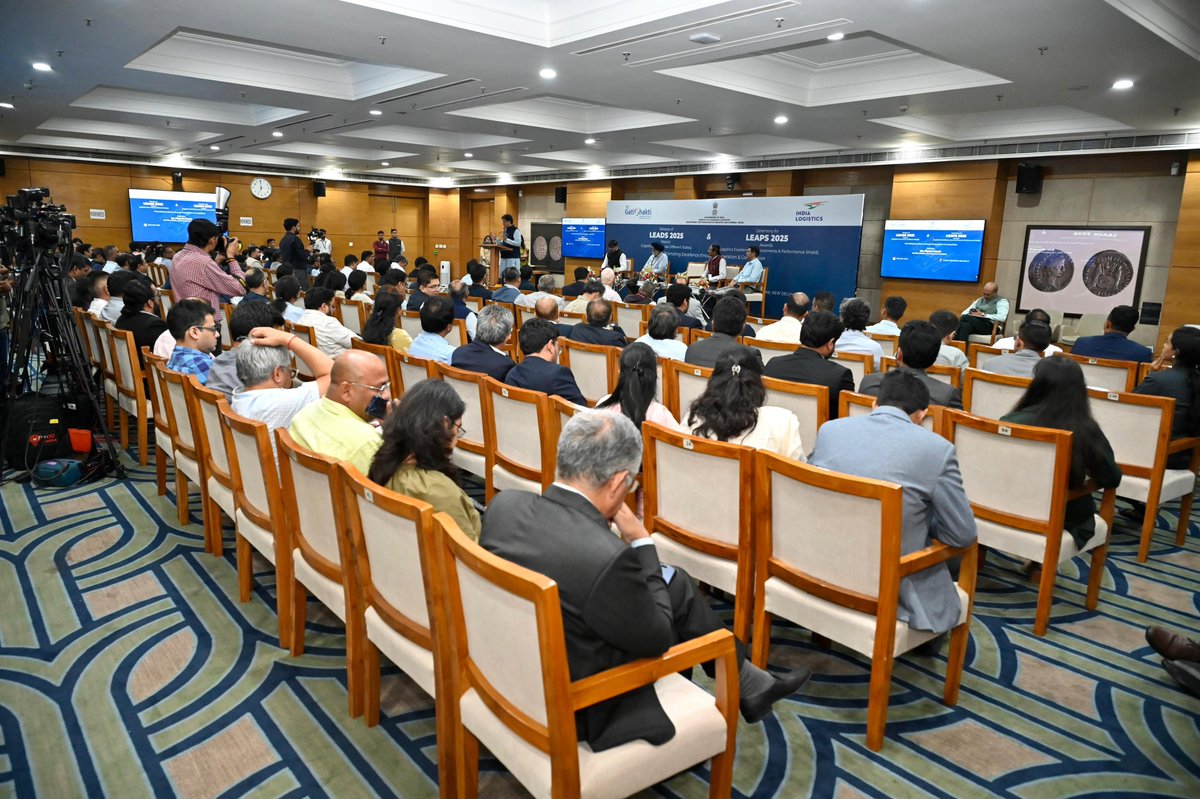
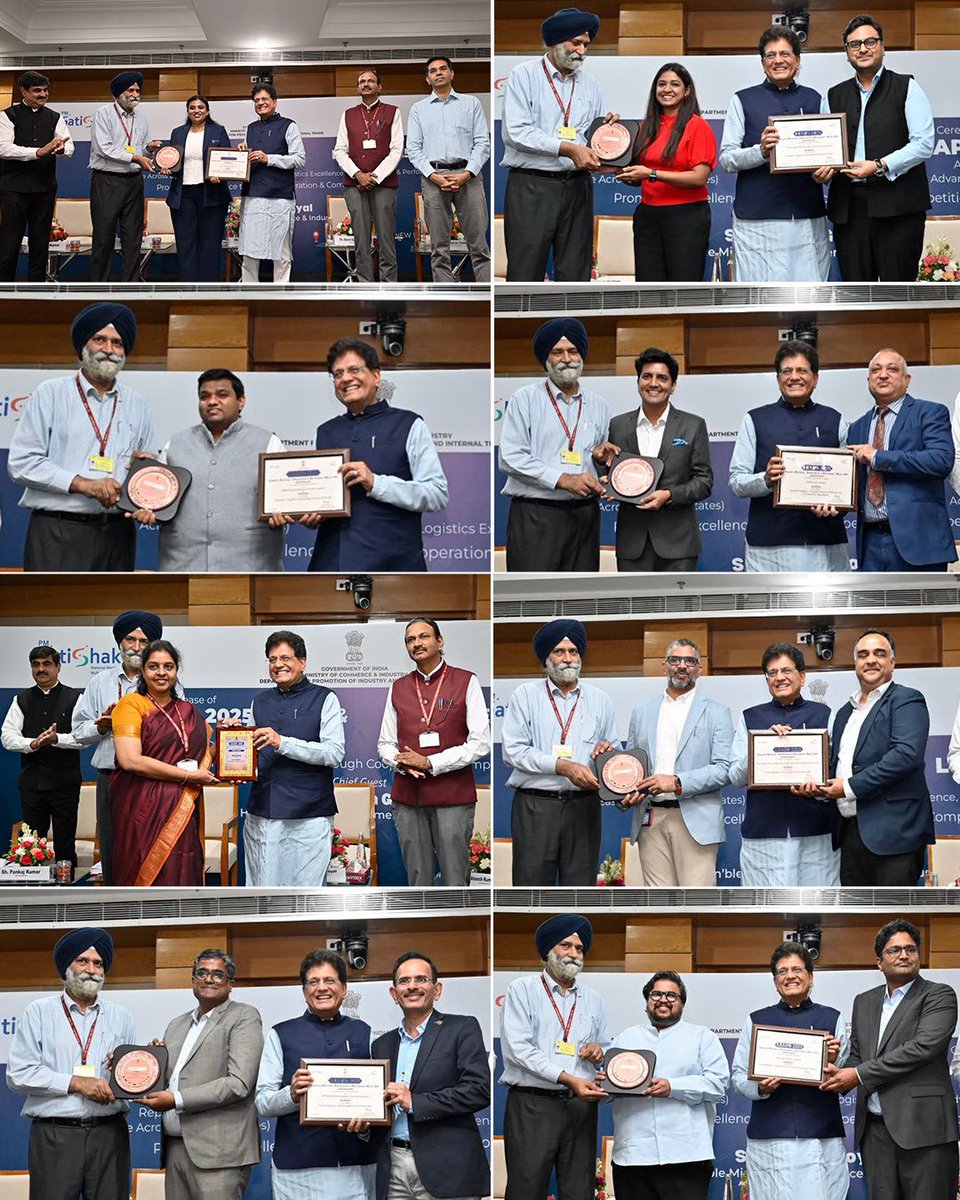
Released the Logistics Ease Across Different States (LEADS) 2025 Report and presented the Logistics Excellence, Advancements and Performance Shield (LEAPS) Awards 2025.
Logistics remains one of the key pillars of infrastructure growth. In my address, I highlighted the need to reduce logistics costs, improve efficiency and enhance competitiveness.
Also, reaffirmed the Modi Government’s commitment towards ease of doing business reforms and decriminalisation measures aimed at enabling businesses to grow, boost exports and attract greater investments.
📖 https://t.co/g2apJmTQ1y
Join us for the Release of the LEADS 2025 Report and the LEAPS 2025 Award Ceremony, celebrating excellence and innovation in India’s logistics ecosystem. 13 May 2026, 5:00 PM –7:00 PM Room No. 22, Vanijya Bhawan, New Delhi #LEADS2025#LEAPS2025#PMGatiShakti#NLP#IndiaLogistics
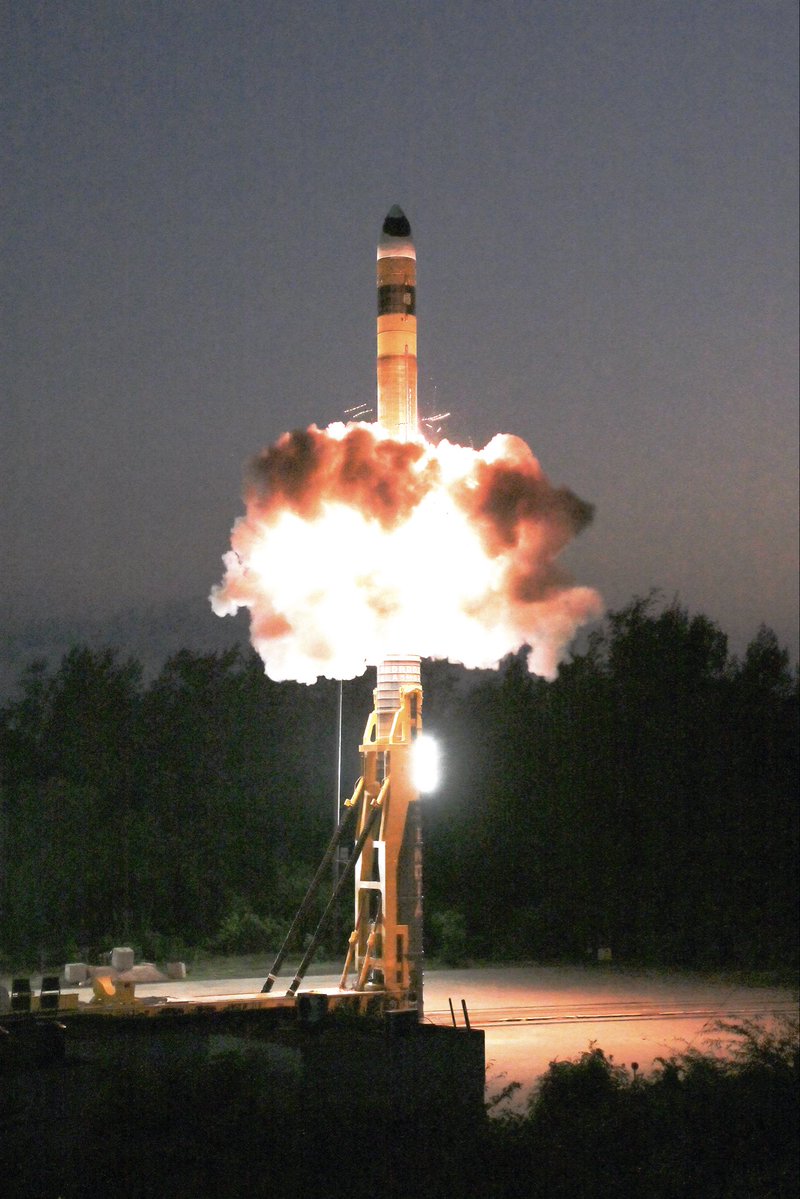
Advanced Agni missile with MIRV (Multiple Independently Targeted Re-Entry Vehicle) system was successfully tested from Dr. APJ Abdul Kalam Island, Odisha on 08th May 2026.
The missile was flight tested with Multiple payloads, targeted to different targets spatially distributed over a large geographical area in Indian Ocean Region.
"ধর্ম যবে শঙ্খ রবে করিবে আহ্বান
নীরব হবে নম্র হয়ে পণ করিও প্রাণ।"
কবিগুরু রবীন্দ্রনাথ ঠাকুরের এই পংক্তি তাঁর জন্মবার্ষিকীতে তাঁর জন্মভূমিতে আজ সার্থক প্রমাণিত হলো। এক অধর্মের বিরুদ্ধে সুদীর্ঘ লড়াইয়ের যে পণ করেছিলেন ভারত কেশরী ডঃ শ্যামাপ্রসাদ মুখার্জি, আজ দীর্ঘ বর্ষ পরে তা পূর্ণ হলো।
শ্যামাপ্রসাদের বাংলায় আজ ভারতীয় জনতা পার্টির সরকার শপথ গ্রহণ করলো। এই ঐতিহাসিক সন্ধিক্ষণে উপস্থিত থাকতে পেরে গৌরবান্বিত বোধ করছি। যশস্বী প্রধানমন্ত্রী শ্রী নরেন্দ্র মোদী জী, মাননীয় গৃহমন্ত্রী শ্রী অমিত শাহ জী ও আদরনীয় সর্বভারতীয় সভাপতি শ্রী নীতিন নবীন জীর মার্গদর্শনে পশ্চিমবাংলার নবনিযুক্ত মাননীয় মুখ্যমন্ত্রী শ্রী শুভেন্দু অধিকারী মহোদয়ের নেতৃত্বে বাংলার জনগনের আশা-আকাঙ্খা পুরণ করে এক সমৃদ্ধ 'বিকশিত বাংলা' গড়ে তোলার সূচনালগ্নে মাতা ত্রিপুরাসুন্দরীর পূণ্যভূমি ত্রিপুরা ও সমগ্র ত্রিপুরাবাসীর পক্ষ থেকে জানাই অসংখ্য শুভকামনা ও অভিনন্দন।
A year ago, our armed forces displayed unparalleled courage, precision and resolve during #OperationSindoor. They gave a fitting response to those who dared to attack innocent Indians at Pahalgam. The entire nation salutes our forces for their valour.
Operation Sindoor reflected India’s firm response against terrorism and an unwavering commitment to safeguarding national security. It also highlighted the professionalism, preparedness and coordinated strength of our armed forces. At the same time, it showcased the growing jointness among our forces and underlined the strength that India’s quest for self-reliance in the defence sector has brought to our national security.
Today, a year later, we remain as steadfast as ever in our resolve to defeat terrorism and destroy its enabling ecosystem.
Prof. Manoj K. Tiwari, Director, @IIMMumbai, speaks on the Viksit Bharat Shiksha Adhishthan Bill, 2025, highlighting how it will play a transformative role in reshaping higher education in India. He emphasises that the Bill strengthens institutional autonomy, promotes innovation and quality, and aligns India’s higher education ecosystem with the national vision of a Viksit Bharat.
#TransformingHigherEducation
@narendramodi@PMOIndia@dpradhanbjp@Vineet_K26@PIB_India@airnewsalerts@DDNewslive
On Day 2 of the Vice Chancellors’ Conference in Kevadia, Prof. Manoj Kumar Tiwari, Director, @IIMMumbai and holding additional charge of TISS Mumbai, addressed a session on the Future of Work. He underlined the need for academic institutions to evolve in response to emerging technologies and changing job landscapes. He emphasised that higher education systems must align courses and skill development with future workforce requirements across sectors.
@PMOIndia@narendramodi@dpradhanbjp@DrSukantaBJP@Vineet_K26@Sunil_Barnwal@PIB_India@DDNewslive@airnewsalerts
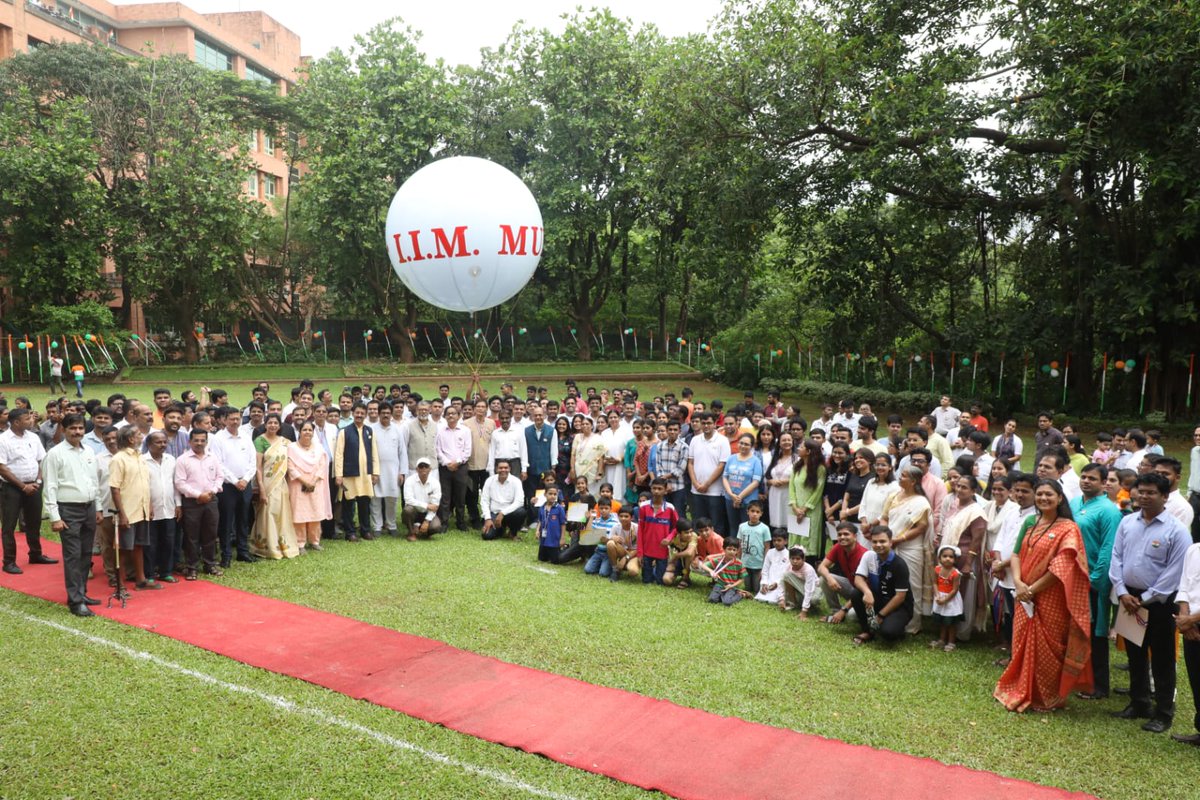
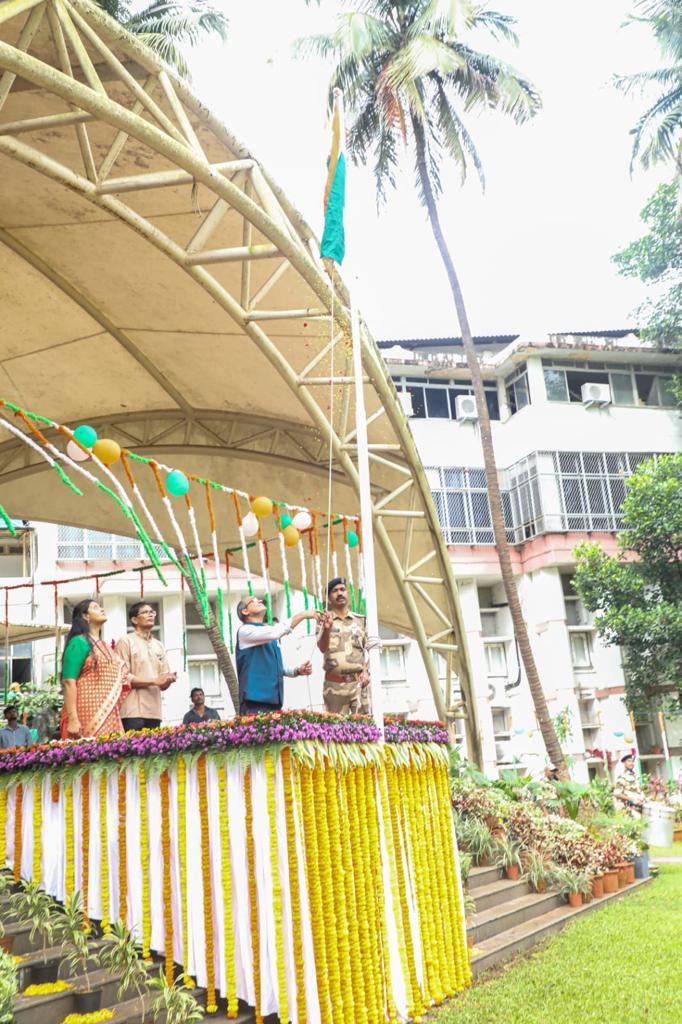
Indian Institute of Management, Mumbai celebrated the 77th #IndependenceDay on 15th August 2023 at #IIM Mumbai Campus in a grand manner. Following MOE guidelines, the #HarGharTiranga " campaign marked the 76th #anniversary of India's independence.
#CelebrateAzaadi
MERI MAATI MERA DESH PLEDGE AT IIM MUMBAI
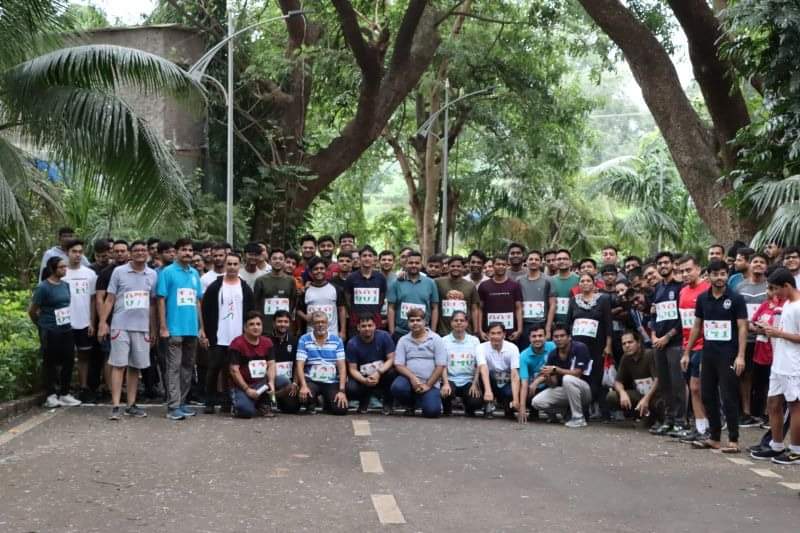
On the 77th #IndependenceDay, (15th August 2023), IIM Mumbai organized a Campus Marathon. The participants of the Marathon took the Pledge under Meri Maati Mera Desh initiative of Government of India.
#IIMMumbai