A million things, big & small, need to perfectly fit together to have the life we have. Like countless miniature jenga pieces that move invisibly in the matrix that we have no control over.
The older I get, the clearer it becomes that our agency is perhaps less than a percent. And that life is arbitrary… that once in a while the dice rolls in our favour. It’d be so very foolish of me to think that I am deserving of what I’m given.
Anyone who writes is a seeker. You look at a blank page and you’re seeking. The role is assigned to us and never removed. I think this is an unbelievable blessing.
—Louise Glück, from an interview
Since we’re telling VC founder pitch horror stories
I invested in this app which was supposed to be the Shazam for food, a future of work data labelling marketplace but it turned out to be a company that sold sea food / octopus recipes…
some people treat their beliefs like laws of physics. like they are immovable and "true". others treat them like theories of physics. so they are always testing and always updating.
I’ve noticed that lack of self respect brings out sadism in other people. If you cheapen yourself or act without dignity others passively enjoy for your downfall. I’ve noticed this schadenfreude even in myself and in friends who otherwise have no vindictiveness or pettiness
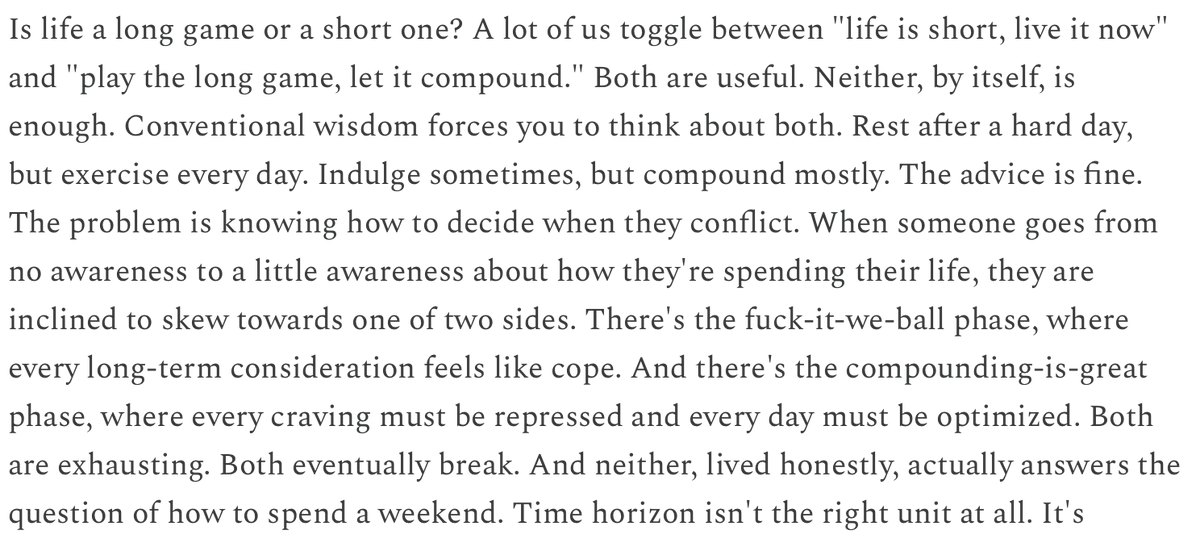
"Life is short" is a psyop
Of course you should make the most out of your life. But stop living in fear that you're running out of time and rushing through the motion.
There is an abundance of time actually. You're allowed to take the time to savor this cup of coffee, visit your aging parents, leisure, read that novel. These things will not only improve the quality of your life, they will improve the quality of your work, too.
Go get it! But with intention, not anxiety
Personal update: I've joined Anthropic. I think the next few years at the frontier of LLMs will be especially formative. I am very excited to join the team here and get back to R&D. I remain deeply passionate about education and plan to resume my work on it in time.
Some context: my friend raved about this book a couple of years ago but I just skimmed it since I've never identified as codependent and a lot of the stories in the book are about the spouses of alcoholics, which isn't personally relevant. But I read it again recently and realized that the book is actually about letting go of the need for control. Many of us try to help our friends and family, without realizing that the frame of "they need my care/support" is actually a form of establishing control. We believe that people need us, that they'll go down the wrong path without us and make the wrong choices in work/relationships/life, but what happens is that while you're trying to control the other person through supporting them you become controlled by their behavior.
If you've ever had the experience of being extremely frustrated at a friend, partner or family member because they asked for your advice and you gave it, only for them to ignore it, this book is relevant to you. (From what I can tell, that's a pretty universal experience.) In it, Melody Beattie writes, "The surest way to make ourselves crazy is to get involved in other people’s business, and the quickest way to become sane and happy is to tend to our own affairs." Despite our best efforts, we have extremely limited ability to influence other people's choices. People are free to neglect their bodies, engage in destructive behavior, get in or stay in toxic relationships, abuse substances, etc. This might feel unbearable if you love them, but if you get overly attached to the idea that *they need you in order to stop,* you've trapped yourself in a situation where you have no real leverage. As in: no matter what you try, how hard you try, how pragmatic, useful, wise, supportive you are, *it's not ultimately your life.* Most of us are better served by, well, actually living our lives, instead of trying to solve someone else's.
Through extreme effort we may able to be able to temporarily modify someone's behavior, but the change will not last because real change only comes when someone grapples with the consequences of their situation and makes the decision to live differently. You cannot force someone to have a revelation, not matter how badly you might want to. Though people might tell us they want or need our advice or support, this generally just gets us trapped in the drama triangle.
There is a difference between *actually helping someone*, and *assuming the role of the rescuer because we believe it's what's required of us." Caretaking is often just a form of enabling. Another great quote from the book: "At the time we rescue or caretake, we may experience one or more of the following feelings: discomfort and awkwardness about the other person’s dilemma; urgency to do something; pity; guilt; saintliness; anxiety; extreme responsibility for that person or problem; fear; a sense of being forced or compelled to do something; mild or severe reluctance to do anything; more competency than the person we are “helping”; or occasional resentment at being put in this position. We also think the person we are taking care of is helpless and unable to do what we are doing for them. We feel needed temporarily.
I am not referring to acts of love, kindness, compassion, and true helping—situations where our assistance is legitimately wanted and needed and we want to give that assistance. These acts are the good stuff of life. Rescuing and caretaking aren’t."
The tl;dr of it all is that in order to actually change, people generally need to reckon with their sense of autonomy and responsibility. When we shield people from consequences, they never learn how to make better choices.
This gets really interesting when you can notice your attempts at control on multiple different levels
Codependency = Trying to control others so you feel safer
People-pleasing = Trying to control others’ happiness to avoid potential rejection/abandonment
Perfectionism = Trying to control yourself in order to earn love
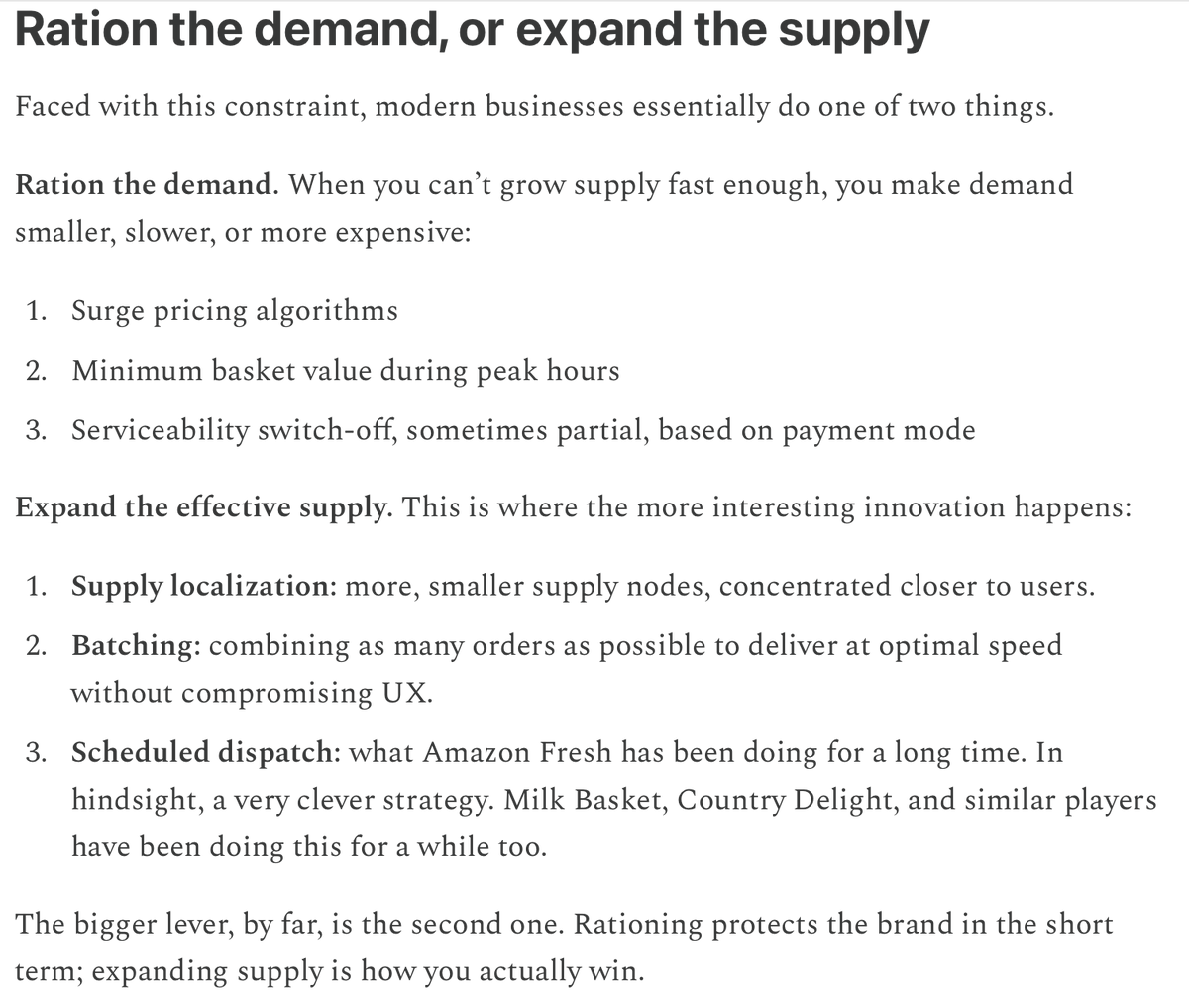
Code scales instantly, the operations scale linearly with capex, and ground execution. You always have to ensure the balance of supply to meet the demand