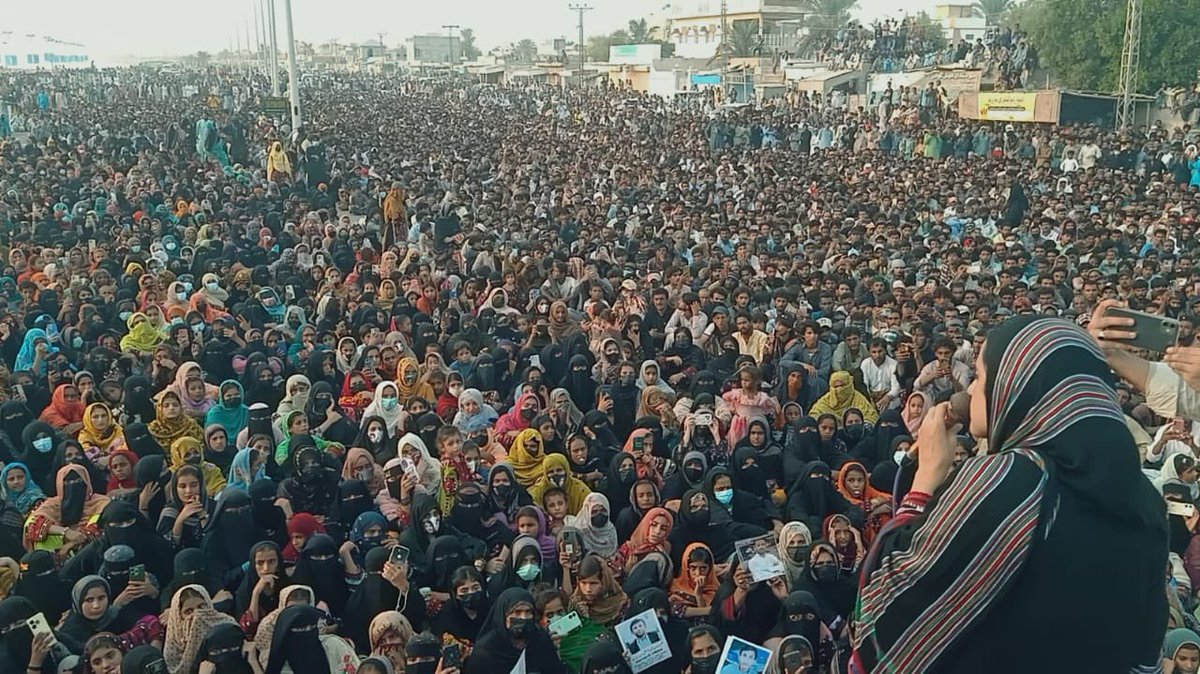
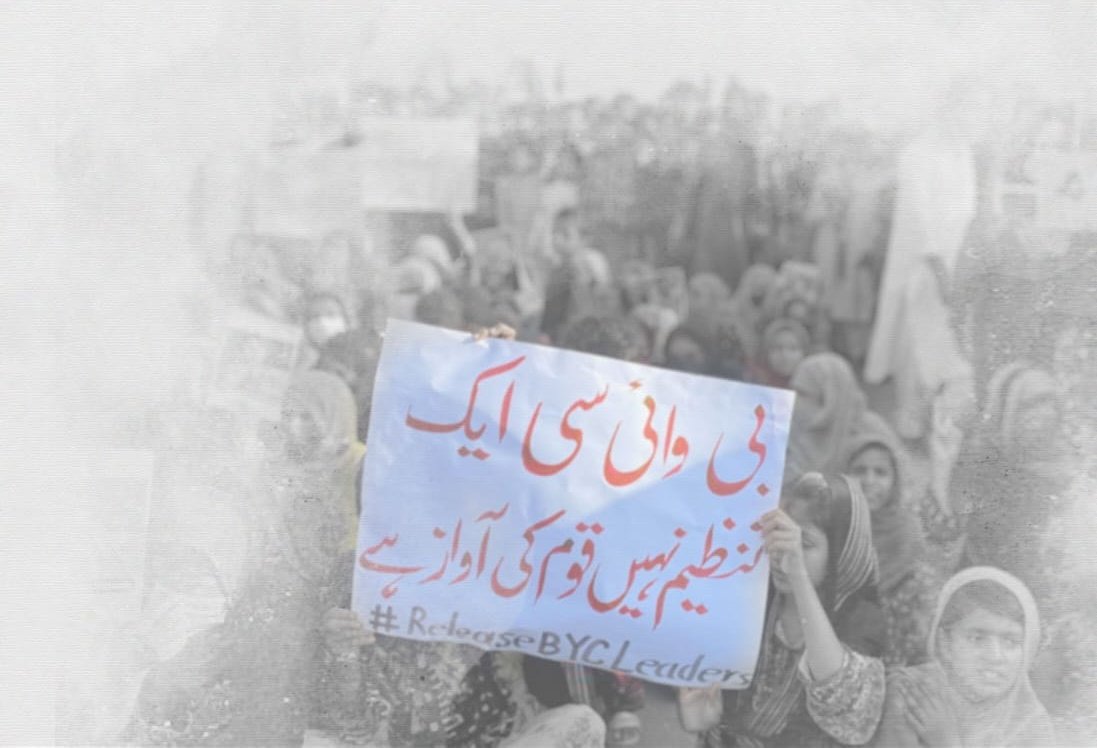
People numbering thousands have taken to the protesting long march against Baloch genocide but one won't see the Pakistani media in covering the Baloch march. This is a clear message to Balochistan that they (Baloch) are not reckoned citizens of the state.
#MediaBlackoutOnMarch
نے سما ءِ ادی نی شیزال ئسے اوس ،ننا یقن او گمان آن زیات شیرزال ئسے اوس۔
ننے یقین ءِ نی اندون محکم مسونوس اندون محکم سلوس آک،
دارو نا ءِ ہرکس فون کننگ ءِ ارفیننگ ءِ نُم امرور ءِ لمہ امر ءِ ای کل آتے پاننگوٹ نن جوان اُن کنا لمہ ماہرنگ نا لمہ ءِ گڑا ماہ رنگ نا وڑا مضبوط ءِ ۔
مننگ کیک اینو دژمن خواشی کننگ ءِ کہ نن دا جنگ ءِ کٹان آک ولے ای پاوہ نا دا جنگ ءِ کنا ایڑ کٹا ماہ رنگ کٹا تا انتئہ کہ او ماہرنگ آن اندون خولیس نا آماچ ئسورہ کہ ہمو جج کہ سودا مسوس ہمو جج اندا فیصلہ تننگ نا ٹائم نا خن تے تون خن شاغیننگ کتوکا اندا وجغان او بند کمرہ ٹی دوز آتے امبار نا کیس ءِ چلیفے او فیصلہ ءِ تیس آک،
نے سما ءِ ادی کورٹ ئنا سٹاف نا کاٹم دارو کنا مونا شیف ئسکا انتئہ کہ اوفتے کُل ءِ سما ئسکا کہ ہمرو نا انصافی ئس مسونے ،
نن ایڑ آک ایلم وخت ئس دم دارینگان ءِ نے آ بسون ءِ گڑا نی ننے پاریس ءِ نُما ایڑ دا گل زمین کہ دریا ٹی پوڑی نا کچ ام قربانی تننگ اف دا گل زمین دا نا باتی آک باز کرزیرہ ءِ ای اوفتے کن ہچ ئس ام کننگ افیٹ ،نا دا ہیت آک ننے ہمت تیسونو نا تربیٹ ننے ہمت تیسونے نا سیاسی تربیت ننا کسر شونی ءِ کرین ءِ او اندون کرو ءِ۔
ننے سما ءِ دژمن بسک نی جیل ئنا تہٹی باز پیرغننگ نا کوشست کرءِ ولے نی
ماہ ران نا مش امبار تینا اصول آتے ٹی سلوک ئسوسا تینا ڈغار نا باتی تا حق آتے کن سالوک ئسوسا اوفتا حق آتا سودہ ءِ کتوس آک تینا شہید آتا دیتر تا سودا ءِ کتوس آک او دژمن حبکہ مسک کہ داخا مراحات تننگ آن پد بی نن ماہ رنگ ءِ پیرغننگ کتون آک اندا وجغان او دونو فیصلہ ئس تینا دلار آ ضمیر فروش عدالت آتا زریعہ آن تیرفے کہ نے پیرغننگ کرور آک ،
ولے ای اوفتے اندا پاننگ خواہ نُما مون آ ماہ رنگ ءِ غفار جان نا مسیڑ ءِ ہمو غفار جان نا کہ ہرا تینا ساہ ءِ ندر کرءِ دا گلزمین کہ ولے تینا مقصد آن پد سلتو ۔۔۔
مھکم سلیس کنا دلیر آ باوہ نا شیزال مسیڑ۔۔۔۔!🌹
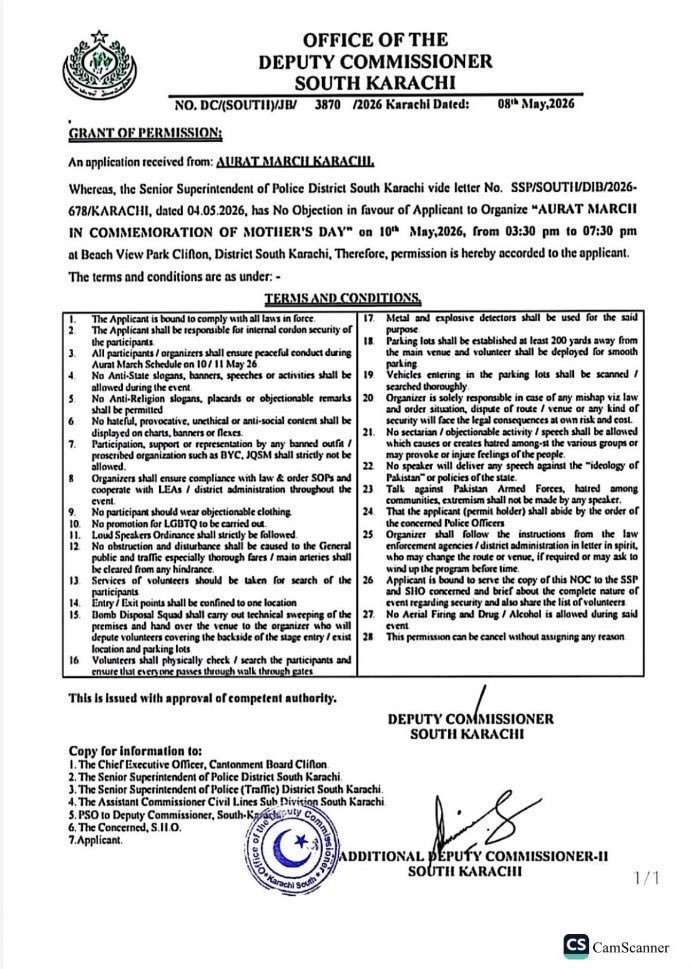
A state that claims to believe in democracy should never be frightened by peaceful political participation. But in Pakistan, the reality is the opposite. Today, even attending a peaceful public gathering as a supporter of Baloch rights is being treated as a crime.
The recent conditions attached to Aurat March Karachi clearly expose the mindset of the authorities. The issue is no longer about maintaining law and order; it is about controlling narratives and isolating every voice that speaks about Balochistan. The state wants platforms, protests, and public spaces to exist only under silence and obedience.
The constitutional rights to freedom of speech and peaceful protest in Pakistan are increasingly being reduced to mere words on paper. Instead of protecting these rights, the state has imposed restrictive conditions that make organizing protests difficult and, in many cases, impossible. This not only undermines fundamental freedoms but also reflects a broader pattern of controlling and silencing human rights voices. When individuals or groups fail to comply with these restrictive conditions, they are often subjected to arrests, harassment, surveillance, and intimidation.
For years, the Baloch people have been subjected to enforced disappearances, extrajudicial killings, arbitrary detentions, media censorship, and collective punishment. Families searching for their loved ones are harassed instead of being heard. Women demanding justice are threatened instead of protected. Students, activists, writers, and political workers are constantly profiled as enemies simply for speaking about human rights.
What is happening today against BYC is part of the same larger policy. Peaceful activism is deliberately being criminalized because the movement has exposed realities that the state wants hidden. From fabricated cases and forced press conferences to surveillance and intimidation, every tactic is being used to break the morale of activists and disconnect them from public spaces.
The decision to label organizations such as the Baloch Yakjehti Committee (BYC) and Jeay Sindh Qaumi Mahaz (JSQM) as proscribed is therefore deeply questionable. BYC is a peaceful political and human rights movement that has consistently raised its voice against enforced disappearances, human rights violations, and state repression in Balochistan through political and constitutional means. Yet, despite the absence of any transparent legal process proving BYC to be an anti-state organization, its leadership has faced imprisonment under fabricated FIRs, while activists and members have been subjected to enforced disappearances, harassment, and extrajudicial violence.
No court of law has publicly established BYC as a violent or anti-state organization. Despite this, peaceful political activism and demands for justice are increasingly being treated as threats rather than democratic rights. The attempts to ban, isolate, and criminalize Organization like BYC reflect a broader fear of organized political consciousness, public mobilization, and collective resistance among oppressed nations.
The state continues to fail in understanding one thing: movements built on the pain, memory, and resistance of people cannot be erased through notifications, restrictions, bans, or threats. Every attempt to suppress peaceful voices only strengthens public awareness about the injustices taking place in Balochistan and other marginalized regions.
The fear shown towards BYC today is itself an acknowledgment that the movement has become impossible to ignore. A peaceful movement demanding dignity, justice, constitutional rights, and an end to enforced disappearances should not threaten any democratic state. The fact that it does reveals the depth of the crisis itself.
These actions are ultimately attempts to silence political awareness, suppress dissent, and weaken the collective voice of oppressed nations. However
According to the Economic Survey 2025, 79% of government schools in Balochistan are without electricity, 71% lack drinking water, 52% have no boundary walls, and 51% do not have toilet facilities. This is alarming.
اکنامک سروے 2025 کے مطابق بلوچستان کے %79 سرکاری سکول بجلی سے محروم ہیں، %71 میں پینے کا پانی میسر نہیں، %52 کی چار دیواری ہی نہیں اور 51 فیصد سکولوں میں ٹوائلٹ کی سہولت نہیں ہے۔ اربابِ اختیار جواب دیں کہ اس غفلت کا مجرم کون ہے؟ یا اسکو بھی بیرونی سازش کے کھاتے میں ڈالنا ہے۔۔۔
🚨🚨#BREAKING: 24 year old #MahjabeenBaloch, a student of #Balochistan university and a polio victim since childhood forcibly disappeared by plainclothes men in early hour at 3am from civil hospital, #Quetta on 29th May 2025.
𝐌𝐚𝐡𝐣𝐚𝐛𝐞𝐞𝐧 𝐁𝐚𝐥𝐨𝐜𝐡’𝐬 𝐃𝐢𝐬𝐚𝐩𝐩𝐞𝐚𝐫𝐚𝐧𝐜𝐞 𝐌𝐚𝐫𝐤𝐬 𝐃𝐚𝐧𝐠𝐞𝐫𝐨𝐮𝐬 𝐄𝐱𝐩𝐚𝐧𝐬𝐢𝐨𝐧 𝐨𝐟 𝐏𝐚𝐤𝐢𝐬𝐭𝐚𝐧’𝐬 𝐂𝐚𝐦𝐩𝐚𝐢𝐠𝐧 𝐀𝐠𝐚𝐢𝐧𝐬𝐭 𝐁𝐚𝐥𝐨𝐜𝐡 𝐖𝐨𝐦𝐞𝐧
The Baloch Yakjehti Committee (BYC) expresses grave concern over the enforced disappearance of Mahjabeen Baloch, a young Baloch woman living with a disability and a student of BS Library Science at the University of Balochistan. Mahjabeen was enforcedly disappeared at approximately 3:00 AM on 29 May 2025 from the Civil Hospital Hostel in Quetta in a joint operation by police, CTD officers and Law Enforcement Agencies (LEAs).
She remains missing, has not been presented before a court, and has been denied access to legal representation, family contact, and medical care—a direct violation of Pakistan’s Constitution, its obligations under the International Covenant on Civil and Political Rights (ICCPR), and the Convention on the Elimination of All Forms of Discrimination Against Women (CEDAW).
Mahjabeen is a polio survivor, and her health condition raises immediate concerns about her safety, well-being, and access to medication. Her enforced disappearance comes just five days after her brother, Younus Baloch, was taken by the military from their home in Besima, Washuk—indicating a pattern of collective punishment against the family.
Despite enduring years of state surveillance, forced displacement, and intimidation in her hometown, Mahjabeen pursued higher education in Quetta as a means of self-empowerment. Her disappearance is not only a grave human rights violation, but also an attack on the rights of women with disabilities, on the right to education, and on the basic dignity of Baloch women.
The targeting of Baloch women signals a dangerous escalation in Pakistan’s systematic campaign of enforced disappearances, previously concentrated on male students and activists. This gendered extension of repression underscores the urgent need for international attention.
We call for urgent international action: UN Special Procedures, including the Special Rapporteurs on Enforced Disappearances, Violence Against Women and Girls, and the Rights of Persons with Disabilities, must intervene and initiate an urgent appeal on her case.
International human rights and women’s rights organizations must recognize the gendered nature of state violence in Balochistan and amplify the demands for justice and accountability.
The global community, particularly states and institutions that support Pakistan militarily and diplomatically, must not turn a blind eye to these violations and must press for transparency, justice, and protection for vulnerable populations.
Baloch women are not invisible.
Their lives, voices, and rights matter. The world must not remain silent in the face of escalating gendered violence in Balochistan.
@unwomenchief@UNWomenWatch@hrw@amnesty@amnestysasia@FrontLineHRD@UN_Women@UNHumanRights@WomenDisability@UN
#SaveBalochWomen
#StopTheGenocide
#StopBalochGenocide
PAKISTAN: Amnesty International, along with four other human rights organizations, calls for an end to the harassment and arbitrary detention of Baloch human rights defenders exercising their rights to freedom of expression and peaceful assembly in Pakistan, particularly in Balochistan province.
All five organizations - Amnesty International, Asian Forum for Human Rights and Development (FORUM-ASIA), Front Line Defenders, International Federation for Human Rights, World Organisation Against Torture - appeal to Pakistan's Prime Minister, @CMShehbaz, to release Baloch human rights defenders and end the crackdown on dissent in line with Pakistan’s international human rights obligations.
Read the joint letter: https://t.co/iiGJffxofL
@forum_asia@OBS_defenders@FrontLineHRD
I am Abdollah Aref @AbdollahAref1 Deputy General Secretary and Head of the Iran Desk in the Research Department at BASC. At BASC, we expose systemic oppression that meets the criteria for genocide under international law, while working to build regional solidarity.
من عبدالله عارف هستم، معاون دبیرکل و رئیس میز ایران در بخش پژوهش بنیاد “باسک”
.
در”باسک”، ما به افشای سرکوبهای ساختاریای میپردازیم که طبق معیارهای حقوق بینالملل، مصداق نسلکشی محسوب میشوند و همزمان برای تقویت همبستگی منطقهای تلاش میکنیم.
#Balochistan #BalochLivesMatter #BASC
🇵🇰#Pakistan: Authorities must put an end to the systematic crackdown on peaceful protests and stop targeting Baloch #HumanRights defenders, especially @BalochYakjehtiC
📣We demand the immediate release of all arbitrarily detained defenders.
👉https://t.co/Ksm8H7LUb7
🚨 #Pakistan
The severe crackdown on Baloch human rights defenders violates Pakistan’s international human rights obligations -we call for the immediate and unconditional release of all HRDs and their family members.
Read more: https://t.co/bJmR5n7PZz
Dr Mahrang Baloch responds to DG ISPR's allegations. Asks for evidence, clarifies the context of her March press conference, and once again condemned all kinds of violence.
How many journalists and media outlets are giving to give space to her point of view now?
“The people of Balochistan deserve justice, not smear campaigns. They deserve answers, not threats. And above all, they deserve to live without fear.”
❤️ despite provocation and baseless propaganda against her, Dr. Mahrang Baloch, as always, responds with demand for peace and justice.
“The people of Balochistan deserve justice, not smear campaigns. They deserve answers, not threats. And above all, they deserve to live without fear”
@MahrangBaloch_#Balochistan#StopBalochGenocide
My Response to the DG ISPR and the Violence in Balochistan
Lastday , the Director General of the Inter-Services Public Relations (DG ISPR) once again accused me of being a "proxy of terrorists", a serious and recurring allegation made without a single shred of credible evidence. This pattern of unsubstantiated claims has become a disturbing hallmark of the DG ISPR's public statements.
He further stated: "She (I) was the one who came seeking the dead bodies of the terrorists killed in the Jaffer Express hijacking incident. Who is she to seek the corpses?"
Let me be clear: that particular press conference was widely misused, fabricated, and taken out of context to distort my message During my press conference in March, I did not condone any act of violence. My only demand was transparency. I asked for the identities of unidentified individuals, beyond the twelve named militants, who were buried in the dead of night at Quetta's Kasi graveyard. These unidentified bodies deserve to be named, and their families have a fundamental right to know the fate of their loved ones. This demand is not only moral but a legal right in any civilized society.
For years, a disturbing pattern has emerged in Balochistan: following any violent incidents, law enforcement agencies have been involved in killing and secretly burying forcibly disappeared persons, later labeling them "militants." In the Jaffer Express case, the armed group responsible publicly released the names, photos, and details of the twelve men involved. Yet over two dozen bodies were brought to Civil Hospital Quetta. My question was: who were the others? Why were they buried in secrecy?
Once again, in response to the DG ISPR's latest accusations, I ask: where is the evidence? If Pakistan's intelligence and military institutions are as capable as they claim, why has no proof ever been presented against me?
My activism is peaceful, principled, and grounded in universal human rights values. I have consistently condemned violence, whether committed by non-state actors or the state itself. But Balochistan today is a landscape scarred by systemic repression, enforced disappearances, and a complete breakdown of justice and accountability. Rather than address these realities, the state chooses to vilify those who dare to speak the truth.
The international community must take note. The people of Balochistan deserve justice, not smear campaigns. They deserve answers, not threats. And above all, they deserve to live without fear.
Sincerely,
Mahrang Baloch
My Response to the DG ISPR and the Violence in Balochistan
Lastday , the Director General of the Inter-Services Public Relations (DG ISPR) once again accused me of being a "proxy of terrorists", a serious and recurring allegation made without a single shred of credible evidence. This pattern of unsubstantiated claims has become a disturbing hallmark of the DG ISPR's public statements.
He further stated: "She (I) was the one who came seeking the dead bodies of the terrorists killed in the Jaffer Express hijacking incident. Who is she to seek the corpses?"
Let me be clear: that particular press conference was widely misused, fabricated, and taken out of context to distort my message During my press conference in March, I did not condone any act of violence. My only demand was transparency. I asked for the identities of unidentified individuals, beyond the twelve named militants, who were buried in the dead of night at Quetta's Kasi graveyard. These unidentified bodies deserve to be named, and their families have a fundamental right to know the fate of their loved ones. This demand is not only moral but a legal right in any civilized society.
For years, a disturbing pattern has emerged in Balochistan: following any violent incidents, law enforcement agencies have been involved in killing and secretly burying forcibly disappeared persons, later labeling them "militants." In the Jaffer Express case, the armed group responsible publicly released the names, photos, and details of the twelve men involved. Yet over two dozen bodies were brought to Civil Hospital Quetta. My question was: who were the others? Why were they buried in secrecy?
Once again, in response to the DG ISPR's latest accusations, I ask: where is the evidence? If Pakistan's intelligence and military institutions are as capable as they claim, why has no proof ever been presented against me?
My activism is peaceful, principled, and grounded in universal human rights values. I have consistently condemned violence, whether committed by non-state actors or the state itself. But Balochistan today is a landscape scarred by systemic repression, enforced disappearances, and a complete breakdown of justice and accountability. Rather than address these realities, the state chooses to vilify those who dare to speak the truth.
The international community must take note. The people of Balochistan deserve justice, not smear campaigns. They deserve answers, not threats. And above all, they deserve to live without fear.
Sincerely,
Mahrang Baloch
Pakistan’s ISI call Dr. @MahrangBaloch_ a terrorist- but the only thing she’s armed with is truth.
The real terrorists sit in power, walk free, smile for cameras.
Mahrang led the oppressed, not militias. She marched with mothers, not murderers.
The ISI fears her because she can’t be bought, bullied, or broken. That’s why she’s in prison. That’s why the killers like Bin Laden can roam free.
You want to know who a regime fears?
Look at who they silence.
Look at who they cage.
Look at the Iron Lady, Mahrang. #IStandWithMahrangBaloch
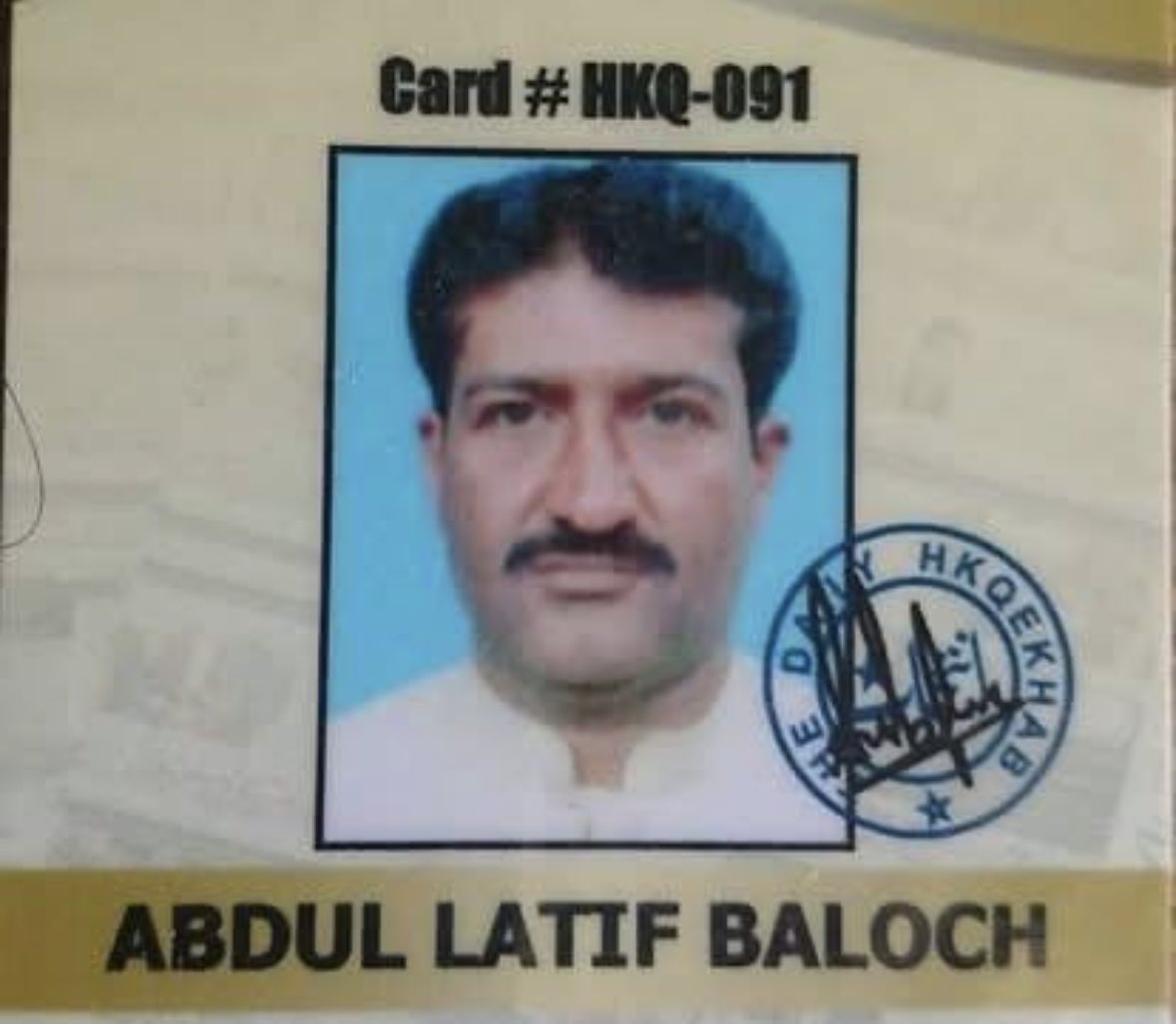
Another Pakistani journalist Abdul Latif Baloch killed in Mashkey tehsil of Awaran district in Balochistan. Abdul Latif Baloch was working for Daily Intikhab. He was receiving threats since last many days. @CPJAsia @RSF_inter @amnestysasia @hrw