@MilHistNow IMHO, it’s a good thing, the producers choose not to film sequels. The original had gripping story telling and well made plot. Sequels would’ve spoiled the original movie, as sequels normally do.
85 years ago today, in the freezing grey water between Iceland and Greenland, the most famous warship in the world died in under three minutes.
HMS Hood. 48,000 tons. The pride of the Royal Navy for twenty years. The ship British schoolchildren drew in their notebooks. "The Mighty Hood."
She was hunting the Bismarck.
At 05:52 on 24 May 1941, Vice Admiral Lancelot Holland gave the order to open fire at 26,500 yards. He was closing the range hard on purpose, because Hood's weak deck armor could not survive shells falling from above at long range. He needed flat trajectories, and he needed them fast.
He was three minutes too slow.
Bismarck's fifth salvo straddled Hood as she turned to bring her rear guns to bear. A single 15-inch shell punched through her thin armored deck and detonated her aft magazines.
Witnesses on Prince of Wales described a column of flame that rose higher than the mainmast, eerily silent at first, the sound arriving a moment later. Hood broke in two. Her stern rose vertically out of the sea, guns still pointed at the sky, and slid under. Her bow followed.
Of 1,418 men aboard, three survived.
Signalman Ted Briggs, Able Seaman Bob Tilburn, Midshipman Bill Dundas. They floated on a raft of debris in near-freezing water, watching their ship's oil burn around them, until the destroyer Electra found them two hours later. Briggs was 18 years old. He lived until 2008, the last man who had stood on the Mighty Hood.
The Bismarck won the battle. But Prince of Wales, only just commissioned with shipyard workers still aboard fixing her main guns, had landed three hits before retreating. One ruptured a forward fuel tank. Bismarck began trailing oil across the Atlantic like a wounded animal.
Churchill's order to the fleet was simple. Sink the Bismarck.
Every available British warship turned to the chase. Three days later, at the edge of the Bay of Biscay, a Swordfish biplane from HMS Ark Royal, flying through a gale at near sea level, dropped a torpedo that jammed Bismarck's rudder hard to port. She could only steam in a slow circle, straight back into the Royal Navy.
King George V and Rodney closed at dawn on 27 May. They fired on her for ninety minutes. Bismarck absorbed over 400 shells and at least a dozen torpedoes before she rolled over and went down with roughly 2,200 of her crew.
The Royal Navy answered for Hood in 72 hours.
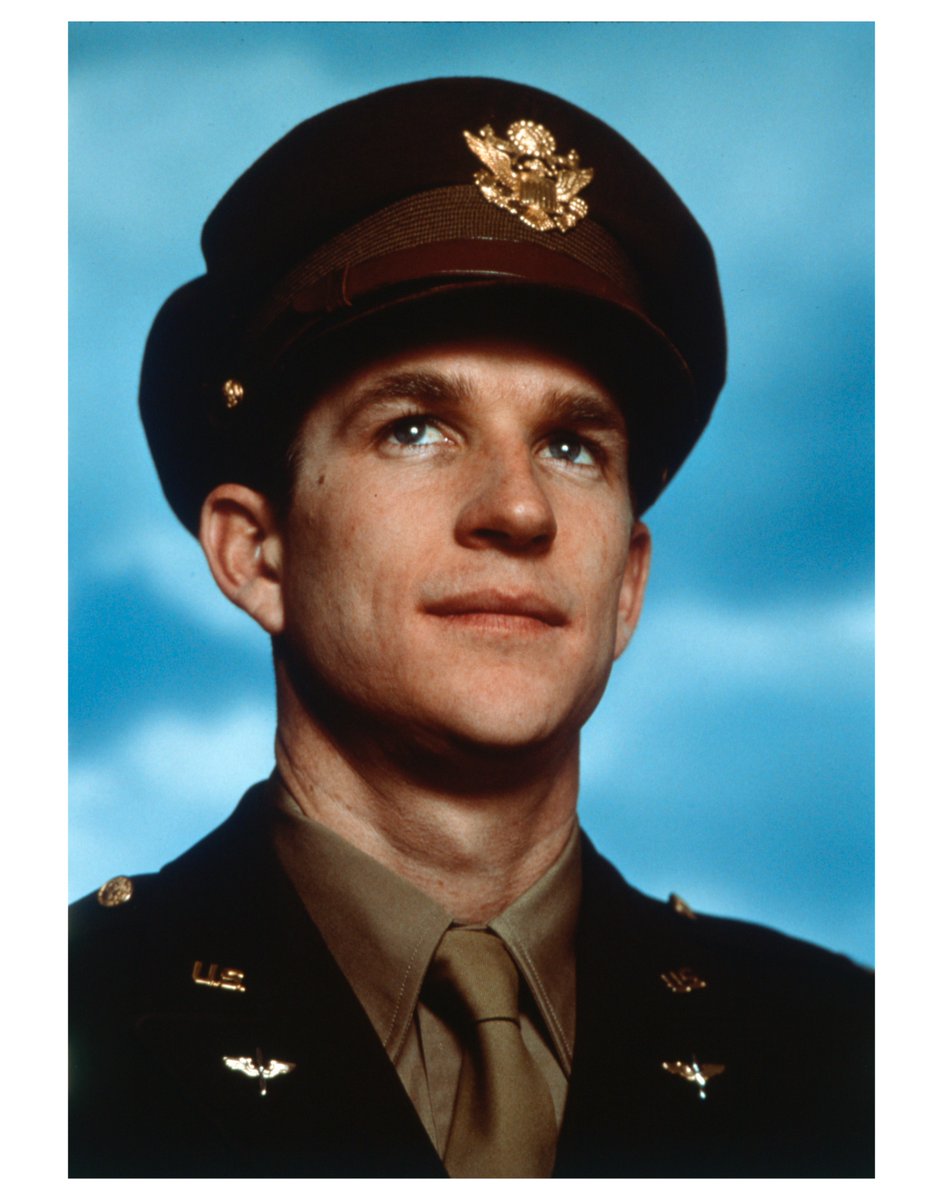
My uncle, Captain Wylder Modine, was a real B-17 "Flying Fortress" pilot during WWII. After returning from a bombing mission, he got hit by anti-aircraft fire and almost had his right arm taken off. He had his crew bail, but his co-pilot was shot up really bad and couldn’t parachute, so my uncle, with one arm, landed the heavily damaged B-17 in a field behind enemy lines. He was awarded the Air Medal and Purple Heart. I talked with him before making MEMPHIS BELLE in 1989. He gave me his dress uniform to wear in the film and said, “when you put that on, don't disrespect it.”
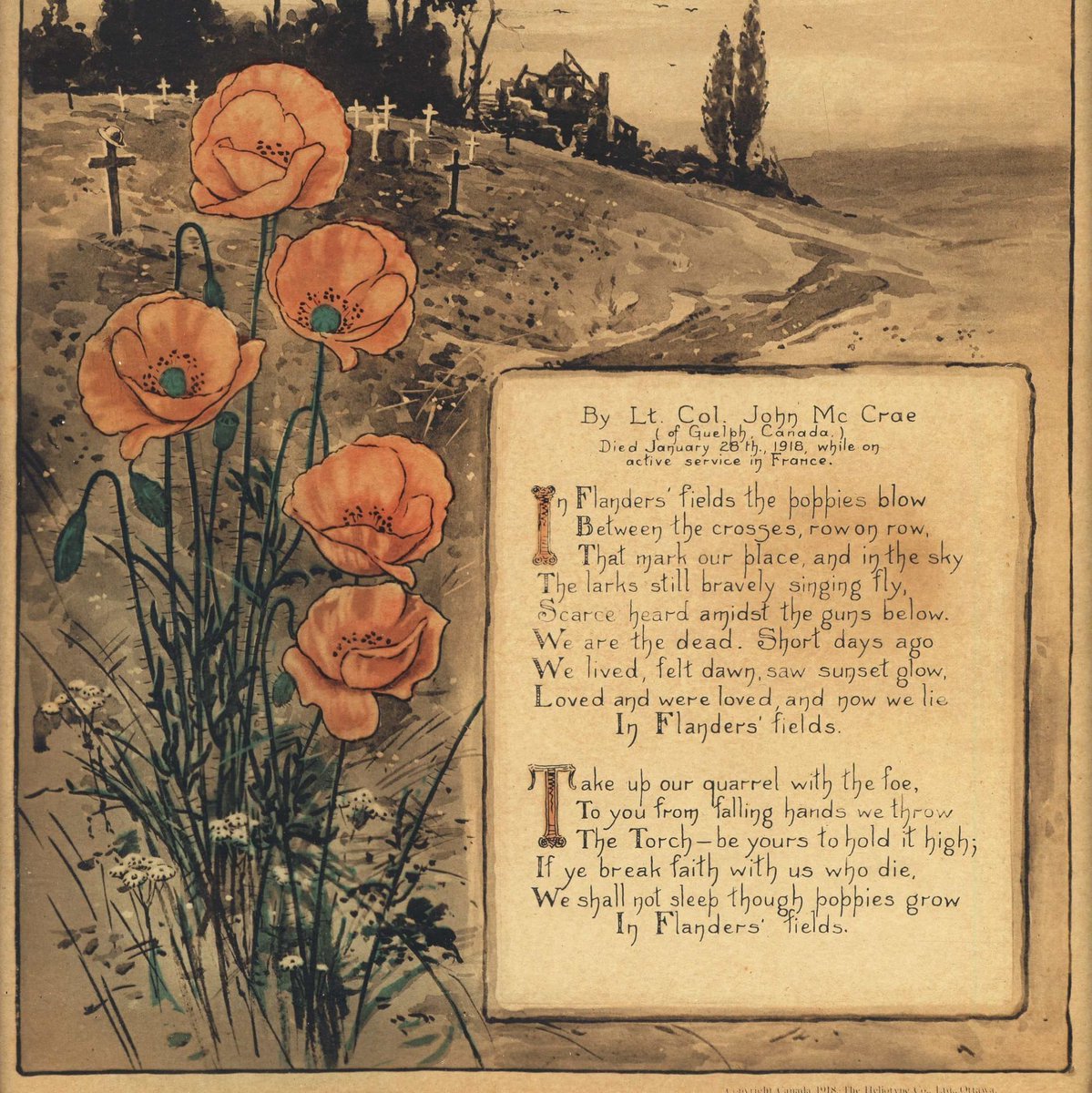
On May 3, 1915, after presiding over the funeral of a fellow soldier and friend, John McCrae sat down to write a poem.
It became In Flanders Fields and has become arguably the most famous poem in Canadian history.
This is its story.
📸 Canadian War Museum
🧵 1/10
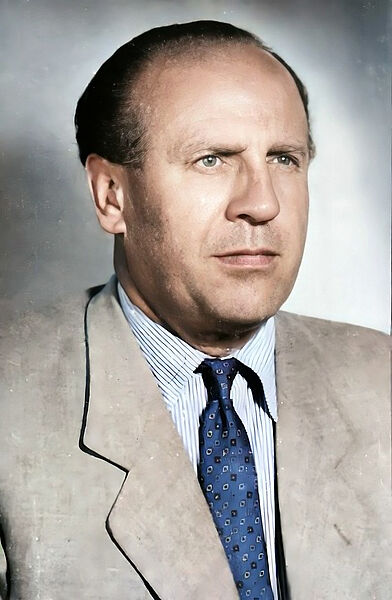
🧵He was a Nazi. A spy. A serial cheater. A heavy drinker. A war profiteer who got rich off Jewish slave labor.
He's also the only Nazi Party member buried on Mount Zion in Jerusalem.
The story of Oskar Schindler is darker, weirder, and more human than the movie ever showed 👇
@Turbinetraveler And…she was aesthetically pleasing, had well advanced avionics, capable to auto land, and…and… just too many things to mention. Sadly due to over budget spending to meet TWA’s numerous demands she was never to be a real success story.
Joseph-Armand Bombardier took a tragedy and created something to help others in that same situation.
His Ski-Dog (renamed Ski-Doo because of a printing error) is an iconic Canadian invention, but he did much more in his life.
This is his story.
🧵 1/12