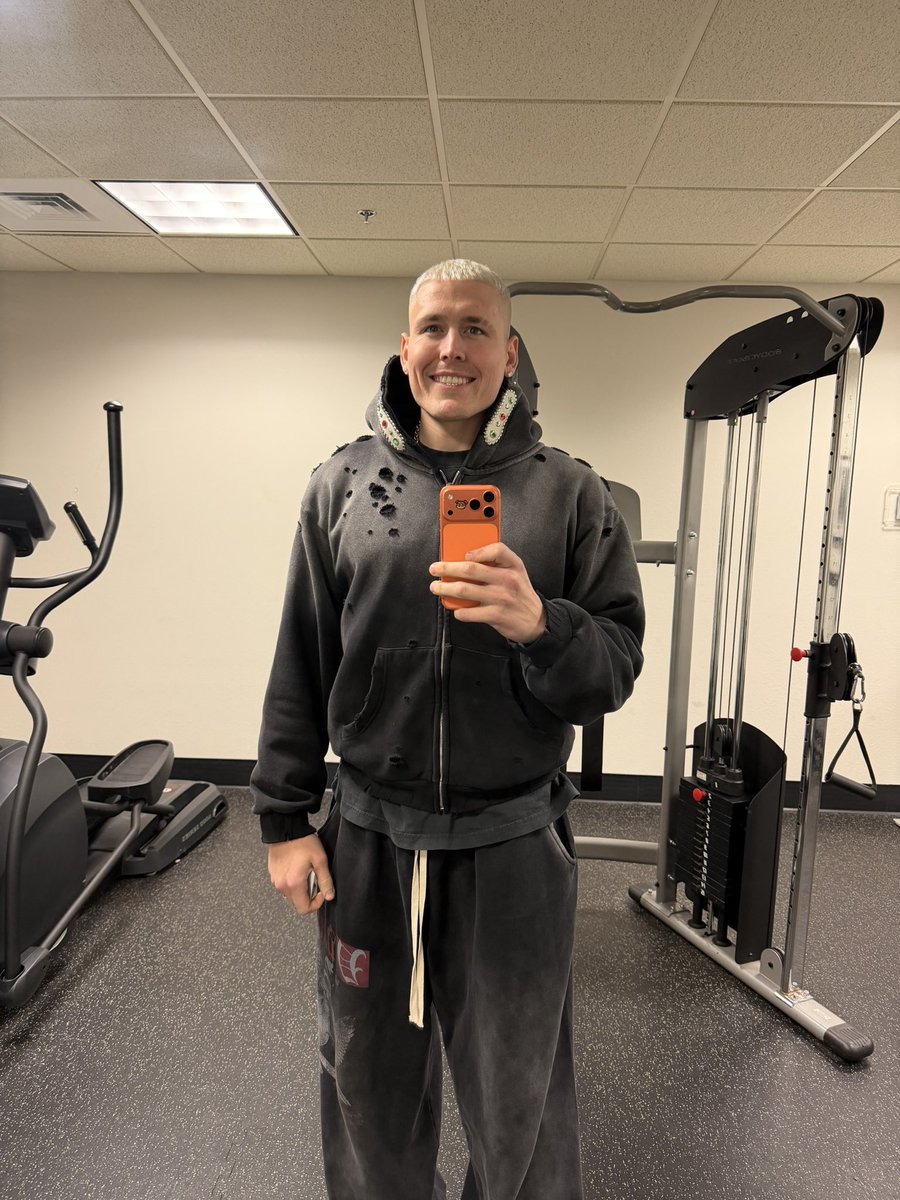
5 years ago today, fentanyl almost took everything from me. Today, it didn’t win.
5 years clean. ✝️
5 years of showing up, fighting back, and choosing life one day at a time.
If you’re in it right now and think there’s no way out, King Ant is living proof there is. 💪
A receipt can prove that money moved.
It cannot prove the deal was fulfilled.
That distinction becomes a serious problem when AI agents start buying and selling without a human approving every transaction.
Imagine an agent pays for a service.
The seller says, “Delivered.”
The buyer says, “Not according to the agreement.”
Both sides have evidence.
Now what?
You need a contract that can evaluate evidence, not just record a payment.
That is the part of @GenLayer I find interesting.
Its Intelligent Contracts can work with non-deterministic inputs such as live web data and LLM outputs. GenVM keeps those operations isolated from deterministic execution.
A leader proposes a result.
Validators independently evaluate whether that result is acceptable under the contract’s Equivalence Principle.
They don't need identical outputs.
They need to reach consensus on whether the result satisfies the contract's rules.
That creates a path from:
Payment → Evidence → Consensus → Settlement
Because agentic commerce cannot run on “the transaction happened” alone.
Did the transaction earn the right to settle?
If you were writing the contract for an AI agent, what evidence would you require before releasing the money?
Start at the GenLayer Portal, where ecosystem contributions are recorded and earn GenLayer Points:
https://t.co/f3tRgU1PvH
On a concrete pour, the paperwork can tell you exactly what happened.
Which truck arrived.
Which batch was delivered.
How much was placed.
When it happened.
But a perfect record still doesn't answer the harder question:
Did the concrete satisfy the specification?
That takes tests, measurements, tolerances, and a rule for deciding what counts as acceptable.
I've seen enough construction work to know that recording an event and proving it met the agreement are two different problems.
Now put that distinction between two AI agents.
An autonomous procurement agent buys a shipment from another agent.
The agreement says payment is released only if the delivery satisfies conditions defined in the contract.
The transaction executes.
The delivery is recorded.
The evidence exists.
Then the buyer's agent says the conditions were not satisfied.
The seller's agent says they were.
The blockchain can record what happened.
It cannot settle that disagreement merely by replaying the transaction history.
That's the gap between execution and adjudication.
This is where @GenLayer gets interesting.
GenLayer's Intelligent Contracts can combine deterministic code with non-deterministic operations such as web requests and LLM calls.
Those operations don't have to produce identical raw outputs for every validator.
A webpage can change.
An LLM can phrase an answer differently.
Independent validators can receive different raw results.
GenLayer doesn't solve that by pretending those outputs are deterministic.
Instead, the contract defines what makes a proposed result acceptable.
That's the role of the Equivalence Principle.
A leader executes the contract and proposes a result.
Validators independently evaluate that proposed result against the contract-defined validation rule.
They don't need to reproduce the same raw LLM or web output.
They need to determine whether the leader's proposed result satisfies the rule the contract established.
That's the important distinction.
The consensus question isn't:
"Did every validator see exactly the same thing?"
It's:
"Does this proposed result satisfy the conditions the contract defines for acceptance?"
If the required majority accepts the proposal, the transaction receives an Accepted decision and enters its appeal window.
If validators reject the proposal and another round is still possible within the funded execution budget, GenLayer rotates the leader and retries.
If consensus still cannot be reached, the transaction can become Undetermined without modifying contract state.
The challenge paths are different too.
A validator appeal uses a fresh validator committee to re-evaluate the existing proposal.
An Undetermined result takes a different path: a leader appeal starts another proposal round rather than rechecking the old one.
That is the deeper idea behind Optimistic Democracy.
The network isn't trying to make every non-deterministic observation identical.
It gives independent validators a contract-defined rule for deciding whether a proposed result is acceptable.
For agent-to-agent commerce, that distinction matters.
When software starts making agreements worth real money, recording what happened is only half the problem.
The other half is defining what counts as satisfying the agreement, what evidence can be considered, and how independent validators can judge the proposed result against those conditions.
If you were writing the first $10,000 agent-to-agent contract, which clause would you make machine-adjudicable first: delivery, quality, price, or performance?
More importantly, what observable evidence would you encode in the contract so validators could independently determine whether that clause was actually satisfied?
https://t.co/kFqk3lhVW5
15 GTD GA spot for @TheRCPTS
Follow @TheRCPTS X @ExtremeDao
X 5 GTD spots and 10 DC spots
Supply: 10000
Chain: Robinhood
Price: Free
Like and Retweet their pinned
Like and Retweet this post
Join
https://t.co/PacZgNUJn6
Drop your EVM and tag 2 friend
Winners in 24hrs
What is RECEIPTS? 🧾
A free mint of 10,000 unique 8×8 visual records on Robinhood Chain.
Each NFT is a unique visual receipt, permanently recorded onchain.
64 cells. 15 CMYK color combinations.
10,000 unique records.
All Credits holders are eligible to mint.
🧵
Doing a PPP memecoin experiment that might or might not involve airdrops.
To be part of it, QT this w your address (or just RT & reply)
To kick it off, here’s mine:
AS3yMXa5yPRFeLgsdQkFR1KxBowExSY1JUzRGZj8iAMu
If we get enough real participants, the experiment will proceed 🐱