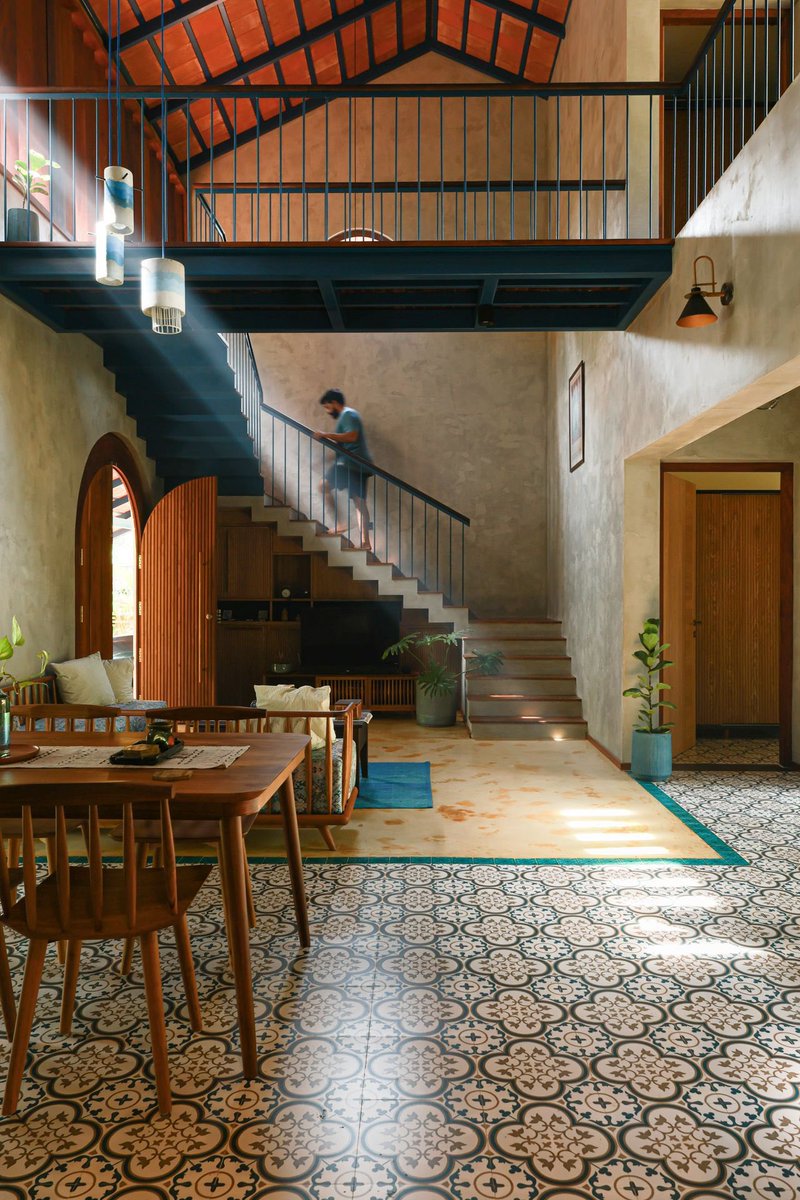
A civil engineer spent his childhood in a quiet Kerala home, moved away for work, and never stopped wanting to come back to that feeling. When the pandemic gave him a reason to work from home, he built one, this time in Elathur, Kozhikode, drawing from both Kerala and Goan vernacular he had come to love while traveling for work.
He called on Aslam Karadan and Sham Salim, longtime friends before they were ever his architects, and together they built a 4,700 square foot home around one belief, that imperfection is not something to hide.
Wood, laterite stone, and terracotta roof tiles came from a demolished public building nearby, material most of us would call waste sitting on a demolition site. Old shopfront planks became the floor, the facade, the door and window frames. Timber salvaged from old doors was rebuilt into a staircase, and the architects left the original bolt holes visible on purpose, proof of a former life instead of something sanded away.
The living room opens on one side to a courtyard, and on the other to a koi pond and garden, the exact kind of space where a family actually lives, eats, argues, and remembers each other. Lime plaster, mixed to recipes carried by specialist craftsmen, coats the walls, the counters, even the toilet floors, a finish that only grows more beautiful with age instead of cracking the way cement does.
None of this is imported knowledge. Courtyards, reclaimed material, lime finishes, our own continent carries the same inheritance. We walk past it every day and reach instead for tiled walls and sealed cement boxes, calling that progress.
Kerala home. Elathur, Kozhikode, India.
Architects: Aslam Karadan & Sham Salim, Aslam Sham Architects. Photography: Abhimanyu K.V
Scientists spent nearly 90 years studying why some people live to 100.
The answer wasn't a special diet, expensive supplements, or perfect genes.
It was one invisible habit that quietly changes your biology every single day.
Here's the complete story: 🧵
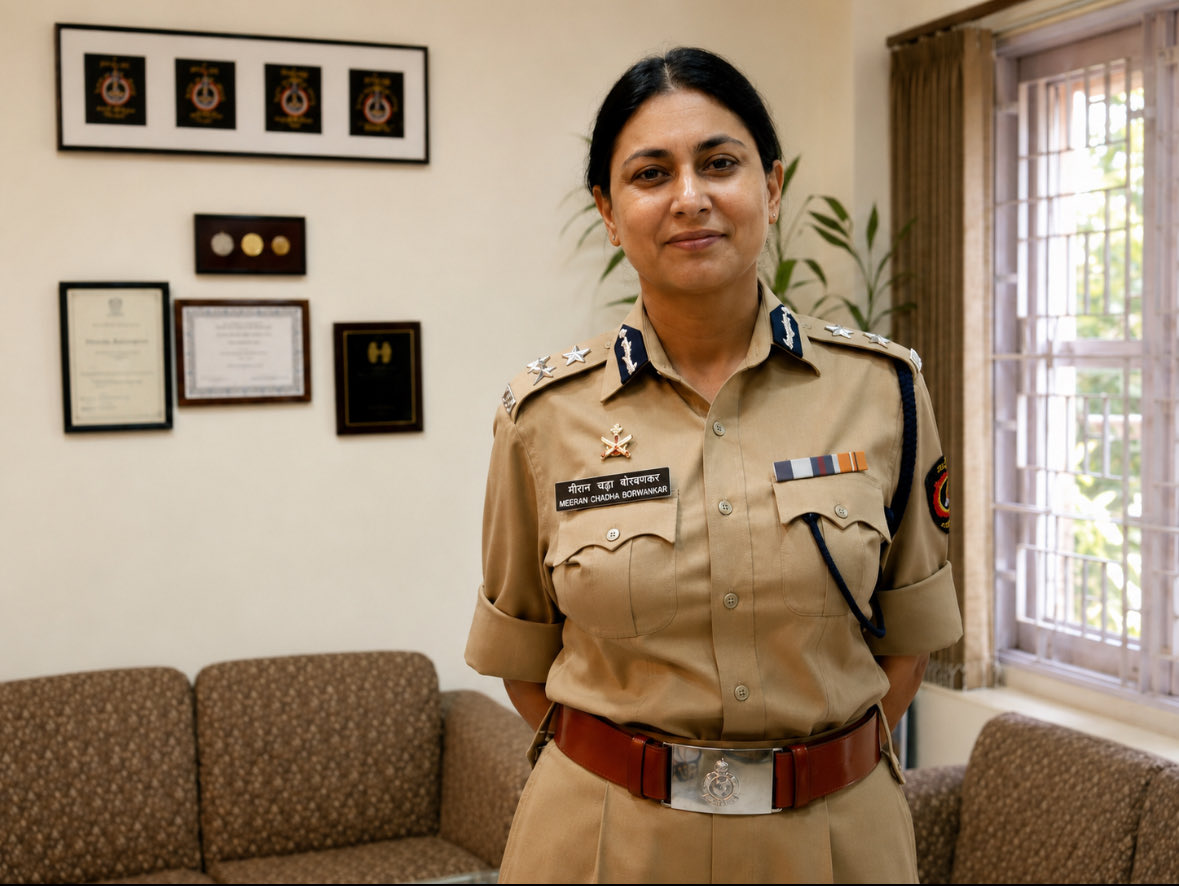
Her name is Meeran Chadha Borwankar.
A minister sat across a table from her and ordered her to hand over three acres of police land to a private bidder.
She said no.
He lost his temper and hurled the map across the glass table between them. She stood up, saluted him, and walked out.
She joined the Indian Police Service in 1981, at a time when a woman in a police uniform in India was almost a curiosity. She went on to become the first woman to head the Mumbai crime branch, and the first woman to lead the Pune police.
In 2010, soon after she took charge in Pune, she was told to complete the handover of a valuable piece of police land in the heart of the city. The land had already been auctioned off to a private bidder before her time. She was expected to simply sign it away.
She looked at it and refused. The land, she said, was needed for the police themselves, for their offices and for homes for the constables and their families, the men and women who guard the city and often cannot afford to live in it. Handing it to a builder, she said plainly, would look like the new commissioner had sold herself out.
The minister overruled her and told her the matter was closed. She told him, gently and finally, that she would not do it.
The map came flying across the table. She saluted, and left.
It cost her. The posting she wanted did not come. But she wrote to the government demanding the whole deal be cancelled, and she kept fighting until the land was returned to the police, where it belonged.
Years later, the bidder who had been due to receive that land was named as an accused in one of the biggest corruption cases in the country.
She had no way of knowing that at the time. She simply refused to hand over what was not hers to give.
ನೀರಾವರಿ ತಂದ ಸಿರಿ!
ಅನ್ನದಾತನ ಕನಸಿನ ಮನೆಯ ಮೇಲೆ ನನ್ನ ಹೆಸರು – ಇದು ನನಗೆ ಸಿಕ್ಕ ಅಪೂರ್ವ ಗೌರವ
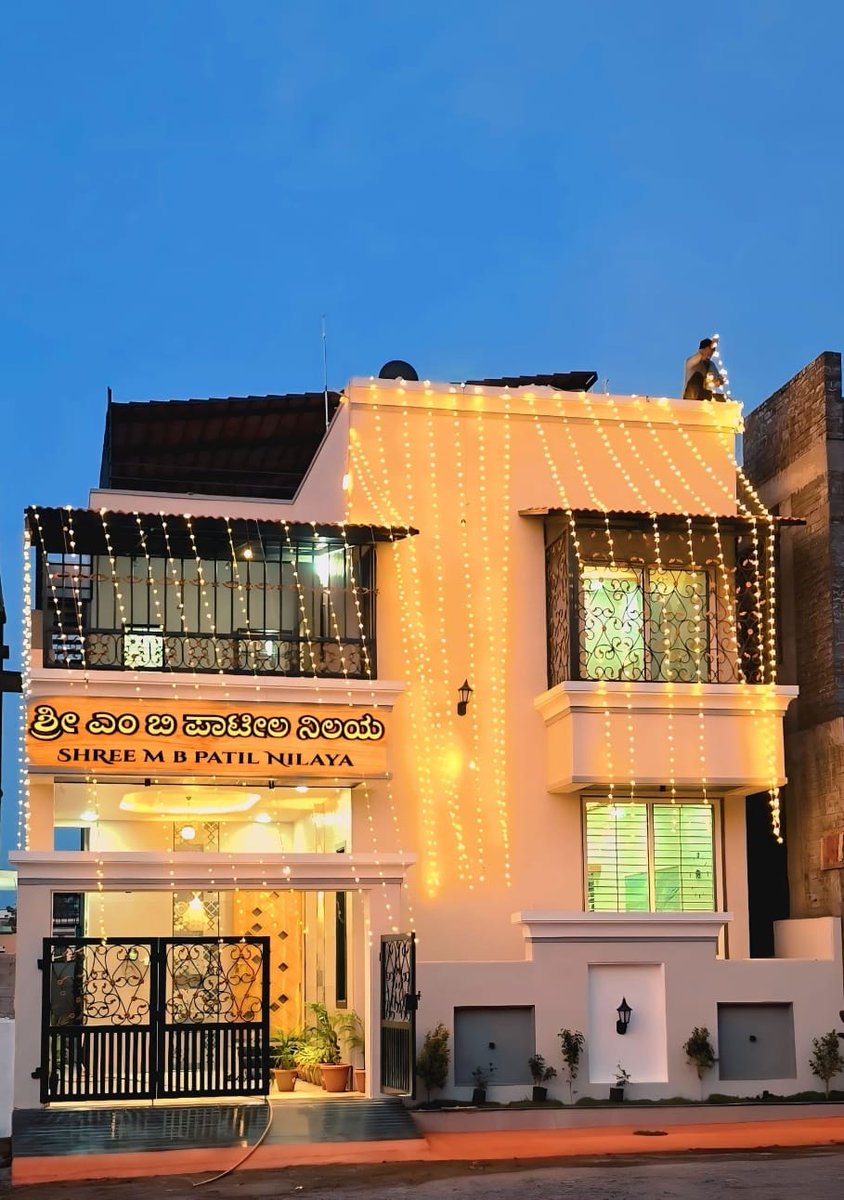
ತಿಕೋಟಾ ತಾಲ್ಲೂಕಿನ ರೈತ ಕುಟುಂಬವೊಂದು ವಿಜಯಪುರ ನಗರದಲ್ಲಿ ತಾವು ಕಟ್ಟಿಸಿದ ತಮ್ಮ ಹೊಸ ಮನೆಗೆ "ಎಂ.ಬಿ. ಪಾಟೀಲ ನಿವಾಸ" ಎಂದು ಹೆಸರಿಟ್ಟಿರುವ ಸುದ್ದಿ ತಿಳಿದು ನನ್ನ ಮನಸ್ಸನ್ನು ಭಾವುಕವಾಗಿಸಿದೆ.
ಇದು ಕೇವಲ ನನ್ನ ಹೆಸರಲ್ಲ... ಇದು ರೈತರ ಪ್ರೀತಿ, ವಿಶ್ವಾಸ ಮತ್ತು ಕೃತಜ್ಞತೆಯ ಸಂಕೇತ.
ನಾವು ಮಾಡಿದ ಕೆಲಸವನ್ನು ಮರೆಯುವವರೇ ಹೆಚ್ಚು ಎನ್ನುವ ಕಾಲದಲ್ಲಿ, ನಮ್ಮ ರೈತರು ಮಾತ್ರ ತಾವು ಬೆಳೆದ ಹಣ್ಣು, ತರಕಾರಿ, ಹಾಲು ತಂದು ಪ್ರೀತಿಯಿಂದ ನೀಡುತ್ತಾರೆ. ಈಗ ತಮ್ಮ ಕನಸಿನ ಮನೆಗೂ ನನ್ನ ಹೆಸರಿಟ್ಟಿದ್ದಾರೆ. ಇದಕ್ಕಿಂತ ದೊಡ್ಡ ಗೌರವ ಮತ್ತೊಂದಿಲ್ಲ.
ವಿಜಯಪುರ ನಗರದಲ್ಲಿ ಮನೆ ನಿರ್ಮಿಸಿದ ತಿಕೋಟಾ ತಾಲ್ಲೂಕಿನ ಸೋಮದೇವರಹಟ್ಟಿಯ ಸಿದ್ದಯ್ಯ, ಸಾತಯ್ಯ, ಬಸಯ್ಯ ಮತ್ತು ಮಲ್ಲಯ್ಯ ಅವರ ಅವಿಭಕ್ತ ಕುಟುಂಬಕ್ಕೆ ಹೃತ್ಪೂರ್ವಕ ಧನ್ಯವಾದಗಳು.
ಈ ಕುರಿತ ವಿಶೇಷ ಲೇಖನ ಇಂದಿನ ಪ್ರಜಾವಾಣಿ ವಿಜಯಪುರ ಆವೃತ್ತಿಯಲ್ಲಿ ಪ್ರಕಟವಾಗಿದೆ.
ಒಂದು ಕಾಲದಲ್ಲಿ ಬರಗಾಲದಿಂದ ತತ್ತರಿಸಿದ್ದ ಈ ನೆಲದಲ್ಲಿ, ಇಂದು ರೈತರು ಕೋಟಿ ರೂಪಾಯಿಗಳ ಆದಾಯ ಗಳಿಸುವ ಮಟ್ಟಿಗೆ ಬೆಳೆದಿದ್ದಾರೆ. ಅದಕ್ಕೆ ನಾವು ಮುತುವರ್ಜಿ ವಹಿಸಿ ಜಾರಿಗೊಳಿಸಿದ ನೀರಾವರಿ ಯೋಜನೆಗಳ ಕೊಡುಗೆ ಮಹತ್ವದ್ದಾಗಿದೆ. ಅನ್ನದಾತನ ಈ ಯಶಸ್ಸು ಮತ್ತು ಕೃತಜ್ಞತೆಯ ಭಾವನೆ ಇನ್ನಷ್ಟು ಸೇವೆ ಮಾಡುವ ಜವಾಬ್ದಾರಿಯನ್ನು ನನ್ನ ಮೇಲೆ ಹೆಚ್ಚಿಸುತ್ತದೆ.
ಇದು ಕೇವಲ ಒಬ್ಬ ರೈತನ ಯಶಸ್ಸಲ್ಲ; ನೀರಾವರಿ, ಶ್ರಮ, ಸಂಕಲ್ಪ ಮತ್ತು ವಿಶ್ವಾಸ ಒಂದಾದಾಗ ಸಾಧ್ಯವಾಗುವ ಪರಿವರ್ತನೆಯ ಜೀವಂತ ಸಾಕ್ಷಿ.
ಈ ಪ್ರೀತಿ ನನ್ನನ್ನು ಮತ್ತಷ್ಟು ಜವಾಬ್ದಾರಿಯುತವಾಗಿ ಕೆಲಸ ಮಾಡಲು ಪ್ರೇರೇಪಿಸುತ್ತದೆ. ರೈತರ ಬದುಕು ಇನ್ನಷ್ಟು ಹಸನಾಗುವವರೆಗೆ, ಅವರ ಮಕ್ಕಳ ಭವಿಷ್ಯ ಇನ್ನಷ್ಟು ಉಜ್ವಲವಾಗುವವರೆಗೆ ನನ್ನ ಸೇವೆಯ ಪಯಣ ನಿರಂತರ.
@prajavani
396 Hz
417 Hz
528 Hz
639 Hz
741 Hz
852 Hz
963 Hz
These frequencies are commonly associated with the seven chakras, each supporting a different aspect of emotional, mentally.
2018 ರಲ್ಲಿ ಡಿಕೆಶಿ ಇಲ್ಲದೇ ಒಕ್ಕಲಿಗರ ಮತಗಳಿಲ್ಲದೇ ಮಂಡ್ಯದಲ್ಲಿ ಒಬ್ಬ ಕಾಂಗ್ರೇಸ್ MLA ಇಲ್ಲದೇ..
80 ಸೀಟ್ ಗೆಲ್ಲಿಸಿದ್ರು..
ಈ ಕುಡುಕೇಶಿಗೇ ತಾಕತ್ತಿದ್ರೆ ಸಿದ್ದರಾಮಯ್ಯನವರನ್ನ ಎದುರು ಹಾಕಿಕೊಂಡು 2028ಕ್ಕೆ 50+ ಸೀಟ್ ಗೆಲ್ಲಿಸಿಕೊಂಡು ಬರಲಿ ನೋಡೋಣ.
ಇದು ನನ್ನ ಓಪನ್ ಚಾಲೆಂಜ್..
ಬೆಟ್ಟಿಂಗ್ ಕೂಡ ಆಡಬಹುದು..
#ಕುಡುಕೇಶಿ vs #ಅಹಿಂದ
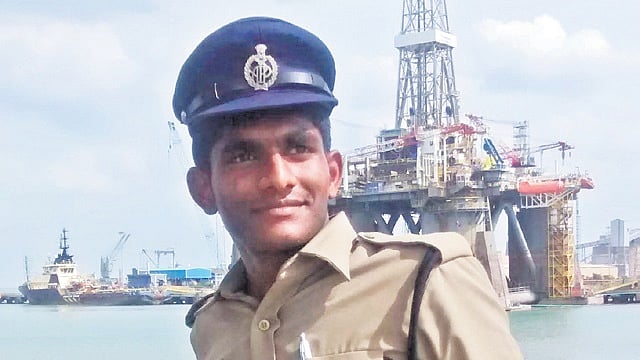
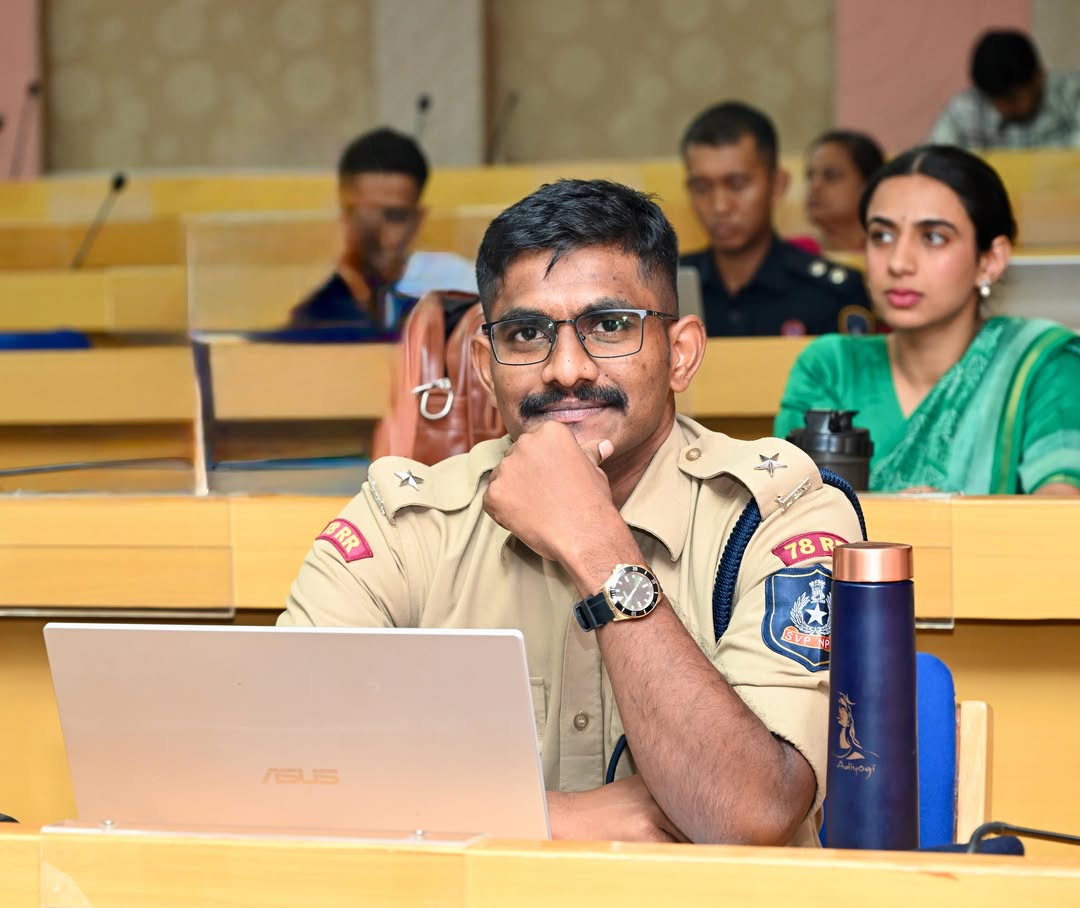
Meet Uday Krishna Reddy IPS , a man who turned from being a police constable to becoming an IPS officer. Born in Ullapalem village of Singarayakonda mandal, he lost his mother at the age of 4 and his father at 15. Raised by his grandmother Ramanamma, a daily wage laborer, life tested him from the very beginning.
He studied in a Zilla Parishad school and later completed his BA from Jawahar Bharathi Degree College. To support his education, he worked part-time as a lab technician at a diabetic clinic while pursuing his studies. In 2012, he joined the police department as a constable.
For years he served sincerely. But in 2018, a humiliating incident changed everything. A Circle Inspector, reportedly holding a personal grudge, publicly humiliated him in front of nearly 60 officers and punished him with an additional drill for over an hour.
Instead of breaking him, that moment ignited a fire within him. He resigned from his job and began preparing for the UPSC Civil Services Examination. Despite setbacks in his first attempts in 2019, 2021, and 2022, but refused to give up. In 2023, his perseverance paid off when he secured AIR 780 and achieved his dream of becoming an IPS officer.
What amazes me is that many people today have access to good colleges, coaching, AC study halls, and every possible resource, yet still struggle to stay consistent. Uday Krishna Reddy's story proves that resources help, but burning desire is what truly change lives
Her name was Maharani Gayatri Devi.
She was born on May 23, 1919, in London. Her father was the Maharaja of Cooch Behar in Bengal. She grew up riding horses, playing polo, and studying in England and Switzerland.
At 12 years old, she met the Maharaja of Jaipur, Sawai Man Singh II. He already had two wives. After an eight-year courtship, she married him on May 9, 1940, and became the third Maharani of Jaipur.
Gayatri Devi refused to observe purdah. At a time when royal women were expected to remain behind veils, she appeared in public confidently and unapologetically. She later founded Jaipur’s first modern school for girls. Vogue magazine also named her among the ten most beautiful women in the world.
In 1962, she joined the Swatantra Party and contested the Lok Sabha election from Jaipur. Out of 246,516 votes cast, she received 192,909 votes, nearly 78 percent of the total.
It was recorded in the Guinness Book of World Records as the largest electoral majority ever won by any candidate in a democratic election at the time.
When she visited the United States, President John F. Kennedy introduced her publicly as “the woman with the most staggering majority that anyone has ever earned in any election in the world.”
She won the Jaipur seat again in 1967 and once more in 1971, each time defeating the Congress.
Then came the Emergency.
In June 1975, Prime Minister Indira Gandhi declared Emergency across India. One month later, Gayatri Devi was arrested on charges of tax evasion.
She was 56 years old and spent five and a half months inside Tihar Jail.
After the Emergency ended, she gradually withdrew from politics. Her husband had died in 1970, and her only son died in 1977. She spent the rest of her life quietly in Jaipur until her death on July 29, 2009.
She was 90 years old.
A queen who won the world’s largest election majority.
A woman jailed by the very Prime Minister she had spent years opposing.
Her school for girls still stands in Jaipur today.
Follow for stories India deserves to remember.
During Adhik Maas (also called Purushottam Maas), many people follow extra spiritual discipline, devotion, and simplicity in daily life.
Here are some commonly followed Niyam (rules/practices👇
His name was Arif Mohammad Khan.
He was 36 years old. A Cabinet Minister in Rajiv Gandhi’s government.
In 1985, the Supreme Court ruled in favour of Shah Bano, a 73-year-old Muslim woman from Indore who had been divorced after 43 years of marriage.
Her husband paid her a small sum under Muslim personal law and claimed his obligation was complete. The Supreme Court disagreed.
It said Section 125 of the Criminal Procedure Code applied to every Indian citizen, regardless of religion. Shah Bano was entitled to maintenance.
Arif Mohammad Khan stood up in Parliament and defended the judgment.
He said the law must protect every Indian woman without exception. It became one of the most powerful speeches heard in Parliament that decade.
Then the government reversed its position.
Facing pressure from orthodox religious leaders, Rajiv Gandhi’s government passed the Muslim Women (Protection of Rights on Divorce) Act, 1986. It effectively nullified the Supreme Court ruling. Shah Bano would no longer receive maintenance under Section 125.
Arif Mohammad Khan refused to support the bill.
He resigned from the Cabinet. His political career collapsed. He spent years out of power.
Shah Bano later withdrew her claim under community pressure. She died in 1992 without ever receiving her maintenance.
The principle overturned in 1986 was effectively restored decades later through later Supreme Court judgments, including the Triple Talaq verdict of 2017.
Thirty-one years later.
Arif Mohammad Khan would later become the Governor of Kerala.
He once said: “I did what my conscience told me. I have no regrets.”
His party called it a mistake. History did not.
Follow for stories India deserves to remember.
Modi Economics: Don’t buy gold, Avoid Destination Wedding, Do Work from home- expectations vs reality!
TIMESTAMPS:
00:00 Intro
00:38 Work From Home
01:01 Destination Wedding
02:26 Gold Import Problem
03:23 Congestion Pricing
04:33 Organic Farming Risk
05:27 Solar Pump Problem