Meet an IIT Kharagpur Alumni -
First Gate Attempt - AIR 525
Rejected by all IITs for Aerospace Engineering.
Second Gate Attempt - AIR 53
Still got Rejected by IIT Madras
If Toppers from General Category are
struggling then I can't imagine the
Plight of an Average General Category Student.
India was fooled in the name of Gen Z.
An entire generation was falsely branded.
Have you noticed one phrase everywhere?
“Gen Z.”
On television.
On Instagram.
For fifty days, India was sold one story.
Gen Z is angry.
Gen Z is Cultureless.
Gen Z is stupid.
Gen Z is a big security threat to India.
Soon, it became Gen Z versus everyone.
Gen Z versus millennials.
Gen Z versus parents.
Gen Z versus Bharat itself.
Then came the placards.
The slurs.
The vulgarity.
Words families could not repeat.
India was quietly trained to distrust its own children.
But the numbers betray the script.
India has nearly 38 crore Gen Z citizens.
~10.98 crore are in Classes IX–XII or higher education.
That is 28.9%.
~3.72 crore study in Classes IX and X.
~2.76 crore study in Classes XI and XII.
~4.50 crore pursue higher education.
~15.73 crore are working.
~1.73 crore are officially unemployed.
Now return to Jantar Mantar.
20th July 2026.
The so called “Gen Z Protest.”
Assume the crowd was 40,000.
Even if half were Gen Z, that gives us 20,000 people.
That is 0.0053% of India’s Gen Z population.
One in nearly 19,000.
The other 18,999 were elsewhere.
Studying.
Working.
Building careers.
Preparing for admissions.
Preparing for life.
Yet television converted 20,000 faces into 38 crore minds.
That was deliberate framing.
That is information warfare.
Now look deeper.
Among Indians aged 15-24,
89.7% of young men and 99.7% of young women,
reported never consuming alcohol.
Around 62% of Gen Z say spirituality gives them clarity.
Around 79% of Indian youth pray or perform religious rituals.
Around 84% worry about environmental damage.
Around 85% will pay more for sustainable products.
Around 90% examine an employer’s environmental policies.
Yet NMDC claimed 60 tonnes of waste.
Alcohol bottles.
Filth.
Does that represent Gen Z?
Or was Gen Z merely the costume?
A genuine student grievance existed.
But a violent protest used its face.
Algorithms selected the rage.
Television repeated the label.
The old political class found its script.
India was pushed towards a manufactured civil war.
Young versus old.
Children versus parents.
Gen Z versus civilization.
Do not blame 38 crore Indians for the behaviour of a few thousand.
CJP is not Gen Z.
It merely wore Gen Z as a mask.
Behind that mask stood an older hunger for power.
The objective was never reform.
The objective was mistrust.
Because a nation that distrusts its next generation has already lost its future.
“India is just an assembly destination for foreign smartphones” to “India is mastering high bandgap compound semiconductor physics.”
Yes, Hamara Desh Badal Raha Hai 🙏
Agnit Semiconductors is India’s 1st vertically integrated Gallium Nitride (GaN) semiconductor manufacturing startup. Incubated out of the CeNSE lab at IISc BLR, they are growing custom material wafers, fabricating chips & packaging high frequency RF & power electronics.
Modern military hardware, whether it is the AESA radar on fighter jets/missile guidance systems/military communications/counter drone electronic warfare systems, relies heavily on RF GaN chips.
Historically, global supply chains for high end GaN power amplifiers have been heavily restricted under international arms control agreements/dominated by the US, Japan & Europe.
By establishing native epitaxy (growing GaN crystals on substrates) & custom device processing on Indian soil, Agnit gives India a sovereign, un-sanctionable supply of military grade RF power amplifiers.
Additionally, Cellular towers use base stations that consume massive amounts of electricity & generate extreme heat trying to push high-frequency signals. GaN chips can handle over 10x the power density & operate at significantly higher temperatures than traditional Silicon.
Agnit holds 15+ patents across the full GaN value chain, from the way the crystalline wafer is grown in MOCVD reactors to the circuit architecture itself.
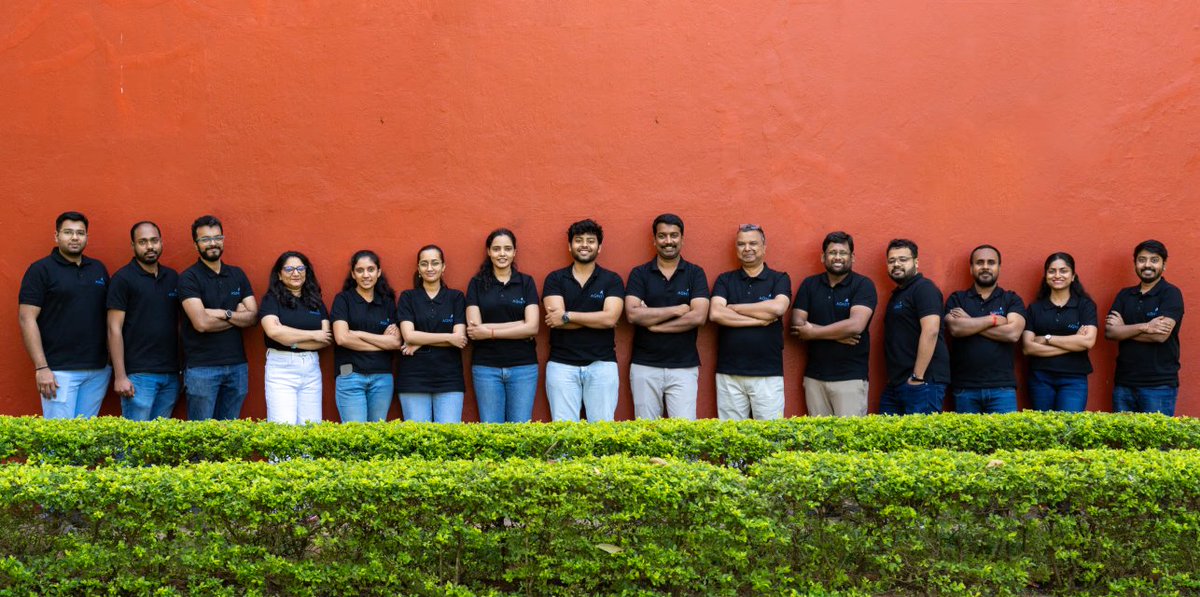
They are built by a foundational team of PhDs & researchers, co-founded by Dr. Hareesh Chandrasekar, Dr. Digbijoy Neelim Nath, Prof. Srinivasan Raghavan & others, who spent ~18 yrs researching compound semiconductors before commercializing.
Deeptech semiconductor startups rarely go viral because they are not building consumer apps. That is exactly why it is on us to give them the shoutout they deserve. 🙏🙏
Chandrakanta. Crown TV. Power outage due to burnt transformer. Battery. Jadavpur University.
A beautifully nostalgic read ending with a feel-good hopeful pride.
Picture this: It is 8:45 AM on a Sunday morning in 1994.
The entire mohalla is quiet, but the air is electric. Across India, millions of kids are standing on rooftops, staring at a wooden bamboo pole lashed to a terrace railing. Someone down on the street is screaming up at the roof: "Agya! Agya! Thoda baayein ghumao... aaya! Photo aaya!"
Then, disaster strikes. At 8:55 AM, exactly 5 mins before the iconic title theme of Chandrakanta begins, the neighborhood power transformer groans, dies & cuts the electricity.
An entire floor of children does not cry. They sprint.
Flip-flops slapping against the mud, kids flooding the stairwells, a stampede of footsteps echoing up the building toward the 1st floor, straight to Umakant Shrimaan ji's home. Because Umakant-ji has The Battery.
Within 3 mins, 30 kids & half the neighborhood adults are packed wall to wall into his bedroom, sitting cross legged on the floor.
Umakant-ji kneels beside a heavy, dark grey box on the floor with 2 brass terminals & a thick red cable attached to the back of a black & white Crown TV. He turns the knob. The screen flickers, a bright green-white line expands from the center & the room erupts as the title card appears: "Naugarh Vijaygarh mein thi takraar....."
The Indian pioneer behind that exact home-battery movement was an electronics engineer named Rakesh Malhotra (Jadavpur university grad).
In the late 1980s, heavy lead-acid batteries were dangerous industrial items. They leaked acid, emitted fumes & were meant for trucks/factory generators.
Hooking 1 directly to a tv meant mess, dangerous bare copper wires & constant manual monitoring. In 1988, a 26 yr old Rakesh Malhotra quit his corporate job & took ₹40000 in savings to solve this exact problem. He founded Luminous Power Technologies in a small Delhi workshop.
Malhotra engineered the integrated solid-state home inverter/charger. His circuit automatically sensed when the main grid died, instantly switched the TV’s power source to the 12V battery within millisecs & smoothly recharged the battery when electricity returned, all wrapped inside a safe box that Umakant-ji could place right under his living room table.
It democratized home power backups across Indian cities.
Rakesh Malhotra turned that ₹40000 investment into an empire. In 2011, French multinational giant Schneider Electric acquired a majority stake in Luminous for ₹1400+ cr, making it 1 of the most successful hardware exits in Indian startup history.
Instead of retiring, Malhotra founded the SAR Group. He launched Livpure (smart water purifiers & home appliances) & Livguard (next-gen energy storage, inverter batteries & EV components), building a 2nd multi-billion rupee energy ecosystem.
Today, operating through his venture arms, he is an active angel investor funding early-stage Indian startups in electric mobility, battery tech & clean energy. The young engineer who made sure in early 1990s kids did not miss Sunday morning Chandrakanta spent the rest of his life building India's decentralized energy infrastructure.
One more request @narendramodi
It is the best time to have a fair & merit-based system & nothing reserved for any sector of society in important entrance exams.
Mesopotamia was never the cradle of civilisation. India was.
I spent forty years in international shipping, not academia. When I began researching the history of maritime trade, I had no orthodoxy to defend. I followed the evidence, and it kept arriving in the same place: the Indian subcontinent.
Nineteenth century archaeologists dug in Mesopotamia because the climate preserved artefacts, the biblical sources pointed them there, and the Ottomans allowed the excavations. That is the entire basis for the myth of Mesopotamia as "the cradle of civilisation."
Nobody applied the same rigour to India. Mohenjo-daro was not discovered until 1922. By then the narrative had already hardened.
What was actually there was the largest civilisation of the ancient world. Three hundred cities. Fifty thousand people in each, by 2600 BC. Two thirds of them stood on the banks of the Sarasvati, the central and greatest of the seven rivers described in the Rig Veda, flowing down from the Himalayas before the river vanished entirely by 1900 BC. The Vedic kings claimed territory stretching "sea to sea," from Afghanistan to Maharashtra, some 1.5 million square miles, against Egypt's 13,000. A dock at Lothal built to handle thirty ships of sixty tons, unmatched in Europe for four thousand years. When it was first excavated, it was recorded as a bathing pool.
When the scale became impossible to dismiss, the theory was not corrected. It was replaced with a story of pale-skinned nomads from the steppe who supposedly arrived around 1500 BC and brought civilisation with them. There is no evidence. The chronology doesn't work. The Vedas describe no invasion.
In 2019 a Harvard-led genetic study revived the claim, and the press reported it as confirmation. It was not. The same study found the builders of these cities were indigenous. The Sarasvati river that the Rig Veda described had already dried up before these newcomers arrived. What the study also found is that a small group of men, arriving after the Sarasvati had already dried up, interbred with the existing population and left a genetic signature. That is all.
So, where they chose to dig was mostly an accident of climate and access. The Aryan invasion theory was constructed because an Indian civilisation that owed nothing to Caucasians was a fact the late nineteenth century could not accommodate.
Link to full Substack essay with sources in the comments below.
@DocPriyamMD Yes, the same happened to my cook's daughter of the same age 2 months back. Her haemoglobin had dropped to 3.3.
I'd been asking her to consult a doctor for quite sometime but she rejected saying he'll write costly tests.
Immediate admission to a hospital saved her.
@Gramergolpo Need to set up an online sales service for many such authentic things.
It'll be immensely helpful for the Bengalis staying outside Bengal.
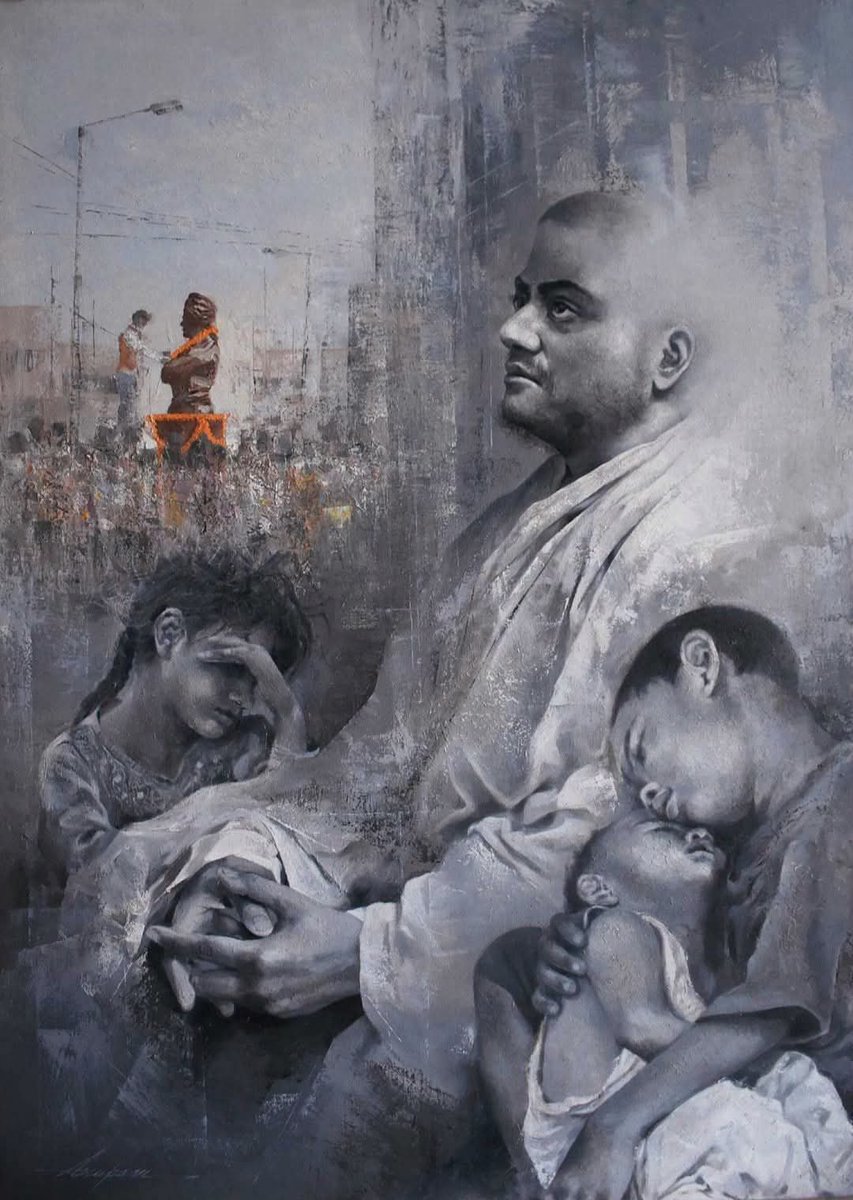
What Were the Final Days of Swami Vivekananda Like?
Swami Vivekananda passed away in 1902 at the age of just 39. It was 9:10 p.m. at Belur Math. At that time, neither Belur Math nor the nearby villages had electricity, although there was a telephone. Yet no news reporters arrived, and remarkably, none of the newspapers published in Bengal carried the news of his death the following day. Nor did any prominent political leader or celebrated Bengali publicly express condolences. It is astonishing to think about. 🔴
Throughout his short life, Swami Vivekananda endured humiliation, neglect, and repeated rejection. After his father's death, he became entangled in legal disputes with relatives over family property and had to appear in court on numerous occasions.
His family lived in extreme poverty. Every morning he would leave home in search of employment, wandering from office to office. Many days, knowing there was no rice, lentils, oil, or salt at home to feed his mother, brothers, and sisters, he would tell his mother, "Don't cook for me today, Mother. I've been invited to a friend's house for dinner." In reality, there was no invitation. He often went hungry so that the rest of the family could eat. It is almost unimaginable. 🍂
He struggled with poverty throughout his life. At the age of 23, he secured a teaching position at the Metropolitan Institution, founded by Ishwar Chandra Vidyasagar. However, the headmaster—Vidyasagar's son-in-law—disliked Narendra Nath Datta and reportedly had him dismissed, alleging that he did not teach well. This happened despite his extraordinary intellect, scholarship, and eloquence.
Once again, he found himself unemployed.
Even abroad, a Bengali religious leader allegedly spread false rumours that Vivekananda had several wives, ten or twelve children, and was nothing more than a fraud and a gambler. 💥
He often endured hunger both in India and overseas. In one of his letters, he wrote:
"Many times I have passed days without food. I felt that perhaps I would die that very day. Then I would rise, crying, 'Victory to Brahman!' and declare: 'I have no fear. I know neither death nor hunger. I am beyond thirst. What power does the world have to destroy me?'"
When the ailing Swami Vivekananda returned to Calcutta after achieving worldwide acclaim, many prominent Bengalis reportedly declined to attend or organise a public reception in his honour. Eventually, Paryichand Mitra agreed but is said to have remarked that since Vivekananda was a Kayastha rather than a Brahmin, he could not truly be a monk and would therefore address him merely as "Brother Vivekananda."
By 1898, Americans were deeply inspired by his speeches and writings, while many in his own homeland remained indifferent.
That same year, the sick Swami consulted the renowned physician Dr. Rasiklal Dutt at his clinic on Sadar Street in Calcutta. The doctor reportedly charged him forty rupees as a consultation fee and another ten rupees for medicines—a considerable sum in those days. The money was paid by Swami Brahmananda from funds collected for Belur Math.
There is no known photograph of Swami Vivekananda after his death. Nor is there an officially preserved death certificate, despite the existence of the Bally–Belur Municipality at the time. Ironically, that same municipality imposed an amusement tax on Belur Math.
Some people even mocked the monastery, dismissing it as a gathering place for idle young men and using insulting nicknames such as "Bichitra Ananda" or "Bibi-ka-Ananda"—
Perhaps that is why, toward the end of his life, he is said to have remarked:
"Only another Vivekananda could truly understand what this Vivekananda has accomplished."
Today, Swami Vivekananda is revered across India and around the world. Yet during his own lifetime, he endured poverty, insults, and neglect. One might even wonder whether, had he witnessed some of today's displays of admiration, he would have dismissed them as empty gestures
Collected n edited
@InfraAddaofWB KMC can expand this to the pooja floral wastes from households as well.
In the Lake Town area, it's already being collected separately 2ce a week.
What an insensitive thing to say. Pathetic attacks in the name of politics, forgetting he's not a politician and has worked his whole life for securing India under many governments.
The man is 81 years old, his job is to use his brains and strategy to keep India secure from multiple threats and project power, in which he has done a commendable job. Like one comment said, it's like attacking Stephen Hawking as incompetent.