Journaling my evolution from degen to disciplined trader.
Wins, losses, and psychological breakdowns logged here.
Goal: Master the process. Freedom follows.
Twenty four hours of nonstop testing, hundreds of mainnet transactions, zero compromises.
Engine 08 Omnichain is officially live on MEME OS.
One token, native on Solana, Base, Ethereum, BNB & Robinhood Chain.
• LayerZero V2 OFT on all 5 chains
• Burn on source, mint on destination
• 2 of 2 DVNs: LayerZero Labs + Google Cloud
• No wrapped tokens, no custodial bridge lockbox
• 126-tx automated pipeline per launch
• Atomic open at identical price across all pools
• Native hourly creator payouts on every chain
• Audited battletested on mainnet
Trade, track liquidity, and bridge across chains directly inside the terminal.
https://t.co/oTxes4jLaI
On-chain intelligence, without leaving chat.
/xray is now live in Discord.
Plugged straight into our main detection engine. Drop a contract address, an X post making wild claims, or a dev wallet, the scanner tears it down in seconds: verifying claims against on-chain data, tracing wallet links, and flagging traps before you touch the buy button.
Save your liquidity. Run the slash command first.
Instagram is now live in Social Escrow.
Launch a coin and direct its creator fees straight to any Instagram account, locked on-chain from the moment it goes live.
The audience already knows who the coin is for. Now the economics can follow the account behind it.
If launching cross-chain means managing five wallets and claiming fees in three different tokens, it’s broken.
We rebuilt it.
Engine 08: One coin. Five chains. One price. All fees paid in SOL to your wallet.
The real cross-chain standard is coming.
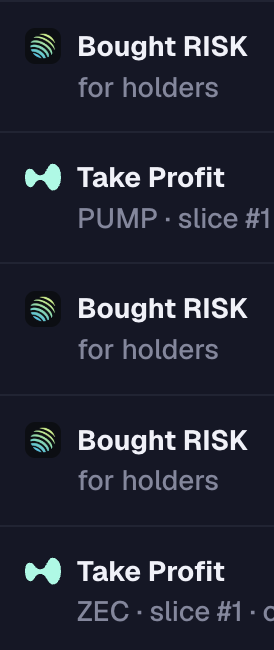
we hit more profits on both ZEC and PUMP longs
this resulted in RISK buys
RISK pays RISK
why?
1. all RISK buys result in RARI buys (study custom pairs)
2. RISK holders are max RISK so they should all 3,3 their RISK rewards (supply flows into diamond hands)
@Embervale_ The game works fine. It is very relaxing and cozy game. My request is to open discord or telegram so people can report bugs or issues easily.
I’ve never really shared my thoughts on this whole situation, but I have to say, the reaction to this update was way over the top.
The website looks dope and I think the idea of using Mars for crypto is great, especially with the Elon Musk association.
The current terms of use are also fine imo - they can always be changed later.
People are upset that 15 didn’t integrate the token into the main website. On this I’m on 15’s side. There’s no need to change the gameplay for people who already enjoy the game. He can simply let users know about the separate Mars website. I’m sure many people would be interested in trying it out.
And obviously, harassing 15 just because people didn’t like the integration is completely unacceptable 🤦♂️