Thrilled to share our paper on growth of ferroelectric 3R-phase WS₂! 3R TMDCs have high χ(2) and carrier mobilities, and fast, nonvolatile domains switching. Dr. Zhepeng Zhang led our effort for pure 3R-phase growth in films 1.4 to 130 nm thick. https://t.co/DiFwwDuAiD
Our latest paper, led by PhD student Lauren Hoang (co-advised with @profericpop), shows that Ni contacts induce strain in monolayer WS2, boosting on-current by up to 2.67× and reducing Rc by up to 78%. Well done, Lauren & team!
https://t.co/EDKiTun77r
Excited to share our work in @acsnano on hybrid MOCVD growth of #2Dmaterials! Inorganic + organic precursors allow easy changes to growth chemistry. We achieve WS2 with RT mobility up to 36 cm²/V-s & sharp PL. https://t.co/m0akBDWJax
Congrats to Zhepeng, Lauren, and team!
Excited to share recent work led by Risa Hocking on twist and strain relaxation in ferroelectric hBN moirés: https://t.co/Kyd4pEW2jk. This is important to understand process limits and tune moiré quantum dots by annealing. A fantastic collab with the Goldhaber-Gordon group!
Excited to share our collab with @profericpop! Achieved 2x mobility & on-current enhancement in WS2 and MoS2 with modest 0.3% strain. Kudos to Jerry Yang in Pop lab for leading, with contributions from Lauren Hoang & Zhepeng Zhang on materials growth.
The first of our several #2Dsemiconductor strain papers this year was out in June. Using a "bendy platform," Jerry Yang found that biaxial tensile strain increases electron mobility in WS2 and MoS2. Collab w/ K. Papagelis at @Aristoteleio and @MannixGroup.
https://t.co/6QOfniRIGw
@afreeelectron Sounds cool! We recently obtained good results using SIFT align plugin in FIJI (ImageJ) on a stack. We only used translation, but affine distortion is an option.
Immediate postdoc opening @Stanford: electrochemical/energy quantum sensing via hBN growth and color center engineering! Collaboration led by Dr. Yan-Kai Tzeng @SLAClab , with Prof. Steve Chu and Prof. Vučković @StanfordPhoton1. Send CV to ajmannix@stanford, subject: hBN Postdoc
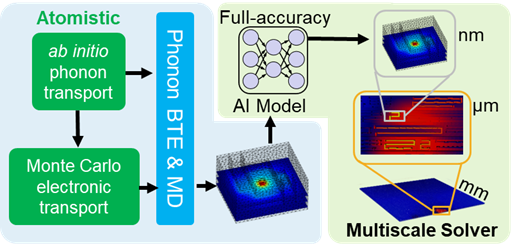
Please RT. We have an immediate opening for a postdoc on nanoscale (heat transfer) simulations. Monte Carlo experience is preferred, but DFT, MD, BTE are also good. You will closely collaborate w/ nanoscale temperature experiments. To apply, email me & mention this "ad".
Some unsolicited advice for those applying to PhD programs in engineering & science, in the US. Just my thoughts based on evaluating apps for 16 yrs, not those of my employer. Where to apply, how to prepare the CV and SoP, what else to consider? A thread.🧵
Excited to share that I have accepted a tenure-track Assistant Prof. position at @UCF! Joining @UCFMSE and @CREOLatUCF this fall, my lab will focus on semiconductor material and optoelectronic device growth. Eager to contribute to groundbreaking research and technology! #UCF
2D moiré patterns have been mostly contrived through interlayer twist & fab-induced (randomized) strains. Here, we show that process-induced strain engineering is an ideal approach to design heterostrain and deterministically craft 2D moiré patterns.
https://t.co/YjiCmClHzA
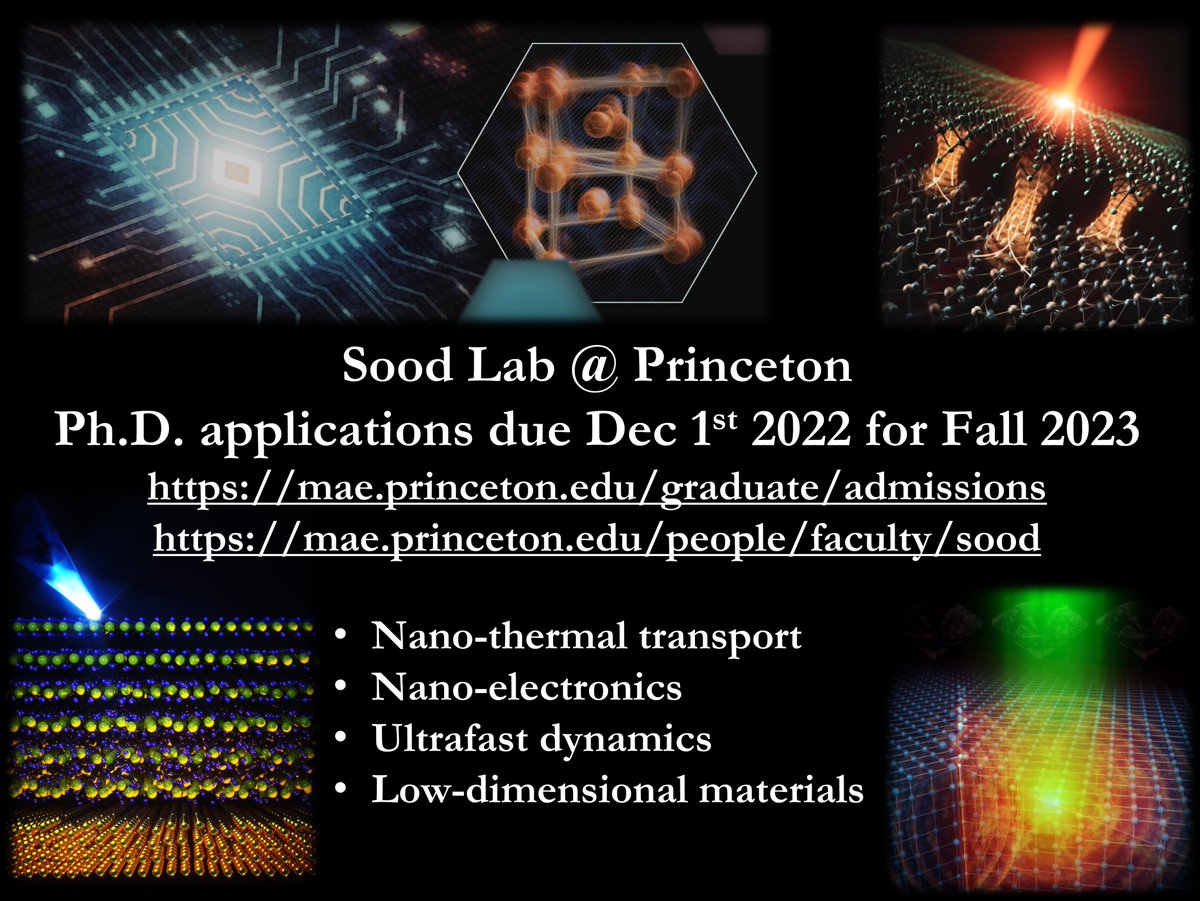
Reminder that #PhD apps for MAE @EPrinceton are due Dec 1st! Come live in a cute college town, and research #materials at extreme time & length scales for applications in #energy & #computing
https://t.co/eosXxXpz9e
Please RT! @profericpop and @MannixGroup at Stanford have a joint postdoc opening in MOCVD growth of 2D semiconductors. Apply by email (not Twitter) to Profs. Mannix and Pop, subject "MOCVD postdoc". Attach CV with all publications in a short email explaining your qualifications.
It's great to be back in person at #S22MRS! Andy will be giving an invited talk on robotic stacking of 2D materials in vacuum on Thurs. 5/12 at 1:30PM (NM01.19). Hope to see you there!
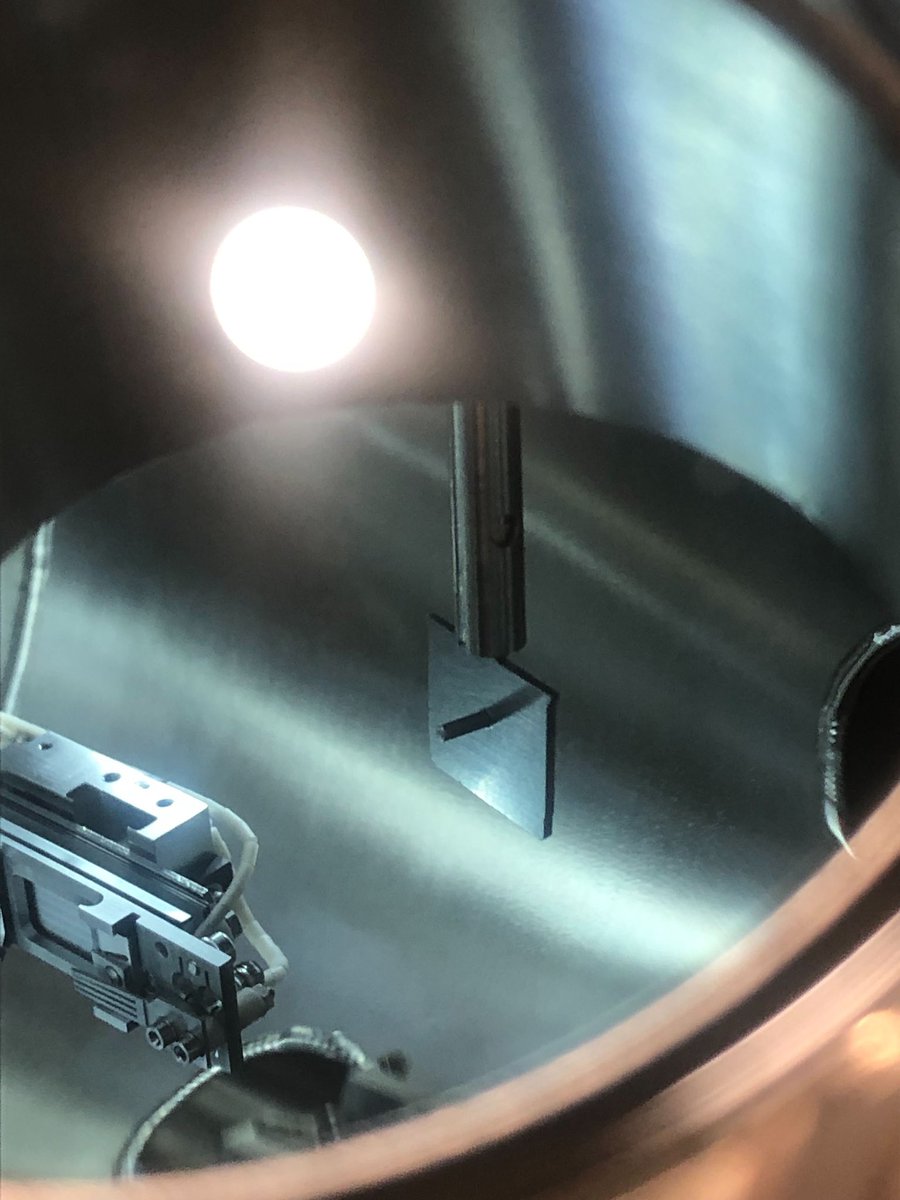
Lab milestone: first makeshift in-vacuum surgery to avoid venting the STM chamber. Complete with rapidly improvised Allen key tool. Operation successful, great job team!
New manuscript on robotic in-vacuum assembly of patterned 2D materials in @NatureNano, including twist angle control. Many thanks to collabs at UMich (@hovden), Cornell (@David_A_Muller), and the High lab and the Park lab @UChicago! https://t.co/eHOXykCYNb #materials