India just stress-tested FOSS (Free and open-source software).
It passed.
The Home Ministry's cybercrime unit ordered GitHub to take down BitChat.
Three hours to comply or face legal action.
BitChat runs over Bluetooth mesh, with no internet, no SIM, no phone number and no central server.
Protesters adopted it because the government kept shutting the internet off and it just kept working!
By the time the notice reaches GitHub, the app is already sitting on thousands of phones, passing messages directly from device to device.
It gets better.
Within hours, copies started spreading beyond GitHub. Radicle, GitLab, community mirrors, personal archives. Every person who copied the code became another node in the network. Every new copy made the software harder to erase.
Decentralisation peaked here.
Takedown orders can say anything like "remove repositories" or "ban code," but this only slows distribution and creates friction.
This is exactly what open-source infrastructure is built for.
A company has a CEO, an office and a legal address. Open protocols have contributors, users, mirrors, forks and copies distributed across the world.
Once enough people hold a copy, the network starts moving on its own by the people.
This is self-custody thinking and decentralisation applied to communication.
Unconventional computing isn't just limited to quantum, thermodynamic, photonic etc. -- there are also trends reshaping how semiconductors are designed and deployed for advanced computational workloads.
@cerebras , @GroqInc , etc. all point to the fact that conventional computing -- and many of the assumptions made about how it is developed, procured, deployed, and used -- are about to be disrupted.
Harsh reality of IT no one talks about 🚨
- People are getting stretched beyond working hours
- WFO policies keep employees away from family
- Some managers misuse their power and mentally exhaust teams
- Women return from maternity leave and still manage work + newborn together
- Upskilling never stops, there’s no escape from it
- People think IT jobs are easy because of AC offices, but they don’t see the pressure behind it
- One production issue at 2AM and you have to open your laptop immediately
- In many families, both parents work while kids grow up with hired caretakers
- People only see the packages in IT.
- Very few see the pressure behind them.
"Aapko koi kaam to hai nahi. Aap CA hain. Bas logon ko tang karte rehte hain. Police ko phone karke aapko uthva lu"
Yet another instance of madam @Manekagandhibjp insulting an entire profession & also threatening a man hearing one sided story on dogs
India says it wants to become a deep-tech and manufacturing power. It has IITs, startups, research grants, and now even a ₹1 lakh crore innovation fund.
So why do so few Indian technologies become real products? 🧵
Police issued a ₹10,000 pollution fine… on an ELECTRIC VEHICLE ⚡😂
❌No engine.
❌ No emissions.
Still “polluting” according to them.
Even after explaining it’s an EV, they refused to listen instead started adding MORE fines (tinted glass, etc.) just to justify it.
So the real question is:
Are laws being enforced… or just used to extract money? 🤔
Educated system or automated extortion?
🚨Repost for better reach
These are the programs which need the most attention by the government
> Kaveri Engine Program
> AMCA program
> Indigenous Aero Engine Ecosystem
> Own flying test bed for testing engine
> Tejas Mk2 first flight yet to happen
> Indigenous Engine (110–120 kN class)
> SSN Submarine
> SSK Submarine
> MALE/HALE UAVs
> Gallium Production
> Carbon Fiber Production
> Forging facilities
> Navigation Satellites
> Rare Earth Processing
You can never attain Autonomous Sovereignty without making your indigenous MIC strong.
Stop freebies and invest in indigenous R&D
@narendramodi
The life of Gen Z :
- College degree is worthless
- Rent is half your paycheck
- Al is replacing your job
- Houses cost 20x your salary
-WW3 started and you might get drafted
- Boomers asking why you're stressed
My most controversial opinion is that Indian cities suck because we Indians don’t have civic sense. It is not just the politicians, the government, the babus or the “system”.
The politicians, government or babus don’t emerge out of a vaccum or from a distinct culture that is unrelated to India. They all grew up in Indian families, were educated in Indian schools and were voted into power by Indian voters.
We could keep debating forever about socialism vs capitalism or left leaning vs right leaning politics but in the end any system is as good as the actors that inhabit and influence the system. And unless the desire to change comes from within, there is no external forcing function that is going to fix the country.
There must be an intrinsic, internal desire within every citizen to clean up after themselves, to give more than they take and be a net positive to society even if it means inconveniencing themselves slightly.
And this is why I think nationalism and patriotism is important. You must take pride in your nation and what it stands for to want to fix things, to want to make a difference, to do the right thing even when it comes at a personal cost.
Indians don’t lack empathy, they show immense empathy for their immediate family but it doesn’t extend beyond a tight circle. A strong national identity can actually help expand that circle and create a more diffused radius of empathy.
The good thing is, I am starting to see this happening. There is still a long, long way to go though.
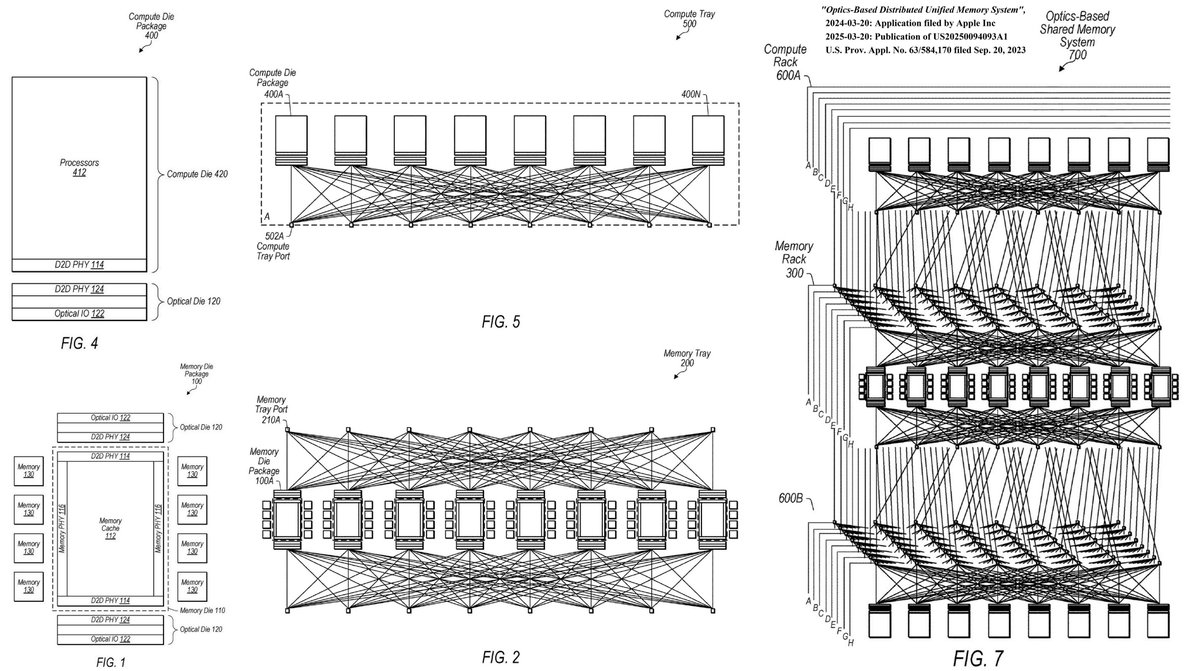
Apple Advanced AI server, Feb 2026
Ring Topology inside an SoC (Multi-die)
↓
Communication Fabric between SoC's Rings
↓
8x SoC with Ring
Shared Address Space?
Gap to access Remote Memory
<= https://t.co/b34vrXxtga
↓?
Opt-Based Distributed Unified Memory https://t.co/9VTJ8jSwNH
The key takeaway from China’s 15th Five-Year Plan is that the rules of the AI race is once again changing.. from model superiority to building an integrated technological system that turns scientific and tech capabilities into economy-wide productivity.
India can enter this race with strong structural advantages... but, our key challenge is institutional. To win this race, will be to move from current siloed approaches in AI, quantum, and biotech... to connect the dots across the full stack: research, infrastructure, talent, capital, and real-world adoption.
Mr Subrahmanyam and I write about the shift and implications for India.
@IndiaToday@NITIAayog
https://t.co/Jn0PF3Bune
Talking about controlling the hardware by writing a Device Drivers from Scratch!
I love blinking LEDs!
And... I am going to add the detailed lectures to the Linux Device Drivers course included in the Library Access: https://t.co/NuEIN7hKm1
The goal is to teach device driver development by controlling real hardware!
To start with, we will blink an LED by writing a driver to control it directly. The idea is to learn as many driver development constructs as possible while keeping the fun quotient very high :D