🔴 ATENÇÃO | MetSul confirma violento tornado com vento de 200 km/h a 300 km/h em Tupanciretã. Fenômeno foi acompanhado por outro com alto poder de destruição. Leia analise com extenso material fotográfico de documentação dos danos. ▶️ https://t.co/PlJ6Zperlm
A closer look at what is thought to be a test patch of stainless steel wool on one of Starship 42's aft flaps that will be used on future Starships to prevent the ablative from scraping off underneath the catch points.
11/15/26
The second set of centaur telemetry shows an apogee which is lower than the initial altitude. The perigee is inside the planet, but rising.
It's like it was generating thrust but not enough to follow the trajectory
Yes, the green flame is caused by burning copper from depleting fuel in the regenerative cooling circuit and going oxygen-rich (closer to stoichiometric temperature) in the main combustion chamber.
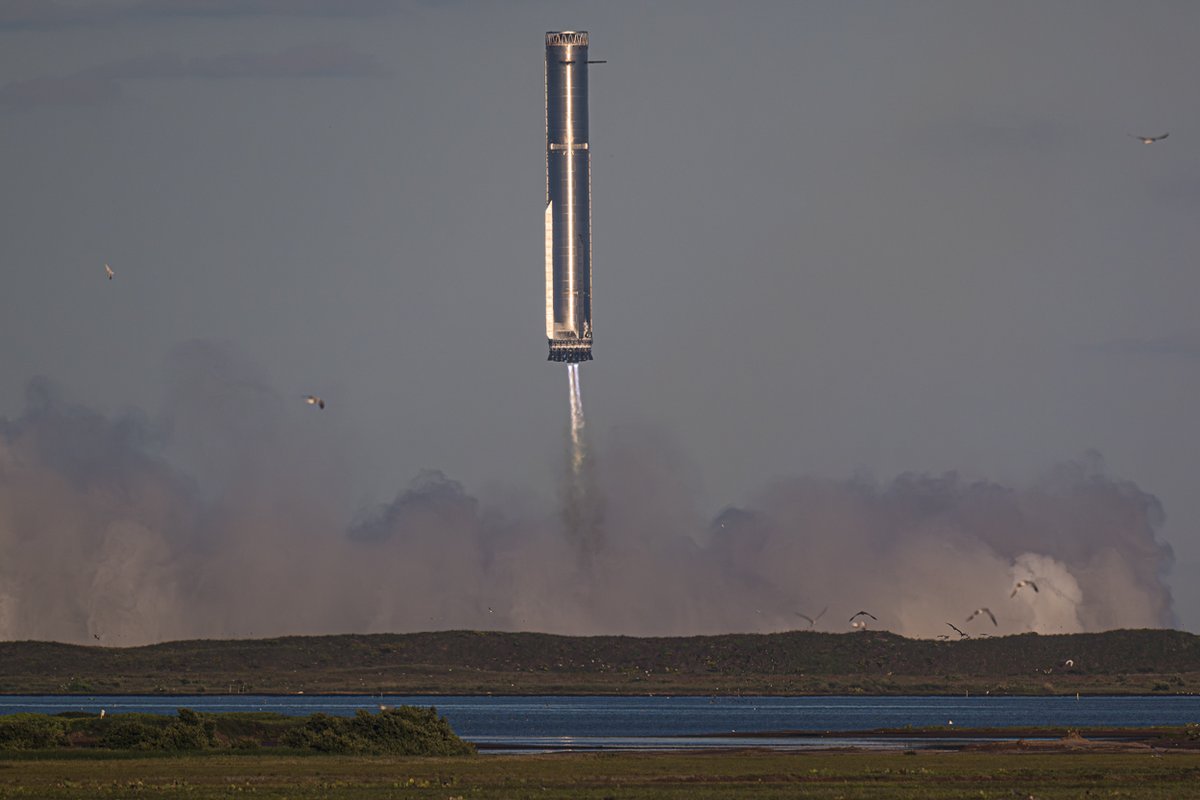
Slight underperformance of engines on this flight is the reason. The booster is meant to land with tiny residuals, so the solution is to improve engine performance and performance consistency (underway with Raptor V3.2), as well as adjust flight software to do MECO1 about one second earlier to ensure enough propellant for boostback and landing (tiny change).
These early ships and boosters are already outdated by improved designs in production or on the test stand, so this booster loss does not change our timeline to reach high volume, fully reusable Starship flights.
A good time to remind you of this amazing clip of an Energia rocket (serial 5S) performing a dry gimbal test of the core stage's four RD-0120 engines in the assembly facility.