🚨KEIR STARMER COMMITS TO CRACK DOWN ON X
Lib Dem Leader Ed Davey says it's "NOT FREE SPEECH"
Starmer agrees and says we need to crack down on X for whipping up violence
These people are insane
They're authoritarian and dangerous
They must be removed from power
A farmer dies in April 2026.
His son inherits the farm. The farm has been in the family since 1847.
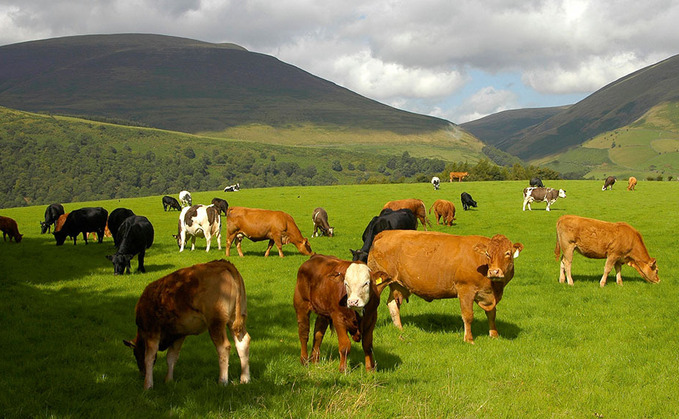
The farm consists of: 300 acres of grazing pasture, a farmhouse built in 1892, a barn, a milking parlour, two tractors of varying ages, a Land Rover that runs about 70% of the time, and a herd of 180 Hereford-cross cattle.
On paper, the farm is worth approximately £3.2 million. This is because land near him has been bought recently by a London hedge fund looking for carbon credits, which has dragged the comparable value of every field within forty miles upward to a number nobody local can justify.
In cash, the farm produces a profit of about £28,000 a year in a good year. In a bad year it loses money. The son also works as a fencing contractor three days a week to keep the operation viable.
The inheritance tax bill on a £3.2 million estate, even at the reduced 20% rate, comes to approximately £140,000 after the increased threshold is applied. The son does not have £140,000. The son has never had £140,000. The son has £4,200 in his current account and an overdraft.
The son sells 60 acres to a developer to pay the tax. The developer puts solar panels on the 60 acres. The remaining herd cannot be sustained on the reduced land. The herd is sold. The barn becomes a holiday let.
A different family eats Brazilian beef this Christmas without knowing why the price went up.
The Treasury collects £140,000.
The land never produces British food again.
@marccartlidge@Progress_Lfc Mate loads of options, same as if most were to do a utd team. Just winds me up all the talk about carragher now, he gets more press exposure now about how good he was when at the time he got nothing.........
@marccartlidge@Progress_Lfc Fuck me I'm a utd fan, how does carra get in that at CB he couldn't get in side at centre back wi hypia n henchoz were CB pairing...........
🏟️ Old Trafford.
⏱️ 93rd minute.
👎 2-1 down.
❌ England not qualifying.
Happy 51st birthday to the man who stepped up and scored 𝗧𝗛𝗔𝗧 free-kick to send England to the 2002 World Cup. 🏴✈️
Not enough is getting said about how much @daltonsmith08 gives back to the fans. He also brought a friend to his run tonight @TeofimoLopez who spent a fair bit of his time giving advice taking pictures and signing things #topblokes
Let me walk you through the financial reality of the average person in Britain. Because the numbers tell a story that most people feel but have never seen laid out.
Start with net worth. Everything you own minus everything you owe.
The median household net worth in the UK is £293,700. That sounds reasonable. Until you break it down.
According to the ONS, around 40% of that is property wealth. Money locked inside a house you live in that you can only access by selling it or borrowing against it. 35% is private pension wealth. Money you cannot touch until age 55 under current rules, rising to 57 from 2028. 10% is physical possessions. Your car, your furniture. And 14%, roughly £41,000, is net financial wealth. Savings, investments, and ISAs, minus any financial liabilities like credit cards and loans.
So the typical British household has a net worth of nearly £300,000 on paper. But only around £41,000 of that is financial wealth, and even that is not the same as cash in the bank. It includes investments that may take time to sell and ISAs that may be locked in fixed terms. Most of Britain's "wealth" is theoretical. It exists on a spreadsheet. It doesn't exist in anyone's bank account.
And that's the median. Half of households have less than that.
Now look at what people actually have saved.
The FCA's Financial Lives survey found that one in ten UK adults has no cash savings at all. A further 21% have less than £1,000 to draw on in an emergency. One in four UK adults has been classified as having low financial resilience.
Commercial surveys paint an even starker picture. A nationally representative 2026 Finder survey found that 16% of adults, around 8.9 million people, reported having no savings. Two in five said they had £1,000 or less. A quarter had £200 or less, which is less than the average person spends in a single week. Average savings for under-55s were just £9,888, dragged up by a small number of higher savers.
The Money and Pensions Service reports that 11.1 million working adults on modest to low incomes do not regularly save at all.
Now break it down by age. Because this is where the generational divide becomes undeniable.
If you're aged 16 to 24, the median household net worth is £15,200.
If you're 25 to 34, it rises to £109,800. But most of that is property equity if you've managed to buy, or pension wealth you can't access for decades.
If you're 35 to 44, it's £209,600. Getting better, but again mostly locked in housing and pensions.
If you're 55 to 64, median household wealth is £496,500.
If you're 65 to 74, it peaks at £502,500.
That peak is 33 times higher than the youngest group. Thirty-three times.
The Institute for Fiscal Studies has found that there has been no substantial generation-on-generation wealth increase for anyone born from the 1960s onwards. The escalator that carried the post-war generations upward has stopped. Millennials are less likely to own a home by their early 30s than Gen X were at the same age. And Gen Z is entering adulthood into the most expensive housing market, the highest tax burden, and the weakest wage growth in modern history.
Now look at the divide that sits underneath all of this.
Property.
The ONS reports that households who own their home outright have wealth more than 15 times higher than those who rent privately or from a social landlord. If you got on the housing ladder, your wealth accumulated almost automatically through rising property prices. If you didn't, you have almost nothing. Homeownership is the single biggest determinant of whether someone in Britain builds wealth or doesn't. And homeownership among young adults has collapsed.
Then there's the regional picture.
Median household wealth in the South East is £489,800. In the North East it's £179,900. The South East is 2.7 times wealthier. Same country. Same tax system. Same government. Fundamentally different economic realities.
And at the extremes, the picture gets sharper. The wealthiest 10% of households hold assets of £1.2 million or more. The bottom 10% have £16,500 or less. Around 8% of households have negative net worth. They owe more than they own. And the top 1% hold at least £3.1 million.
Now put all of this together.
The typical British household has £293,700 in net worth, of which only about £41,000 is net financial wealth and even less is actual cash. The FCA says one in ten adults have no cash savings at all and a quarter have low financial resilience. The generational wealth escalator has broken. Renters have a fraction of the wealth of homeowners. The North East has a third of the wealth of the South East. And real wages have barely grown in fifteen years. The Resolution Foundation has described this period as one of severe economic stagnation.
But the most striking thing about these numbers is not what they say about people who aren't working. It's what they say about people who are.
The median full-time salary in the UK is about £37,400 a year. For someone paying income tax, National Insurance, a workplace pension contribution, and student loan repayments, take-home pay can be around £2,300 a month. ONS data shows average household spending is roughly £2,700 a month. Those aren't directly comparable figures, one is an individual earner, one is a household. But they help explain why, for the growing number of households relying on a single income, or where both earners are on modest salaries, there is almost no margin left. And where there is no margin, there is no saving.
And without savings, there's no investment. Without investment, there's no compounding. Without compounding, there's no wealth. The cycle never starts.
This is not a picture of a wealthy country. It is a picture of a country where wealth is concentrated in property and pensions, locked away from the people who need it most, distributed unevenly by age, region, and tenure, and increasingly inaccessible to anyone born after 1970.
And the next time someone tells you Britain is the sixth richest country in the world, ask them where the money is. Because for millions of people it's nowhere. For a quarter of the population it wouldn't cover a month's emergency. And for the working people in the middle, it's mostly locked inside a house they can't sell and a pension they can't touch.
The "fifth richest country in the world". Where a quarter of the population couldn't survive a month without income. Where real wages haven't grown in fifteen years. And where the average working person's actual accessible wealth would barely cover three months' rent.
That's not wealth. That's the appearance of wealth. And the gap between the two is the story of modern Britain.