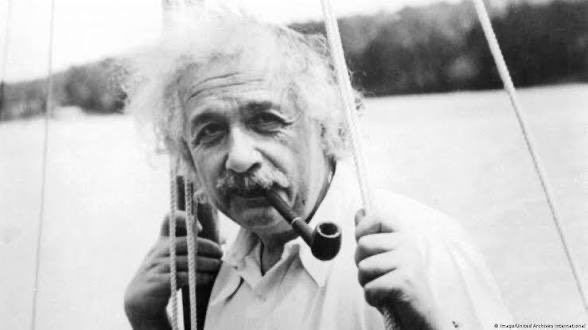
“Não sou ateu. O problema em questão é vasto demais para nossas mentes limitadas. Estamos na posição de uma pequena criança que entra em uma enorme biblioteca repleta de livros escritos em muitas línguas. A criança sabe que alguém deve ter escrito aqueles livros, mas não sabe como. Ela não entende os idiomas em que foram escritos. A criança suspeita vagamente de uma ordem misteriosa na disposição dos livros, mas não sabe qual é. Essa, me parece, é a atitude até mesmo do ser humano mais inteligente diante de Deus. Vemos um universo maravilhosamente organizado e obedecendo a certas leis, mas compreendemos essas leis apenas de forma limitada.”
- Albert Einstein
Fonte: artigo “What Life Means to Einstein”, publicado no The Saturday Evening Post em 26 de outubro de 1929.
O FRACASSO É REALMENTE IMPORTANTE.
“A sorte é absurdamente importante. Quando fiz a descoberta que me rendeu o Prêmio Nobel, nós estávamos tentando fazer uma coisa completamente diferente. Não deu certo, foi um fracasso. E então fomos analisar por que aquilo tinha falhado. A natureza estava nos dizendo alguma coisa, e nós descobrimos o que era.
Isso me leva a outro ponto: o fracasso é realmente importante. Nem todo experimento precisa dar certo. E, se ele não dá certo, mas foi conduzido corretamente, a natureza está tentando te mostrar que ali existe uma descoberta a ser feita. Por isso eu adoro o fracasso. Adoro quando os alunos chegam para mim e dizem: “Ei, eu fiz exatamente o que você mandou fazer e não funcionou.” Ah, talvez exista uma descoberta aí. É esse tipo de coisa que empolga.
Outra questão é a criatividade. Os sistemas educacionais de muitos países parecem feitos para arrancar a criatividade das crianças. Toda criança pequena é criativa. Ela vai para a escola, e isso lhe é arrancado. E isso não é uma coisa boa.
E há ainda um aspecto pessoal: eu nunca gostei que me dissessem o que fazer. Se alguém fala: “Ah, você deveria fazer isso”, eu imediatamente quero fazer o oposto. Porque, se a pessoa já pensou nisso, provavelmente não pode ser tão interessante assim. Eu quero aprender por conta própria.
Então, seja lá o que você esteja fazendo como estudante, não deixe ninguém dizer: “Não faça isso; faça aquilo.” Se você sente que aquilo que estão te mandando fazer está errado, faça o que você acredita ser o certo.”
Richard Roberts, Nobel de Medicina.
CERN's "How Small is an Atom?" zooms from a human hair (100μm) down to quarks!
Atoms are ~0.1 nm wide; millions fit across one strand. 99.99% empty space around a tiny nucleus of protons & neutrons (made of quarks).
Building blocks of everything.
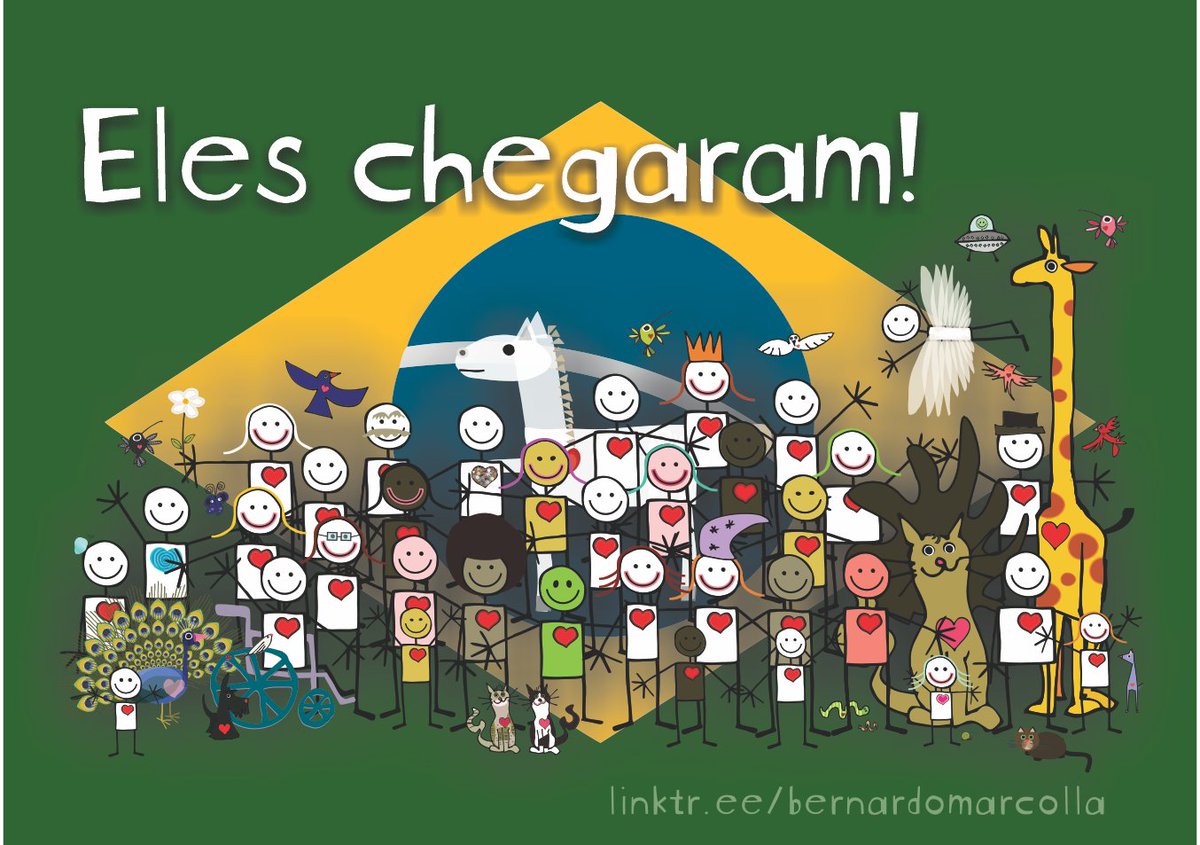
Pronto! Agora todos os novos livros estão disponíveis no Brasil! Cada um deles está em edição bilíngue (em inglês e português), à venda nas plataformas da Amazon em diversos países.
@caytlyn_brooke Don't give up, because this kind of frustration is part of the journey. I'm a Brazilian writer who has already been published in three countries, but I haven't been able to publish in my own country to this day. Let's enjoy the journey anyway!
“Study the science of art and the art of science. Learn how to see. Realize that everything connects to everything else."
- Leonardo da Vinci (1452 - 1519)
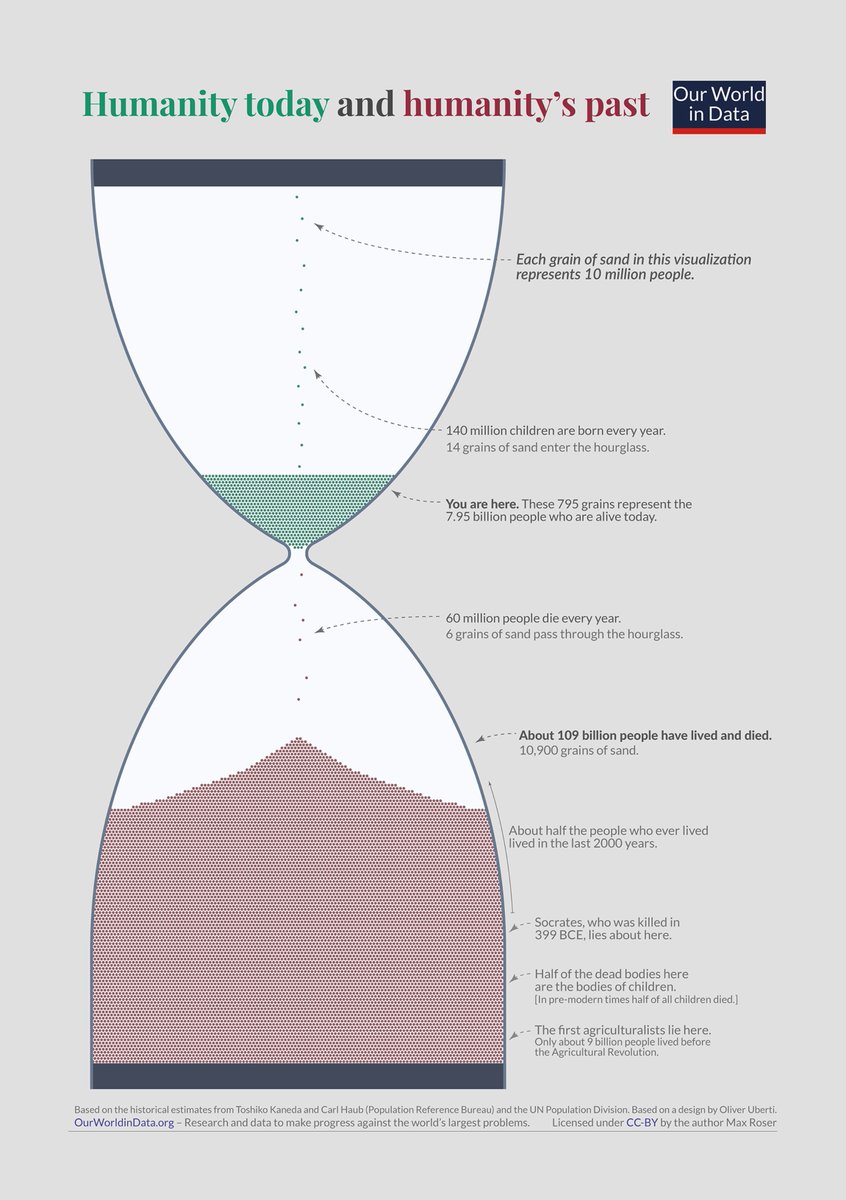
7% of the humans who have ever lived are alive right now.
And we are all directly linked to the 109 billion people who have come before us.
You know somebody who knew somebody else who knew another person who knew another, and so on, going back further and further in time, who once knew William Shakespeare (for example). In other words: we are all connected to every human who has ever lived by a chain of conversations, relationships, friendships, and every other form of social connection, going back to the beginning of human civilisation and beyond.
And the decisions those people made continue to influence the present in ways both major and minor.
A good example is language. There are certain words (including mother, fire, and what) which linguists believe to be at least 15,000 years old. They were part of a language spoken during the Ice Age which is the common ancestor of many modern languages. But these words didn't just appear — people, perhaps a single individual, came up with them. And, passed on from one person to another, we are still using them today. What words we create will be spoken 15,000 years from now?
The point here is that history has few hard lines. We usually think about the past in terms of dates and movements. The Battle of Hastings was in 1066, the Western Roman Empire fell in 475 AD, the Renaissance began in the 15th century etc. Thus we end up with a neat procession of ages: Classical Antiquity, the Middle Ages, the Renaissance, the Enlightenment, the Industrial Revolution, and so on.
But the truth is that generations, movements, cultures, ideas, events, and civilisations all melt imperceptibly into one another.
We are currently living in the Information Age (or the Digital Age), but when did it begin? Was it with the invention of the transistor in 1947, or of the World Wide Web in 1989? Maybe, but in the 1980s our capacity for storing data was less than 1% digital, and it didn't go beyond 50% until 2002.
You've got to draw lines somewhere, if only for simplicity and ease. But we've got to remember that the past, like the present, was ever-changing, complex, and imprecise. In the same way that our Digital Age didn't simply "begin", in the year 1475 people didn't suddenly wake up and decide they were in the Renaissance rather than the Middle Ages. Over the years Leonardo painted his pictures, Machiavelli wrote his books, and Bracciolini uncovered ancient manuscripts — the Renaissance emerged and people realised they were living through it.
History isn't movements and dates; history is people saying and doing things.
As Thomas Carlyle once wrote, the entirety of the past and the entirety of the future are contained in the present. This isn't just a memorable line — it is literally true. Every future human being will be the descendant of people alive today, just as we are all the descendants of people who came before. Everything that has ever happened has brought us here, and everything that could ever happen will be a product of today.
Left: how humans see starlings.
Right: how starlings may see each other - with bolder markings and more colour.
The amazing world of UV vision, seen through the eyes of…. birds.
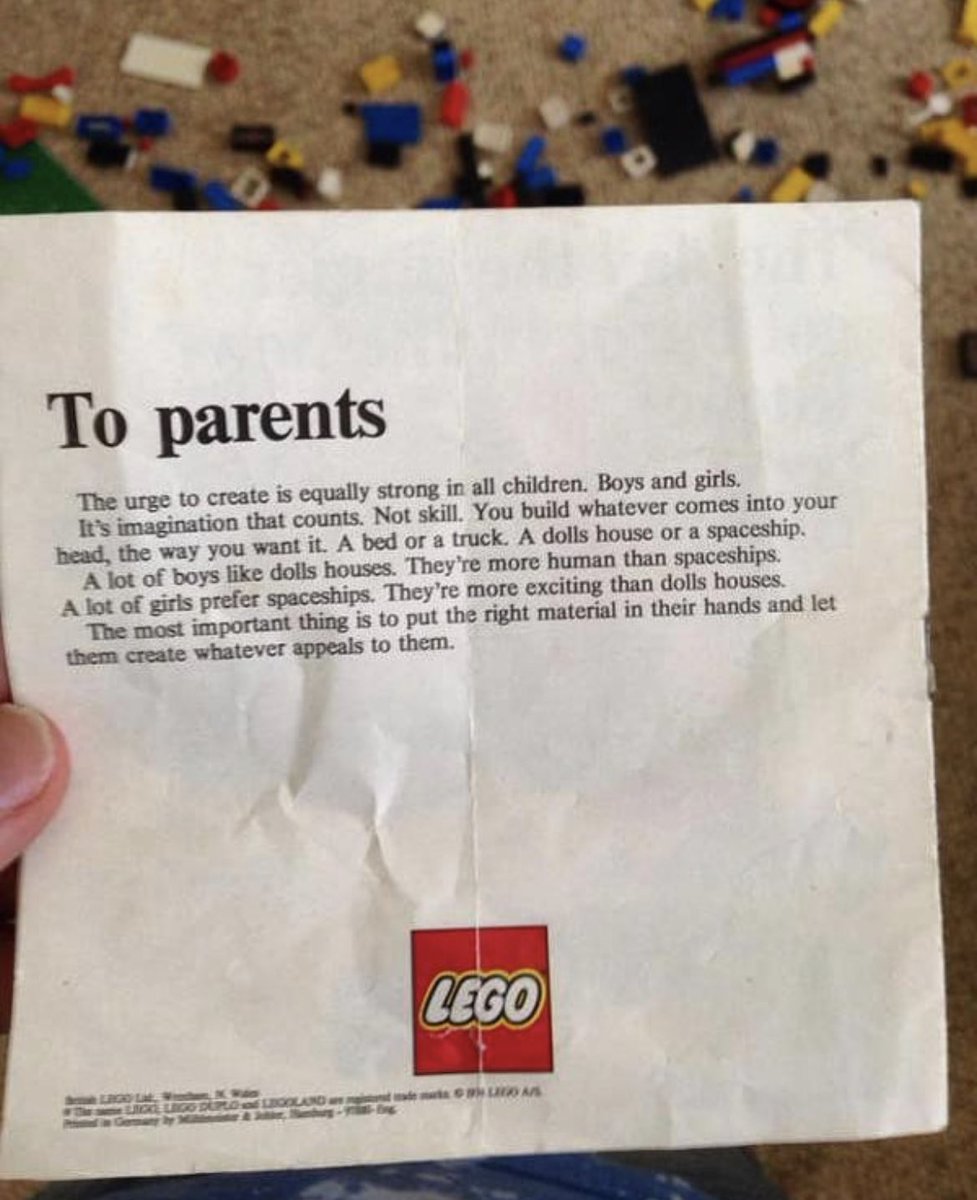
A Lego letter to parents from 1974.
Here's the letter transcribed:
"To Parents
The urge to create is equally strong in all children. Boys and girls.
It's the imagination that counts. Not skill. You build whatever comes into your head, the way you want it. A bed or a truck.
A dolls house or a spaceship.
A lot of boys like dolls houses.
They're more human than spaceships. A lot of girls prefer spaceships. They're more exciting than dolls houses. The most important thing is to put the right material in their hands and let them create whatever appeals to them.”
Lego has no military related sets because the inventor's policy was to not want to make war seem like child's play.
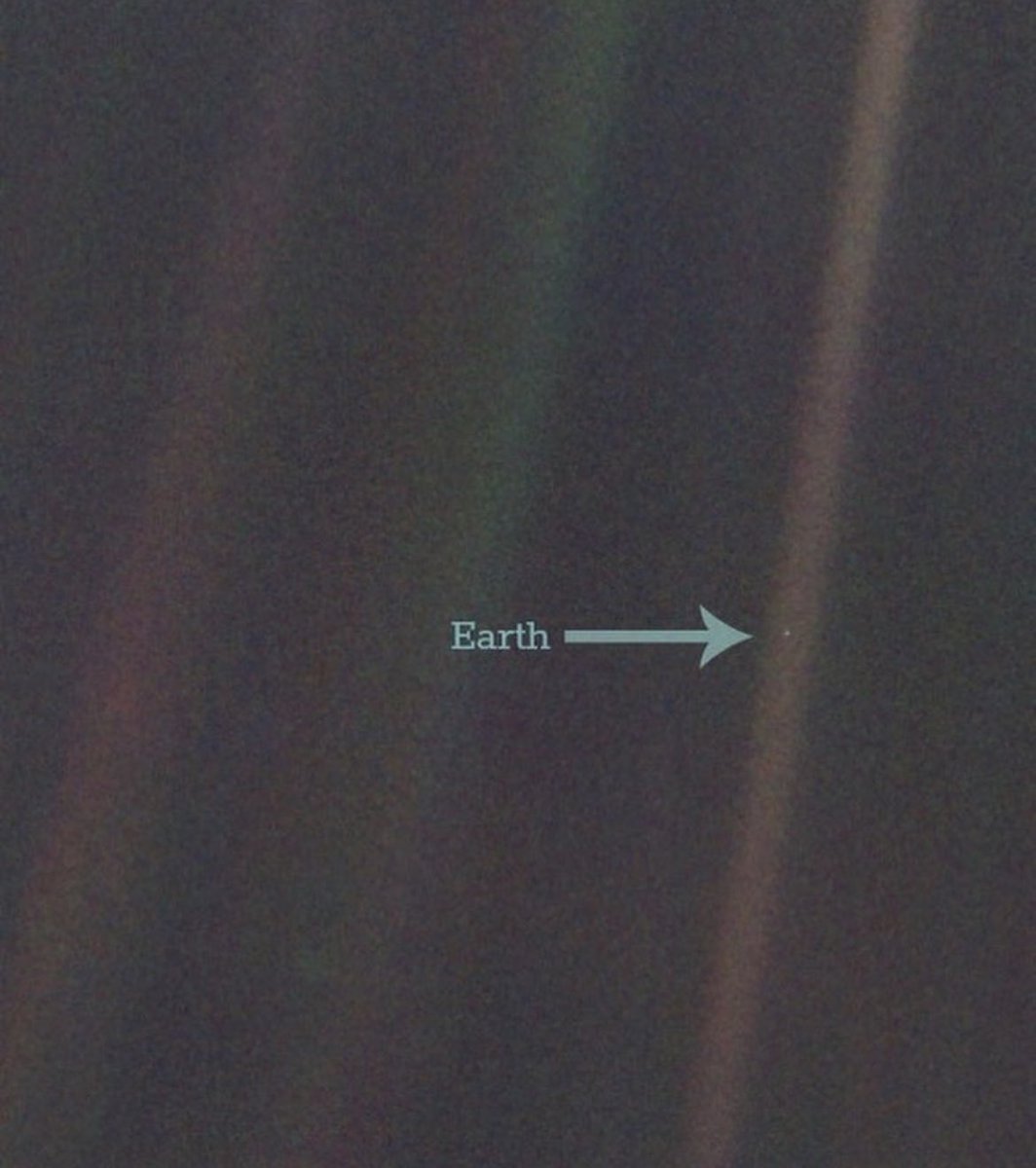
The Pale Blue Dot is an iconic photograph of Earth captured by the Voyager 1 space probe in 1990. Taken from a distance of around 6 billion kilometers (3.7 billion miles) as Voyager 1 was departing our solar system, the image portrays Earth as a tiny, pale blue speck in the vastness of space. This image is a powerful reminder of our planet's isolation and fragility in the cosmic expanse, highlighting the need for responsible stewardship of our home. The photograph was a result of astronomer Carl Sagan's suggestion to turn Voyager's camera back towards Earth, offering a profound perspective on our place in the universe.









![Rainmaker1973's tweet photo. The truth
[by Visualize Value] https://t.co/qIr4gTSCjv](https://pbs.twimg.com/media/F8tTeriXQAENsKj.png)