Polska właśnie napisała historię na torach kolejowych.
Firma Nevomo – założona w Polsce – pomyślnie przetestowała pierwszy na świecie system lewitacji magnetycznej na istniejącej, konwencjonalnej infrastrukturze kolejowej. Bez budowy nowych torów. Bez tuneli hyperloop. Wystarczy standardowa szyna, wzbogacona o technologię lewitacji.System MagRail wykorzystuje silniki liniowe i lewitację magnetyczną, aby unieść pojazd nad istniejącymi torami, eliminując tarcie i umożliwiając prędkości do 550 km/h. Test przeprowadzono na rzeczywistym torze w Polsce, a jego wyniki potwierdziły niezależne komisje inżynierskie.Implikacje są ogromne: zamiast budować zupełnie nową infrastrukturę od zera, kraje będą mogły modernizować istniejące sieci kolejowe do prędkości bliskich hyperloopowi za ułamek kosztów.Polska nie tylko dogania świat. Polska buduje to, co przyjdzie po nim.
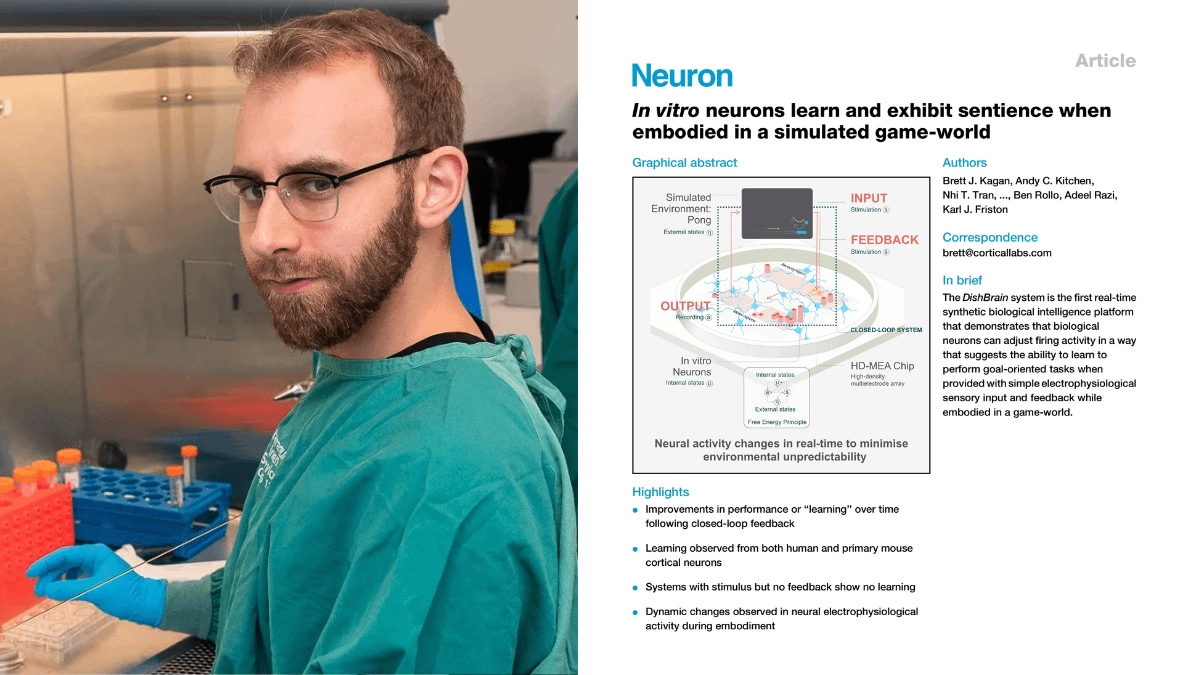
An Australian scientist took 800,000 human brain cells, kept them alive in a dish, wired them to a computer, and taught the cells to play the video game Pong in five minutes, which is faster than any AI on Earth had ever learned the same game.
His name is Brett Kagan.
He runs the science team at a Melbourne company called Cortical Labs, and the paper that broke the story was published in the journal Neuron in October 2022. The title sounds like a science fiction novel. In vitro neurons learn and exhibit sentience when embodied in a simulated game-world.
The setup was simple, and that is what made it so strange.
Kagan and his team took some brain cells from mouse embryos. They took some human brain cells grown from stem cells. They placed them on a chip covered in tiny electrodes, the size of a small coin, and they hooked the chip up to a computer running Pong.
The electrodes could do two things. They could read what the cells were doing. They could also send small bursts of electricity back into the cells.
The team used those two channels to talk to the dish.
When the ball was on the left, they fired the electrodes on the left side of the dish. When the ball was on the right, they fired the electrodes on the right. The closer the ball got to the paddle, the faster they fired. The cells could move the paddle by sending their own signals back.
That was the whole game.
Then the team added one more rule, and this is the part that changed everything.
When the cells missed the ball, they got a random, chaotic burst of electricity for four seconds. Noise. Static. Pure unpredictability. When the cells hit the ball, they got a clean, steady, predictable signal.
That was the only feedback the dish ever received.
Within five minutes, the cells started getting better at the game.
The rallies got longer. The hits got more frequent. The dish was not winning, but it was clearly playing, and it was improving, and nobody had told it the rules.
It had figured them out by itself.
The reason this worked is the part that should stop you for a second.
Brains hate surprise. That is the thing they are built to avoid. Karl Friston, who is one of the most cited neuroscientists alive and a co-author on the paper, has spent his whole career proving this. The brain is not really a thinking machine. It is a prediction machine. It runs on a single quiet rule. Make the world less surprising.
The cells in the dish were doing the same thing.
The chaotic stimulus felt like surprise. The clean stimulus felt like calm. The only way to get more calm and less chaos was to stop missing the ball. So the cells learned to stop missing the ball, not because anyone trained them, and not because they wanted a reward, but because the only way to quiet the noise was to play the game well.
They were not learning Pong. They were learning to make their own world more predictable, and Pong just happened to be the world they were stuck inside.
The same thing your brain is doing right now.
Every choice you make today, every word you reach for, every plan you build for tomorrow, is your brain trying to make the next moment less surprising than the last one. The feeling you call thinking is mostly your head doing the same thing those cells did. Trying to quiet the static.
The dish learned Pong faster than any AI had at the time, using around 800,000 cells and almost no power, while the AI systems running the same game needed thousands of times more energy and far longer training runs.
Kagan said it plainly in his interviews after the paper came out.
He said the cells were not trying to win. They were trying to feel less lost. And the moment he said that, half the room realized he was no longer just describing the dish.
He was describing them.
Coś, co przez dekady uznawano za absolutnie niemożliwe, dzieje się na naszych oczach.
Przełom z Cambridge: Paraliż może być odwracalny!
Naukowcy z Uniwersytetu w Cambridge dokonali czegoś niebywałego. Wyhodowali w laboratorium miniaturowe, połączone wersje ludzkiego mózgu i rdzenia kręgowego. Dzięki temu odkryli ukryty „przełomowy przełącznik” w naszych genach, który w trakcie rozwoju całkowicie blokuje zdolność nerwów do regeneracji. Po prostu wyłącza ją na stałe!
Ale to nie wszystko! Badacze znaleźli sposób, aby ten przełącznik z powrotem włączyć. Przeszukując bazę leków, trafili na… popularny środek antykoncepcyjny (linestrenol). Po podaniu go do uszkodzonych neuronów, zablokowane dotąd komórki nagle runęły do ponownego wzrostu i zaczęły się regenerować!
Choć sam lek to dopiero początek drogi i baza do dalszych badań, to dowód jest niezaprzeczalny: ludzkie neurony DA SIĘ zmusić do odbudowy. To absolutny świt nowej ery i gigantyczna nadzieja dla ponad 15 milionów ludzi na całym świecie żyjących z urazami rdzenia kręgowego, stwardnieniem rozsianym czy chorobami neuronu ruchowego. Coś pięknego! 🌟
#Science #Innovation #Neuroscience #Cambridge #Hope
@turkows Tyle że nie ma innej drogi, niż obecna, nigdy nie bylo inaczej w dziejach ludzkosci.
To co proponujesz musialoby by byc zaakceptowane przez wszystkich,mrzonka.
Wystarczy że jeden kraj, panstwo jedno Ai nie dostosuje sie i już zdobywa przewagę. Niezrozumienie ludzkiego umysłu.
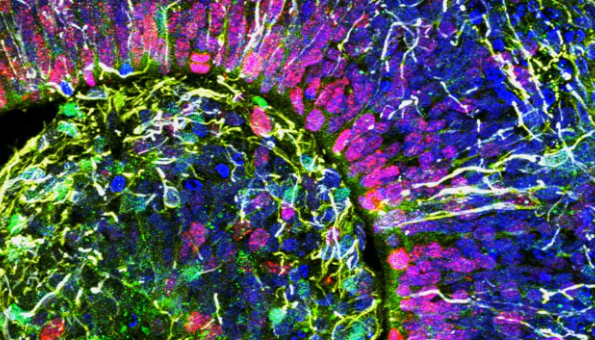
Scientists successfully reversed the biological age of human skin cells by around 30 years.
This advance has the potential to transform regenerative medicine and treatments for age-related diseases.
A research team at the Babraham Institute in Cambridge developed a technique called maturation phase transient reprogramming (MPTR). By carefully exposing adult fibroblasts to Yamanaka factors for just 13 days, the researchers induced profound cellular rejuvenation without allowing the cells to lose their specialized identity and revert fully into stem cells. This precise timing enabled the cells to erase decades of accumulated aging damage while retaining their original function.
The reprogrammed cells not only showed molecular signs of youthfulness but also performed like younger cells. In functional tests, they produced substantially more collagen and closed experimental wounds much faster than untreated older cells.
[Gill, D., Parry, A., Santos, F., Okkenhaug, H., Todd, C. D., Hernando-Herraez, I., Stubbs, T. M., Milagre, I., & Reik, W. (2022). Multi-omic rejuvenation of human cells by maturation phase transient reprogramming. eLife 11: e71624. DOI/10.7554/eLife.71624]
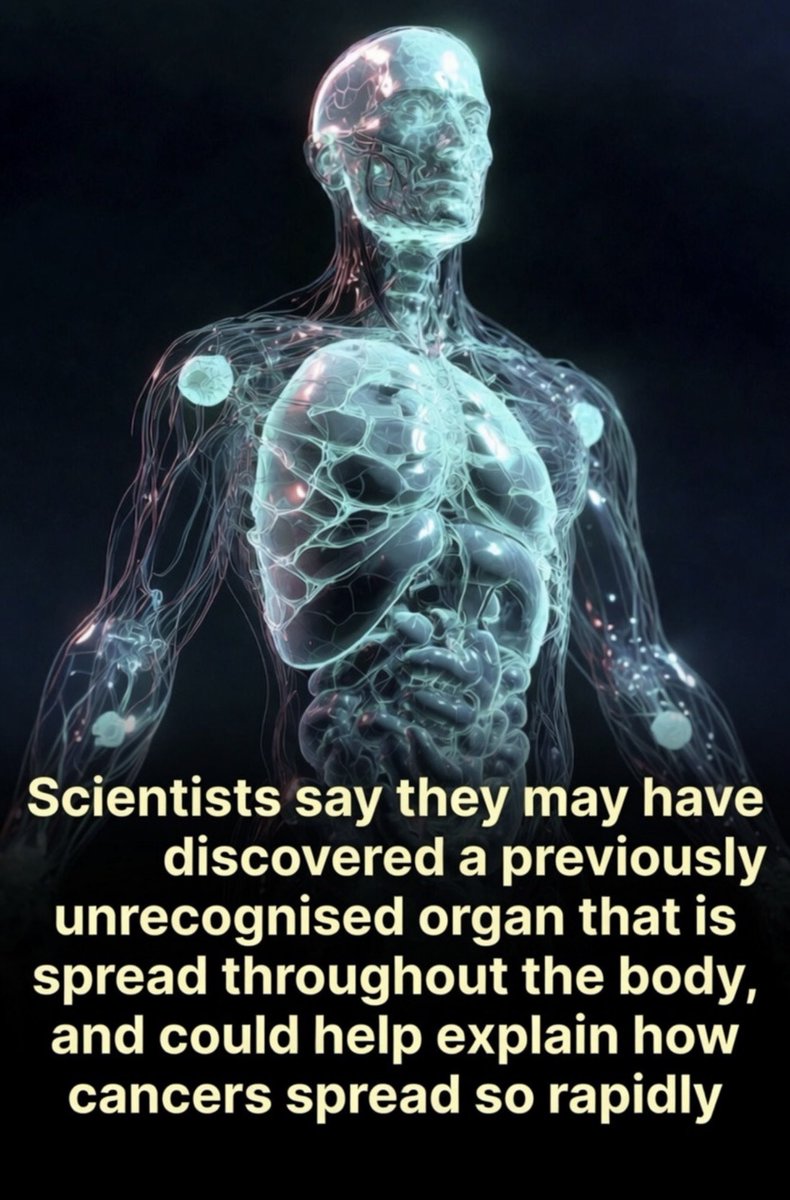
Scientists may have discovered a hidden network inside the human body that had gone unnoticed for decades.
In 2018, researchers described a widespread system of fluid filled spaces found throughout the body and suggested it could qualify as a newly recognized organ called the interstitium.
The structure is located beneath the skin, surrounding muscles, lining organs such as the lungs and digestive tract, and wrapping around blood vessels and the urinary system. For years, these layers were thought to be made mostly of dense connective tissue.
But when scientists examined living tissue using a laser imaging method known as probe based confocal laser endomicroscopy, they found something unexpected.
Instead of tightly packed solid tissue, they observed interconnected pockets filled with fluid and supported by a flexible network of collagen and connective fibers.
Researchers believe the structure had been missed for so long because of the way tissue samples are traditionally prepared for microscopes. Standard preparation methods involve chemically fixing tissue before examination, a process that drains the fluid and causes the spaces to collapse, making them appear solid.
In living tissue, however, the channels remain open and connected.
Scientists think the interstitium may help move fluid through the body and could influence inflammation, tissue aging, and even the spread of cancer.
Some researchers suspect these fluid pathways may help explain how certain cancers spread so quickly. Once cancer cells enter the network, the channels may allow them to travel into the lymphatic system and reach other parts of the body more easily.
The structure may also play a role in wrinkles and the stiffening of tissue that occurs with age.
Not all scientists agree that the interstitium should officially be classified as its own organ, and debate continues within the scientific community. Even so, the discovery has changed how many researchers think about human anatomy.
Read the study:
“Structure and Distribution of an Unrecognized Interstitium in Human Tissues.” Scientific Reports.
Boom! Scientists Discovered a Hidden Superhighway Inside You That Might Finally Explain Why Acupuncture Actually Works!
How tattooed skin biopsies proved something over 4,000 years old.
Buckle up…research just dropped a bombshell that is rewriting the human anatomy textbook and high fiving ancient healers at the same time!
Deep inside your body lies an enormous, previously overlooked network called the interstitium. It is a vast, fluid filled web that acts like a secret third circulatory system alongside your blood vessels and lymphatics. It is not just empty space between tissues.
It is a dynamic, interconnected superhighway made of collagen bundles suspended in a shimmering hyaluronic acid gel that soaks up water and lets fluids, cells, and molecules flow slowly but surely throughout your entire body, from skin to muscles to organs and back again.
For over a century, scientists saw these spaces as isolated little pockets. But groundbreaking work starting in 2018 by pathologists revealed the jaw dropping truth: it is one giant, continuous network.
When researchers examined tattooed skin biopsies, the ink particles had boldly marched from the skin deep into the fascia below, traveling through the interstitium in ways that made scientists say, That was not supposed to happen!
Here is where it gets truly electrifying.
This hidden highway might finally give Western medicine the biological proof it has been craving for acupuncture and Traditional Chinese Medicine.
For 4000 years, TCM has described chi flowing along 12 specific meridians. Acupuncture needles target precise points along those lines.
Skeptics have long asked for hard science. Now they have it.
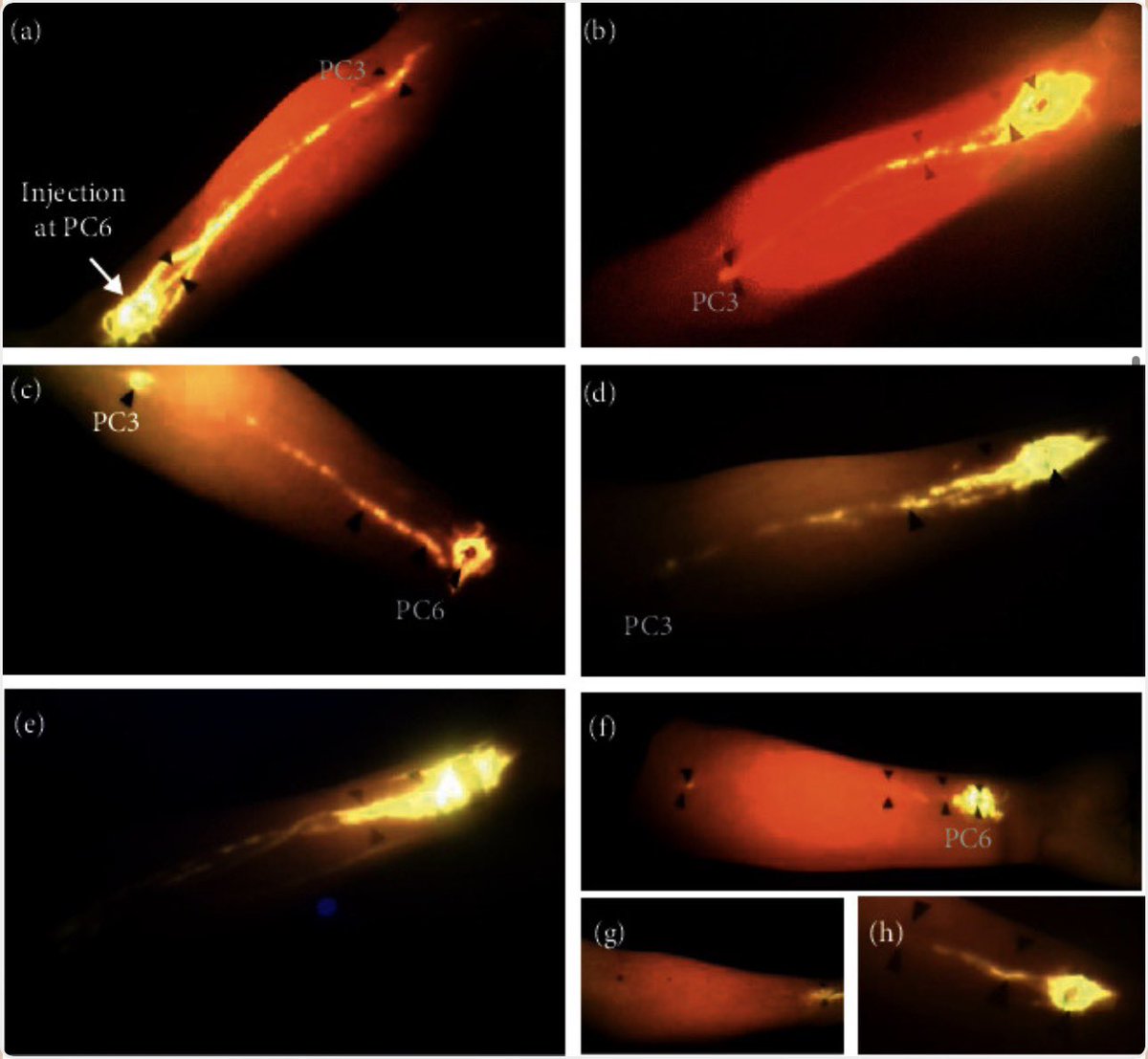
Studies, including tracer injections and dye experiments in living volunteers, show that when you inject dye into an acupuncture point, it does not just sit there or race through veins.
It flows exactly along the traditional meridian pathways through the interstitial spaces between muscles, heading straight toward the heart. The dye follows the interstitium like a GPS guided river.
Rebecca Wells, one of the lead scientists, sums it up perfectly:
“I actually do think that the interstitium could be the link between Eastern and Western medicine”.
The implications are massive and mind blowing.
Cancer cells may hitch rides on this network to metastasize.
It could explain autoimmune flare ups where gut particles travel to distant organs.
It might even unlock better treatments for Type 2 diabetes by revealing how interstitial cells influence healthy fat production during weight gain.
This is not just a cool anatomy fact. It is a paradigm shift that could reshape pain management, chronic disease treatment, and how we think about the body as a whole.
Evolutionarily speaking, similar fluid systems appear in ancient creatures going back hundreds of millions of years.
The interstitium is not new. It has been with us since the dawn of multicellular life. We are only now catching up.
This discovery is pure science magic: ancient wisdom validated by cutting edge research, turning what looked like disconnected puzzle pieces into one breathtaking picture of how our bodies really work.
When reading this, be sure to send condolences to the “debunkers” that stole this 4,000 year old empirical science from your health. They were wrong.
Dive into the actual research papers:
The groundbreaking discovery of the interstitium: https://t.co/cqX5kzcVDZ
The study on continuity of interstitial spaces across the body: https://t.co/MeW2ZzPm3z
Research visualizing fluorescent dye migration along acupuncture meridians: https://t.co/C8juE92PA0
Your body just got a whole lot more awesome. The future of medicine is flowing through the interstitium right now, and it is going to be legendary!
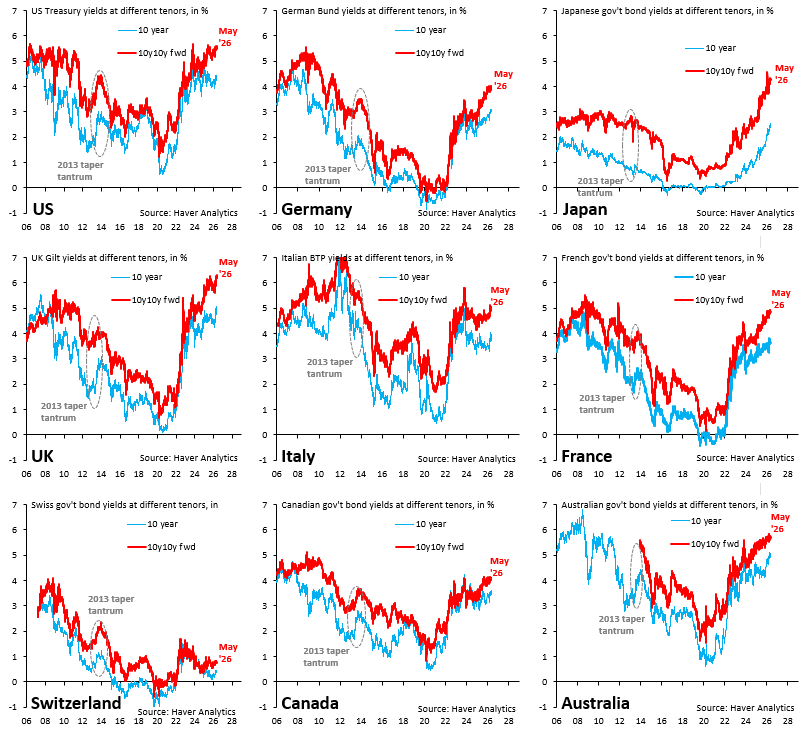
At some point, the Strait of Hormuz will reopen and oil prices will fall back to pre-war levels. But the latest rise in long-term yields won't get reversed. Every shock that happens permanently ratchets up global fiscal stress. A one-way train of debt...
https://t.co/wLyQata4uf
An MIT professor taught the same math course for 62 years, and the day he retired, students from every country on earth showed up online to watch him give his final lecture.
I opened the playlist at 2am and ended up watching three of them back to back.
His name is Gilbert Strang. The course is MIT 18.06 Linear Algebra.
Every machine learning engineer, every data scientist, every quant, every self-taught programmer who actually understands how AI works learned the math from this one man. Most of them never set foot on MIT's campus. They just opened a free playlist on YouTube and let him teach.
Here's the story almost nobody tells you.
Strang joined the MIT math faculty in 1962. He retired in 2023. That is 61 years of standing at the same chalkboard teaching the same subject to 18-year-olds.
The interesting part is what he did when MIT launched OpenCourseWare in 2002. Most professors were skeptical. They worried that putting their lectures online would make their classrooms irrelevant. Strang did not hesitate. He said his life's mission was to open mathematics to students everywhere. He filmed every lecture and gave it away.
The decision quietly changed how the world learns math.
For decades linear algebra was taught the wrong way. Professors started with abstract vector spaces and proofs about field axioms. Students drowned in the abstraction. Most never recovered. They walked out believing they were bad at math when they had simply been taught in an order that nobody's brain is built to absorb.
Strang inverted the entire curriculum.
He started with matrix multiplication. Something you can write down on paper. Something you can compute by hand. Something you can see. Then he showed his students that everything else in linear algebra eigenvectors, singular value decomposition, orthogonality, the four fundamental subspaces was just a different lens for understanding what the matrix was actually doing under the hood.
His rule was strict. If a student could not explain a concept using a concrete 3 by 3 example, that student did not actually understand the concept yet. The abstraction was supposed to come last, not first. The intuition was the foundation. The proofs were just confirmation that the intuition was correct.
The second thing Strang changed was the classroom itself. He said please and thank you to his students. Every single lecture. He paused mid-derivation to ask "am I OK?" to check if anyone was lost. He never used the word "obviously" or "trivially" because he knew exactly what those words do to a student who is one step behind. He treated 19-year-olds learning math for the first time the way he treated his own colleagues. With patience. With respect. With the assumption that they belonged in the room.
For 62 years.
The result is something that has never happened in the history of education. A single math professor became the default teacher of his subject for the entire planet.
Universities in India, China, Brazil, Nigeria, every country with a computer science department, started telling their own students to just watch Strang's lectures. The University of Illinois revised its linear algebra course to do almost no in-person lecturing. The reason was honest. The professor said they could not compete with the videos.
His final lecture was in May 2023.
The auditorium was packed with students who had never met him before. He walked to the chalkboard, taught for an hour, and at the end the entire room stood and applauded. He looked confused for a moment, like he genuinely did not understand why they were cheering. Then he smiled and waved them off and walked out.
His written comment under the YouTube video of that final lecture was four sentences long. He said teaching had been a wonderful life. He said he was grateful to everyone who saw the importance of linear algebra. He said the movement of teaching it well would continue because it was right.
That was it. No book promotion. No farewell speech. No legacy management.
The man whose teaching is the foundation of modern AI just thanked the audience and went home.
20 million views. Zero ego. The entire engine of the AI revolution sits on top of math that millions of people learned for free from one quiet professor in Cambridge.
The course is still on MIT OpenCourseWare. Every lecture, every problem set, every exam, every solution. Free.
The most important math course of the 21st century is sitting one click away from you. Most people will never open it.
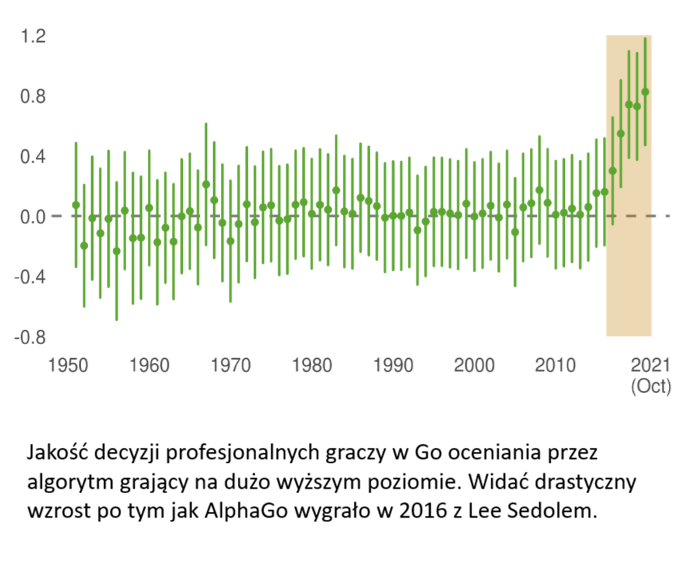
Czy używanie SI nas ogłupia? Czy jednak dzięki jej rozwojowi stajemy się mądrzejsi? Ciekawej odpowiedzi dostarcza go i szachy, gdzie wpływ tej technologii nastąpił dużo wcześniej. Po stworzeniu AlphaGo profesjonalni gracze zaczęli grać dużo lepiej, choć bardziej sztampowo. Ciekawe, czy czeka nas to także w innych dziedzinach życia?
Poniżej podsumowanie trzech badań, które dobrze opisują ten fenomen:
1. Szerokie badania w https://t.co/sSRv1wRFOM dostarczają jednoznacznych dowodów na to, że obcowanie z nadludzkimi systemami AI radykalnie podniosło poziom profesjonalnych graczy. Przebadano zbiór ponad 5,8 miliona ruchów z lat 1950–2021. Użyto SI jako „wyroczni”, aby ocenić jakoś podejmowanych przez ludzi decyzji. Badanie pokazało, że przez dekady jakość ludzkich decyzji rosła bardzo powoli lub stała w miejscu. Natychmiast po udostępnieniu narzędzi SI (takich jak AlphaZero, czy otwartoźródłowe Leela Zero), wskaźnik jakości zaliczył gwałtowny wzrost. Ludzie obiektywnie zaczęli grać dużo lepiej.
2. Uczenie się od sztucznej inteligencji ma też swoje paradoksalne oblicze. Praca badawcza - https://t.co/9RfhG3abfK pokazuje, jak powszechność optymalnych silników drastycznie zredukowała różnorodność w podejściu do gry. Choć AI podważyła wielowiekowe koncepcje i wygenerowała nowe wzorce, szybko stały się one nowymi, żelaznymi zasadami, które są teraz bardzo często naśladowane. W 2003 roku top 10 najpopularniejszych wzorców otwarć stanowiło zaledwie 4,02% zagrań ścisłej czołówki – ze względu na unikalne style i szkoły (agresywne, defensywne itp.). W 2021 roku ten sam wskaźnik wyniósł aż 66,8%. Większość elity gra dziś według tych samych, wzorowanych na maszynach schematów.
3. W szachach maszyny zdominowały nas dekady wcześniej (zwycięstwo Deep Blue nad Kasparowem w 1997 r.). Badanie w pracy - https://t.co/56sD4ZNXAj analizujące 11,6 mln decyzji na przestrzeni 40 lat, identyfikuje dwie główne fale tej rewolucji. Pierwsza fala (przełom wieków): To wejście tradycyjnych silników opartych na brutalnym przeszukiwaniu (np. wczesny Stockfish). Doprowadziły one do stałego, stabilnego wzrostu jakości ludzkiej gry - zwłaszcza wśród młodych zawodników. Hipoteza jest taka, że cyfryzacja treningu doprowadziła do większej jego dostępności. Druga fala (koniec lat 2010.): Era głębokiego uczenia i sieci neuronowych (AlphaZero, LCZero). Co niezwykle ciekawe - inaczej niż w Go - to nowe podejście nie wywołało natychmiastowego skoku siły wśród arcymistrzów. Powodów może być kilka, ale mnie przekonuje ten, że algorytmy grają w sposób bardzo nieludzki. Okazuje się, że SI jest zdolna do rozmyślnego, ukierunkowanego podtrzymywania i pielęgnowania wysoce ryzykownych, asymetrycznych układów przez znacznie dłuższe okresy czasu niż gracze ludzcy, którzy dążą do drastycznego upraszczania pozycji i zredukowania możliwych ataków.
JUST IN: The IRGC Navy just added a second lock to the gate.
Hours after the ceasefire was supposed to reopen Hormuz, the IRGC issued an official directive requiring all commercial vessels to use two alternative corridors near Larak Island to avoid sea mines deployed during the war. Inbound traffic north of Larak. Outbound traffic south of Larak. All ships must coordinate with the IRGC Navy before entering. Until further notice.
The mines are real. Iran laid them during the February to April campaign as a defensive measure against the US Fifth Fleet. They are in the standard shipping lanes. The alternative routes bypass the minefields but funnel every vessel through a narrow channel inside Iranian territorial waters, past the same Larak Island where the IRGC toll booth already operates and the patrol boats already escort ships one at a time after verifying clearance codes paid for in yuan or cryptocurrency.
This is not a safety measure. It is infrastructure. The mines create the problem. The alternative routes create the solution. The solution requires coordination with the IRGC. The coordination requires toll payment. The toll requires yuan. Each layer reinforces the previous one until the Strait of Hormuz is no longer a waterway governed by international maritime law but a managed corridor operated by a theocratic military force collecting revenue in a currency that is not the dollar.
The sequence now runs as follows. A vessel operator contacts IRGC-linked intermediaries. Submits IMO number, ownership chain, cargo manifest, crew list, and destination. The IRGC’s Hormozgan Provincial Command screens for sanctions alignment and assigns a friendliness tier. The toll is calculated at approximately one dollar per barrel for oil tankers, paid in yuan through CIPS or in stablecoins through the Qeshm Island crypto exchange window. If approved, the vessel receives a clearance code and route instructions for the Larak corridors. Upon approach, VHF radio hail, AIS verification, and a patrol boat escort through the minefield-free alternative channel. One ship at a time.
Fifteen to twenty ships completed this process in the first 24 hours. The pre-war average was 138 per day. Four hundred vessels are reportedly waiting outside the strait. The Gulf states have declared the toll illegal and refuse to pay. Japan’s prime minister called the strait an international public good. Oman’s transport minister said international agreements prohibit fees. None of this has stopped the IRGC from operating the corridor, collecting the revenue, and turning back tankers that attempt passage without a code.
Trump claimed a complete opening of the strait. The strait is not completely open. It is completely controlled. The difference between closed and controlled is that a closed strait generates no revenue and invites military intervention. A controlled strait generates reconstruction funding in yuan, establishes a precedent for non-dollar energy settlement, and operates under the legal fiction of a safety directive that blames wartime mines for the necessity of IRGC coordination.
The mines will take months to clear. The alternative routes will become permanent. The toll will become normalised. And by the time Islamabad concludes, the infrastructure of a post-dollar energy chokepoint will have been stress-tested, revenue-generating, and operationally embedded for two weeks under the protection of a ceasefire that was supposed to dismantle it.
Full analysis https://t.co/0fIdGsM5qH
BREAKING: Russia, China, and France are blocking an Arab-backed push at the UN Security Council to authorize military action against Iran to reopen the Strait of Hormuz, per NYT.
According to diplomats, the three veto powers oppose any resolution language that would permit the use of force.
Chinese battery giants, BYD and CATL joins over 100 companies in China in a race to commercialize perovskite solar cell technology.📜
China’s dominance in solar energy has been built on silicon solar cells, massive manufacturing lines, economies of scale, and an unassailable grip on the global photovoltaic supply chain.
But the industry in China is moving beyond silicon solar cells.
Enter the perovskite solar cell.
Over 100 Chinese firms, including battery titans CATL and BYD are in a high-stakes race to commercialize this game changing technology.
🔹Why Perovskite Changes Everything
What makes perovskite cells superior?
Traditional silicon panels are efficient but rigid, energy-intensive to produce, and are approaching their theoretical efficiency limit.
Perovskites comes in a crystal structure that can be printed like newspaper, tuned to absorb different wavelengths of light, and layered atop silicon to create tandem cells that have already surpassed 33% efficiency in the lab far beyond what silicon can achieve alone.
The key point here is tandem cells, which is a layer of perovskite cells on top of silicon cells, perovskite are semi-transparent and act as a protective layer on top of the more fragile silicon cells. Doubling the potential efficiency.
But the real promise lies in versatility. Perovskites can be made semi-transparent, flexible, and lightweight. They can turn car roofs, building facades, and even window glass into power-generating surfaces.
For companies like CATL and BYD, which already dominates the electric vehicle space, the potential is huge:
An EV whose entire body shell doubles as a solar harvester, trickle-charging its own battery while parked. It can also be used by the 2 battery giants in energy storage, turning passive surfaces into solar cells.
🔹The Chinese Advantage
What sets China apart in this race is not just the number of firms involved, but the convergence of capabilities. Silicon solar manufacturing gave China unparalleled expertise in scaling thin-film technologies. Battery giants bring expertise of materials science and long-term durability engineering, aiming for the ultimate goal of stability and eventual commercialization.
The first firm to deliver a perovskite panel with a 20 year lifespan will capture not just a market, but an entire energy supremacy.
Chinese companies with government backing, a deeply integrated supply chain, and a willingness to invest heavily in next-generation manufacturing, are perfectly positioned to repeat what we've achieved in the silicon solar cell industry.
🔹Energy Security for China.
This technological push carries huge geopolitical weight. The current conflict in Iran and the resulting energy crunch have demonstrated that fossil fuel dependence is a strategic vulnerability.
Especially for China, which imports the majority of its oil and gas, energy security is the foundation of nationhood, without it, nothing else matters.
The commercialization of perovskite technology means China can reduce its reliance on long and vulnerable supply chains for fossil fuels. It can build resilience into its cities, its transportation networks, and its industrial base.
Moreover, as developing nations across the Global South seek affordable, decentralized energy networks, China's renewable energy technology is not merely a power generation tool, but also a geopolitical tool for global influence.
🧵 Andrej Karpathy (in a recent interview) is not really arguing that AI is a better tool.
He is arguing that the structure of knowledge work is changing.
His language is much more radical than most summaries suggest.
1/
“Code's not even the right verb anymore.”
That line is doing a lot of work.
He is not saying coding got faster.
He is saying the old description of the activity no longer fits.
2/
What replaces it?
“I have to express my will to my agents for 16 hours a day.”
That is a different model of work:
less direct execution,
more specification, delegation, and supervision.
3/
Karpathy is also explicit that this is not hypothetical.
“In December is when something really flipped. I went from 80/20 of writing code by myself versus delegating to agents, to like 20/80.”
That is not an incremental gain.
That is a regime change.
4/
He pushes the point further:
“I don't even think I've typed a line of code probably since December, basically.”
Whether or not others are there yet, his claim is clear:
for at least some frontier users, the workflow has already changed.
5/
He thinks most people have not caught up to this fact.
“I don't think a normal person actually realizes that this happened or how dramatic it was.”
And then even more sharply:
“Their default workflow of building software is completely different as of basically December.”
6/
What is the new bottleneck?
Not intelligence, exactly.
“It's limited by everything.”
And then:
“It's not that the capability is not there; it's that you just haven't found a way to string together what's available.”
7/
That is why he keeps returning to the phrase:
“It's a skill issue.”
Which sounds flippant, but his point is serious:
the limiting factor is increasingly the human ability to structure tasks, write instructions, manage memory, and create good loops.
8/
He gives the clearest statement of where mastery is going:
“Mastery looks like going ‘up the stack.’ It’s not about a single session; it’s about how multiple agents collaborate in teams.”
This is the real shift.
Not better autocomplete.
Delegated cognition organized at a higher level.
9/
That is also why he asks:
“How can I have not just a single session of Claude or Cursor... how can I have more of them?”
He is already thinking beyond one assistant.
The unit of productivity is becoming a system of agents, not a single chat window.
10/
He even reframes the economics of attention this way:
“What token throughput do you command?”
That is an extraordinary sentence.
It suggests the scarce resource is no longer only human labor, but your ability to direct and absorb machine labor at scale.
11/
His smart-home example is not a gimmick.
It supports a deeper thesis:
“These smart home apps shouldn’t even exist in a sense; it should just be APIs and agents using them directly.”
12/
Then he says the really important part:
“Agents are the glue of the intelligence.”
And then:
“The industry has to reconfigure because the customer is no longer the human; it’s the agent acting on behalf of the human.”
13/
That is a much larger claim than “AI improves UX.”
It implies software may increasingly be designed for machine operators rather than direct human operation.
Or in his words:
“This refactoring will be substantial.”
14/
He extends the same logic into research.
“I don't want to be the researcher looking at results. I want to arrange the objective once and hit ‘go.’”
That is not copilot language.
That is automation of the experimental loop itself.
15/
He is even blunter here:
“We shouldn't be running these hyperparameter searches; we should be removing humans from the process.”
16/
And then this:
“Researchers can contribute ideas, but they shouldn't be enacting them.”
That may be one of the clearest formulations of his worldview in the whole transcript.
Human role: propose objectives and ideas.
Machine role: execute search and evaluation.
17/
He makes the organizational implication explicit too:
“A research organization is essentially a set of markdown files describing roles.”
That is a revealing abstraction.
It treats institutions not as fixed human arrangements, but as programmable systems open to optimization.
18/
But he is not naive about where this works.
“If you can't evaluate it, you can't auto-research it.”
That is probably one of the most useful general principles in the interview.
AI scales fastest where feedback is cheap, clear, and reliable.
19/
He also gives a sharp description of current-model limitations:
“These models are still ‘jagged.’ I feel like I'm talking to a brilliant PhD student and a 10-year-old at the same time.”
That is better than most benchmark discourse.
Capability is not smooth.
It is uneven, spiky, and domain-dependent.
20/
He does not think the future is one universal oracle either.
“I think we should expect more ‘speciation.’”
And:
“We don't need one oracle that knows everything.”
That points to an ecosystem of specialized models, not just one giant general system.
21/
On the economy, he is more expansionary than most doom narratives.
“It's the Jevons Paradox. Software was scarce because it was too expensive. If it becomes cheaper, demand goes up.”
22/
And on the digital versus physical split:
“Flipping bits is a million times faster than accelerating matter. The physical world will lag.”
That is a clean way to understand where change comes first.
23/
His education comments may be the most underrated part.
“I realized I shouldn't be explaining this to people; I should be explaining it to agents.”
Then:
“If the agent gets it, they can explain it to the human in any language with infinite patience.”
24/
And finally, the closing line that ties the whole worldview together:
“You should have markdown documents for agents, not HTML for humans.”
Then the punchline:
“Your job is now the few bits that agents can't do.”
25/
That is the core thesis.
Not just that AI will help people work.
But that software, research, interfaces, and teaching may all be reorganized around agents as the primary operators.
Karpathy’s language is not the language of assistance.
It is the language of reconfiguration.
"5 marca 1938 roku w Chicago urodziła się dziewczynka, którą w szkole uważano za „trudną uczennicę”.
Często stała w kącie za złe oceny i sama później żartowała, że była „okropną studentką”.
Nazywała się Lynn Margulis.
To, co w szkole wyglądało jak problem z nauką, w rzeczywistości było innym sposobem myślenia. Zadawała pytania, które nie pasowały do gotowych odpowiedzi.
W wieku 19 lat ukończyła studia i wyszła za mąż za młodego studenta astronomii — Carla Sagana, który później stał się jednym z najbardziej znanych popularyzatorów nauki na świecie.
Ich małżeństwo nie było łatwe. Lynn jednocześnie wychowywała dzieci, prowadziła dom i próbowała rozwijać karierę naukową. Po latach powiedziała szczerze:
„Nie da się jednocześnie być idealną żoną, idealną matką i pierwszorzędnym naukowcem. Coś zawsze trzeba poświęcić”.
Właśnie w tym okresie w jej głowie narodziła się idea, która zmieniła biologię.
Badając mikroorganizmy, Lynn zauważyła coś dziwnego. W komórkach organizmów złożonych znajdują się struktury — mitochondria i chloroplasty, które produkują energię. Jednak zachowują się inaczej niż reszta komórki.
Mają własne DNA.
Dzielą się jak bakterie.
A ich kształt i rozmiar bardzo przypominają bakterie.
Lynn wysunęła odważną hipotezę:
te struktury kiedyś były niezależnymi bakteriami, które miliardy lat temu zostały wchłonięte przez inne komórki.
Innymi słowy — złożone życie na Ziemi powstało nie tylko dzięki walce i konkurencji, lecz dzięki współpracy.
W 1966 roku napisała artykuł naukowy opisujący tę teorię.
Został odrzucony 15 razy.
Jeden z recenzentów napisał nawet:
„Twoje badania to bzdura. Nie składaj więcej wniosków”.
Ale Lynn się nie poddała.
W 1967 roku jej praca w końcu została opublikowana.
A przez kolejne lata środowisko naukowe po prostu ją ignorowało.
Dopiero nowe badania genetyczne potwierdziły jej teorię.
I wtedy okazało się, że Lynn Margulis miała rację.
Dziś teoria endosymbiozy jest podstawą współczesnej biologii. Każdy student biologii uczy się, że mitochondria to dawne bakterie, które stały się częścią naszych komórek.
W 1999 roku prezydent USA Bill Clinton wręczył jej National Medal of Science.
Nazywano ją buntowniczką, heretyczką i „trudną dla świata nauki”.
Ale to właśnie tacy ludzie czasem zmieniają nasze rozumienie świata.
Lynn Margulis udowodniła jedną ważną rzecz:
największy przełom w ewolucji nie wydarzył się dzięki sile czy walce.
Stał się dzięki współpracy.
Jak sama powiedziała:
„Życie nie przejęło planety poprzez walkę, lecz poprzez współdziałanie”.
A jej historia pokazuje jeszcze coś:
czasem trzeba usłyszeć 15 odmów, zanim świat zrozumie prawdę.
Najważniejsze to nie przestać iść dalej."
za Przytulność
@piotrmiecz@piotrsankowski Unijne "Inwestycja" w ETS'y są miarą , skalą i wektorem zmian.
A Pan konkluduje swoje racje w oderwaniu od rzeczywistości, jakby nie chcial Pan tego zauważać.
@piotrsankowski Problem jest bardzo prozaiczny,czyli: definicji MERITUM (oraz jego niepodważalności) w stosunku do ktorgo kreuje się Teorię Spiskową.
Czyli KTO będzie interpretatorem MERITUM.
Teoria Spiskowa jest tylko komentarzem MERITUM, mniej lub bardziej udanym.
Nieszczęsny Kopernik🫠
Czasopismo Delta wydało właśnie marcowy numer poświęcony AI. Znajdziecie tam kilka spojrzeń na to, jak algorytmy zmienią przyszłość badań naukowych.
Miałem przyjemność dołożyć tam swoją cegiełkę: "Nadchodzi rewolucja w prowadzeniu badań".
Cały numer jest dostępny online tutaj: https://t.co/1t2tWrtnL4




![Rainmaker1973's tweet photo. Scientists successfully reversed the biological age of human skin cells by around 30 years.
This advance has the potential to transform regenerative medicine and treatments for age-related diseases.
A research team at the Babraham Institute in Cambridge developed a technique called maturation phase transient reprogramming (MPTR). By carefully exposing adult fibroblasts to Yamanaka factors for just 13 days, the researchers induced profound cellular rejuvenation without allowing the cells to lose their specialized identity and revert fully into stem cells. This precise timing enabled the cells to erase decades of accumulated aging damage while retaining their original function.
The reprogrammed cells not only showed molecular signs of youthfulness but also performed like younger cells. In functional tests, they produced substantially more collagen and closed experimental wounds much faster than untreated older cells.
[Gill, D., Parry, A., Santos, F., Okkenhaug, H., Todd, C. D., Hernando-Herraez, I., Stubbs, T. M., Milagre, I., & Reik, W. (2022). Multi-omic rejuvenation of human cells by maturation phase transient reprogramming. eLife 11: e71624. DOI/10.7554/eLife.71624]](https://pbs.twimg.com/media/HImV13rXIAAiYh1.jpg)