@IanTrades_ Nice! Is the data live? Where do you pull that from? I have a order and portfolio tracker that pulls data from my broker but it’s refreshed at the end of session
Good managers get results -
Great leaders do this:
Leadership isn’t a title.
It’s something you do.
Real leaders build people, not just results.
Want to lead well?
Start with the ABCs of Leadership.
They will lead to:
✅ Stronger Trust
✅ Faster Progress
✅ Better Decisions
✅ Greater Teamwork
✅ Confident Leadership
✅ Effective Communication
✅ Smarter Problem-Solving
✅ Stronger Accountability
✅ Higher Engagement
✅ Lasting Influence
✅ More Innovation
✅ Clear Direction
✅ Less Conflict
A title means nothing if your actions don’t inspire.
Respect is earned by how you treat people every day.
Great leadership is built in the small moments that matter.
Please repost to help others out there! ♻️
👇 Want a PDF of my top infographics? 👇
Go Here: https://t.co/VwjXadHCap
The "Always Done It This Way" Trap...
Every process needs to answer:
- Does it serve customers?
- Is it efficient?
- Can it be automated?
- Would we create it today?
Tradition is not a business strategy.
Using an overhead recovery model is a great way to make it easier to price jobs well.
It's pretty simple...
First, figure out your total overhead - leases, insurance, office staff, etc. Everything that is NOT a guy in the field doing the actual work. Let's say the total is $1m.
Next, figure out how many work hours you can bill in a year - let's say you have 20 guys, 50 weeks worked, 40 hours per week. 2000 hours each per year x 20 guys = 40,000 labor hours per year.
Reduce this to reflect billable efficiency e.g. if 75% of worker hours can be billed, we're now at 30,000 billable labor hours.
Divide annual overhead cost by annual billable labor hours. In our example, 1m / 30,000 = $33.33 per hour. This means you must charge $33.33 on top of your wage rate AND desired gross profit per labor hour, to recoup your overhead costs.
It is amazing how many people do NOT run these numbers, and therefore have made WAY less than they thought they would when the end of the year rolls around. This is a simple way to avoid that - it's kinda crazy to realize how much overhead 'burdens' labor rates. Ignore it, and you're on track to lose money.
(To really do well, couple this with proper estimating of machinery costs - another post, maybe, but basically the annual cost to own and operate, divided by the amount of hours it's used per year. Bill this, with a margin, on every job.)
(To do really really well, get good at estimating elapsed days accurately, and therefore your travel costs. Build them in too!)
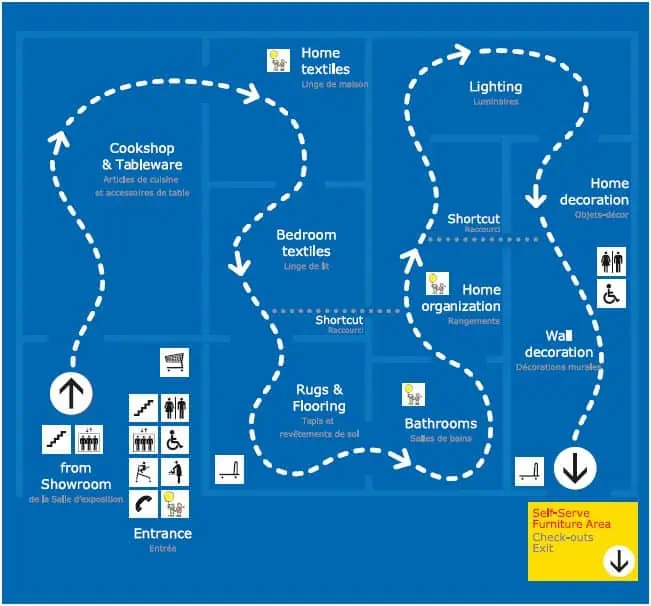
You walk into IKEA for a simple shelf.
Two hours later, you’re leaving with a cart full of things you never planned to buy.
This isn’t an accident—it’s a $50 billion psychological trap.
Here’s how IKEA mastered human behavior to make you spend more (without realizing it):
The coolest company you've never heard of:
- $70B conglomerate that acquires 100 companies/year.
- On the way to produce 500 millionaire employees
- Acquired 1000+ companies to date.
Founder refuses any media interviews.
Here's a deep dive on how he does it🧵