ERR: DPP1 inhibitors reduce exacerbations and may slow progression of bronchiectasis, validating inflammation as a key therapeutic target. Further investigation into their long-term efficacy, safety and treatment benefit across populations is needed. https://t.co/vqlQIUdFSD
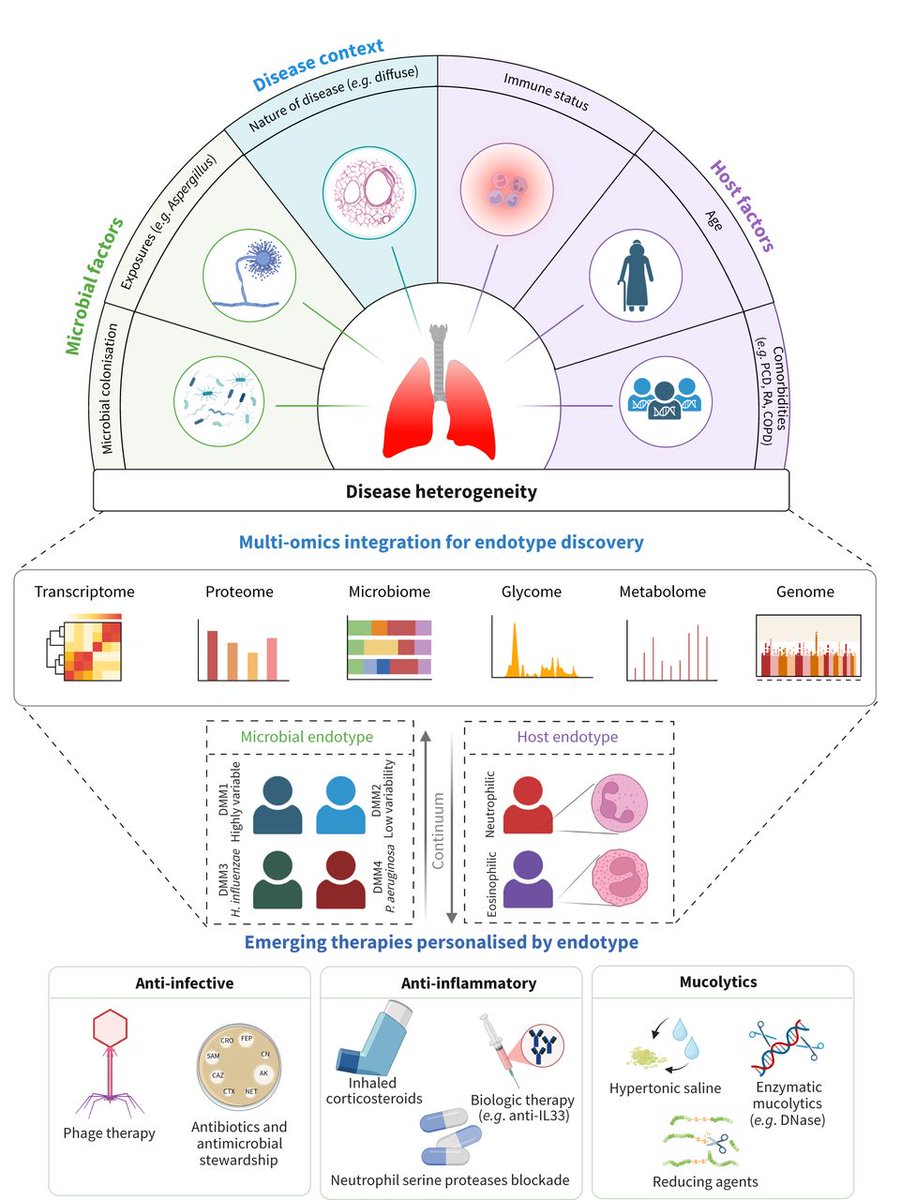
Bronchiectasis is driven by dynamic host–microbiome interactions, not single pathogens. Integrating microbial and immune multi-omics can define actionable endotypes, enabling precision therapy and accelerating translation from discovery to clinical care. https://t.co/5pUYrIAwqa
PS-OCT maps out the heterogeneous distribution of airway smooth muscle remodelling in patients with asthma, providing insights that were previously only accessible post mortem. PS-OCT can support the development of new therapies to reduce smooth muscle. https://t.co/Sm5bPyive1
A new Clinical Practice article summarizes the classification, evaluation, risk stratification, and management of syncope. History, examination, electrocardiography, and orthostatic blood-pressure measurement identify the cause in most patients.
Read “Syncope” by Rose Anne Kenny, MD, DSc: https://t.co/69m7PyroLn
Ask AI Companion to provide a summary of this article for your patient. In Spanish.
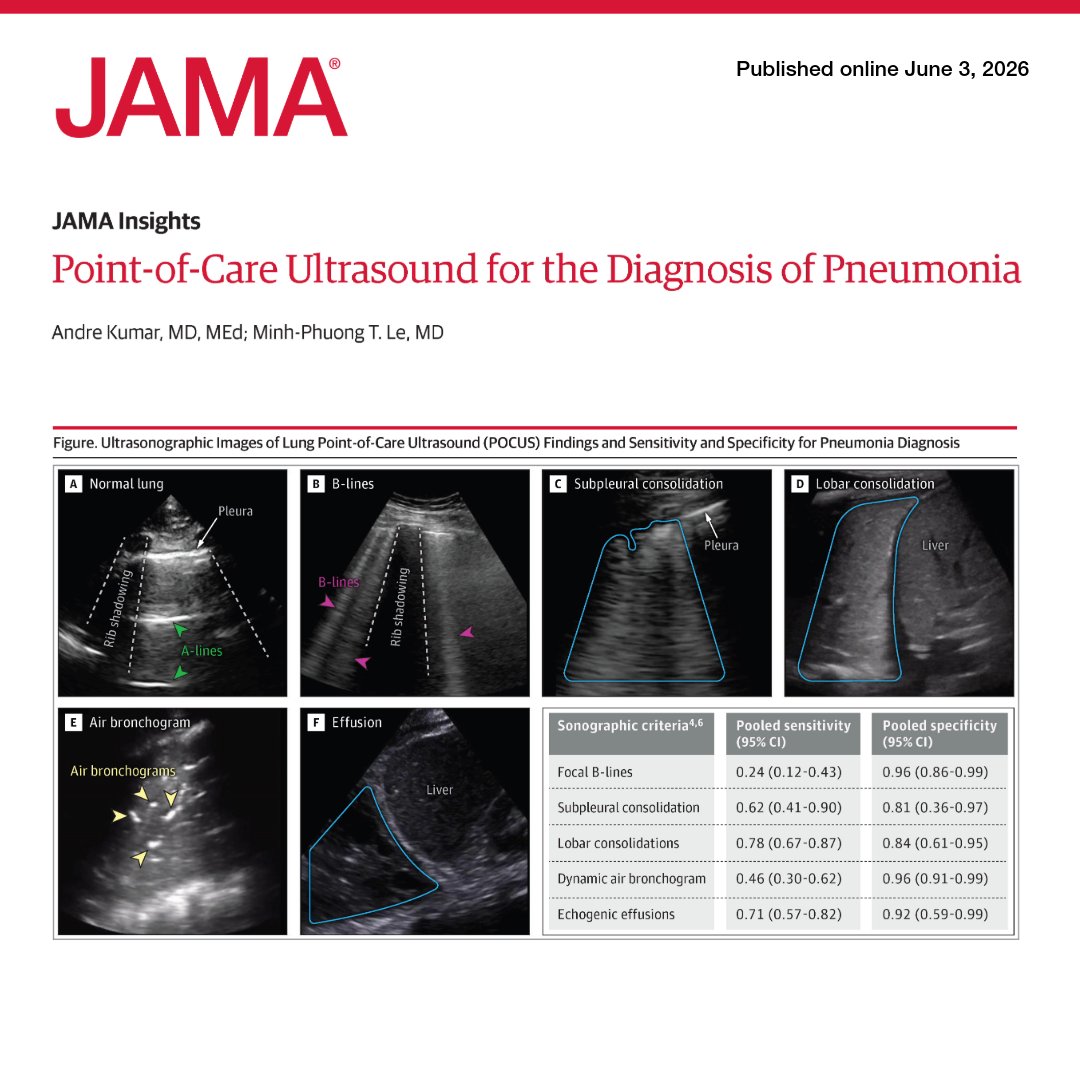
💡 JAMA Insights: #POCUS by trained clinicians is a guideline-endorsed alternative to chest radiography for #pneumonia diagnosis, offering higher sensitivity and specificity, immediate results, and no ionizing radiation.
https://t.co/fo9n15FfKV
A new anti-inflammatory treatment for bronchiectasis: a viewpoint on optimal dose selection for DPP1 inhibition in clinical practice
https://t.co/4fIWC7JeGV
@ProfJDChalmers@atscommunity
Respiratory muscle training in mechanically ventilated adult patients: toward a precise prescription based on current evidence: a scoping review https://t.co/idsK1nH9WF #icurehab#A2Fbundle
💡 JAMA Insights: Point-of-care ultrasound (POCUS) is an imaging modality that the 2025 American Thoracic Society Clinical Practice Guideline on CAP endorses as an acceptable diagnostic alternative to chest radiography for adults with suspected CAP at centers with appropriate clinical expertise.
#POCUS by trained clinicians is a guideline-endorsed alternative to chest #radiography for #pneumonia diagnosis, offering higher sensitivity and specificity, immediate results, and no ionizing radiation.
https://t.co/u6Y2zXOXJI
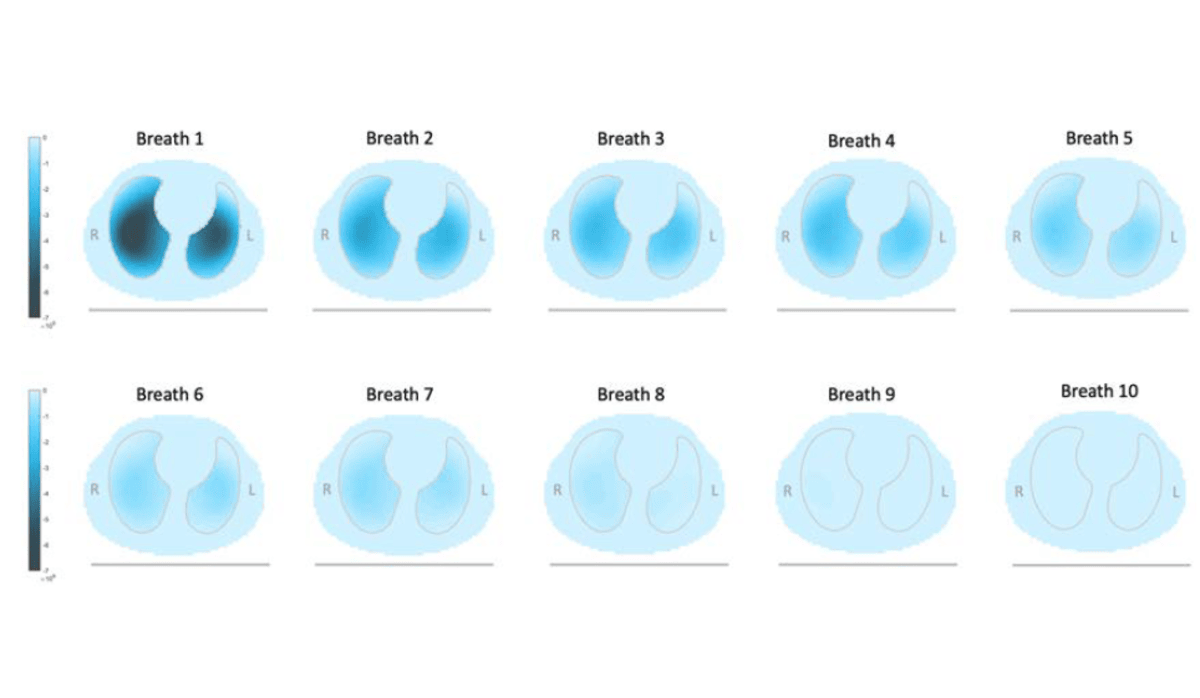
The first breaths after birth—early lung function in healthy term infants
This prospective observational study examines lung function of the first breaths after birth in healthy newborns
https://t.co/lqv5ubvhkF
Reconsidering resistance: a potentially overlooked risk factor for lung injury during assisted ventilation
Airway resistance may drive lung injury during assisted ventilation in acute hypoxemic respiratory failure
https://t.co/4wi2jFjyK1
@ACastellviFont@ecgoligher
Dysanapsis: when do the features of different growth patterns become the signs of airway disease?
Whether discussed from a structural or functional perspective, there is a need to better understand the role of dysanapsis in lung health and disease
https://t.co/tP1u2JcqtK
Amyotrophic lateral sclerosis (#ALS) is an adult-onset neurodegenerative disorder characterized by progressive muscle weakness due to degeneration of upper motor neurons in the brain and lower motor neurons in the brainstem and spinal cord.
Diagnosis relies on clinical criteria with mixed upper and lower motor neuron features, and is often supported by electromyography and genetic testing, which may direct treatment.
📌 Learn more in this JAMA Review: https://t.co/2gvxr8EQUA
🧠⚡ EEG may be one of the most underused monitoring tools in modern intensive care.
This new 2026 perspective in Critical Care argues something provocative:
EEG should evolve from a specialist diagnostic test into a true bedside monitoring system for intensivists.
The paper highlights a reality we face daily in ICU:
Many critically ill patients develop: • delirium
• non convulsive seizures
• metabolic encephalopathy
• hypoxic ischemic injury
• sedation related cortical suppression
Yet much of this cerebral dysfunction remains clinically invisible.
Especially in: ⚠️ sedated
⚠️ mechanically ventilated
⚠️ unconscious patients
Clinical examination alone is often insufficient.
One of the strongest points of the article:
The authors argue EEG should follow the same trajectory as: 📌 bedside echocardiography
📌 lung ultrasound
Not every intensivist needs to become a neurophysiologist.
But intensivists should learn to recognize: • background suppression
• asymmetry
• burst suppression
• epileptiform activity
In the same way we identify: • RV failure
• tamponade
• B lines
• pneumothorax
This is a major conceptual shift.
The proposed model is particularly interesting.
The authors describe a tiered EEG system: 🟢 simple bedside alarms for nurses
🟡 simplified interpretation for ICU physicians
🔵 qEEG trend analysis for trained intensivists
🔴 full raw EEG interpretation for neurophysiologists
Combined with: 🤖 AI assisted pattern recognition
The objective is not replacing experts.
The objective is: faster recognition of dangerous brain physiology.
One of the most important messages:
Current ICU monitoring focuses heavily on: • blood pressure
• oxygenation
• cardiac output
• ventilation
But often ignores the organ we are ultimately trying to protect: 🧠 the brain.
EEG may become the missing physiological layer of multimodal ICU monitoring.
The article also raises a very practical concern: alarm fatigue.
If EEG systems generate excessive false positives, ICU staff will rapidly ignore them.
This is where AI may become transformative: continuous surveillance without fatigue.
Particularly fascinating is the potential future of:
📡 point of care EEG
📡 emergency department EEG
📡 prehospital EEG
📡 tele neurophysiology
Imagine: an ambulance transmitting simplified cerebral activity before hospital arrival.
That possibility no longer sounds futuristic.
My personal takeaway:
Critical care spent decades refining cardiovascular monitoring.
The next frontier may be: continuous functional brain monitoring.
Not simply detecting seizures.
But integrating cerebral physiology into real time ICU decision making.
📖 Reference
Taccone, F. S., Critical Care, 30, 195. https://t.co/RqVX8PXbkv
📊 JAMA Clinical Guidelines Synopsis: The 2025 ACC/AHA guideline recommends home and office blood pressure monitoring to confirm diagnosis and titrate medications, with a target blood pressure of <130/80 mm Hg for most adults.
https://t.co/aomnd2Hcul
Cardiopulmonary exercise limitation is frequent after PE and associated with persisting clinical, echocardiographic and laboratory abnormalities as well as worse QoL. CPET may serve as a diagnostic modality for patients with persisting symptoms after PE. https://t.co/kjk05Ng5mS
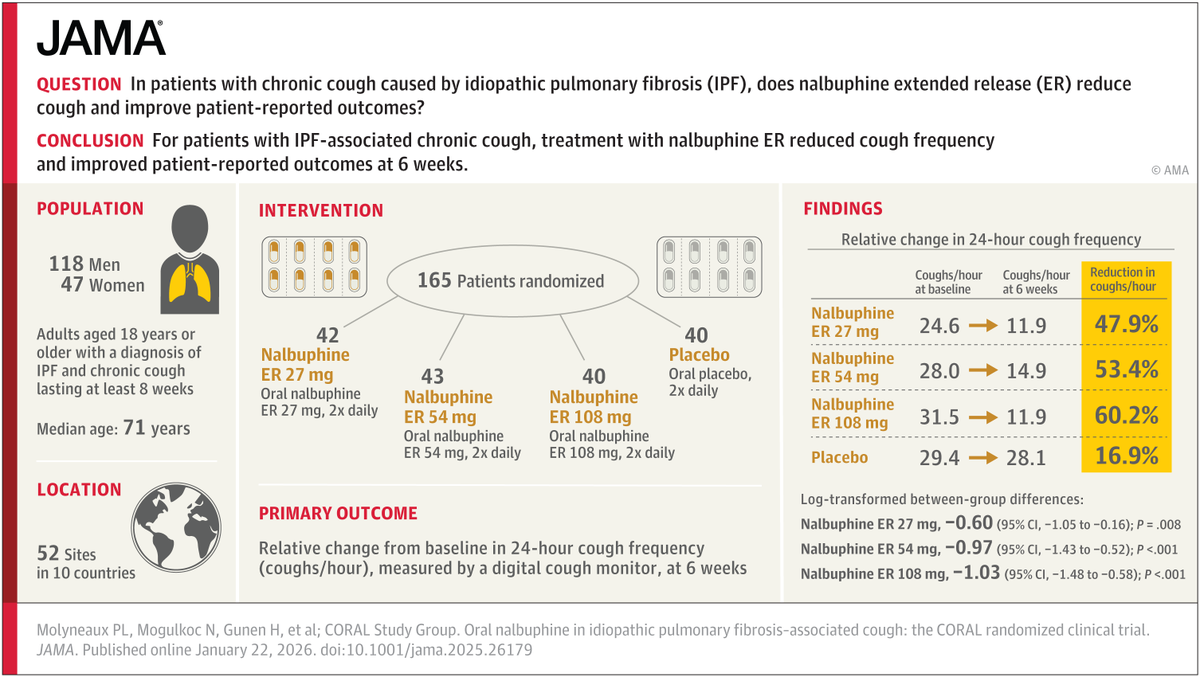
Among patients with idiopathic pulmonary fibrosis and chronic cough, nalbuphine ER achieved dose-dependent reductions in cough and improved symptom scores, with acceptable tolerability.
https://t.co/7lyDA61vra