Between January 2021 and Nov. 1, 2023, the state of Florida took 11,395 elderly or disabled Floridians out of their homes without any judicial oversight, a Miami Herald investigation found.
It happened to Martin Hochheiser in 2022. 🧵
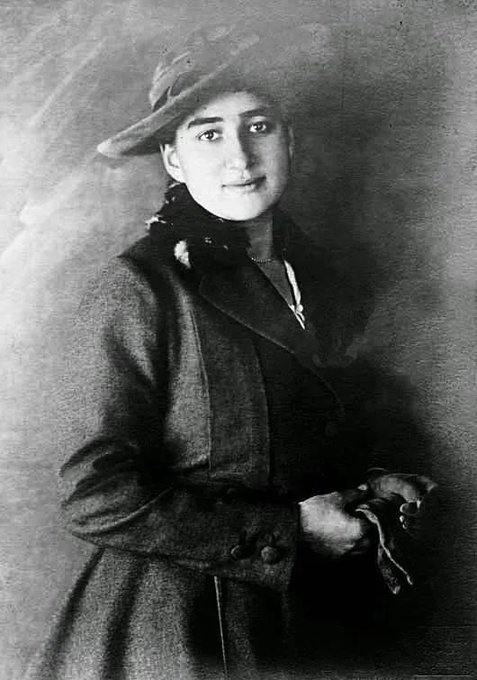
Everybody knows Franz Kafka, but almost no one knows his sister Ottla.
She was gassed on arrival at Auschwitz on Oct 7, 1943 after volunteering to escort a group of orphans from the Terezin ghetto so they wouldn’t be afraid.
Anonymous
I’m a school nurse. We have a rule. Kids without lunch money get a cold cheese sandwich. Nothing else. It’s policy. This boy came in one Wednesday. Sixth grader. Stomach pain he said. I’ve been doing this twenty years. I know real stomach pain and I know hunger. “When did you last eat?” He looked at the floor. “Yesterday lunch.”
Sent him to the cafeteria with a note. Told them to give him a full hot meal. Pasta. Salad. Milk. The works. Cafeteria lady looked at my note. Looked at me. Gave him the tray without a word. He ate like he hadn’t seen food in days. Probably hadn’t. Came back to my office after. “Am I in trouble?” “For what?” “For eating.” “That’s what food is for.”
Started keeping granola bars, peanut butter crackers, juice boxes in my bottom drawer. For kids who come in with headaches that are really hunger. Stomachaches that are really empty. I’m not supposed to. Technically against policy. Don’t care. Told my principal once. She looked at me for a long moment.....
Opened her desk drawer. Showed me her stash. Crackers. Fruit snacks. Applesauce. “What drawer?” she said. We never spoke of it again.
That sixth grader is in high school now. Came to find me last spring. “I just wanted you to know I’m okay. And that I remembered. I always will.” He volunteers at a food bank on weekends. Has since he was thirteen.
Best granola bars I ever bought.
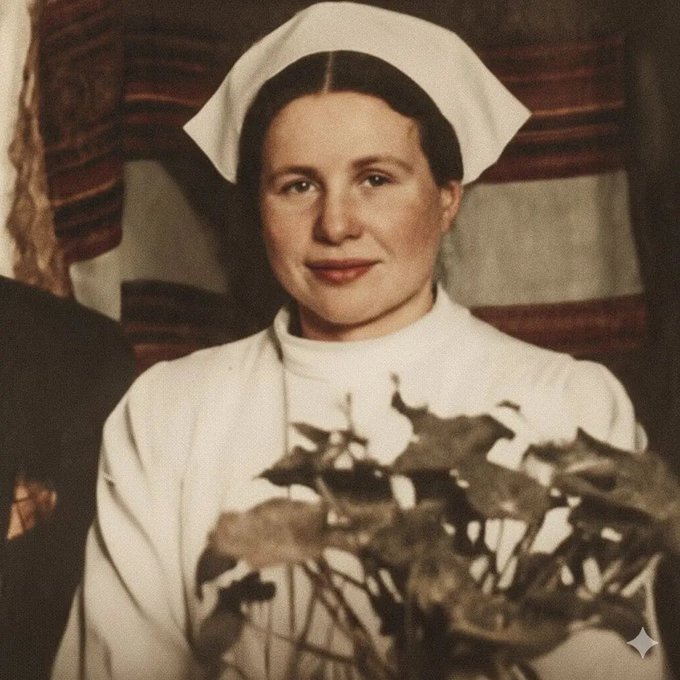
In the autumn of 1942, a slight, 32-year-old Polish social worker named Irena Sendler passed through the gates of the Warsaw Ghetto with a carpenter’s toolbox in her arms. Beneath the hammers and nails lay a drugged six-month-old infant, breathing softly, utterly silent. One cry would have meant instant death for both of them. Irena smiled at the guards; they waved her through. They never suspected that this quiet woman would repeat the journey 2,499 more times.
The ghetto was a slow-motion extermination. Starvation, disease, and random murder stalked every street. Jewish parents faced a choice no human being should ever have to make: keep their child and watch them waste away, or hand them to a stranger who promised a chance—however thin—at life.
Irena came officially to inspect for typhus. In reality, she came to steal children from death.
Babies left in toolboxes or ambulances under false bottoms. Toddlers sedated and tucked into potato sacks. Older children led by the hand through the stinking, lightless sewers while German boots marched overhead. “Not a sound,” she whispered as rats scurried past their feet.
She knew that the rescued children would be given new names, new religions, new families. Their pasts would vanish unless someone remembered. So, on fragile scraps of tissue paper, Irena wrote each child’s real name, their parents’ names, and their new hiding place. She rolled the papers tight, slipped them into glass jars, and buried them beneath an apple tree in a neighbor’s garden. If she were caught and killed, the truth might still survive.
She was caught.
On October 20, 1943, the Gestapo kicked in her door. They took her to Pawiak Prison and demanded the list. When she refused, they smashed both her legs with iron bars. Then her feet. Then her arms. For weeks the beatings continued. She never spoke. They scheduled her execution. On the appointed morning, guards dragged the broken woman from her cell.
Instead of a firing squad, she found herself outside the prison walls—alive. The Polish underground council Żegota had bribed a guard to mark her file “shot while trying to escape.” Officially dead, Irena Sendler limped back into the shadows to keep working.When the war finally ended, the first thing she did was dig up the jars under the apple tree. She spent years trying to return the children—now scattered across convents, farms, and foster homes—to whatever family might remain.
Almost no parents had survived. But the children had. Because of her, 2,500 Jewish boys and girls lived to grow up, to marry, to have children and grandchildren of their own—an entire secret branch of the human family tree that the Nazis never managed to cut down.For decades her story stayed buried deeper than the jars themselves. Then, in 1999, four high-school girls in rural Kansas stumbled across a brief mention of her name. They found the old woman still living quietly in Warsaw and brought her courage back into the light.
Journalists called her the greatest rescuer of the Holocaust. Irena only shook her head.“I could have saved more,” she said. “That regret follows me to the grave.”Irena Sendler—armed with nothing but a ghetto work permit, a toolbox, and a refusal to look away—proved that even in the heart of the worst evil humanity has ever devised, one determined person can still keep the darkness from winning completely.
NEW: Florida says Congress' decision not to extend Obamacare tax credits will cost at least 10,000 Floridians their life-saving HIV medication.
w/@romyellenbogen:
https://t.co/cS9HkqQXMG
Over the weekend I took Kira with me to run some errands. I told her I would also take her to lunch which she loves to do.
At the restaurant as we are leaving we walked past a table with a couple sitting there. For some reason, Kira walks straight up to the woman and looked in her face. I said hello and told her to leave these people alone. Well I couldn't get her to move she just kept staring at them.
The lady reached out and began rubbing Kira on the head. That's when she told me that they had just lost their beloved dog 2 weeks before.
I told them how sorry I was for their loss and they began talking to me about how quiet their house seemed now.
The man began asking me about Kira and are German Shepherds good dogs to have as pets. I told them that they are the best and Kira is just a very special girl. When I told them she was a rescue they were amazed. They began to ask questions about how to adopt a rescue.
I told him there was a process for it but there are so many dogs in need of homes they shouldn't have a problem finding one to adopt.
They asked me to sit down to answer more questions for them. I must have answered 50 questions. The man shared with me that he has wanted to have a German Shepherd since he was a kid but unfortunately never had one.
His wife asked him why he never shared that with her. He just told her that he didn't think she would want one.
" If you want a German Shepherd then we'll adopt one" she told him.
His voice began to quiver and he got teary eyed .
" Really?" He asked. " Yes. We'll adopt one for you."
." Jim.... Do you know of a good rescue we can contact?"
That's when I placed Kira's card on the table.
" OMG ! She's the ambassador for the GSD rescue?"
"Yes she is and somehow she knew she could help you . "
I'll be meeting them in a few weeks to help them find their German Shepherd.
Kira... You just continue to amaze me.
Tiffany Carr defrauded the state of millions meant for domestic violence victims, walking away with no jail time. Her refusal to admit wrongdoing is indefensible. When funds meant to protect victims are stolen, survivors pay the price. Accountability shouldn’t stop at probation.