Exploring the Microcosm of Life within the Macrocosm of Ecosystems. Marine bacteria and their phages. PhD Student in Molecular Microbial Ecology @UA_Universidad
More than 50 researchers have worked on this paper outlining the next phase of the Earth Commission's work and a scientific roadmap towards a safe and just future. Thanks to all who contributed.
Link to the paper: https://t.co/0sVU53w4Le
Read more: https://t.co/LsutKAnA3Q
📜New paper alert!
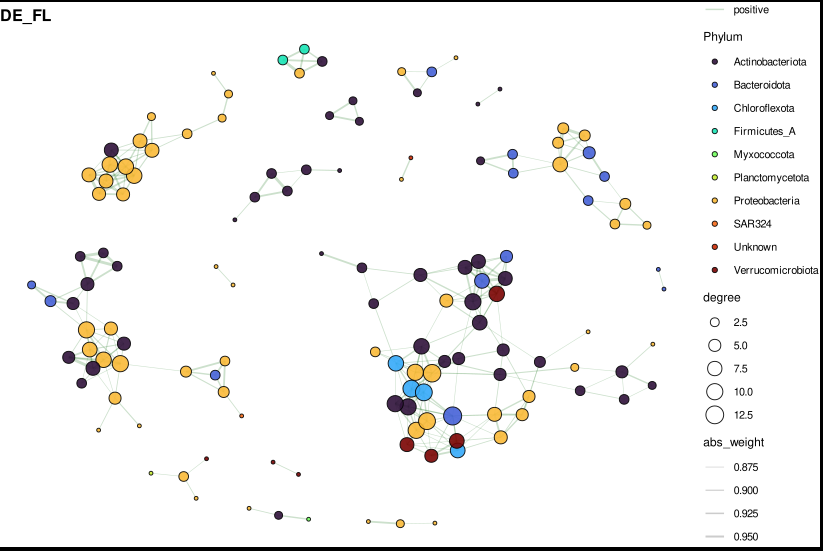
How do 🌊ocean microbial communities form, and what makes them stable under climate stress? Our new paper in @ASMicrobiology@mSystemsJ tackles this across 4,611 samples from @TaraOceans_Sci, @earthmicrobiome, Malaspina, Bio-GO-SHIP & more!
New paper from lab- Functional restructuring of the global soil microbiome under multiple stressors- in @NatureComms
Across global terrestrial ecosystems ~60% of all functional genes significantly shift when microbes experience high multiple stressors.
https://t.co/h7hdzc4ngn
Resilience and response of marine microbes to the future ocean and a marine heatwave — insights from a mesocosm experiment | FEMS Microbiology Ecology | Oxford Academic https://t.co/eK0asTWHSP
What happens when people learn that humans are not standalone organisms, but walking ecosystems?
Our new paper explored whether learning about the #holobiont concept – humans are symbiotic assemblages of a host & trillions of microbes – influences nature connectedness.
1/
Ecology of prokaryotic DNA viruses in a highly-impacted coastal lagoon revealed through comparative and temporal metagenomics | ISME Communications | Oxford Academic https://t.co/1NPQ4pSgNX
Volland et al. discovered a type of bacteria which grows to around a centimeter in length! They explore its remarkable biological adaptations as well. A very interesting read! https://t.co/Ln4gU8uBNs
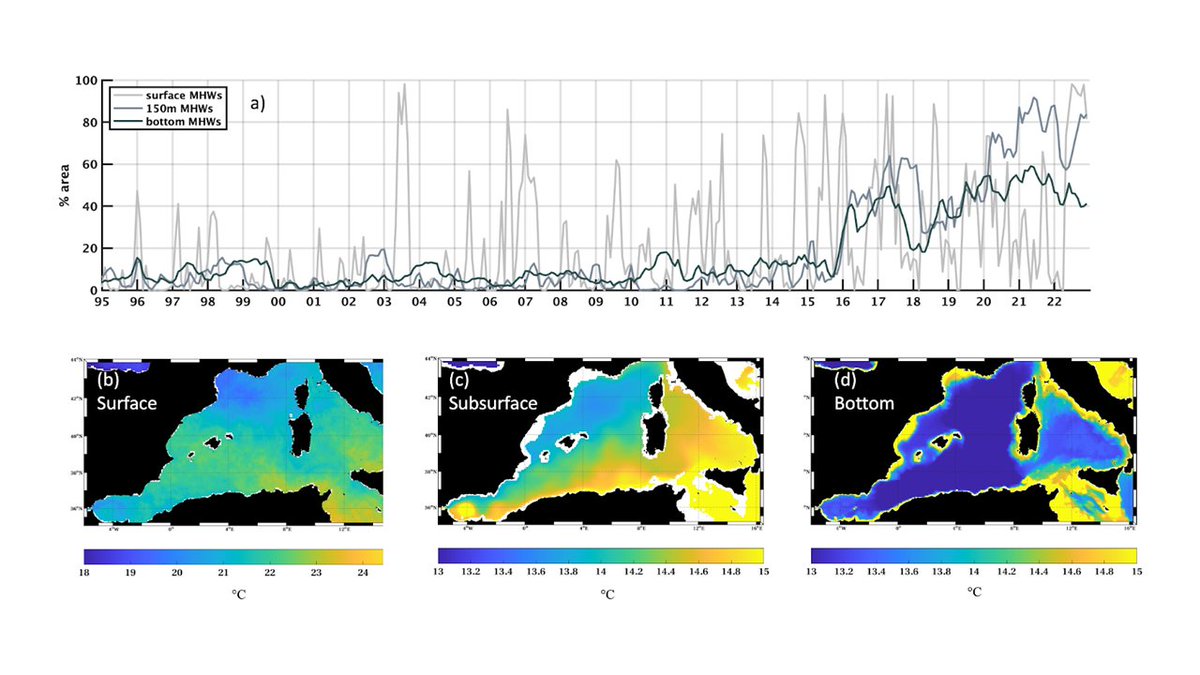
🌡️ New research shows that marine heatwaves are reshaping the Western Mediterranean, with cascading impacts across trophic levels and long-term changes in ecosystem structure.
More info here👉 https://t.co/tDWW8bPXPo
Very pleased to share our recent article entitled “Current understanding of viral contributions to soil carbon cycling” @NatRevEarthEnv@IcraWater https://t.co/K69hjoFNZp