From Rafale to Revenue: Turning Aerial Supremacy into Economic Strategy for Pakistan
On May 7, 2025, a high-altitude drama unfolded over the contested skies of India and Pakistan that would reverberate far beyond the battlefield. In a precise and coordinated aerial engagement, and accordingly to Pakistan sources, Pakistan Air Force (PAF) jets successfully intercepted and downed five Indian aircraft, including three highly advanced French-built Rafale fighters—long considered among the most sophisticated combat aircrafts. These claims, supported by independent international coverage from outlets like Reuters, Telegraph, CNN, signaled not only a significant tactical achievement but a far more consequential truth: that technological parity alone does not dictate victory, and that a nation—smaller in size, marred by continuous economic strains, and burdened with internal challenges—can still outthink and outmaneuver a much larger, wealthier adversary.
What unfolded in the air on that day was more than just an exchange of firepower. It was a moment of global attention, and for Pakistan, a rare alignment of perception and performance. The JF-17 Thunder—co-produced with China and the J-10CE jets, recently inducted from China, provided high-speed support in the engagement.
But even more impressive than the machines were the men behind them: highly trained PAF pilots, supported by disciplined command centers and forward-operating personnel who executed a near-flawless operation.
While military success often fades quickly in media cycles, this one should not. Pakistan has long waited for a window of strategic leverage that could be translated into something more lasting—and this is that moment. Air superiority, if marketed wisely and framed with strategic clarity, can evolve into economic opportunity. The question is: will Pakistan seize it?
First, the battle-tested JF-17 now has undeniable market value. Already exported to Nigeria and Myanmar, and under negotiation with countries like Azerbaijan and Iraq, the jet has faced skepticism in the past due to maintenance issues and perceived limitations. But real-world success is the strongest marketing tool in the defense sector. Now labeled “combat-proven” against one of the world’s most expensive and modern jets, the JF-17 has a new story to tell: of value, reliability, and deterrence at a fraction of the cost. While exact figures for the global light-fighter segment are not published separately, the overall fighter aircraft market is projected to surpass $100 billion by 2025, according to The Business Research Company. Within this broader space, Pakistan’s JF-17 Thunder— a credible, battle-tested product and significantly more affordable than its Western counterparts—offers a highly attractive price-to-performance proposition. With targeted diplomatic outreach and a robust support ecosystem, expanding JF-17 exports by 50 units by 2027 is an ambitious yet achievable goal.
Secondly, Pakistan’s military victory should not be measured only in aerial kills, but in exportable expertise. PAF pilots have a long history of training foreign forces, especially in Gulf countries. Now is the time to institutionalize this advantage. A Pakistan Center for Advanced Combat Training (PCACT), backed by the government and opened to international clients, could serve as a hub for pilot training, drone warfare, and air defense strategy—generating both foreign revenue and soft power. The global military simulation and training market was valued at approximately $12.9 billion in 2023 and is projected to reach $20.9 billion by 2033, according to Allied Market Research. Capturing even a modest 1% of this market could yield annual revenues exceeding $200 million. Pakistan has the credibility and personnel to deliver high-quality, cost-effective instruction. What it needs now is positioning.
Third, while the battle was fought in the air, its economic consequences must land firmly on the ground. The narrative of a leaner, embattled nation defeating a larger one through skill, agility, and resolve is one that can inspire both local industry and international investment. Nations like Turkey and Israel have leveraged similar moments to build billion-dollar defense ecosystems. Pakistan too can cultivate a "combat innovation corridor" around Kamra and Taxila, anchored in aircraft assembly, avionics, drone manufacturing, and simulator development.
But perhaps the greatest lesson of May 7 is psychological: that competence, not just capital, defines a nation’s power. That a nation frequently underestimated in global rankings—whether due to GDP, political instability, or media narrative—can still deliver excellence under pressure.
This story, if told well, can reshape international perceptions, galvanize domestic morale, and attract allies who value capability over clout.
Of course, challenges remain. Pakistan must avoid over-politicizing its military success or descending into triumphalism. Claims must be transparent and verifiable, and diplomacy must walk in tandem with deterrence. Quality control in future JF-17 batches must be rigorous to avoid repeat concerns like Myanmar’s reported maintenance issues in 2023. Training programs must maintain neutrality to appeal across blocs.
Pakistan has achieved something remarkable, not only in military terms but in terms of international optics. Now is the time to package that success into defense deals, training partnerships, innovation clusters, and economic reforms that give permanence to a fleeting moment.
Because the sky, after all, is not the limit. It’s only the beginning.
Pakistan's elected anti-imperialist leader Imran Khan is sentenced to 14 years in jail as its CIA installed rulers are rewarded for doing the US bidding with a new $20 billion World Bank loan.
They don't try to hide it.
Another strange attempt to link global support for Khan to Israel. In reality, this support is most present in nations that (1) have large Pakistani diasporas (most of which are pro-Khan/pro-democracy) & overseas PTI leaders (2) give people the right to voice such support.
"Imran Khan is facing around 280 fabricated cases over the past 2.5 years. It is ridiculous; no one takes the legal and policing systems seriously anymore. They have turned the judicial system into a joke." says Aleema Khan while speaking with Mehdi Hassan on Zeteo @mehdirhasan@Aleema_KhanPK https://t.co/ecNoLlKgfL
#FreeImranKhan
اسلحہ بھی تھا، گولیاں بھی چلیں۔ سینکڑوں کی تعداد میں چلیں۔ نہتے لوگوں کی خون آلود لاشیں بھی گرتی گئیں۔ ساری دنیا نے دیکھا، بی بی سی کے رپورٹرز نے دیکھا، الجزیرہ کے رپورٹرز نے دیکھا، لیکن وہ سی سی کیمرہ فوٹیج جانے ایک بار پھر کہاں غائب ہو گئی جس کو دیکھ کر اس ملک کے محافظوں کو یقین آئے گا کہ انہوں نے کیا ظلم کر دیا۔
#اپنا_ادارہ_ٹھیک_کرو
#گولی_کیوں_چلائی
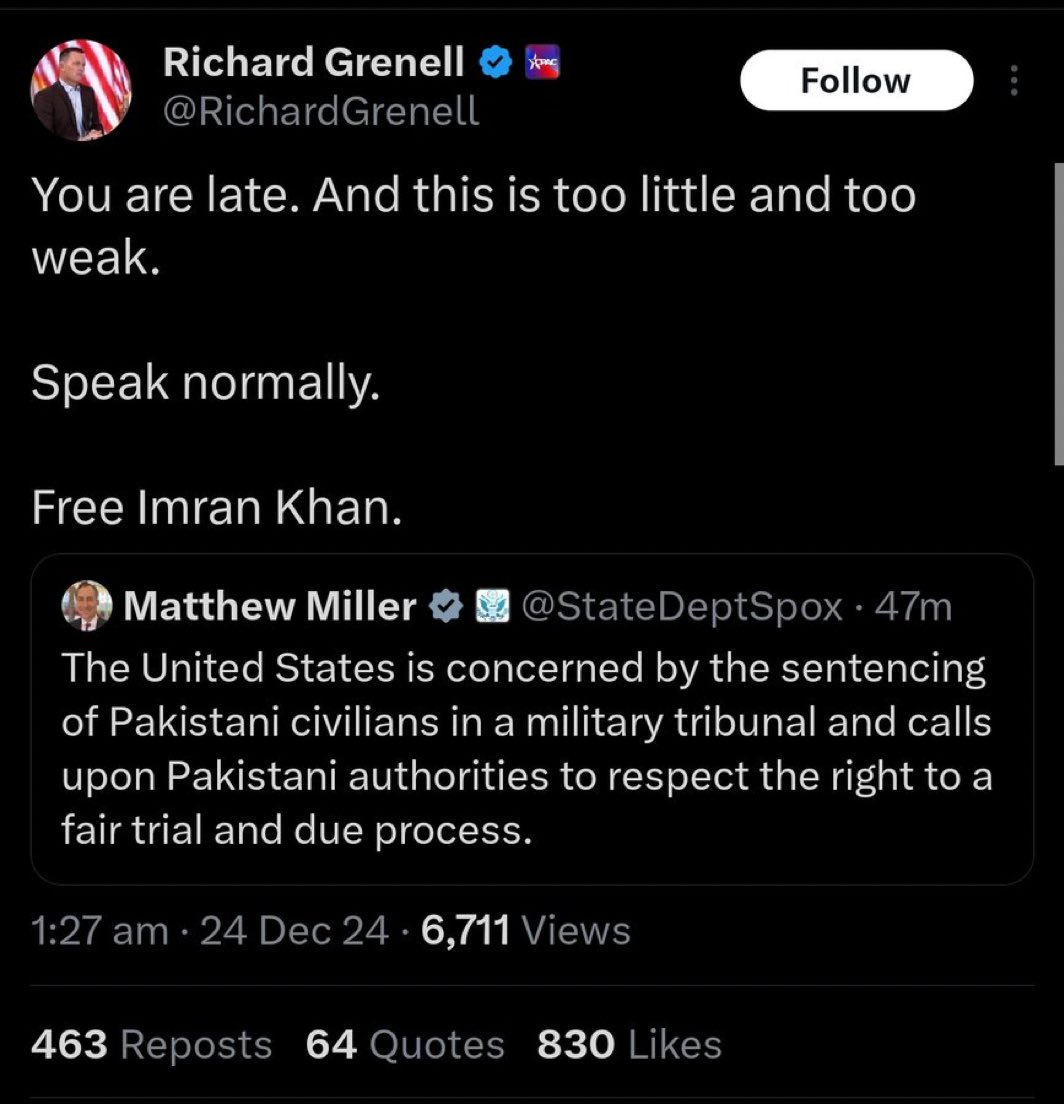
"I want to echo Trump Special Envoy @RichardGrenell's call: Free Imran Khan!"
"This is bipartisan. We need to NOT recognize the rigged election in Pakistan"
"We need NEW elections in Pakistan, and Imran Khan needs to be out of jail."
-@RoKhanna
رچرڈ گرنیل کے ٹویٹس کے پیچھے چھپا طوفان
شائد کمپنی کو اصل صورت حال اور اس کی سنگینی کا اندازہ ہی نہیں ہے۔
اگر کمپنی یا اس کا کوئی سیاسی مشیر غور سے رچرڈ گرینل کی moves کو سمجھنے کی کوشش کرتا تو جان لیتا کہ معاملہ بہت دور تک جانے والا ہے۔ گرینل نے تو ابتدا کی ہے۔
یہ صاف نظر آرہا ہے کہ ریپبلکن پارٹی آپریشن رجیم چینج اور اس کے نتائج کو ڈیموکریٹک پارٹی کا بیانیہ تباہ کرنے کے لیے برتنا چاہتی ہے۔
ڈیموکریٹک پارٹی کا امریکہ کی مقامی سیاست میں بیانیہ جمہوریت، انسانی حقوق، شہری آزادیوں، فیمنزم، حتی کہ گے رائٹس سے عبارت ہے۔ یہ امریکی پس منظر میں بائیں بازو کی جماعت تصور کی جاتی ہے۔ اگر اس کا کسی اہم ملک میں جمہوریت کو روند کر پچاس ساٹھ کی دہائی کی جنرل پنوشے جیسی فاشسٹ ڈکٹیٹر شپ مسلط کرنا ثابت ہوجائے اور اسکی انسانیت کے خلاف جرائم میں ملوث ہونے قتل عام وغیرہ پر ڈیموکریٹک پارٹی کی آشیرباد ثابت ہوتی ہے تو اس کا بیانیہ کتنا تباہ ہوگا اس کا اندازہ لگانا مشکل نہيں۔
حالات کا رخ بھانپ کر ڈیموکریٹک پارٹی موجودہ پاکستانی رجیم سے خود کو علیحدہ کررہی ہے اور اب اسے جائز حکومت کی حیثیت دینے کو بھی تیار نہیں یے۔
اور دوسری طرف اس کی پوری پوری کوشش ہے کہ بائیڈن کے ہوتے ہوئے ہی مذاکرات کے ذریعے رجیم چینج کا معاملہ ریورس ہوجائے تاکہ اس کا ڈیمیج کم سے کم ہو۔
ادھر یورپی یونین اور برطانوی حکومت بھی حالات کا رخ بھانپ کر اپنی پوزیشن ایڈجسٹ کررہی ہے۔ برطانوی پارلیمنٹ چھبیس نومبر کے قتل عام پہ عینی شاہدین کی سماعت کا اعلان کر چکی ہے۔
جبکہ ٹرمپ انتظامیہ کی طرف سے واضح اشارے ہیں کہ وہ موجودہ رجیم سے انگیج ہی نہیں کریں گے اور نہ اس کی قانونی پوزیشن کو تسلیم کریں گے۔
انہوں نے ابھی سے اعلان کردیا ہے کہ ٹرمپ کی حلف برداری میں کسی پاکستانی عہدیدار کو شرکت کی دعوت نہیں دی جائے گی۔
ٹرمپ کی حلف برداری کے بعد امریکی کانگریس کو اسلام آباد قتل عام پہ بریفنگ دی جائے گی اور اس کے بعد معاملات اس سمت مزید آگے بڑھیں گے۔
(عمیر فاروق، لندن)
@Umairfrooq@RichardGrenell
پالستانی اسٹیبلشمنٹ کے لیے بڑی مشکلات کھڑی ہو رہی ہیں۔ آنیوالی ٹرمپ حکومت کے تیور بالکل واضح ہیں۔ کیا پاکستان کی ننھی منی اسٹیبلشمنٹ اپنے چھوٹےموٹے ذاتی فائدوں کے لیے طاقتور امریکی رجیم سے ٹکر لے پائے گی؟ ملک کے اندر پر امن سیاسی جماعت سے ٹکراؤ اور اس عالمی سطح کے تصادم میں زمین آسمان کا فرق ہے۔