Vow to never get a blue tick because privacy matters. I don’t crunch data in numbers but in narratives. Expert in killing conversations. Consultant for Mapping.
Also in a separate news, a project I did storytelling for won us Cannes World Film Festival award. The news came yesterday giving a befitting farewell to 2022 for us.
Images from a plane carrying Iran’s delegation to US-Iran talks in Islamabad show seats filled with photos and belongings of victims of the Minab school strike.
The aircraft, “Minab 168,” honours the 168 killed, mostly children.
🇰🇷 Jesus from South Korea was supposed to float slightly above the stage, but, due to technical issues, the crane continued to lift the performer high into the city skyline
So, he epically plummeted "to heaven"
سڑک بارش سے نہیں بیٹھتی تھکن کی وجہ سے بیٹھ جاتی ہے۔ یہ نیچرل فنامنا ہے۔ آپ تھوڑی دیر پہلے کھڑے تھے اب بیٹھ گئے ہیں۔
مرتضی وہاب کا صحافی کو بارش میں سڑک بیٹھ جانے کے سوال پر کرارا جواب۔
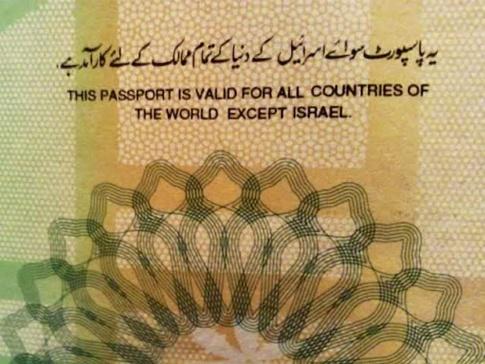
We hold this statement on Pakistan's passport as a badge of honour. We do not recognize Israel and could not care less about the feelings of its genocidal leaders. We will always stand with Iran, Palestine and Lebanon against the terrorist Zionist entity, inshAllah.
Pakistan Air Force didn't just escort the Iranian delegation to Islamabad. It established total air domain control over the Persian Gulf hours before they boarded and held that corridor through the flight. JF-17 Block IIIs, F-16s, IL-78 tankers, AWACS. A moving exclusion zone over a live war theatre. Full analysis:
I hope no one needs an MRI this year.
The world's largest producer of liquified helium is in Qatar and is shut off. We just got a notice that our supply for the year will be at least cut in half.
No one could have predicted this (unless they thought about it).
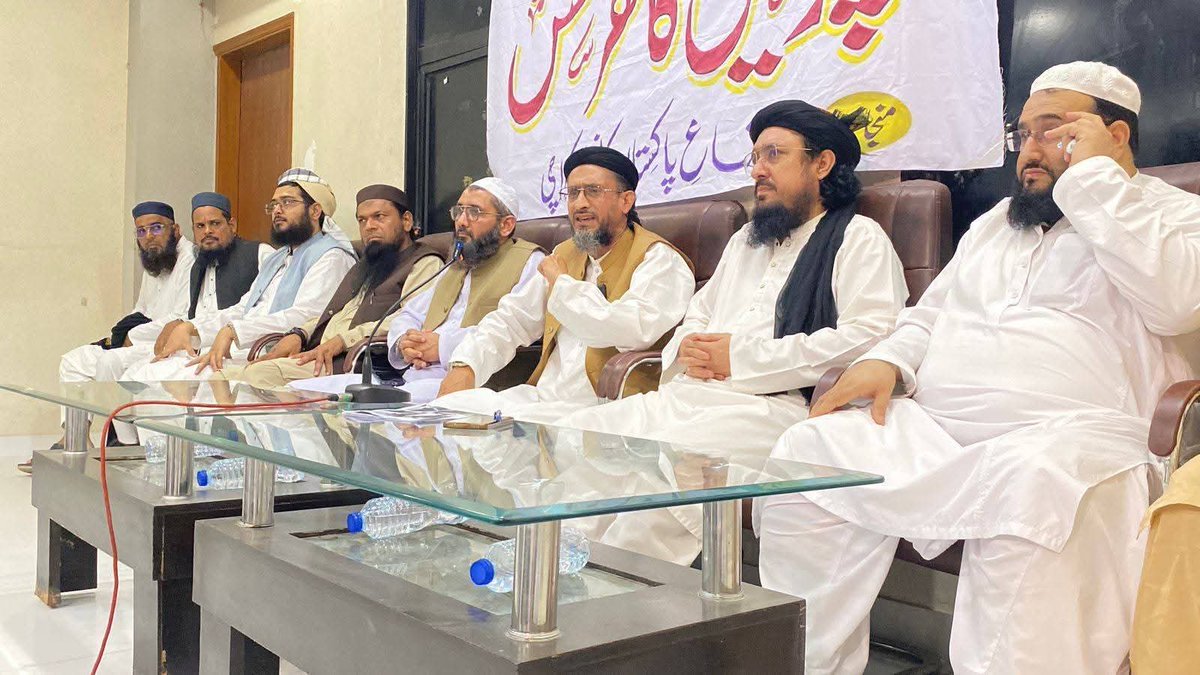
Unsurprisingly: Difa e Pakistan Council (group of many banned outfits) has been activated.
They held a press conference against Iran yesterday in Karachi.
DPC include banned Sipah e Sahaba, Jamat ud' Dawa amongst several 4th scheduled extremist leaders.
THE GLOBAL AVIATION MODEL JUST HIT A MISSILE
Emirates suspended operations from Dubai. Etihad grounded flights from Abu Dhabi until at least March 4 according to FlightGlobal. Qatar Airways halted departures from Doha, holding cargo at hubs worldwide. PBS confirmed 2,280 flights cancelled. Fortune reported 90,000 passengers per day stranded across Gulf hubs. The Guardian counted 115,000 Australians alone affected. FreightWaves documented Qatar Airways holding 13 tons of daily cargo capacity at standstill.
That was the first 72 hours.
Trump told reporters the war will last approximately four to five weeks. Project the math. Ninety thousand stranded passengers per day across 35 days is 3.15 million passengers. Each requiring rebooking, accommodation, meals, and compensation under international air passenger rights. Emirates alone carried 43.6 million passengers in the twelve months before this war. Dubai International processed 92.3 million passengers in 2024, making it the busiest international airport on earth. Every single one of those routes now requires rerouting south over Saudi Arabia, adding 1 to 3 hours of flight time, burning thousands of additional gallons of jet fuel per departure, on routes that were priced for direct overfly.
The fuel cost alone will restructure ticket pricing for every carrier touching the Gulf for the next quarter.
But here is what the travel industry is not yet processing.
The UAE intercepted 137 ballistic missiles and 209 drones according to the Hindustan Times. Breaking Defense reported 541 total drones launched at UAE territory, with 35 falling and causing material damage. Smoke was visible over Jebel Ali port on satellite imagery. The Burj Al Arab absorbed drone fragments. Iran hit Dubai’s most photographed landmark and the logistics port that handles 40% of UAE trade.
Emirates, Etihad, and Qatar Airways are not ordinary airlines. These three carriers and their hub airports are the connective tissue of 21st-century global aviation. The entire long-haul routing model for East-West traffic, connecting Europe and the Americas to Asia, Africa, and Oceania, was built on a single premise: that the Persian Gulf is a permanently stable corridor. Over two decades, Dubai, Abu Dhabi, and Doha captured the global transit market by positioning themselves as the geographic midpoint between every major population center on earth.
That geographic advantage just became a geographic liability. The midpoint between continents is also the midpoint of a war zone.
Every code share agreement, every interline connection, every cargo forwarding contract written through Gulf hubs assumed zero probability of sustained airspace closure from military conflict. Insurers at Lloyd’s are recalculating war-risk premiums in real time. Cargo forwarders are scrambling to route through Istanbul, Singapore, and Addis Ababa. FreightWaves reported air freight rates already spiking before Monday markets open.
Four to five weeks of closed or contested Gulf airspace does not create a disruption. It creates a structural rerouting of global aviation away from the Gulf model permanently. Airlines that spent 20 years building hub-and-spoke empires through Dubai and Doha just discovered the spoke runs through a missile corridor.
The world built global connectivity through a war zone.
The war just arrived.
https://t.co/BrzGRrU3VW
A day before the US attacked Iran, it had blacklisted AI company Anthropic. It then reportedly used Anthropic’s technology in its military operation in Iran.
Al Jazeera’s Linh Nguyen explains the dispute between the Pentagon and Anthropic over how AI should be used in warfare.
I am a diplomatic aide in the Sultanate of Oman's Ministry of Foreign Affairs.
My job is logistics. When two countries that cannot speak to each other need to speak to each other, I book the rooms. I prepare the briefing materials. I make sure the water glasses are the right distance apart. You would be surprised how much of diplomacy is water glasses. Too close and it feels informal. Too far and it feels like a tribunal. I have a chart.
We had a very good month.
Since January, Oman has been mediating indirect talks between the United States and Iran on Iran's nuclear program. The talks were held in Muscat and in Geneva. The Americans would sit in one room. The Iranians would sit in another room. I would walk between them. My Fitbit says I averaged fourteen thousand steps on negotiation days. The hallway between the two rooms at the Royal Opera House conference center is forty-seven meters. I walked it two hundred and twelve times in February. This is good for my cardiovascular health. It was less good for my knees. Both are in the service of peace.
By mid-February, we had something.
Iran agreed to zero stockpiling of enriched uranium. Not reduced stockpiling. Zero. They agreed to down-blend existing stockpiles to the lowest possible level. They agreed to convert them into irreversible fuel. They agreed to full IAEA verification with potential US inspector access. They agreed, in the Foreign Minister's phrase, to "never, ever" possess nuclear material for a bomb. I have worked in diplomacy for seven years. I have never seen a country agree to this many things this quickly. I made a spreadsheet of the concessions. It had fourteen rows. I color-coded it. Green for confirmed. Yellow for pending. By February 21 the spreadsheet was entirely green. I printed it. It is on my desk in Muscat. It is still green.
That phrase took eleven days. "Never, ever." The Iranians initially offered "not seek to." The Americans wanted "will not under any circumstances." We landed on "never, ever" at 2:14 AM on a Tuesday in Muscat. I typed the final version myself. I used Times New Roman because Geneva prefers it. The document was fourteen pages. I was proud of every comma.
Here is what they said, in the order they said it.
February 24: "We have a once-in-a-generation opportunity." — The Foreign Minister, private briefing to Gulf Cooperation Council ambassadors. I prepared the slide deck. Slide 14 was the implementation timeline. Slide 15 was the signing ceremony logistics. I had reserved the Palais des Nations in Geneva, Room XX. It seats four hundred. We discussed pen brands for the signing. The Iranians preferred Montblanc. The Americans had no preference. I ordered twelve Montblanc Meisterstucks at six hundred and thirty dollars each. They arrive on Tuesday.
February 27, 8:30 AM EST: "The deal is within our reach." — The Foreign Minister, CBS Face the Nation. He sat across from Margaret Brennan. He said broad political terms could be agreed "tomorrow" with ninety days for technical implementation in Vienna. He said, and I wrote this line for the briefing card he carried in his breast pocket: "If we just allow diplomacy the space it needs." He praised the American envoys by name. Steve Witkoff. Jared Kushner. He said both had been constructive.
I watched from the Four Seasons Georgetown. The minibar had cashews. I ate the cashews. They were nineteen dollars. The most expensive cashew I have ever eaten. But it was a good morning and we were within our reach.
February 27, 2:00 PM EST: Meeting with Vice President Vance, Washington. The Foreign Minister presented our progress. Zero stockpiling. Full verification. Irreversible conversion. "Never, ever." The Vice President used the word "encouraging." His aide took notes on an iPad. The aide did not make eye contact for the last nine minutes of the meeting. I noticed this. Noticing things is the only part of my job that is not water glasses.
February 27, 4:00 PM EST: "Not happy with the pace." — President Trump, to reporters.
Not happy with the pace.
We had achieved zero stockpiling. Full IAEA verification. Irreversible fuel conversion. Inspector access. And the phrase "never, ever," which took eleven days and cost me two hundred and twelve trips down a forty-seven-meter hallway.
Every American president since Carter has failed to get Iran to agree to this. Forty-five years.
Not happy with the pace.
February 27, 9:47 PM EST: The Foreign Minister's flight departs Dulles for Muscat. I am in the seat behind him. He is reviewing Slide 14 on his laptop. The implementation timeline. Vienna technical sessions. The signing ceremony. The pens.
I fall asleep over the Atlantic. I dream about water glasses.
February 28, 6:00 AM GST: I wake up to push notifications.
February 28: "The United States has begun major combat operations in Iran." — President Trump.
Operation Epic Fury. Coordinated airstrikes. The United States and Israel. Tehran. Isfahan. Qom. Karaj. Kermanshah. Nuclear facilities. IRGC bases. Sites near the Supreme Leader's office. Israel called their half Operation Roaring Lion. Someone in both governments spent time choosing these names. Epic Fury. Roaring Lion. I spent eleven days on "never, ever." They spent it on branding. The President said Iran had "rejected American calls to halt its nuclear weapons production."
Rejected.
Iran had agreed to zero stockpiling. Iran had agreed to full verification. Iran had agreed to "never, ever." Iran had agreed to everything in a fourteen-page document that I typed in Times New Roman.
The President said they rejected it.
I do not know which document the President was reading. I know which one I typed.
February 28, 18:45 UTC: Iran internet connectivity: four percent. — NetBlocks, confirmed by Cloudflare. Ninety-six percent of a country went dark. You cannot negotiate with a country at four percent connectivity. You cannot negotiate with a country that is being struck. You cannot negotiate. This is not a political opinion. This is a logistics assessment.
February 28: The governor of Minab reported forty girls killed at an elementary school.
I do not have logistics for that. There is no slide for that. The water glass chart does not cover that.
February 28: Lockheed Martin: up. Northrop Grumman: up. RTX: up. Dow futures: down six hundred and twenty-two points. Gold: five thousand two hundred and ninety-six dollars. An analyst at AInvest published a note titled "Iran Strikes: Tactical Plays." The note recommended positions in oil, defense stocks, and gold.
The most expensive cashew I have ever eaten was nineteen dollars. The most expensive pen I have ever ordered was six hundred and thirty dollars. The math suggests I have been working in the wrong industry. Defense stocks do not require water glasses. Defense stocks do not require eleven days. Defense stocks require one morning.
February 28: Israel closed its airspace and its schools. Iran launched retaliatory missiles toward US bases in the Gulf. The Supreme Leader promised a "crushing response." Israel's defense minister declared a permanent state of emergency. Everyone is using words I recognize in an order I do not. I recognize "permanent." I recognize "emergency." I do not recognize them next to each other. In diplomacy, nothing is permanent and everything is an emergency. In war it is the reverse.
February 28: The Foreign Minister has not made a public statement.
The briefing card is still in his breast pocket. It still says "within our reach."
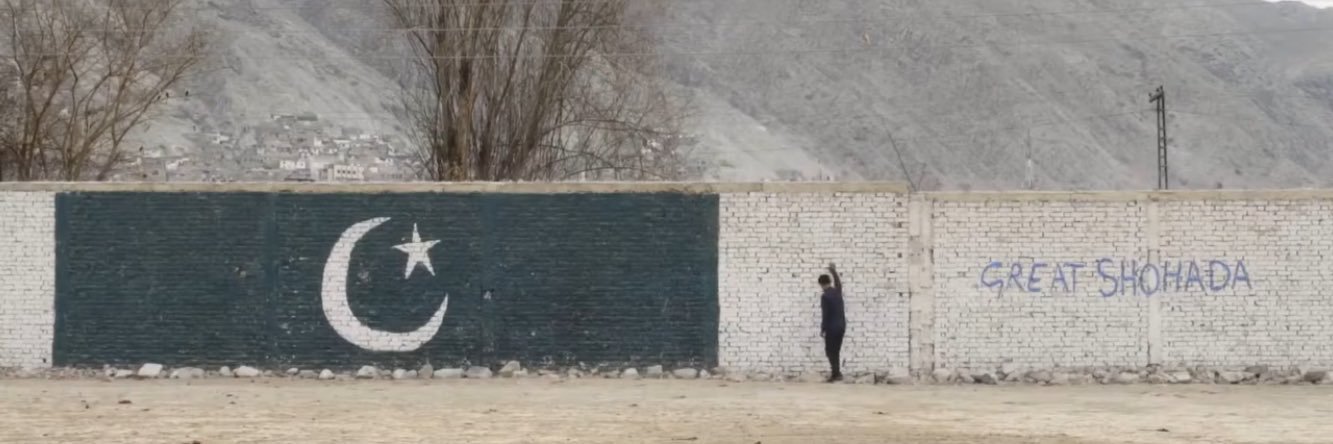
"Rapist mentality among Indians." 👹
"Even girls in wall paintings are not safe." 🤡
How can girls be safe on the roads if even wall paintings by the roadside are not safe?
This isn't just vandalism, it reflects a deeply disturbing mindset that needs to change.
When a comedian can't make jokes anymore, you know something's broken.
@Aligulpir reads out Section 26A of the Prevention of Electronic Crimes Act (PECA). The law is turning 10 years old this year and has taught creators, journalists, and activists one lesson: silence is safer than speech.
This is Pakistan's digital rights law. It was made in 2016 supposedly to protect us online (from being blackmailed, doxxed, stalked, etc). Instead, it has become a tool to silence dissent, criminalise criticism, and chill free expression. For 10 years, we have watched people arrested for tweets. Activists interrogated for posts. Journalists charged for stories. Comedians like Ali learning where the red lines are.
Ten years of PECA. Ten years of silence.
But now, at HRCP, we are breaking it.
Over the next few weeks, we will share stories of how this law has shaped what we can and can't say online. Because the first step to changing a bad law is refusing to be quiet about it.
Send us your videos reading out your favourite section of PECA 2016 or PECA 2025.
#BreakingTheSilence #10YearsOfPECA #DigitalRights #FreedomOfExpression #HRCP
When a comedian can't make jokes anymore, you know something's broken.
@Aligulpir reads out Section 26A of the Prevention of Electronic Crimes Act (PECA). The law is turning 10 years old this year and has taught creators, journalists, and activists one lesson: silence is safer than speech.
This is Pakistan's digital rights law. It was made in 2016 supposedly to protect us online (from being blackmailed, doxxed, stalked, etc). Instead, it has become a tool to silence dissent, criminalise criticism, and chill free expression. For 10 years, we have watched people arrested for tweets. Activists interrogated for posts. Journalists charged for stories. Comedians like Ali learning where the red lines are.
Ten years of PECA. Ten years of silence.
But now, at HRCP, we are breaking it.
Over the next few weeks, we will share stories of how this law has shaped what we can and can't say online. Because the first step to changing a bad law is refusing to be quiet about it.
Send us your videos reading out your favourite section of PECA 2016 or PECA 2025.
#BreakingTheSilence #10YearsOfPECA #DigitalRights #FreedomOfExpression #HRCP
make the state apparatus tremble in its stride. This gives me hope in Pakistan’s future to be completely free from draconian laws which bring us to streets. #ResistenceZindabad
19 Years of seeing THESE containers, cordoning off the protest routes, dispersing peaceful protesters by unconstitutional use of law, cheap tactics of splitting the crowd and treating us as bug splat.
Although, as much as I fear that it may not dissolve our courage and our will to stand at the right side of the history, I see hope - it makes me see the force and the might, with which, just completely unarmed, peaceful citizens, asking for their right to dissent,