Good afternoon Twitter, X now lol, it’s been awhile since I’ve posted! The biggest update I have is that I was blessed with the birth of my daughter Sydney Renee on 1/20/24! 🥰
As exciting as this was, I want to share my birth story as it relates to importance of advocacy.
@NICU_Musings As a NICU parent this was tough. Never felt like I had a clear idea of a timeline. Staff often deferred to vague answers. Which I understand, they don’t want to make promises. But it would have been nice to be aware early in our stay what the path/requirement to going home was.
Is there a spot in the limitations section of my thesis where I can write that it’s really hard to concentrate while the unborn appears to be trying out for their first jiu jitsu tournament.
Are you looking for a mentor, or to share your experience with upcoming water professionals? Join our Fall Mentoring Program. Apply by Sept 29. https://t.co/OHWxvvSXeq
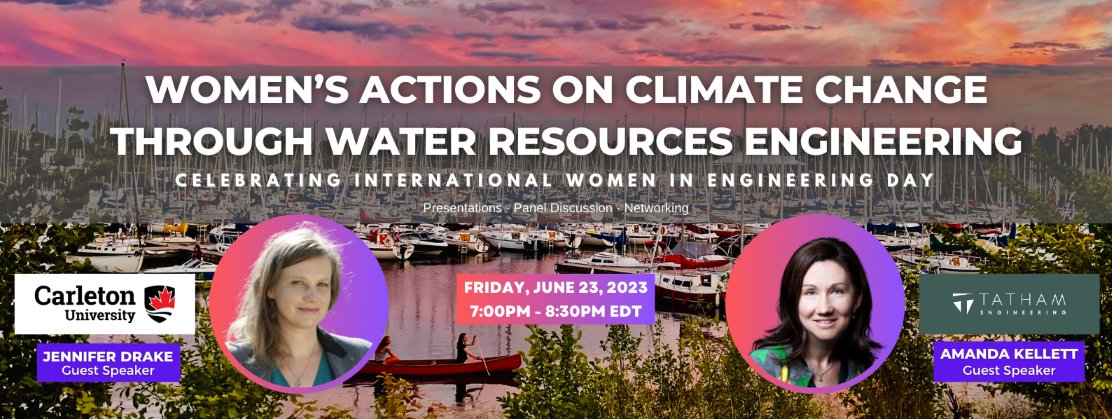
Join us on Friday (23rd) for a webinar hosted by CWRA SYP celebrating International Women in Engineering Day! Come learn about how women are combating climate change with water resource engineering from Jennifer Drake and Amanda Kellett. Register today at https://t.co/yFKFOPmQ1V
Happy to announce that my lab finally has its own account! Follow us for updates on seminars, papers, news/events and job opportunities! @h2obabyts @CWRA_Flows@AB_CWRA_SYP
I’m finishing up an ethics paper on @betterhelp and WHEW LORD. I’m admittedly conservative when it comes to ethics, but there’s no amount of money you could pay me to do therapy on these “therapy matching” platforms.
That said, it’s been a fun paper to write!
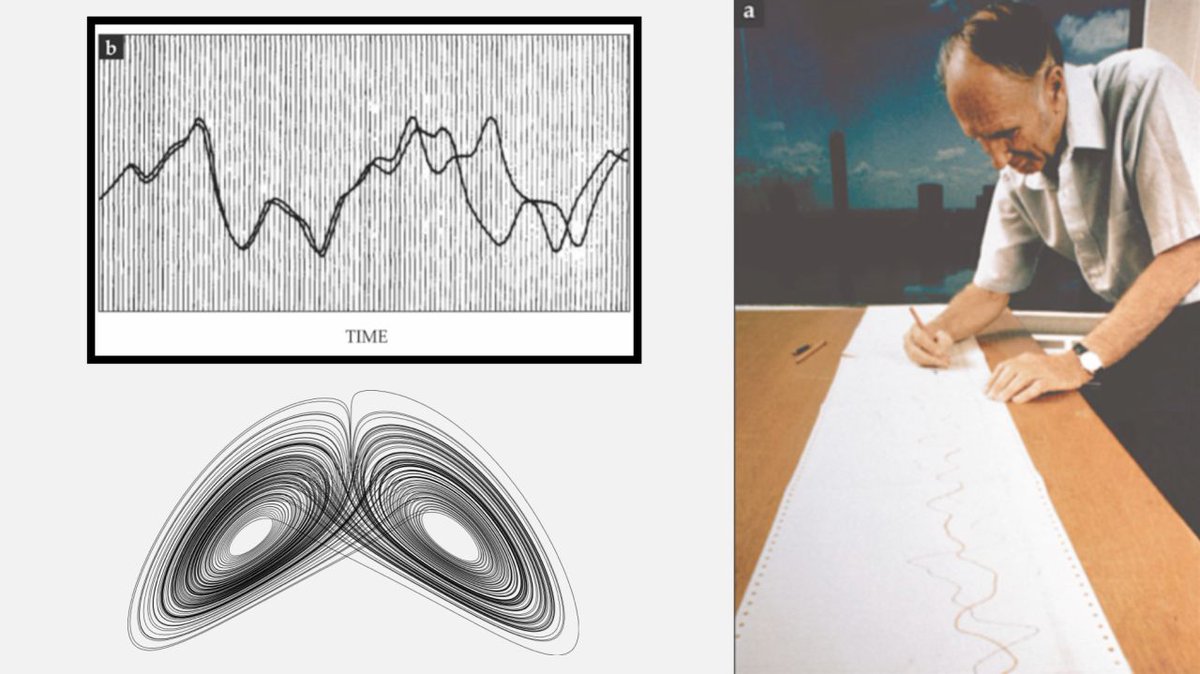
In the year 1961, the well-known meteorologist Edward Lorenz was engrossed in running a computational model for weather forecasting. Intent on restarting an interrupted simulation, he decided to utilize initial conditions from a prior printout, only to discover the ensuing simulation significantly deviating from the previous run.
The startling divergence was rooted in the subtle discrepancy of the printout values, rounded to a mere three decimal places, lacking the accuracy incorporated in the original calculations. Lorenz had anticipated that any deviations resulting from this loss in precision would be minor, however, they spiraled out of control. The errors escalated rapidly, doubling approximately every four days of simulated weather, and within the span of two simulated months, the weather scenario bore no resemblance to the initial conditions.
In this unexpected turn of events, Lorenz stumbled upon a phenomenon that would later be famously known as the butterfly effect.
This pivotal incident in the realm of chaos theory underscores the sensitivity of complex systems to minute changes in initial conditions. Its profound implications have rippled across diverse fields, from meteorology to finance to ecology, and beyond. The butterfly effect, originally identified in the world of weather simulations, serves as a profound reminder of the inherent unpredictability and complex interplay within natural systems.
This moment, forever ingrained in the annals of scientific exploration, marks a fundamental shift in understanding the dynamics of complex systems, echoing the consequences of minor alterations over time. It underscores the profound influence that seemingly insignificant changes can have, resulting in entirely different outcomes, forever altering our comprehension of the intricate interdependencies of the natural world.
#UCalgary's Dr. Tricia Stadnyk, a Canada Research Chair in Hydrologic Modelling, discusses the International Watersheds Initiative, a study to revisit agreements set in place by the Boundary Waters Treaty, which helps manage water between Canada and the U.S. @UCalgaryArts