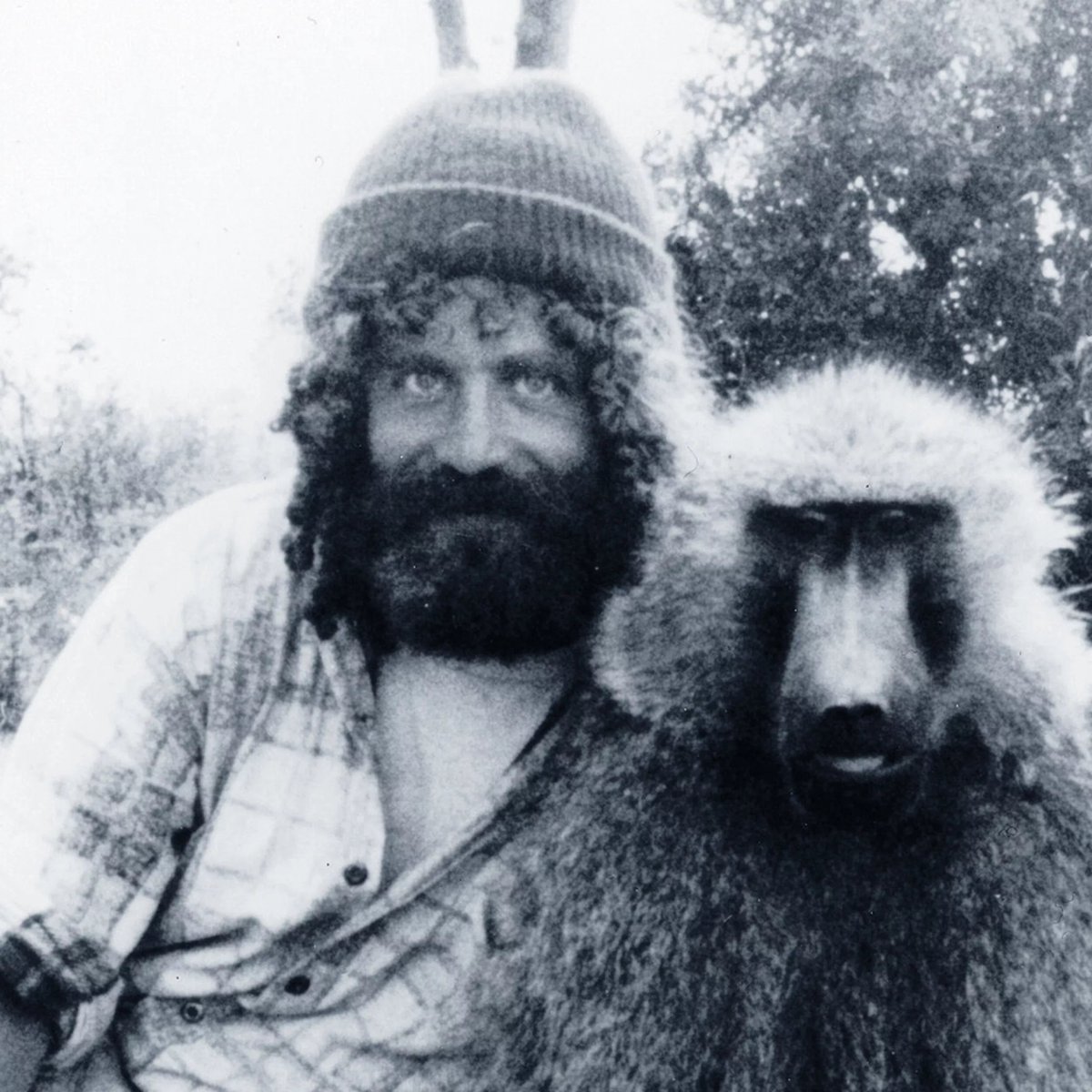
Sascha Riley’s testimony is blood chilling. Where is media coverage and investigation? Believe the survivors!
https://t.co/N0sN89B1nt
#SaschaRiley#trump#Epstein
«Пройдут выборы, отключат интернет и объявят мобилизацию.»
Думаю, что это очень вероятный сценарий.
Сейчас в инстаграме волна политического контента от тех, кто еще вчера был «вне политики». Ролики залетают на 1,2,3 млн просмотров и больше. Отклики аудитории невероятные. Но никого не трогают, чтобы не нагнетать перед выборами. После голосования будет еще больший накат на свободный интернет, это как пить дать.
То же и по новой волне мобилизации. Вполне вероятно, что так и будет. А на Пензе сейчас откатка идет.
McDonald's loses lawsuit against chef Jamie Oliver, who proved that the food they sell is unfit for human consumption because it is highly toxic.
Chef Jamie Oliver won a lawsuit against the world's largest fast-food chain.
Oliver demonstrates how hamburgers are made.
According to Oliver, fatty cuts of meat are "washed" with ammonium hydroxide and then used to fill the hamburger patties. Even before this process, the TV presenter says, this meat was unfit for human consumption.
Oliver, a radical activist chef taking on the food industry, says:
"We are talking about meat that is sold as dog food and then served to humans. Aside from the quality of the meat, ammonium hydroxide is harmful to health." Oliver calls it "the pink slime process."
What sane person would put a piece of meat soaked in ammonium hydroxide into a child's mouth?
In another initiative, Oliver demonstrated how chicken nuggets are made: After the "best parts" are selected, the rest—fat, skin, cartilage, eyes, bones, head, feet—is subjected to a mechanical separation process called "Canica"—a euphemism used by food engineers. This blood-pink paste, which is deodorized, bleached, refreshed, and re-colored, is then coated in flour and deep-fried. It is typically fried in partially hydrogenated oils—in other words, toxic substances.
The food industry uses ammonium hydroxide as an antimicrobial agent, allowing McDonald's to use meat in its hamburgers that is unfit for human consumption. Even more alarming, however, is the fact that these ammonium-hydrogen-based substances are considered "legal components of the production process" in the global food industry, with the approval of health authorities. Consequently, consumers will never know what substances are in their food.
Please stop giving this fake food to your children.
Latest episode of Lifespan is out!
I'm so proud of the team who worked >300 hrs to make the most in-depth, 2-part episode covering:
1. The real facts about fasting
2. Why & how it slows aspects of aging
3. Easy tricks to implement the practice 💪
https://t.co/I7yLbd6N0d
Jensen Huang just dismantled the entire “AI is coming for your job” narrative in under two minutes.
Huang: “If you apply that to me, you would come to the conclusion what Jensen does for a living is tap on phones and talk. And therefore my job should be gone. But I’m busier than ever.”
The entire panic is built on a category error.
People look at a job and see the task.
They never see the purpose.
The task is typing.
The purpose is solving.
They were never the same thing.
Huang: “There’s a fundamental difference between the purpose of the job and the task of the job.”
Every doomsday prediction about AI makes the exact same mistake.
It watches a programmer type and concludes the job is typing.
It watches a designer move pixels and concludes the job is moving pixels.
It watches a writer arrange words and concludes the job is arranging words.
The job was never the motion.
It was the judgment behind it.
Huang: “It is a fundamental flaw that we only need a billion lines of code written. We need a trillion lines of code written.”
The doomsday model assumes demand is fixed.
That there’s a set number of problems in the world and AI is about to solve your share and leave you with nothing.
Demand was never fixed.
It was capped.
Capped by the speed of human fingers on a keyboard.
Hospitals still running on software from 2003. Small businesses still doing invoices by hand. Not because nobody imagined better. Because there weren’t enough humans to build it.
The backlog of unsolved problems on this planet isn’t shrinking.
It’s infinite.
AI didn’t show up to take your seat.
It kicked open a door to a room full of problems nobody had the bandwidth to touch.
Huang: “We have lots and lots of imaginations of all the things that we can do. If we just didn’t have to type anymore, we could go and do those things.”
This is what 50 years of keyboards did to us.
We didn’t build a tool and stay in control.
We built a tool and rearranged our entire lives around serving it.
Huang: “This one little device with a keyboard on it consumed all of our lives to the point where we just can’t imagine living without typing anymore.”
An entire generation measured its worth by how fast it could press buttons on a rectangle.
We called it skill.
We called it career.
We called it identity.
Nobody stopped long enough to ask whether the thing eating 8 hours of every day was the work itself or just the friction standing between us and the work.
Huang: “50 years before that people didn’t do that. And so in the future we’re gonna do less of that, we’re gonna do more of something else.”
The people most terrified of AI aren’t afraid of losing their purpose.
They’re afraid of losing their routine.
Because somewhere along the way routine became identity.
And when the routine disappears, they don’t know who they are without it.
The farmer didn’t stop feeding people when the tractor arrived.
The surgeon didn’t stop saving lives when the robot entered the operating room.
The task changed.
The purpose never did.
AI isn’t coming for your job.
It’s coming for the part of your job you mistook for the whole thing.
Fifty years from now, people will look back at this era the same way we look at scribes copying manuscripts by candlelight.
And they’ll ask the same question we always ask.
Why did it take so long to let go.
Три года назад Россия захватила руины Бахмута.
Я хорошо помню, что тогда пропаганда преподносила это как колоссальный успех, за которым вскоре уже последует и полная победа России.
Три года прошло.
Армия РФ за три года продвинулась от руин Бахмута на 15 км.
BREAKING: Donald Trump is reportedly pissed because Ukraine is now steadily liberating its land with drones and pummeling Russian energy export infrastructure to the point that Trump isn't involved in the peace talks, and won't be invited to the final photo-op to take credit.
This is an unprecedented level of corruption.
Trump is forcing the government to drop ALL tax audits of him, his family, and his businesses—giving him FULL IMMUNITY from prosecution.
What is Trump hiding from the American people?
Congress must step up and stop this corruption.
Donald Trump posted 55 times on social media between 10:00 pm and 1 am. His posting spree included calls to arrest Obama, Clinton, Comey etc. He also attacked his own DOJ for not charging them with treason.
This man is not well. 25th Amendment now.
Trump has gone completely over the edge in this deranged post.
A Dutch band (from an island?) is now getting worldwide free publicity and exposure thanks to the orange basketcase.
Incredible.
It’s the second (!!!) U.S. ambassador to Kyiv resigning over their disagreements with Trump.
This is… quite telling, to put it very mildly.
https://t.co/q65SQkvrWW
Please help my son Lucas make the Top 10, while supporting a great cause - supporting the National Wildlife Federation in their mission to protect #wildlife and preserve wild places for future https://t.co/LCLbBdEiTq vote - currently 2X votes🙏
👉 https://t.co/HHPF1tRjsq
🚨In 1990s, Stanford researcher Dr. Robert Sapolsky discovered something that should have broken the internet by now.
He was studying dopamine pathways in primates and found that the brain doesn't just adapt to repeated stimulation. It actively fights back.
When you flood dopamine receptors consistently, the brain deploys what neuroscientists call "opponent processes." For every artificial high you create, your nervous system generates an equal and opposite neurochemical low. Not eventually. Immediately. The system is designed to maintain balance, so it starts producing compounds that directly counteract dopamine while you're still experiencing the dopamine hit.
This means every notification, every scroll, every digital reward doesn't just give you a high followed by a return to baseline. It gives you a high followed by a crash below baseline. You end up in neurochemical debt.
Tech companies never publicized this research. They probably never read it. They were too busy discovering that variable ratio reinforcement schedules could keep users engaged for hours. They built addictive systems by accident, then refined them into addiction machines once they realized what they'd stumbled onto.
Your phone delivers an average of 80 dopamine hits per day. Your ancestors got maybe 5. Each hit triggers opponent processes that create a corresponding low. By the end of a typical day of normal phone usage, your baseline dopamine is running in negative territory. You feel flat, restless, vaguely unsatisfied, and hungry for stimulation because your brain chemistry is literally below zero.
You think you're bored. You're chemically depressed by artificial highs.
The opponent process theory explains why nothing feels interesting anymore. Your brain isn't broken. It's precisely calibrated to maintain neurochemical balance, and you keep throwing that balance off with artificial intensity. Every Instagram hit requires an equal Instagram crash. Every TikTok high gets paid for with a TikTok low. Every notification rush gets balanced with notification emptiness.
Your reward system is running a neurochemical deficit that grows larger every day.
Sapolsky's research revealed something even more disturbing: opponent processes don't just create temporary lows. They become permanent changes to your baseline dopamine production. Chronic overstimulation doesn't just make you tolerant to digital rewards. It makes you insensitive to natural rewards.
The sunset that would have captivated your great-grandfather becomes invisible to you not because sunsets got worse, but because your dopamine system needs intensity levels that sunsets can't provide. A good conversation becomes boring not because conversations got less interesting, but because your brain requires the rapid-fire stimulation of social media to register engagement.
You've accidentally trained your reward system to ignore everything that isn't artificially amplified.
This connects to research from Dr. Anna Lembke at Stanford, who found that people who undergo complete digital fasting for just 30 days show measurable increases in dopamine receptor density. Their brains literally regrow sensitivity to natural rewards. Food tastes better. Music sounds more complex. Social interactions become genuinely engaging again.
But there's a catch that nobody talks about: the first two weeks of dopamine detox feel like clinical depression. Your brain has been chemically dependent on artificial stimulation for years. Removing that stimulation creates actual withdrawal symptoms. Restlessness, anxiety, inability to focus, emotional flatness, and desperate cravings for digital input.
Most people interpret these symptoms as evidence that they need their phones. Actually, they're evidence that they've been neurochemically dependent on their phones without realizing it.
The withdrawal period isn't a bug. It's proof the reset is working.
What happens after week three is remarkable. Colors become more vivid. Conversations become genuinely absorbing. Simple pleasures like hot coffee or cool air become satisfying in ways you forgot were possible. Your brain rediscovers that reality contains enough complexity and beauty to hold your attention without artificial amplification.
You don't need more interesting content. You need more sensitive reward systems.
The solution isn't better apps or more engaging entertainment. The solution is restoring your brain's factory settings for what constitutes a worthwhile experience.
Sapolsky's opponent process research suggests this can happen faster than anyone expected. Every day you don't artificially spike your dopamine, your baseline moves a little higher. Every natural reward you pay attention to rebuilds receptor density. Every moment of boredom you endure without reaching for stimulation strengthens your capacity for sustained focus.
Ancient humans lived in a world that provided exactly the right amount of stimulation to keep their reward systems healthy. Enough challenge to stay engaged, enough calm to stay balanced, enough novelty to stay curious, enough routine to stay stable.
We built a world that provides 10 times too much stimulation and wonder why nothing feels rewarding anymore.
Your brain is not the problem. Your environment is the problem.
Change the environment, and the brain heals itself automatically.