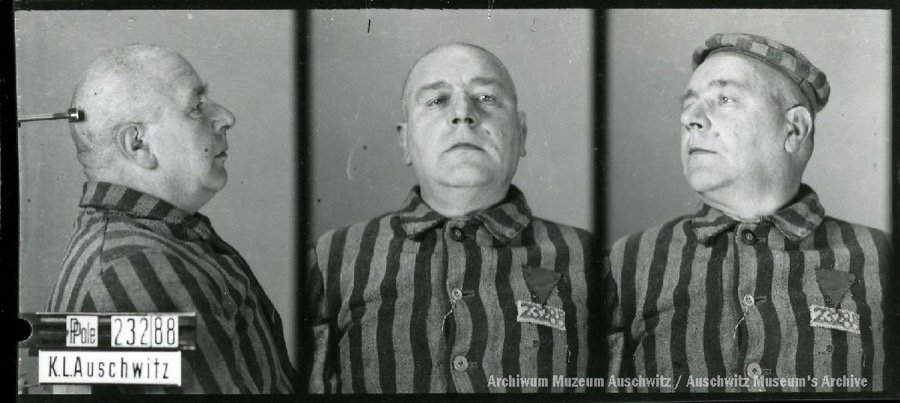
My name is Jerzy Cygler 🇵🇱,
an engineer from Myszków, born on November 2️⃣4️⃣,1913.
I was murdered by #Germans in their #Death camp #Auschwitz on March 15, 1942 at the age of 2️⃣8️⃣ only because I was a #Pole.
I survived9️⃣9️⃣days.
They also murdered my brother Wiktor and father Hugo.
Wybieram się z wnuczką pokazać jej Kraków. I powiem szczerze - dla zwykłego Polaka jest to miasto nieosiągalne. Darmowy listopad reklamowany przez @MartaCienkowska to fikcja. 128 PLN za Damę z Łasiczką to jakiś horror. Taniej jest w Prado, Luwrze czy Alte National Galerie, Rijks lub Kunsthistorische. O darmowych muzeach muzeach londyńskich nie wspomnę. Obliczyłem, że gdybym chciał z malutką zobaczyć tylko najważniejsze rzeczy plus teatr i koncert to 1500 pln jak obszył. Bez dojazdu i hotelu.
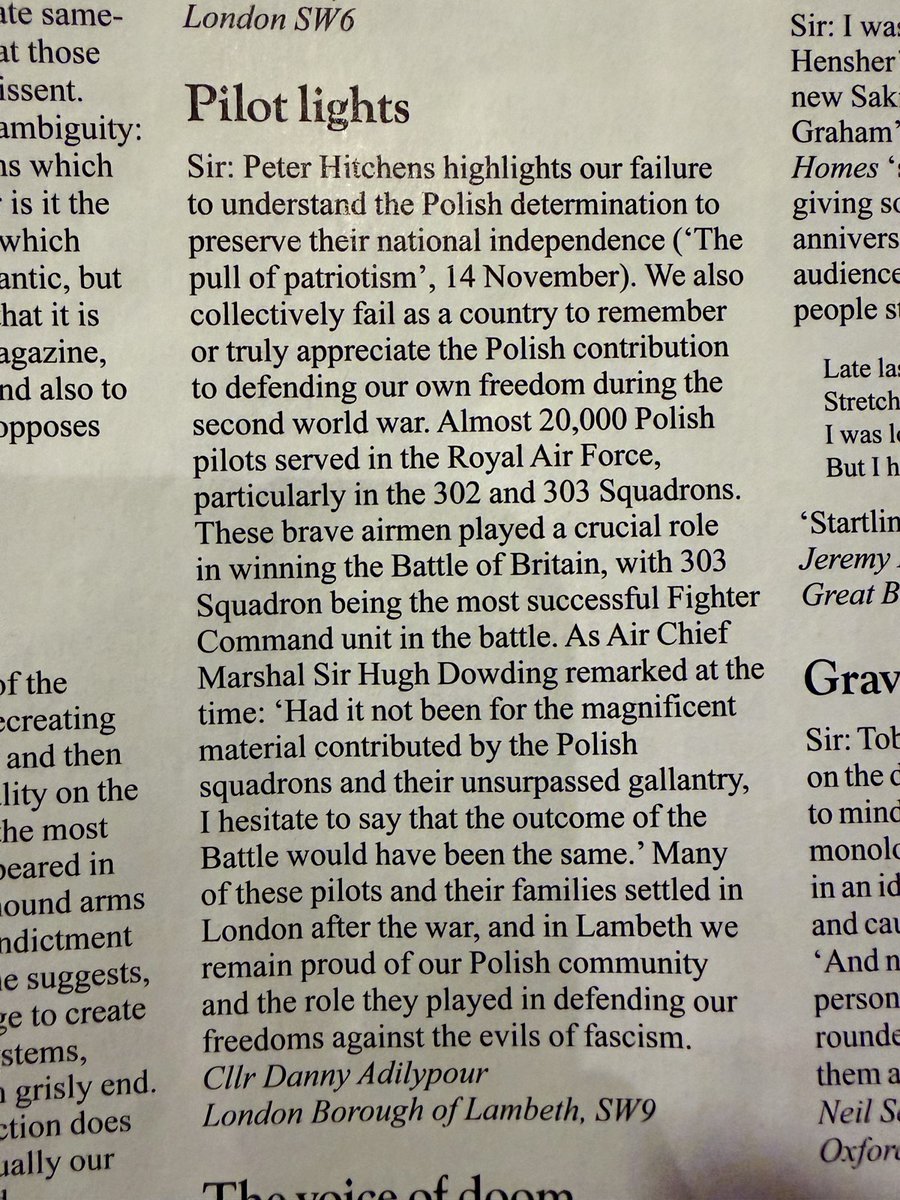
"Had it not been for the magnificent material contributed by the Polish squadrons and their unsurpassed gallantry, I hesitate to say that the outcome of the Battle would have been the same."
In a letter published in The Spectator (21 November), Cllr Danny Adilypour quotes Air Chief Marshal Hugh Dowding while responding to Peter Hitchens. He highlights Britain's failure to appreciate Poland's determination to preserve its independence and the vital contribution of Polish airmen to the RAF during WWII. Almost 20,000 Polish pilots served in the RAF.
Adilypour also expresses pride in London’s Polish community for their role in defending freedom.
During WWII, Warsaw was viciously and methodically destroyed by Nazi Germany. All traces of the Polish city were to be erased, its inhabitants displaced or murdered. Today's rebuilt cityscape speaks of trauma but also of defiance.
ZEITGEIST in Warsaw 👇
https://t.co/Fv9akmaVXZ
My name is Tadeusz Rokicki🇵🇱,
a paver from Chełm, born on November 2️⃣2️⃣, 1896 in Lwów.
I was murdered by #Germans in their #Death camp #Auschwitz on April 26, 1942 at the age of 4️⃣5️⃣ only because I was a #Pole.
I survived 9️⃣ days.
Please, #NeverForget me!
#Genocide#NeverAgain
Ustawa o limitach nie zmienia wycen i liczby kupowanych operacji czy wizyt przez NFZ w szpitalach
Dalej wszyscy beda sie zabijać o neurochirurgów, a zamykać pediatrie
Jak ktoś chce tu coś zmienić silą opini publicznej, to o to się trzeba teraz bić
My name is Bolesław Olejniczak 🇵🇱,
a worker from Aleksandrów, born on November 2️⃣2️⃣, 1892.
I was murdered by #Germans in their #Death camp #Auschwitz on Aug. 8, 1941 at the age of 4️⃣8️⃣ only because I was a #Pole.
I survived 1️⃣4️⃣0️⃣ days.
Please, #NeverForget me!
#Genocide#WWII
My name is Adam Ozimek 🇵🇱,
a clerk from Kolbuszowa, born on November 2️⃣2️⃣, 1901.
I was murdered by #Germans in their #Death camp #Auschwitz on June 1, 1942 at the age of 4️⃣0️⃣ only because I was a #Pole.
I survived 6️⃣3️⃣ days.
Please,#NeverForget me!
#WWII#Genocide#NeverAgain
My name is Bolesław Majewski🇵🇱,
a drainage system operator from Czersk, born on November 2️⃣1️⃣, 1893.
I was murdered by #Germans in their #Death camp #Auschwitz on Feb. 17, 1942 at the age of 4️⃣8️⃣ only because
I was a #Pole.
I survived 1️⃣2️⃣9️⃣ days.
Please,#NeverForget me!
#WWII
24-letni strażak ochotnik Tomek, który został ranny po tym, jak własnym ciałem ochronił swoją żonę Kingę w zamachu w Krakowie, został już przeniesiony na oddział ogólny jednego z krakowskich szpitali. Co wiadomo o jego zdrowiu? ⤵️
✍🏻 Kamil Dachnij
14-year-old Jurek Bitschan was one of the youngest defenders of Lwów.
Before he went to fight, he left a note at home: "My dear Daddy, today I’m going to report for military service. I want to show that I can find enough strength to serve and endure. It is my duty to go while I still have enough strength, and the army is still lacking men to liberate Lwów. I have already done as much schooling as was necessary."
Jurek was born on 29 November 1904.
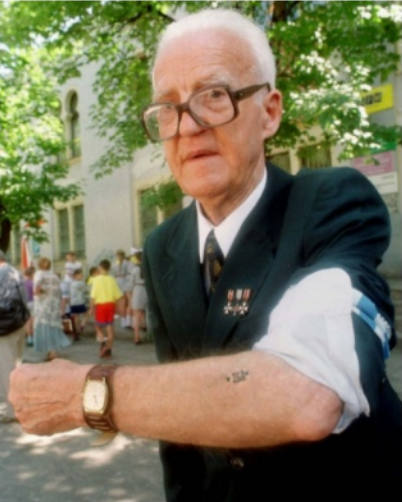
The first prisoner registered at Auschwitz was a Pole, Stanisław Ryniak (camp number 31).
He survived over four years in the camps. After the war he became an architect and helped rebuild Wrocław. He designed the Mausoleum of the Victims of World War II in his hometown of Sanok.
My name is Roman Diechtierow 🇵🇱,
a locksmith from Tomaszów Mazowiecki, born on Oct. 13, 1891.
I was murdered by #Germans in their #Death camp #Auschwitz on November 2️⃣2️⃣, 1943 at the age of 5️⃣2️⃣ only because I was a #Pole.
Please, #NeverForget me!
#NeverAgain#Genocide#WWII
Another longer post, but an important one:
The Shoah is remembered and memorialized in museums, schools, and institutions around the world. Countless Holocaust museums exist across the United States and Europe, while museums devoted to the victims of communism or to the full Polish experience under German and Soviet occupation remain comparatively rare.
That imbalance is striking when one considers that more than 8.3 million Americans report Polish ancestry, compared with an estimated 7.5 million Jewish Americans. This is not an argument against Holocaust remembrance; it is an argument for broader and more equal historical awareness.
In the countries where communist crimes occurred, their victims are often remembered, but outside those nations, millions who were murdered, imprisoned, deported, starved, or broken by communist regimes often receive far less attention. Poland’s experience is especially neglected. Germany and Soviet Russia both sought to crush the Polish nation through terror, mass murder, deportation, and the destruction of its institutions.
Poles have often carried a survivor’s mentality rather than building a collective identity around victimhood. They rebuilt their country after partitions, occupation, genocide, and communist repression; preserved their language, faith, and culture; and continued forward. That resilience is admirable, but it has also meant that many outside Poland never learned the full scale of what Poles endured.
As a student, and later as an educator, I saw full units devoted to the Shoah but almost nothing about the suffering of other targeted peoples under German and Soviet rule. That omission is a genuine educational tragedy. Many Westerners know little of Poland’s wartime destruction, its resistance, its losses, or the resilience with which Poles rebuilt their country. This is not the fault of ordinary Westerners; they were rarely taught this history. In my experience, many people are genuinely surprised and interested when they first learn about Poland’s ordeal, its resistance, and the scale of its losses. The problem is the gap in education and public memory that has left so much of this history unknown.
When Poles were mentioned, it was too often through a narrow and damaging stereotype: backward, antisemitic people rather than a nation whose citizens were subjected to occupation, terror, deportation, mass murder, and the destruction of their cultural and political life. Only through more self directed study can one encounter the fuller story of Poland: its victims, its complexity, its courage, and its extraordinary resilience.
The Katyn Memorial in Jersey City reminds us why this matters. In 2018, the mayor and constituents proposed moving the monument commemorating the Soviet murder of approximately 22,000 Polish officers, police, intellectuals, and other prisoners in 1940. Polish Americans had to organize and fight to preserve it. Such memorials are rare and deserve protection. Efforts to question the proposed removal were, often met with accusations of antisemitism. It is a serious issue when the issue halts further study or logical claims are branded antisemitism.
Antisemitism must always be treated seriously, but the accusation must also be accurate, not used as a shield against legitimate historical questions or as a weapon to silence those asking that Poland’s victims be remembered. More people are beginning to understand that the genocide and mass terror created millions of victims, way beyond the Jewish population: Poles, Roma and Sinti, Soviet prisoners of war, people with disabilities, political prisoners, and many others.
Remembering Polish victims does not diminish Jewish or other suffering; it broadens our understanding. Historical memory is a duty to the dead and the truth.
We should remember that every victim mattered, not only the six million Jews murdered but also millions of beautiful and courageous other victims.
Never Forget all victims.
My name is Jan Marszałek🇵🇱,
a warehouseman from Radom, born on November 2️⃣1️⃣, 1886.
I was murdered by #Germans in their #Death camp #Auschwitz on March 23, 1942 at the age of 5️⃣5️⃣ only because I was a #Pole.
I survived 1️⃣1️⃣7️⃣ days.
Please,#NeverForget me!
#WWII#Genocide#WWII
@auto_moto_pl W latach 90tych, jadąc z Ojcem Starem w lesie, zakopaliśmy się tak, że ledwo mogliśmy otworzyć https://t.co/uEkXTDZtjpślę , że wtedy takie coś by nam się przydało 😁
Longer post:
When judging Poles under German occupation for not doing enough to save Jews, people must understand the reality, brutality and context.
The punishment for helping a Jew was often not imprisonment, but death, often for an entire family. German terror could also bring collective reprisals against neighbors or villages. To offer food, shelter, forged papers, or a hiding place was therefore not a small act of kindness; it could be an almost suicidal decision that placed one’s children, parents, and community at risk.
Still, countless Poles did help often due to their theology and strong Christian morals. They hid Jews, fed them, carried messages, secured documents, and created rescue networks such as Żegota (the only aid organization, created in occupied Europe; the duty was saving Jews). Many paid with their lives and the lives of family members.
Before judging people who lived under that terror, we should honestly ask ourselves: would we risk our own children, spouse, parents, and home to save someone from another faith or community? Often Polish saviors took great risk doing this and they may not even known the person. It is easy to make moral judgments from the safety of a computer screen decades later. It was far harder to act with courage when the consequence could be the murder of everyone you loved.
Polish rescuers deserve lasting honor, and the frightened should be understood in the context of a system designed to make humanity itself punishable. Those who did not help Jews lived under the knowledge that even small acts of assistance could bring lethal consequences. Their choices should be assessed with the seriousness and historical context that such terror demands.
Photos:
Jan Karski risked his life as a courier of the Polish Underground State. After witnessing the Warsaw Ghetto and the deportation machinery, he carried firsthand reports of the destruction of Poland’s Jews to Allied leaders in Britain and the United States.
Irena Sendler, shown with a child, was a Polish social worker and member of Żegota, the underground Council for Aid to Jews. Żegota was the only state-supported underground organization in occupied Europe devoted specifically to aiding Jews. With a network of brave Polish collaborators, she helped remove Jewish children from the Warsaw Ghetto and place them in hiding with families, convents, and orphanages.
Aleksander Ładoś, head of the Polish Legation in Bern, helped lead a rescue network that arranged Latin American passports for Jews under German occupation. The Ładoś Group sought to help as many as 8,000–10,000 people, and researchers estimate that its work contributed to saving approximately 2,000–3,000 Jewish lives. Ładoś spent the final years of his life in crushing poverty.
Zofia Kossak-Szczucka, seen welcomed with flowers, was a writer and co-founder of Żegota. In 1942, she publicly condemned the mass murder of Jews in her underground appeal Protest! and helped establish organized rescue efforts despite the deadly consequences imposed by the German occupiers.
These photographs show four Polish figures, who were amidst thousands whose actions during the German occupation deserve to be remembered and honored highly.
These were not distant observers - they acted in a country where helping a Jewish neighbor could mean execution, not only for the rescuer but often for family members as well.
Once people understand this essential context, the terror, isolation, and threat to entire families, it becomes easier to understand why rescue was so difficult and and why fear cannot be judged casually from a safe distance
My name is Katarzyna Wilk 🇵🇱, a farmer from the village of Wietrzychowice, born on November 2️⃣0️⃣, 1885.
I was murdered by #Germans in their #Death camp #Auschwitz on March 20, 1943 at the age of 5️⃣7️⃣ only because I was a #Pole.
I survived over 7️⃣ months.
Please, #NeverForget me!
Andrzej Hodorowicz was not a professor, official, or member of the so-called intelligentsia. He was a bricklayer from Piotrków Trybunalski, an honest working man, murdered at German Auschwitz after just 43 days.
The German occupation did target Poland’s leaders, teachers, clergy, professionals, and cultural figures in actions such as Intelligenzaktion, but it did not stop there. Ordinary Polish workers, farmers, parents, children, and laborers were also imprisoned, deported, enslaved, and murdered simply because they were Poles.
The German vision for occupied Poland was not merely to remove an elite. It sought to destroy Poland as an independent nation: it was to to kill and terrorize the population.
Andrzej Hodorowicz’s photograph reminds us that Polish suffering was not confined to one social class and a bricklayer’s life mattered. He was not killed because of what he did for a living, but because the occupiers regarded Polish lives, Polish identity, and Poland itself as disposable.