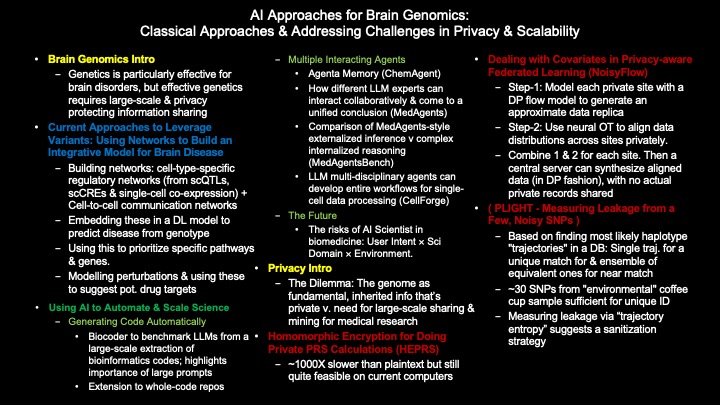
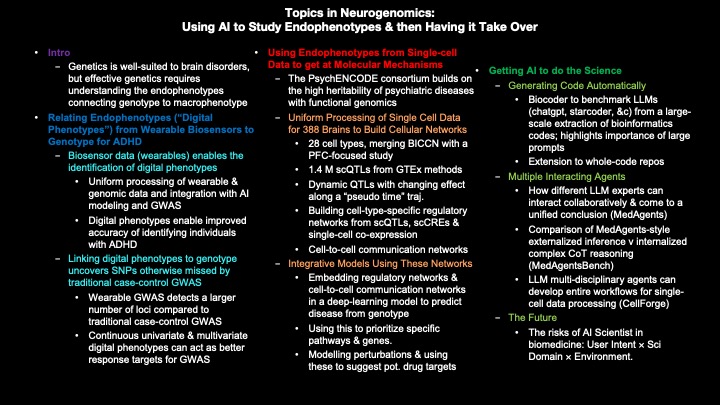
Posting my talk tomorrow at #FOGBoston (#FOG26) https://t.co/6lZtFOVQkj Lots of slides on single-cell multi-omics integration for brain disorders. New slides on a formalism for model interpretation @FLGenomics@FoGenomics
New @naturecomms paper by @katerbowie@MarkGerstein@jordan_peccia@H2O_Hannah. We study how disinfection shapes microbes in hospital sink drain biofilms. Biofilms regrew in 4 days, enriched for carbapenem-resistant bacteria and multidrug efflux pump genes https://t.co/WvAhxtAHwA
In our @NatMachIntell paper, we introduce a framework to analyse interpretability in deep learning by drawing on a formal notion of model semantics from the philosophy of science. We illustrate our framework with examples from biomedicine. Read here: https://t.co/tOSkNL3Gmz
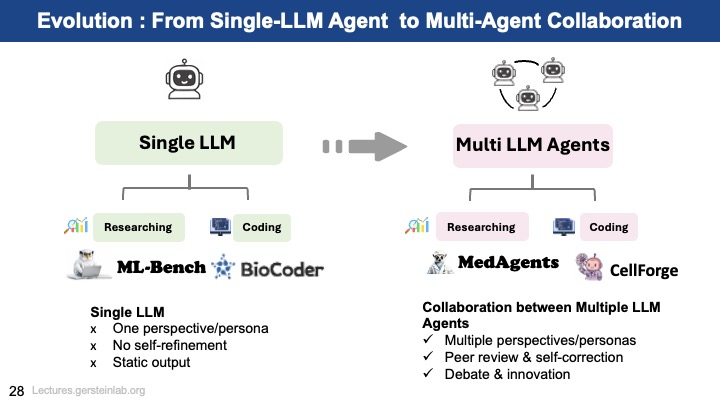
We are presenting this tutorial at ISMB 2026, together with @XiangruTang (Yale), @WenqiShi0106 (UT Southwestern), and @MarkGerstein (Yale). Looking forward to connecting with friends in DC!
Curious how pseudogenes are transcriptionally regulated? Our new @genomeresearch paper shows processed pseudogenes break the rules: they’re transcribed without classic epigenetic marks, linked to enhancers, and enriched for YY1 motifs. Study co-led by @YunzheJ and @beaborsari
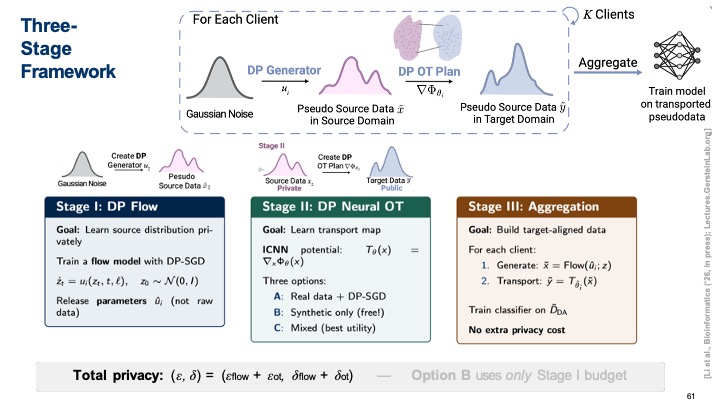
Posting my talk tomorrow at St. Johns U. on brain genomics https://t.co/ZTeQpUHbkD Lots of new slides on the challenges of AI model applicability to genomics (@XiangruTang & @danielstupid) & on private federated learning with co-variate matching (@_YunyangLI).
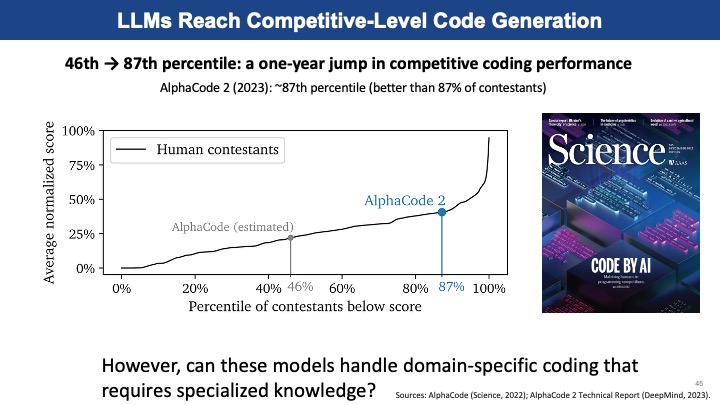
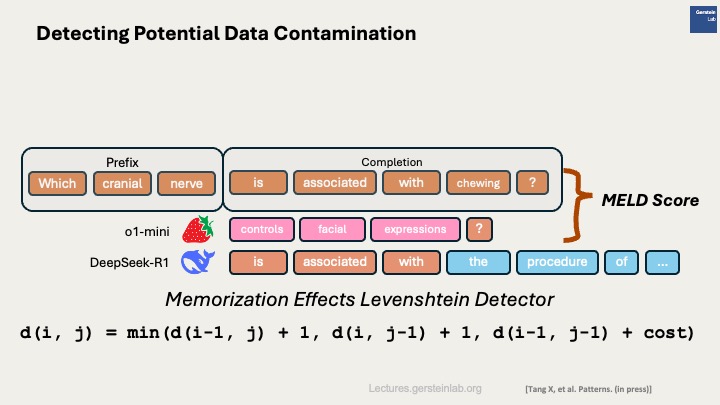
Posting my talk tomorrow @nygenome (hosted by @gamzeandgursoy). https://t.co/6JrNQcpXdh Doing genomics with AI & then seeing if AI can take over the whole thing (spoiler: not yet!). New slides from @XiangruTang on assessing agent models with externalized reasoning (vs. baselines)
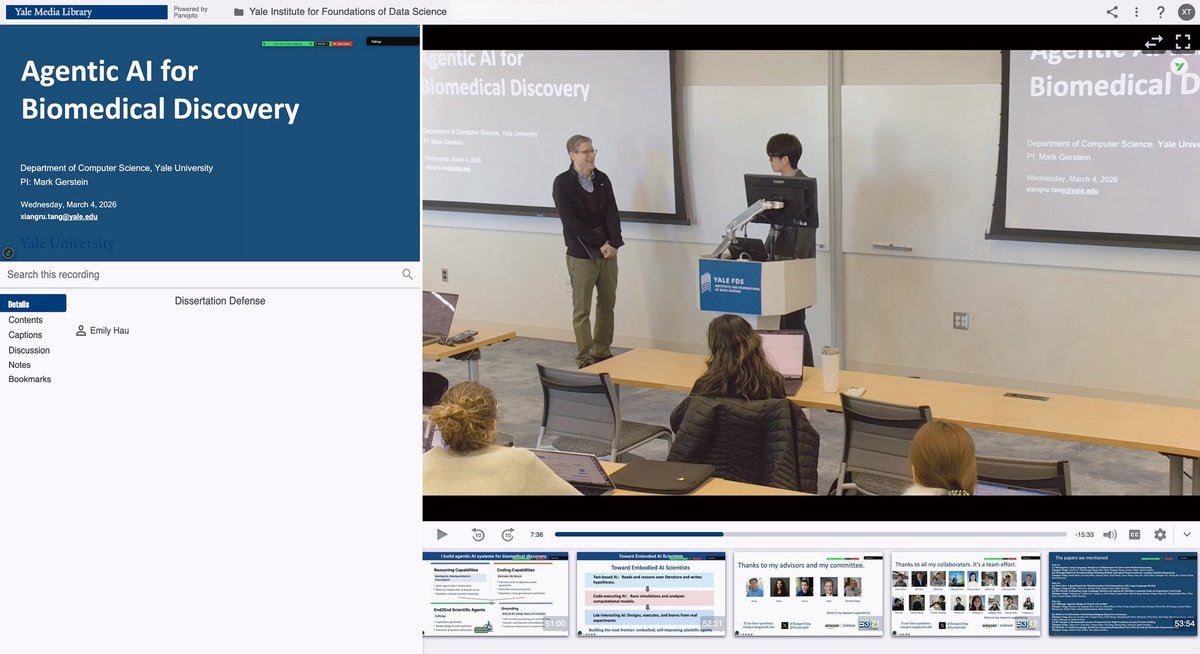
PhD defended at Yale.
I feel very fortunate to have worked with so many brilliant collaborators and to have had such a supportive committee. Thank you all for supporting my work. 🥺
Special thanks to my advisor Mark for his mentorship, support for my research, and the many lessons that shaped how I think, communicate, and do science. 🙏
On to the next chapter.
Google DeepMind researchers unveil AlphaGenome, an AI model trained on molecular data to predict 11 different genomic processes, such as gene splicing (@carlzimmer / New York Times)
https://t.co/J3rZ4kwekm
https://t.co/hASlBGJxUQ
📥 Send tips! https://t.co/wlNZvXuhJs
🔐 New open-access paper in Cell Reports Methods!
We show that fully homomorphic encryption enables privacy-preserving polygenic risk scores (PRS), allowing secure computation directly on encrypted genomes with near-zero accuracy loss.
📄 https://t.co/rwBfwwKcmD
🚀 New paper in Bioinformatics!
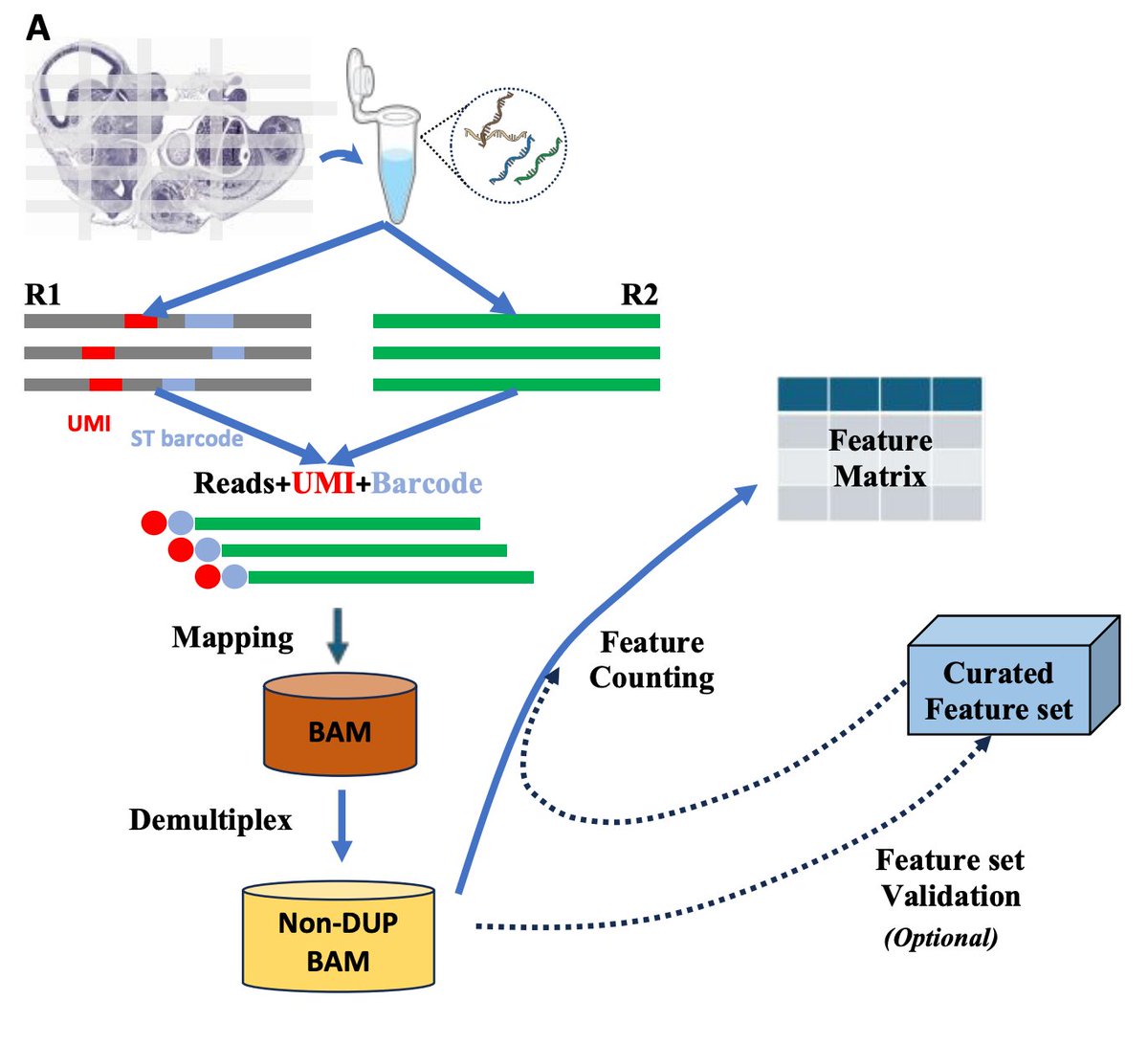
Our #ASTRO work led by @dingyao_zhang introduces "ASTRO: Automated Spatial-Transcriptome whole RNA Output", an automated pipeline optimized for whole-transcriptome spatial analysis, especially in challenging FFPE samples.
🔗 https://t.co/ecr2No1BHv
Our @NeurIPSConf work led by @_YunyangLI “E2Former: An Efficient and Equivariant Transformer with Linear-Scaling Tensor Products” was selected as a spotlight (with score ranked ~17 / 21k submissions).
Poster: Thur Dec 4, Exhibit Hall CDE #5512
Online: https://t.co/q8tKBleaF9
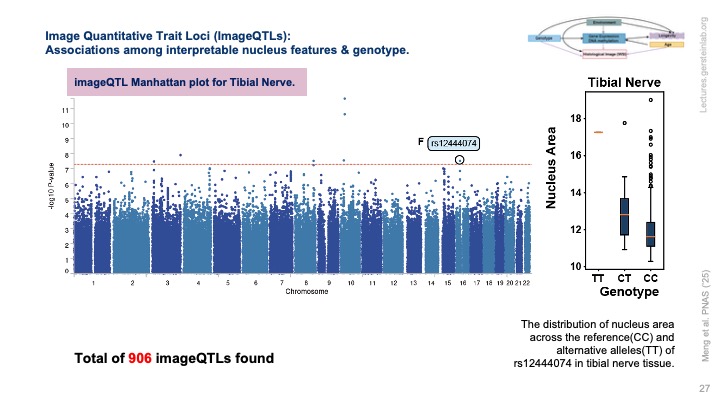
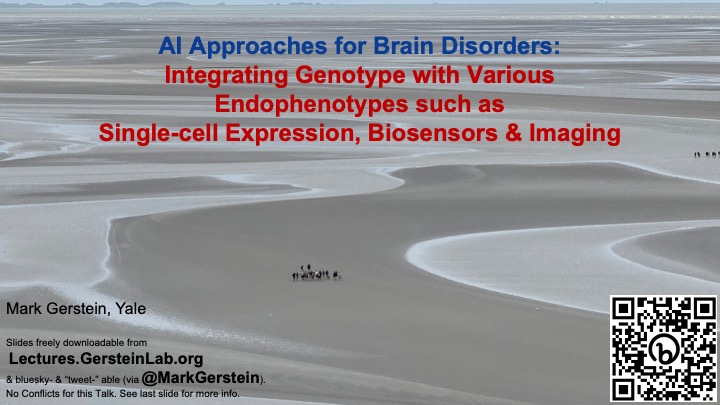
Posting my talk tomorrow at @UMich (hosted by @brendon_watson), on analyzing endophenotypes (expression, biosensors & imaging). https://t.co/iAyXpSilco Lots of new slides from @RanMeng_m on using the @GTExPortal images to predict age
We are excited to announce a tenure-track or tenured faculty position in Computational Biophysics and Biochemistry, exploring the intricate molecular and cellular processes and the complex interactions of their macromolecular components!
Apply now at https://t.co/21oc2AjF9I.
Honored to host my postdoc advisor, Dr. Mark Gerstein @MarkGerstein from Yale, for annual DeMets Lecture today @uwcdis@UWMadison. Inspiring talk & fantastic overview on AI in biomedicine: single-cell genomics, drug discovery, genomic privacy, LLM & agents, and quantum computing.
Posting my talk at @UWMadison (the DeMets lecture, hosted by @daifengwang). Lots on bioinformatics methods for studying the brain: classic, present (DL) & future (quantum) https://t.co/kfAd1oMjWE New slides on AI agents (from @XiangruTang) & homomorphic encryption for privacy