@GBNEWS Not just the UK. The Tesla Model Y was the highest selling vehicle of any type or Powertrain in Australia in May and BEVs are 20% of the new car market, double that of the previous year.
https://t.co/lYgJTFEMpr
@ivanbarbic1@S4muraiD4d@Peter_Fitz@OneNationAus I would check your figures on Net Australian Migration. Adding up ABS figures I get about 1.5 million over the last 5 years 2021 to 2025. Happy if you want to say that even that’s too much but be sure of your figures first.
@Baradine1566@sydney_ev Yes. Modern EVs constantly monitor the battery whilst the car is parked. However the energy used to do this is so small as to be irrelevant to the owner. My EV loses about 2-3Km a day of its 450km range so I leave it plugged in when on holidays. Other than that it doesn’t factor.
@sbskues@Peter_Fitz Early days in Australia, mostly centred around short distance routes, but planning for the Adelaide to Brisbane route has started. Here’s an example
https://t.co/MPDX3g3nS3
🔋 Tesla’s 200 MW / 800 MWh Koolunga battery matters.
• South Australia is getting a $225 million Megapack system
• 800 MWh at 200 MW means 4 hours of discharge, which is long enough for evening peak shifting, not just short grid balancing
• That is the use case where batteries start competing with gas peakers
@5054magazine They’re fairly robust and waterproof cables. Rather than as shown in the gutter where water collects and a pedestrian can trip over it , I put it under my car as in most cases that’s higher than the gutter and so less water. I keep an old towel in the car to wipe down cables.
@HL95868523@theguardrailguy In Australia, have app called Snap Send Solve. In app you to take a picture of a local problem, classify it, e.g. water leak, rubbish etc, then using geolocation sends responsible local authority the problem. Partner with a similar app writer in US to add guardrail category.
Finally the @abcnews interviews someone who knows what they’re talking about @EVTimOZ. A surge in EV sales leaves hours-long queues at charing stations | ABC NEWS https://t.co/cdGzHSrrDf via @YouTube
@TeslaTrackerUS That’s why they should keep building it and the X plus update them to include drive by wire, 48v low voltage, 800 high voltage architecture, V to X compatibility. Tesla needs an aspirational model that headlines the latest tech to keep them the leader.
@TheDriven_io just listened to the podcast Apartment EV Charging. My committee is doing $250K EV backbone for large Strata but CDC approval is requiring fire suppression upgrades at $170k that may kill the project. Has this been discussed in a podcast?
We have The Boulder Garden Hotel in Sr Lanka to ourselves as the only guests. Although a small hotel we are hearing of mass cancellations everywhere in Sri Lanka. This place is special but if 5 stars is you there’s plenty more places in the country. Time for a Holiday?
I can appreciate his point. My Tesla ruined all other cars for me too. - Nearly.😎
This Car Ruined Other Cars For Me https://t.co/pKrlErMwES via @YouTube
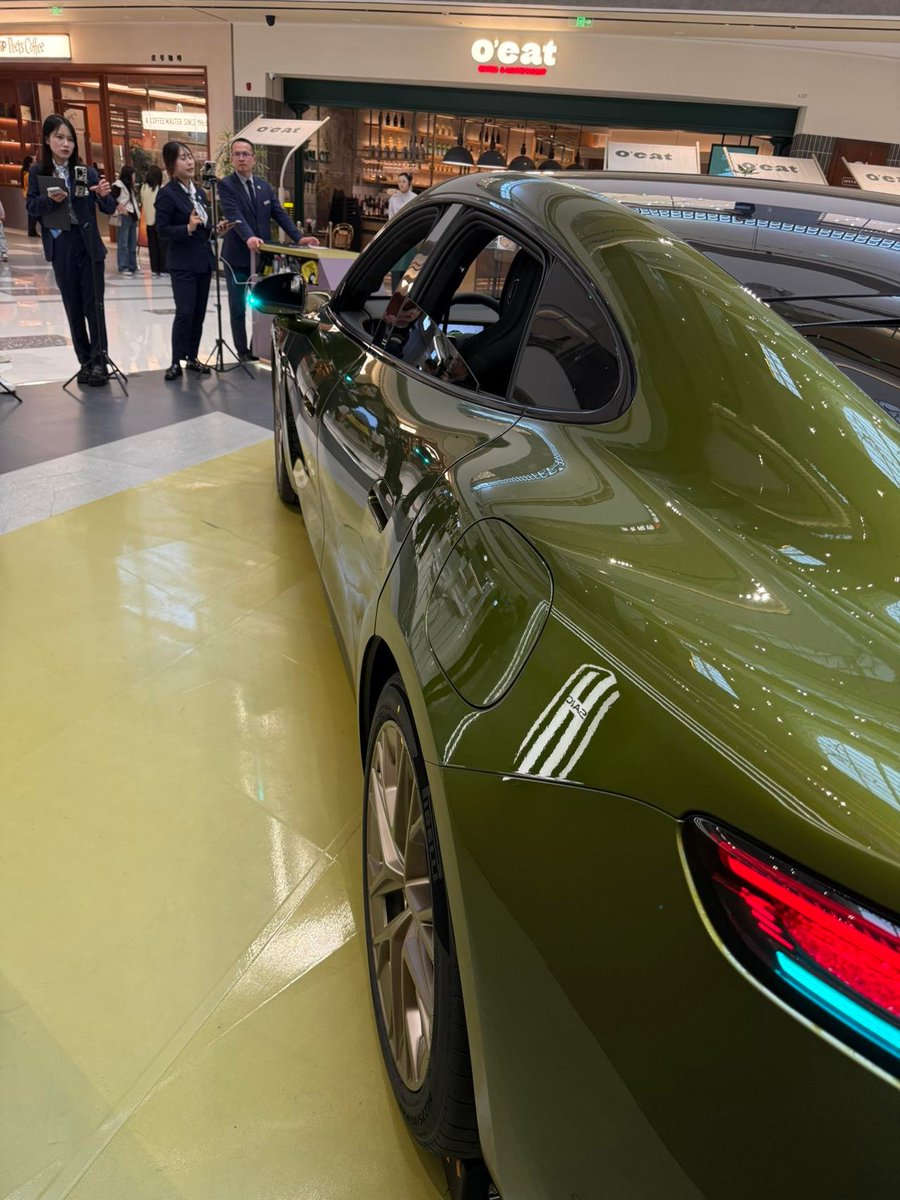
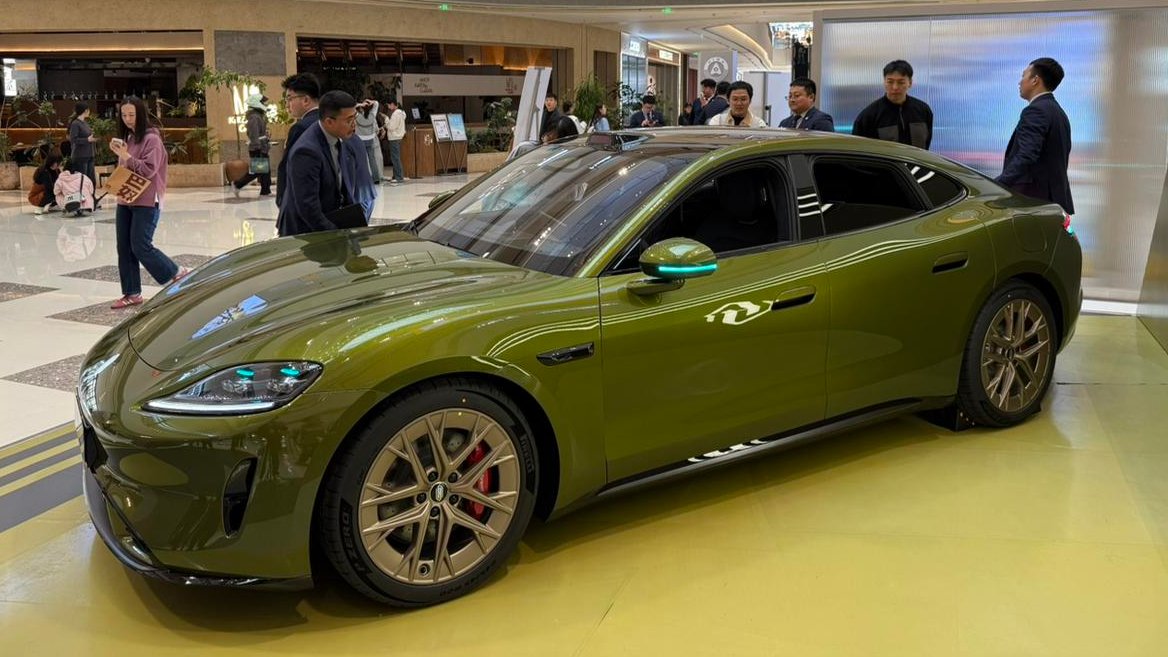
The “Chinese Porsche” at the shopping mall
The SAIC Z7 is a new electric sedan with a clear Porsche-inspired design — new pics show a light green car with flashy fold alloys at a shopping mall.
- 264 kW RWD or 434 kW AWD.
- Huawei hard and software.
- CATL batteries.
- $34K in pre-sales.
SAIC is a Chinese car brand controlled by SAIC Motor and HIMA (a subsidiary of Huawei).
In Australia right now, a diesel prime mover sits at A$200k–$250k. The Windrose BEV E700 lands at A$450k–$500k.
“Twice the price.” That’s the headline. That’s where most people stop.
Layer in Tesla. The Semi is arriving at US$260k–$300k (~A$400k–$460k).
And BYD? In a different league entirely—scaling heavy-duty electrics in China at aggressive prices through full vertical integration.
Yes, electric still carries the upfront premium.
But that’s the wrong comparison.
You’re not choosing between A$250k and A$450k.
You’re choosing between:
• Diesel: A$250k + ~A$2 million in volatile fuel over 10 years
• Electric: higher capex, then structurally far cheaper to run
The Windrose isn’t a compromise. ~700 km loaded range. ~700 kWh LFP pack. ~1,400 hp. ~870 kW charging. ~68-tonne capability.
That’s diesel performance—without the fuel dependency.
Tesla’s Semi is already proving materially lower real-world cost per kilometre in fleet deployments. BYD is industrialising faster, quieter, and cheaper.
Here’s what actually matters.
The visible gap (purchase price) is shrinking fast.
The invisible gap (operating cost) is widening faster.
Those two curves are converging hard.
That’s the squeeze.
Once they cross, adoption doesn’t crawl—it flips. Freight doesn’t care about narratives. It cares about cost per kilometre.
And the loop is now running in electric’s favour.
Oil shocks used to reinforce oil.
Now they accelerate its replacement.
Every diesel price spike forces fleets to run the numbers. Every electric truck on the road kills future diesel demand. That weakens supply investment. Which makes the next spike worse.
We’re sitting in diesel’s last comfort zone on sticker price.
The real shift isn’t happening on the invoice. It’s happening in the system underneath.
And when that system flips? Diesel doesn’t compete. It gets exposed. ⚡🔋 #Bettrification